
Pull to refresh
Logo
World's tallest wind turbine reaches full height in Germany

World's tallest wind turbine reaches full height in Germany

Built World

GICON's 365-meter pilot in Schipkau stands taller than the Eiffel Tower and taps stronger high-altitude winds

Yesterday: World's tallest turbine confirmed at full height

Overview

Updated 1 hour ago

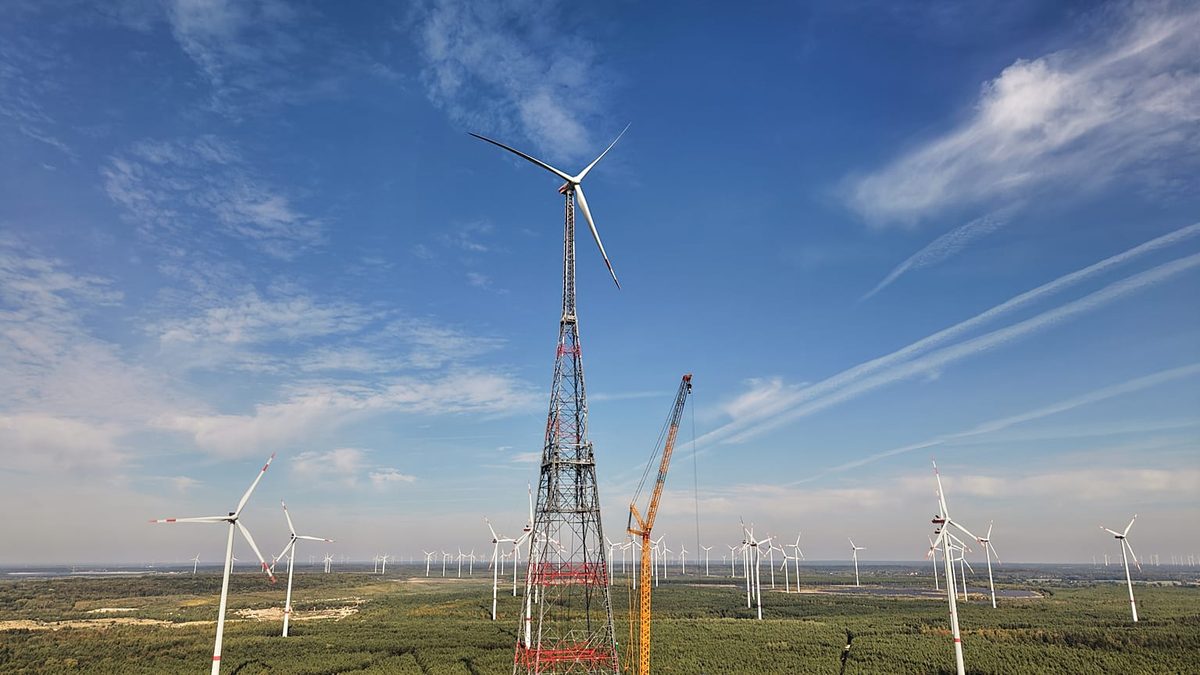
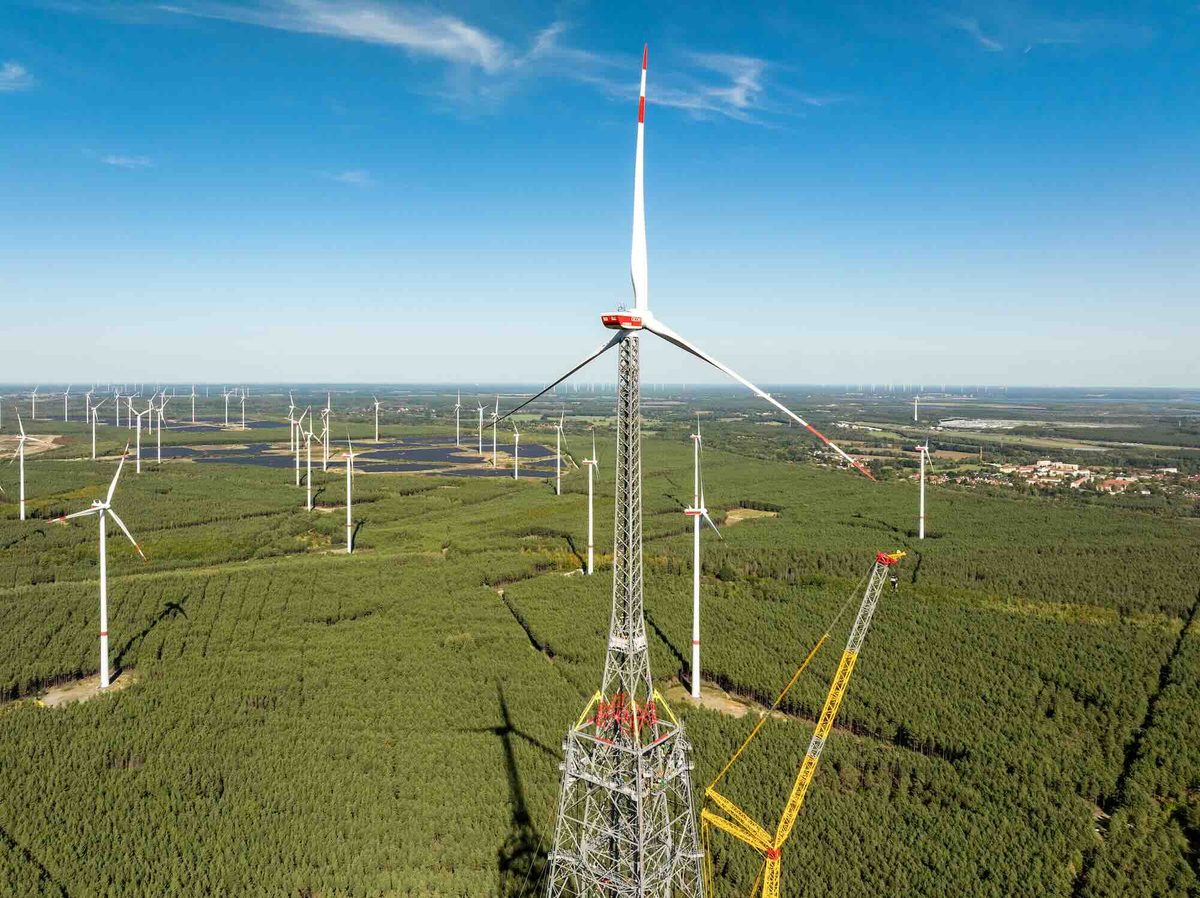
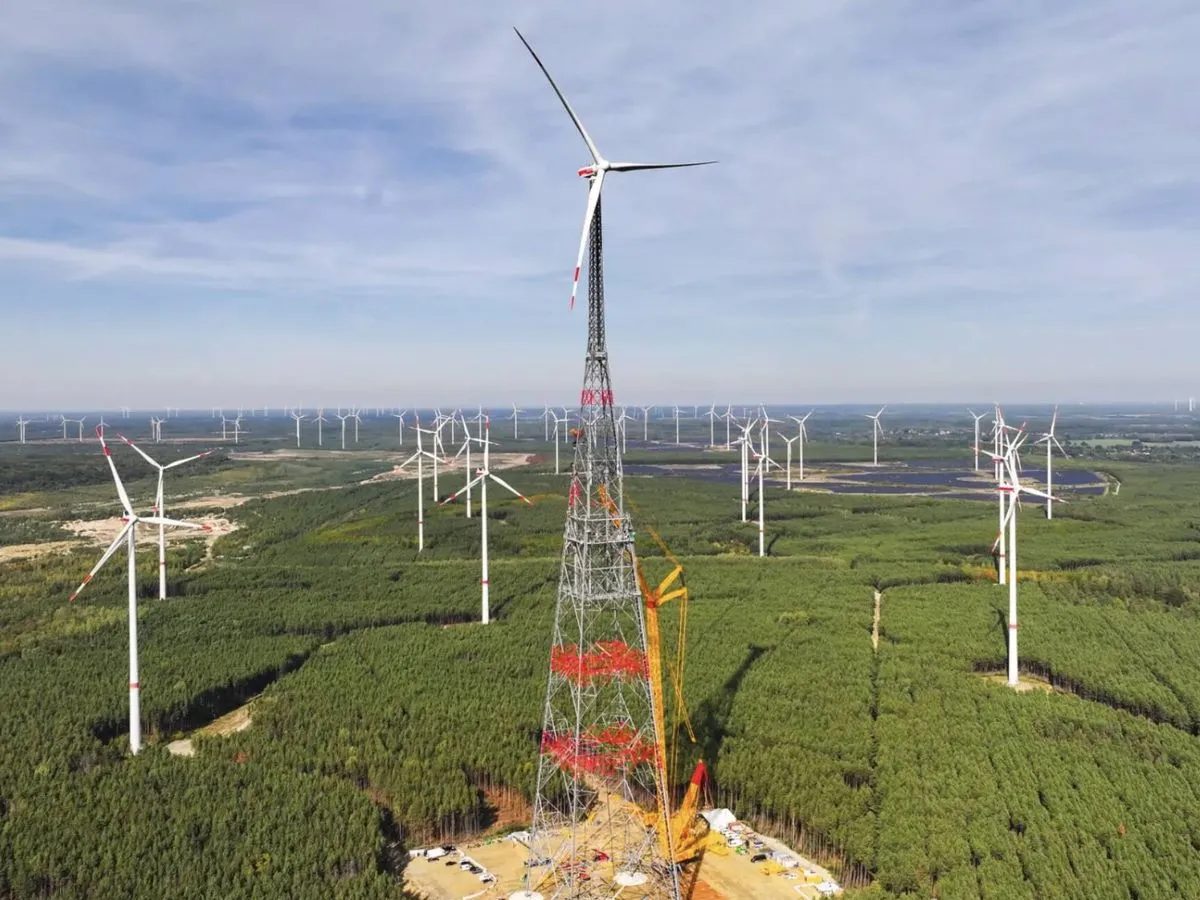
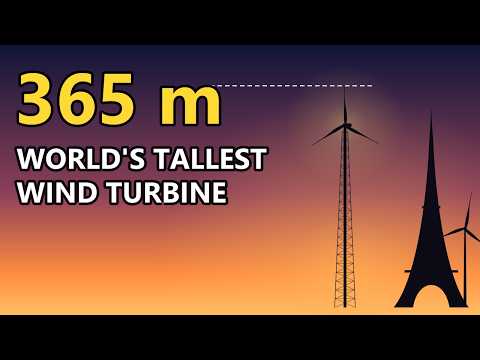
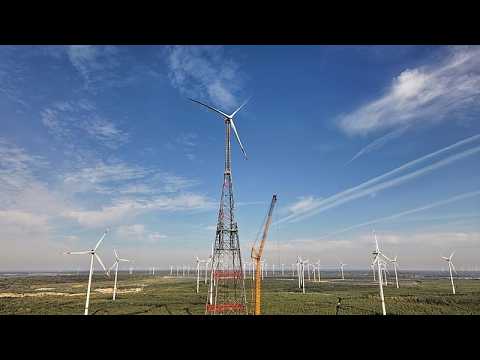
A wind turbine now rises 365 meters (1,197 feet) above a former coal region in eastern Germany — taller than the Eiffel Tower and second only to Berlin's TV tower among German structures. GICON's pilot in Schipkau is the world's tallest wind turbine.

Its hub sits 300 meters up, roughly twice the height of a conventional onshore turbine, tapping winds that blow stronger and steadier at that altitude. GICON and SPRIND, the German federal innovation agency behind the project, say the concept could be stacked as a second tier over existing wind farms, up to 4,000 sites in Germany, without using new land. Official commissioning is set for November.

Why it matters

If high-altitude turbines can be built cheaply enough, existing wind farms could roughly double their output without acquiring an acre of new land.

Questions about this story

Free account needed to ask — your question is kept and asked for you right after sign-up. Answers are public.

No questions yet — be the first to ask.

Key Indicators

365 m
Total height from base to blade tip
World record; only Berlin's TV tower, at 368 meters, is taller in Germany.
300 m
Hub height
Roughly double the hub height of a typical onshore turbine, reaching stronger winds.
2x
Expected energy yield vs. conventional turbine
Same rotor diameter, roughly twice the output, thanks to steadier high-altitude winds.
4,000
Potential second-tier retrofit sites in Germany
GICON's estimate of existing wind farms that could host a high-altitude turbine above.
60%
Investment cost reduction needed to compete
Energy expert estimate of the gap the design must close to match conventional turbines at scale.

Voices

Curated perspectives — historical figures and your fellow readers.

Ever wondered what historical figures would say about today's headlines?

Sign up to generate historical perspectives on this story.

People Involved

Organizations Involved

Timeline

2019 October 2026

8 events Latest: Yesterday
Tap a bar to jump to that date
  1. World's tallest turbine confirmed at full height

    Latest Milestone

    The 365-meter turbine is confirmed as Germany's second-tallest structure; commissioning is set for November.

  2. Turbine reaches final height of 365 meters

    Milestone

    Rotor blades fitted and inner tower telescoped upward, completing the world's tallest wind turbine.

  3. Construction resumes after winter pause

    Construction

    Work restarts after a pause tied to steel components that allegedly did not meet quality standards.

  4. Construction begins at Schipkau

    Construction

    A Liebherr LR 11350 crawler crane arrives on site; tower assembly starts on the former lignite mining land.

  5. Pilot turbine approved for construction

    Decision

    SPRIND and GICON green-light the Schipkau high-altitude turbine based on the measurement results.

  6. Altitude wind data collection begins

    Data

    A year of measurements confirms winds blow stronger and more reliably at greater heights.

  7. World's tallest wind measurement mast erected

    Milestone

    SPRIND and GICON raise a measurement mast on the Klettwitz plateau to test wind conditions at altitude.

  8. Bendix submits high-altitude wind concept to SPRIND

    Proposal

    Horst Bendix, 91, pitches his high-altitude wind turbine idea to the German innovation agency.

Scenarios

1

Turbine comes online in November commissioning

Likely Resolves by Jan 31, 2027

Discussed by: GICON and SPRIND announcements; press coverage

The pilot turbine is officially commissioned as planned and begins feeding power to the grid at its 3.8 megawatt nominal capacity. This validates both the high-altitude concept and the telescopic tower design, clearing the way for the commercialization talks already underway.

2

Cost reduction unlocks series production

Possible Resolves by Q2 2028

Discussed by: SPRIND scaling goals; WELT-cited energy experts

GICON closes the roughly 60% investment cost gap cited as necessary to compete, signs commercialization agreements, and begins series production. Up to 4,000 high-altitude turbines could then be added as a second tier above existing German wind farms without new land.

3

Costs stay high, second tier stalls

Possible Resolves by Q2 2028

Discussed by: WELT energy expert analysis

The turbine operates but investment costs remain roughly 60% above conventional turbines, so no second-tier expansion proceeds. The Schipkau pilot stays a demonstration of what is possible rather than the start of a new generation of wind farms.

Historical Context

3 moments from history that rhyme with this story — and how they unfolded.

2007

Enercon E-126 (2007)

The Enercon E-126, introduced in 2007, was long considered the world's largest wind turbine, standing roughly 198 meters tall at its tallest configuration with a 127-meter rotor. It marked the shift toward very large onshore turbines.

Then

It claimed the size record and helped establish multi-megawatt onshore wind as a mainstream technology.

Now

Hub heights and rotor diameters have climbed steadily since, with today's largest onshore turbines reaching hub heights around 150-200 meters.

Why this matters now

The Schipkau turbine's 300-meter hub is roughly double current conventional hub heights, a step-change in the same upward trend the E-126 began.

2010s-2020s

Lusatia's lignite-to-renewables transition

Lusatia, a lignite (brown coal) mining region on the German-Polish border, has shed most of its mining and coal-fired power jobs as Germany phases out coal by 2038. The region is being repurposed for renewable energy on former mining land.

Then

Former open-pit sites and surrounding land now host wind and solar projects as mining operations wind down.

Now

The region is becoming a testbed for how post-coal economies can rebuild around clean energy infrastructure.

Why this matters now

The Schipkau turbine stands in an existing wind farm on former lignite territory, a concrete example of that regional transition.

2010s-present

German wind repowering programs

Repowering, replacing older and smaller turbines with fewer but larger ones, has been a central tool in German wind policy. Taller machines capture stronger winds at height, boosting output on the same land.

Then

Repowered sites often produce two to three times more energy than the turbines they replace.

Now

Repowering became the default way to increase onshore wind output where new land is scarce or opposed.

Why this matters now

The second-tier concept extends repowering logic vertically: instead of replacing low turbines, it stacks a high-altitude turbine above them on the same footprint.

Sources

(10)