


Pull to refresh
Logo
Daily Brief
Following
Why Ranks Sign Up
Biogen's tau drug slows Alzheimer's decline in first-of-its-kind trial

Biogen's tau drug slows Alzheimer's decline in first-of-its-kind trial

New Capabilities

Diranersen missed its main statistical goal but cut brain tau and slowed cognitive decline, opening a second drug target beyond amyloid

Today: Full CELIA data presented at AAIC in London

Overview

For decades, nearly every Alzheimer's drug that reached patients aimed at one target: a sticky protein called amyloid. On July 14, 2026, Biogen showed the first clinical evidence that hitting a different protein, tau, can also slow the disease.

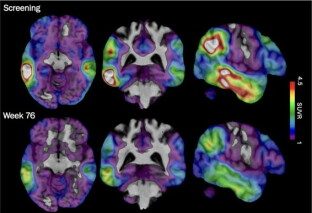
The drug, diranersen, missed the trial's main statistical goal. But it cut tau in the brain and slowed cognitive decline by about a quarter at its lowest dose. Biogen is taking it to late-stage trials anyway.

Why it matters

If tau-targeting holds up in larger trials, doctors could gain a second way to slow Alzheimer's, and possibly a drug to pair with today's amyloid treatments.

Questions about this story

No questions yet — be the first to ask.

Key Indicators

26%
Slowing of decline at low dose
Reduction in cognitive-decline rate on the CDR-SB scale at the 60 mg dose over 18 months.
50-65%
Tau cut in spinal fluid
Drop in total tau measured in cerebrospinal fluid across all doses tested.
416
Trial participants
People with early Alzheimer's enrolled in the Phase 2 CELIA study, down from a planned 735.
18 months
Study length
Length of the CELIA study before the readout.

Voices

Curated perspectives — historical figures and your fellow readers.

Ever wondered what historical figures would say about today's headlines?

Sign up to generate historical perspectives on this story.

Play

Exploring all sides of a story is often best achieved with Play.

Log in to play. Track your picks, climb the leaderboards. Log in Sign Up
Predict 3 ways this could play out. Contrarian picks score more — points lock when the scenario resolves. Log in to play
Higher or Lower Two numbers from this story. Guess which is bigger. 5 rounds to set a streak. Log in to play
Connections Sixteen names from the news. Find the four hidden groups of four. Log in to play

People Involved

Organizations Involved

Timeline

April 2024 July 2026

3 events Latest: Today
  1. Full CELIA data presented at AAIC in London

    Today Presentation

    Biogen showed the complete dataset, including a 26% slowing of decline at the 60 mg dose and 50-65% tau reductions in spinal fluid.

  2. Topline results: primary goal missed, but signals positive

    Trial Result

    Biogen and Ionis reported that CELIA missed its main statistical goal, yet cut tau and slowed decline across doses. Biogen said it would advance the drug.

  3. Early trial shows the drug can lower tau

    Research

    A Phase 1 study of BIIB080 reported large drops in tau in spinal fluid, setting up the larger CELIA test.

Historical Context

3 moments from history that rhyme with this story — and how they unfolded.

June 2021

Aducanumab's contested approval (2021)

The FDA approved Biogen's amyloid drug aducanumab, sold as Aduhelm, based on its ability to clear amyloid, even though two trials gave conflicting results on whether it helped patients. An advisory panel had voted against it, and several members resigned.

Then

Insurers and doctors largely refused to use it, and sales collapsed.

Now

Biogen pulled the drug in 2024, and the episode made regulators and analysts wary of biomarker-only approvals.

Why this matters now

Diranersen also missed its main clinical goal while moving a biomarker. That history shapes how regulators and investors will read Biogen's push to advance it.

2020-2021

Tau antibody drugs fail (2020-2021)

Genentech's semorinemab and Biogen's own gosuranemab, both antibodies aimed at tau floating between brain cells, failed to slow Alzheimer's in mid-stage trials despite hitting their targets in the body.

Then

Both programs were largely shelved for Alzheimer's.

Now

The failures suggested that mopping up tau outside cells was not enough, pushing researchers toward cutting tau production inside cells.

Why this matters now

Diranersen works differently, lowering how much tau the brain makes at all. Its signal is the first from any tau approach after those earlier defeats.

November 2022

Lecanemab validates the amyloid target (2022)

Eisai and Biogen's lecanemab, later sold as Leqembi, slowed decline by about 27% in a large trial, giving the amyloid theory its clearest win after years of doubt. It won full FDA approval in 2023.

Then

Leqembi became a standard early-Alzheimer's treatment, though with safety monitoring for brain swelling.

Now

It set a benchmark, roughly a quarter slowing of decline, that new drugs are measured against.

Why this matters now

Diranersen's 26% slowing at its low dose lands near lecanemab's mark, which is why researchers call the tau result meaningful despite the missed goal.

Sources

(5)