
Pull to refresh
Logo
Daily Brief
Following
Why
Davos becomes crisis summit as old order declared dead

Davos becomes crisis summit as old order declared dead

Rule Changes
By Newzino Staff |

Greenland standoff, middle power revolt, and agentic AI reshape the annual gathering

January 23rd, 2026: WEF 2026 Concludes

Overview

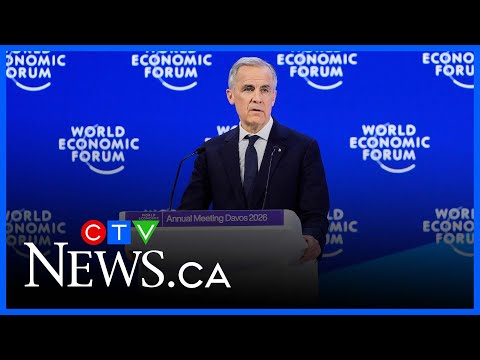
The World Economic Forum has convened annually in Davos for 55 years. This year's gathering—the first without founder Klaus Schwab—transformed into an emergency diplomatic summit when Trump's tariff threats over Greenland collided with record attendance from 60+ heads of state. By week's end, a NATO 'framework deal' had defused the immediate crisis, while Canadian PM Mark Carney delivered a declaration that European and middle-power leaders openly applauded: the U.S.-led rules-based order is over.

The forum produced three structural shifts. First, Trump backed off European tariffs after NATO agreed to expand Arctic security—though Greenland's sovereignty remains unchanged. Second, Carney's call for middle powers to build a 'third path' outside great-power rivalry drew explicit support from von der Leyen, Macron, and Merz. Third, the AI conversation moved from hype to implementation, with CEOs focused on agentic AI's near-term ROI while Anthropic and DeepMind leaders warned that China has closed the capability gap to 6-12 months.

Key Indicators

60+
Heads of State
Record government participation, up from previous high
$175B
Arctic Sentry Cost
Projected cost of proposed NATO Arctic missile defense shield
€90B
EU Ukraine Loan
New European commitment announced by von der Leyen for 2026-2027
6-12 mo
China AI Gap
DeepMind CEO's estimate of how far China trails in AI capabilities

Interactive

Exploring all sides of a story is often best achieved with Play.

Ever wondered what historical figures would say about today's headlines?

Sign up to generate historical perspectives on this story.

Sign Up

Debate Arena

Two rounds, two personas, one winner. You set the crossfire.

People Involved

Mark Carney
Mark Carney
Prime Minister of Canada (Delivered keynote declaring end of rules-based order)
Donald Trump
Donald Trump
President of the United States (Attended Davos, launched Board of Peace, reached Greenland framework)
Ursula von der Leyen
President of the European Commission (Announced €90B Ukraine loan, called for European independence)
Mark Rutte
Mark Rutte
NATO Secretary General (Brokered Greenland framework deal with Trump)
Volodymyr Zelenskyy
Volodymyr Zelenskyy
President of Ukraine (Delivered scathing critique of European inaction)
Emmanuel Macron
Emmanuel Macron
President of France (Defended multilateralism; criticized Trump policies)
Friedrich Merz
Friedrich Merz
Federal Chancellor of Germany (Called for EU deregulation; pledged Arctic security support)
Javier Milei
Javier Milei
President of Argentina (Delivered third consecutive Davos speech; defended China trade ties)

Organizations Involved

World Economic Forum
International Organization
Status: Held 56th annual meeting, first without founder Schwab

Convened record 3,000 participants including 60+ heads of state under theme 'A Spirit of Dialogue.'

North Atlantic Treaty Organization (NATO)
Military alliance
Status: Central to Greenland framework negotiations

Brokered Greenland framework with U.S. committing to expanded Arctic security operations.

European Commission
European Commission
EU Executive Body
Status: Announced major Ukraine support and India trade deal progress

Committed €90B to Ukraine and advanced trade diversification with India, Indonesia, and others.

Timeline

  1. WEF 2026 Concludes

    Event

    Forum closed with remarks from Saudi Economy Minister and WEF President Brende. AI, geopolitics, and Arctic security dominated five days of discussions.

  2. Trump Launches Board of Peace at Signing Ceremony

    Initiative

    Trump signed Board of Peace charter with approximately 30 countries. Several allies including UK declined; Belgium denied signing after being listed.

  3. Zelenskyy Delivers Scathing Critique of Europe

    Speech

    Ukrainian President said Europe 'looks lost' and is living in 'Groundhog Day.' Announced U.S.-Russia-Ukraine trilateral talks in Abu Dhabi.

  4. Merz Addresses European Competitiveness, Arctic Security

    Speech

    German Chancellor called EU 'world champion of over-regulation' and pledged Germany would protect Denmark and Greenland within NATO.

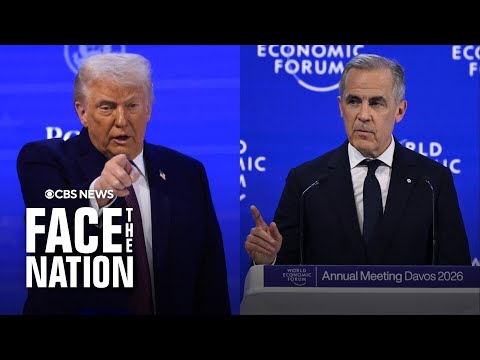
  5. Trump Delivers Davos Address, Rules Out Force

    Speech

    Trump said he would not use military force to take Greenland while insisting U.S. must 'get' the territory. Criticized NATO allies as unreliable partners.

  6. Trump-Rutte Meeting Produces Greenland Framework

    Diplomacy

    After meeting with NATO Secretary General, Trump announced 'framework of a future deal' on Greenland and Arctic security, suspended tariff threats.

  7. Carney Declares End of Rules-Based Order

    Speech

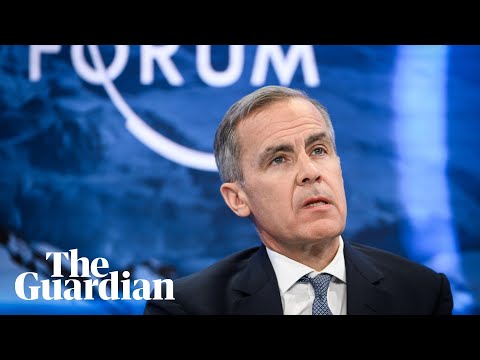
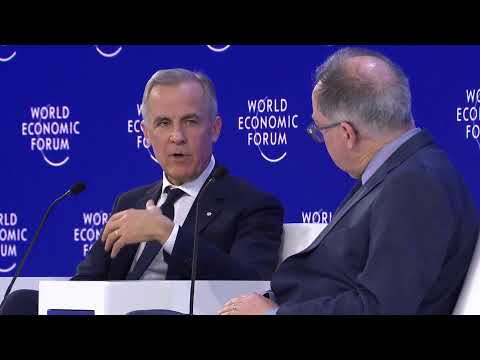
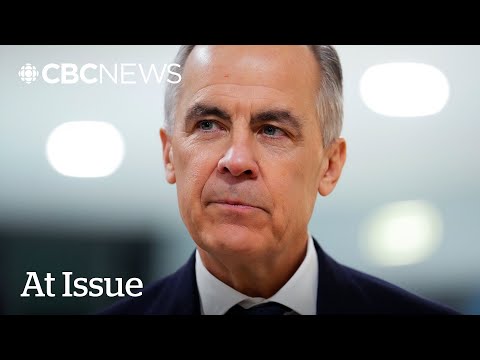
    Canadian PM Mark Carney received standing ovation for speech declaring the U.S.-led international order over and calling for middle powers to build a 'third path.'

  8. Von der Leyen Calls for European Independence

    Speech

    EU Commission President announced €90B Ukraine support and described moment as requiring 'a new form of European independence.'

  9. Macron Defends Multilateralism Against 'Bullies'

    Speech

    French President criticized Trump tariff policy, saying Europe 'prefers respect to bullies' and rule of law to brutality.

  10. WEF 2026 Opens with Record Attendance

    Event

    56th World Economic Forum began in Davos with nearly 400 government leaders, including 60+ heads of state—the highest governmental participation in history.

  11. Trump Threatens European Tariffs Over Greenland

    Escalation

    Trump announced 10-25% tariffs on eight European nations and NATO members unless they supported U.S. acquisition of Greenland.

Scenarios

1

NATO Arctic Sentry Mission Launches in 2026

Discussed by: Atlantic Council, UK Foreign Secretary Yvette Cooper, NATO officials

The Greenland framework produces a concrete NATO Arctic security mission. European allies increase defense spending in the Arctic, the U.S. gains expanded 'operational access' to Greenland without sovereignty change, and the immediate crisis is resolved. This requires NATO commanders to develop implementation plans 'fast,' as Rutte promised, and European governments to fund their commitments.

2

Middle Power Coalition Formalizes Outside U.S.-China Rivalry

Discussed by: Canadian officials, European Commission, policy analysts at The Conversation

Carney's call for middle powers to build a 'third path' gains institutional form. Canada, EU members, and like-minded nations accelerate trade diversification (India deal, ASEAN engagement) and coordinate on energy, critical minerals, and AI governance. This scenario depends on whether Carney's rhetoric translates into binding commitments and whether European leaders follow through on independence language.

3

Greenland Crisis Reignites as Framework Collapses

Discussed by: Denmark's Prime Minister Frederiksen, Greenland's PM Nielsen, International Crisis Group

The 'framework' proves hollow as Denmark and Greenland reject any sovereignty compromise while Trump demands more than NATO security cooperation. Tariff threats return, NATO unity fractures, and the Arctic becomes a renewed flashpoint. This outcome becomes more likely if Trump perceives the framework as insufficient or if domestic politics in Denmark or Greenland harden against U.S. demands.

4

Board of Peace Expands into UN Alternative

Discussed by: White House officials, skeptical allies including UK, NPR analysis

Trump's Board of Peace, initially focused on Gaza, evolves into a permanent body handling multiple global crises with the U.S. as permanent chair. Membership grows beyond initial 30 countries. This scenario faces significant obstacles: major allies (UK, Germany, France) have not joined, the $1B membership fee limits participation, and the charter's scope invites competition with existing UN mechanisms.

Historical Context

Davos Declaration Between Greece and Turkey (1988)

January 1988

What Happened

Greek PM Andreas Papandreou and Turkish PM Turgut Özal met at Davos during an acute crisis that had brought their countries to the brink of war over Aegean territorial disputes. The forum provided neutral ground for direct dialogue.

Outcome

Short Term

The leaders signed the Davos Declaration, establishing direct communication channels and stepping back from military confrontation.

Long Term

Set precedent for WEF as venue for crisis diplomacy. Greece-Turkey tensions continued but the 1988 war was averted.

Why It's Relevant Today

Davos 2026 similarly became an emergency diplomatic venue, with the Greenland crisis transforming scheduled programming into high-stakes negotiations between Trump and European leaders.

Mandela-de Klerk Meeting at Davos (1992)

January 1992

What Happened

ANC President Nelson Mandela and South African President F.W. de Klerk held their first face-to-face meeting at Davos as South Africa transitioned away from apartheid. Mandela later credited Davos discussions with changing his views on nationalization.

Outcome

Short Term

The meeting built personal rapport between former adversaries during a fragile transition period.

Long Term

South Africa adopted market-friendly policies. Mandela said Davos participants 'changed my views altogether' on economic policy.

Why It's Relevant Today

Demonstrates WEF's historical role in facilitating dialogue that shapes major policy shifts. Carney's pivot toward middle-power economic diversification echoes how Davos conversations can redirect national strategies.

Cairns Group and Middle Power Coalition Building (1986)

August 1986

What Happened

Australia led 14 agricultural exporting nations—none of them superpowers—to form the Cairns Group during Uruguay Round trade negotiations. The coalition challenged both U.S. and EU agricultural subsidies.

Outcome

Short Term

The group established itself as a unified bloc that could not be ignored in trade talks.

Long Term

Helped secure the Agreement on Agriculture in 1994. Became a template for middle-power coalition diplomacy.

Why It's Relevant Today

Carney's call for middle powers to 'combine to create a third path' directly invokes this model. Australia's success showed that coordinated middle powers can shape outcomes against great-power preferences.

12 Sources: