


Pull to refresh
Logo
Daily Brief
Following
Why Sign Up
Ecuador imposes overnight curfew across nine provinces under emergency decree

Ecuador imposes overnight curfew across nine provinces under emergency decree

Force in Play
By Newzino Staff |

Decree 370 covers most of the population through May 18 as homicides surge in second nationwide push of 2026

Today: Nationwide curfew takes effect across nine provinces

Overview

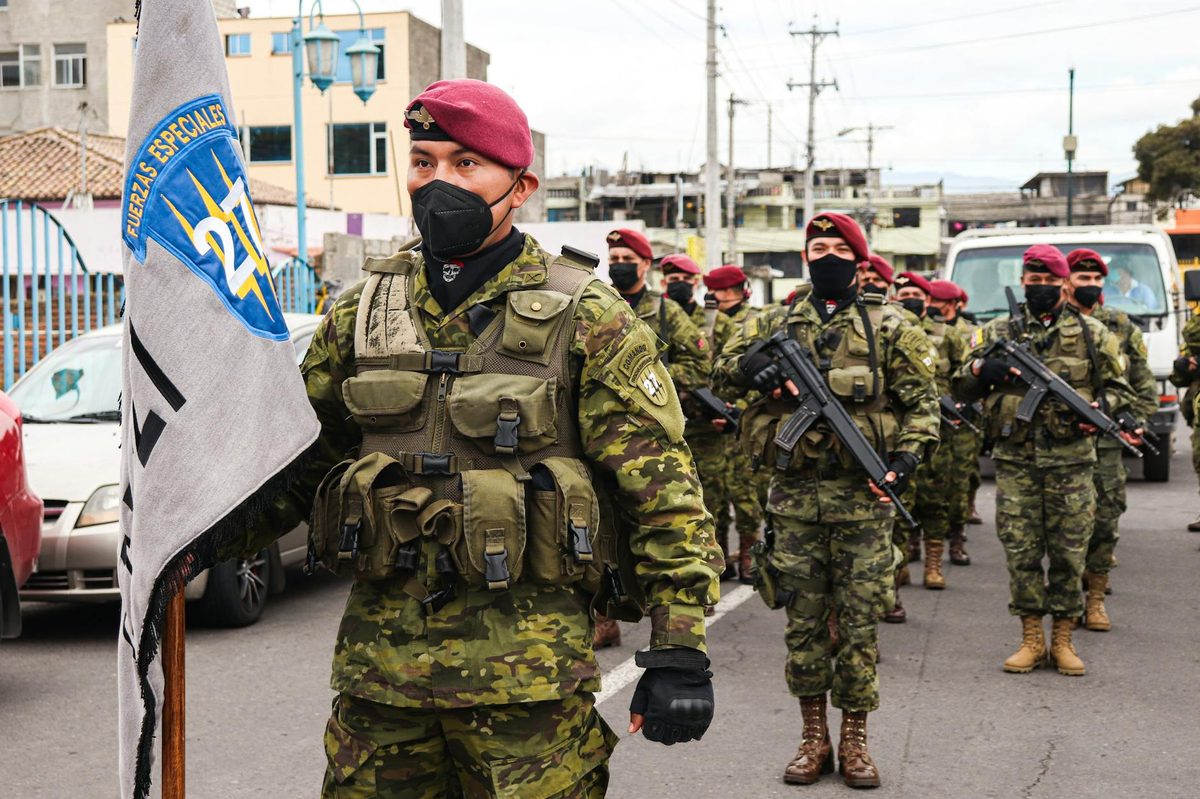
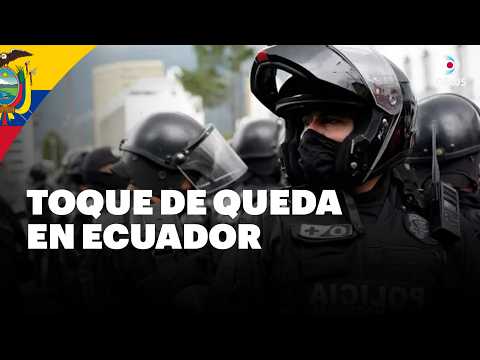
Five years ago Ecuador had one of the lowest homicide rates in South America. On May 3, 2026, the country woke up to its second nationwide curfew of the year, with soldiers and police authorized to clear streets between 11 p.m. and 5 a.m. across nine of 24 provinces — including Quito and Guayaquil, which together hold most of the population. Executive Decree 370 runs through May 18 and follows a four-province curfew in March that the government concedes did not break the criminal networks driving the violence.

Why it matters

Ecuador is testing whether a democracy can use El Salvador-style emergency powers to break entrenched cartels — without the political costs Bukele paid.

Key Indicators

2,509
Homicides Jan–Apr 2026
Recorded killings in the first four months of the year, the trigger cited for Decree 370.
9 of 24
Provinces under curfew
Includes Pichincha (Quito) and Guayas (Guayaquil), covering most of Ecuador's population.
44%
Killings concentrated in Guayas
Single coastal province accounts for nearly half of national homicides in 2026.
11pm–5am
Curfew hours
Six-hour nightly window during which civilian movement is restricted through May 18.
2nd
Curfew of 2026
Follows a March curfew across four provinces that authorities say failed to disrupt criminal networks.

Interactive

Exploring all sides of a story is often best achieved with Play.

Ever wondered what historical figures would say about today's headlines?

Sign up to generate historical perspectives on this story.

Sign Up

Debate Arena

Two rounds, two personas, one winner. You set the crossfire.

People Involved

Organizations Involved

Timeline

  1. Nationwide curfew takes effect across nine provinces

    Decree

    Decree 370 enforces an 11 p.m.–5 a.m. movement ban through May 18, covering Quito, Guayaquil, and most of Ecuador's population.

  2. Decree 370 announced amid homicide surge

    Decree

    Government cites 2,509 killings in four months as justification for expanded emergency measures.

  3. First 2026 curfew imposed in four provinces

    Decree

    Earlier emergency decree restricts movement in Guayas and three other provinces but fails to disrupt gang networks.

  4. 'Fito' recaptured after 17-month manhunt

    Security

    Authorities locate Macías in a hidden bunker in Manabí province; he is later extradited to the United States.

  5. Noboa re-elected to full presidential term

    Political

    Voters return Noboa over Luisa González, endorsing the security-first approach despite continued violence.

  6. Armed gunmen storm TC Television live on air

    Security Crisis

    Masked attackers take over a live broadcast in Guayaquil, prompting Noboa to declare an 'internal armed conflict' the same day.

  7. Decree 111 designates 22 gangs as terrorist groups

    Legal

    Noboa authorizes military operations against organized crime, transforming Ecuador's security architecture.

  8. 'Fito' escapes from La Regional prison

    Security Crisis

    Los Choneros leader Adolfo Macías is reported missing from his cell in Guayaquil, igniting a nationwide security emergency.

  9. Noboa wins snap election on security platform

    Political

    Daniel Noboa, 35, defeats Luisa González in a runoff to complete the term of impeached predecessor Guillermo Lasso.

  10. Presidential candidate Villavicencio assassinated

    Inciting Event

    Anti-corruption candidate Fernando Villavicencio is shot dead leaving a Quito campaign event, exposing the depth of Ecuador's gang infiltration.

Scenarios

1

Curfew extended past May 18 as homicides plateau

Discussed by: Regional security analysts at InSight Crime and the Washington Office on Latin America (WOLA)

Past Ecuadorian states of emergency have routinely been renewed before expiration. If the May 18 deadline arrives with homicide rates merely flattening rather than declining, the government's most likely move is a fresh decree extending and possibly geographically expanding the restrictions. This would normalize curfews as a recurring instrument of governance rather than an emergency measure.

2

Constitutional Court partially strikes down decree

Discussed by: Ecuadorian constitutional law scholars and human rights organizations including Human Rights Watch

Ecuador's Constitutional Court has previously trimmed the scope of Noboa's security decrees. A challenge from civil-society groups or opposition legislators could narrow the geographic reach or shorten the curfew window, forcing the executive to recalibrate without abandoning the framework entirely.

3

Deeper U.S. security cooperation announced

Discussed by: U.S. embassy statements and Reuters reporting on bilateral security talks

The Noboa government has openly courted closer cooperation with Washington, including a referendum on hosting foreign military bases. A sustained homicide crisis increases the political space for an expanded U.S. role — joint maritime interdiction, intelligence sharing, or training programs — that would shift Ecuador's security posture for years.

4

Homicides rebound as gangs adapt to curfew

Discussed by: Ecuadorian security researchers at FLACSO and independent crime analysts

March's failed four-province curfew suggests gangs can shift killings to permitted hours or relocate operations. If the May curfew produces a brief lull followed by displacement and rebound, public confidence in emergency tools could erode and force the government toward more structural reforms — prison administration, port controls, judicial capacity — that successive administrations have avoided.

Historical Context

El Salvador's state of exception (2022)

March 2022–ongoing

What Happened

After 87 killings in a single weekend, President Nayib Bukele suspended constitutional rights and arrested more than 80,000 suspected gang members. Mass detentions emptied MS-13 and Barrio 18 strongholds within months.

Outcome

Short Term

El Salvador's homicide rate collapsed to among the lowest in the Western Hemisphere within two years, and Bukele's approval ratings exceeded 80 percent.

Long Term

The state of exception has been renewed dozens of times and is now a permanent feature of governance, drawing both regional imitators and sustained criticism from human rights bodies over due-process violations.

Why It's Relevant Today

Ecuador's framework consciously echoes Bukele's playbook — emergency decrees, military deployment, terrorist designations — but Noboa faces a more decentralized criminal landscape tied to international trafficking rather than locally rooted street gangs.

Mexico's militarization under Calderón (2006–2012)

December 2006–November 2012

What Happened

President Felipe Calderón deployed 50,000 soldiers against drug cartels within weeks of taking office, launching the war on drugs. High-value targets fell, but cartels splintered into smaller, more violent factions.

Outcome

Short Term

Headline arrests and seizures rose sharply alongside soaring homicide rates that exceeded 120,000 deaths over the six-year term.

Long Term

Mexico's cartels fragmented and diversified into extortion, fuel theft, and human trafficking; military involvement in policing became permanent across successive governments.

Why It's Relevant Today

Ecuador's reliance on the armed forces for urban policing carries the same fragmentation risk: removing top leaders like 'Fito' may multiply rather than eliminate the violent actors driving homicides.

Plan Colombia (2000–2016)

July 2000–2016

What Happened

The United States committed roughly $10 billion to Colombia's fight against the FARC insurgency and cocaine traffickers, combining military aid, aerial coca eradication, and judicial reform.

Outcome

Short Term

Coca cultivation and homicide rates fell substantially through the late 2000s, and FARC combatants were pushed to peace negotiations.

Long Term

Cocaine production migrated to Peru and Ecuador's coastal corridors, fueling the trafficking ecosystem now driving Ecuador's crisis — the unintended consequence Quito is living through today.

Why It's Relevant Today

Ecuador's homicide surge is in part the downstream effect of successful interdiction elsewhere; any solution that ignores regional trafficking dynamics risks displacing the violence rather than resolving it.

Sources

(4)