
Pull to refresh
Logo
Daily Brief
Following
Why Ranks Sign Up
Eli Lilly buys psychedelic drugmaker AtaiBeckley

Eli Lilly buys psychedelic drugmaker AtaiBeckley

Money Moves

A $2.8 billion cash deal puts Lilly into a race with Johnson & Johnson for the next depression drugs

Yesterday: Lilly agrees to buy AtaiBeckley

Overview

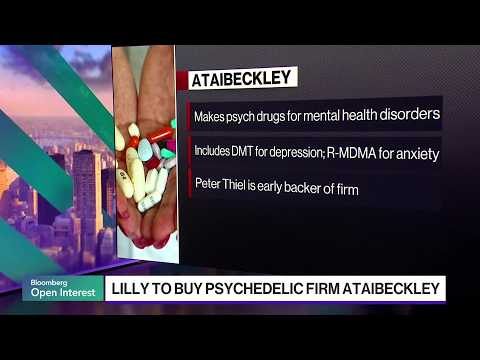
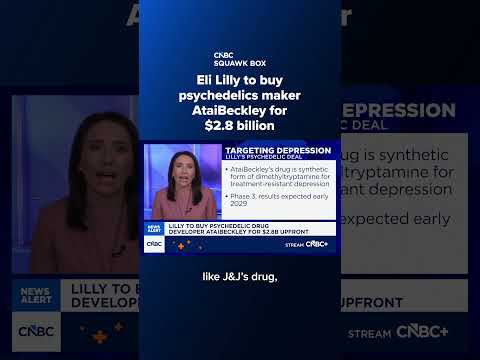
Eli Lilly agreed to buy AtaiBeckley for $6.75 a share in cash, about $2.8 billion, with up to $1 billion more if two drugs hit development targets. The purchase pulls one of the world's largest drugmakers into psychedelic medicine.

AtaiBeckley's lead drug is a nasal spray built on 5-MeO-DMT, a fast-acting psychedelic, aimed at people whose depression has not responded to standard pills. Lilly is betting that a single supervised dose can do what daily antidepressants often cannot.

Why it matters

Roughly a third of people with depression don't get better on standard drugs. Lilly is spending billions to change that with a psychedelic given once, under supervision.

Questions about this story

No questions yet — be the first to ask.

Key Indicators

$2.8B
Upfront cash price
What Lilly pays now, at $6.75 per AtaiBeckley share.
$1B
Milestone payments
Extra cash, up to about $2.50 a share, tied to drug and regulatory targets.
~30%
Patients unhelped by standard drugs
Share of people with depression who don't respond to usual medication.
2029
Phase 3 readout expected
When the lead drug's final trial results are due.
$584M
J&J's quarterly Spravato sales
The rival product Lilly now aims to compete with.

Voices

Curated perspectives — historical figures and your fellow readers.

Ever wondered what historical figures would say about today's headlines?

Sign up to generate historical perspectives on this story.

Play

Exploring all sides of a story is often best achieved with Play.

Log in to play. Track your picks, climb the leaderboards. Log in Sign Up
Predict 3 ways this could play out. Contrarian picks score more — points lock when the scenario resolves. Log in to play
Higher or Lower Two numbers from this story. Guess which is bigger. 5 rounds to set a streak. Log in to play
Timeline Five events from this story — drag them oldest to newest. Log in to play
Connections Sixteen names from the news. Find the four hidden groups of four. Log in to play

People Involved

Organizations Involved

Timeline

June 2025 July 2026

5 events Latest: Yesterday
Tap a bar to jump to that date
  1. Lilly agrees to buy AtaiBeckley

    Latest Deal

    Eli Lilly announced a $6.75-per-share cash deal, about $2.8 billion, with up to $1 billion more tied to drug milestones. Closing is expected in the third quarter.

  2. Lead drug advances toward Phase 3

    Clinical

    AtaiBeckley moved BPL-003 into its final trial stage after a successful end-of-Phase-2 meeting with the FDA.

  3. AtaiBeckley is born

    Corporate

    atai Life Sciences and Beckley Psytech completed their all-stock merger, forming AtaiBeckley with a runway into 2029.

  4. FDA grants Breakthrough Therapy status

    Regulatory

    The FDA named BPL-003 a Breakthrough Therapy for treatment-resistant depression, a status meant to speed its review.

  5. Phase 2b data triggers merger

    Clinical

    Beckley Psytech's 5-MeO-DMT nasal spray cut depression scores in a 193-patient trial, prompting atai to move ahead with a merger.

Historical Context

2 moments from history that rhyme with this story — and how they unfolded.

March 2019

J&J's Spravato approval (2019)

The FDA approved Johnson & Johnson's Spravato, a nasal spray derived from the anesthetic ketamine, for treatment-resistant depression. It was the first genuinely new type of depression drug in decades and required patients to be dosed and monitored in certified clinics.

Then

Uptake was slow at first as clinics and insurers adjusted to the supervised-dosing model.

Now

Certified sites grew from about 2,800 in 2024 to over 7,000 by 2026, and quarterly sales topped $580 million.

Why this matters now

Spravato proved the business model AtaiBeckley's drug would copy, and it is the exact product Lilly now wants to compete against.

December 1987

Lilly's Prozac era (1987)

Lilly launched Prozac, the first blockbuster in a new class of antidepressants known as SSRIs. It made depression treatment mainstream and became one of the most prescribed drugs in the world.

Then

Prozac reshaped psychiatry and generated billions in sales for Lilly through the 1990s.

Now

Patents expired and big drugmakers, Lilly included, largely retreated from risky brain-drug research for years.

Why this matters now

The AtaiBeckley deal marks Lilly returning to the depression market it once dominated, now through a psychedelic instead of a daily pill.

Sources

(8)