

Pull to refresh
Logo
UK and EU sign post-Brexit reset deal, with tuition fees unresolved

UK and EU sign post-Brexit reset deal, with tuition fees unresolved

Rule Changes

Three agreements on food trade, carbon markets and youth mobility, but Brussels links their implementation to a separate fight over university fees

Overview

Updated 5 hours ago

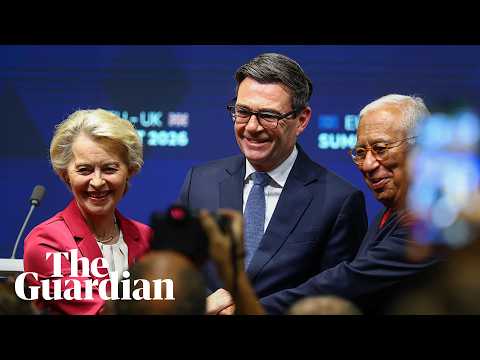
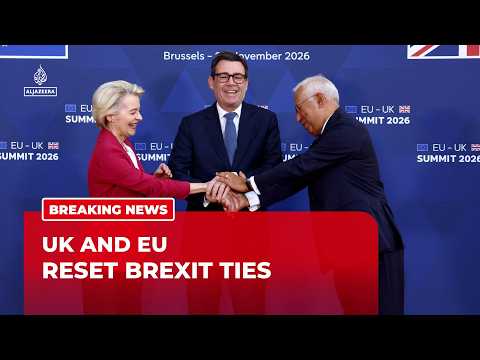
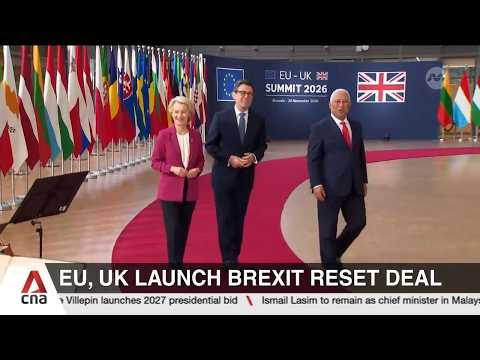
British sausages, burgers and seed potatoes have been shut out of EU shops since 2021. A deal sealed in Brussels on 20 November 2026 reopens that market, but not until March 2028, and a separate fight over university tuition fees could still hold it up.

The second EU-UK summit concluded three agreements: a common food-safety area, a link between the two carbon markets, and a youth mobility scheme for 100,000 people each way per year. A fourth file, tuition fees for EU students at British universities, was deferred for six months. EU documents say Brussels could hold up the other three if those talks fail; UK officials say the issues are separate.

Why it matters

British exporters get cheaper food and carbon-border trade; 100,000 young people a year gain three-year residence rights, if ratification holds.

Questions about this story

Free account needed to ask — your question is kept and asked for you right after sign-up. Answers are public.

No questions yet — be the first to ask.

Key Indicators

0.5%
Projected GDP gain by 2040
UK government estimate of the combined effect of the three agreements.
£17bn
Annual economic gain by 2040
Downing Street's cash equivalent of the 0.5% GDP figure.
100,000
Young people per direction per year
Cap under the Youth Experience Scheme for ages 18 to 31, staying up to three years.
32.5%
Fall in UK agrifood exports to the EU since 2019
The decline the food-safety agreement is meant to reverse.
£6.5bn
UK exports exposed to EU carbon border levy
Goods that would face the EU's carbon border adjustment without a linked market.
£9,790
UK domestic tuition fee cap
The rate Brussels wants for EU students; international rates can be four or five times higher.

Voices

Curated perspectives — historical figures and your fellow readers.

Sign up to generate historical perspectives on this story.

People Involved

Organizations Involved

Timeline

June 2016 November 2026

7 events Latest: Today
Tap a bar to jump to that date
  1. Brussels summit seals three agreements

    Today Summit

    Food safety, linked carbon markets and youth mobility concluded; food-safety terms to apply from March 2028, carbon link targeted for January 2028.

  2. Tuition fees deferred six months

    Today Negotiation

    EU agreed to postpone the fee question; its separate statement leaves implementation exposed to those talks.

  3. EU and UK agree 100,000-a-year youth mobility cap

    Negotiation

    Ages 18 to 31, stays of up to three years, in each direction.

  4. Windsor Framework replaces Northern Ireland Protocol

    Agreement

    Created a customs border in the Irish Sea, with Northern Ireland following EU goods rules.

  5. Trade and Cooperation Agreement struck

    Agreement

    A bare-bones deal kept goods tariff-free but added customs checks and left food safety, carbon and mobility untouched.

  6. Britain votes to leave the EU

    Referendum

    51.9% backed Leave, setting up the withdrawal negotiations that followed.

Scenarios

1

Three deals enter force on the published timetable

Likely Resolves by Mar 1, 2028

Discussed by: UK government joint statement and explainer; Al Jazeera; Irish Times

Both sides complete their domestic legal processes, the common food-safety area applies from 1 March 2028, and the carbon-market link goes live by 1 January 2028. Export health certificates and plant health certificates disappear for most GB-to-EU food shipments, and British sausages, burgers and seed potatoes return to EU shelves.

2

Tuition fee agreement concluded within six months

Uncertain Resolves by May 20, 2027

Discussed by: European Council joint statement; POLITICO; The Guardian

Negotiators agree a supplementing agreement to the Trade and Cooperation Agreement within six months of the summit, covering fees for EU students in the UK and UK students in the EU. If it lands, the implementation link described in the EU Council statement becomes moot and the package proceeds on schedule.

3

Fees dispute drags and the package slips

Possible Resolves by Mar 1, 2028

Discussed by: EU officials quoted by The Guardian and POLITICO; UK officials dispute the linkage

Talks over whether EU students pay the £9,790 domestic cap run past the six-month mark. Member states use the Council statement's language to delay their internal processes, and the March 2028 start date passes without the food-safety area operating. UK officials insist the files are separate, which becomes the central argument.

Historical Context

3 moments from history that rhyme with this story — and how they unfolded.

1994

Norway and the European Economic Area (1994)

Norway rejected EU membership in a 1994 referendum but joined the European Economic Area, which extends the single market to non-members. In exchange, Norway applies EU rules on goods, services and competition, pays into the EU budget, and has no vote on the rules it adopts.

Then

Norwegian exporters gained full market access, notably for fish and energy.

Now

The arrangement became the standard reference for rule-taker membership: influence without a vote.

Why this matters now

The new food-safety area works the same way. UK officials will be invited to advise on EU food legislation but will not vote on it.

2017-2019

The Irish border deadlock (2017-2019)

Britain's withdrawal agreement with the EU stalled for two years over one unresolved question: how to keep the Irish border open without a hard customs line. The deadlock sank Theresa May's deal in three Commons votes and delayed Brexit twice.

Then

Boris Johnson's government reopened the text and replaced the backstop with a customs border in the Irish Sea.

Now

It set the pattern for the current relationship: Northern Ireland follows EU goods rules while Great Britain does not.

Why this matters now

The tuition-fee standoff follows the same script: one narrow file that Brussels can use as leverage over a wider package.

December 2020

The Trade and Cooperation Agreement (December 2020)

After nine months of talks, the UK and EU agreed a bare-bones trade deal on Christmas Eve, days before the transition period expired. It kept goods tariff-free but imposed customs paperwork and left food safety, carbon markets and mobility out entirely.

Then

Trade continued, but UK agrifood exports to the EU fell 32.5% from 2019 levels, according to the UK government.

Now

The gaps became the agenda for the reset talks five years later.

Why this matters now

The three 2026 agreements fill exactly the holes the 2020 deal left open.

Sources

(10)