Ukraine started the war with 38 GW of power generation capacity; 28 months of Russian strikes cut that to 11 GW. Winter demand hit 18 GW on January 15, 2026. Energy Minister Denys Shmyhal told parliament on January 16 that 'not a single power plant left in Ukraine' has escaped Russian attack.
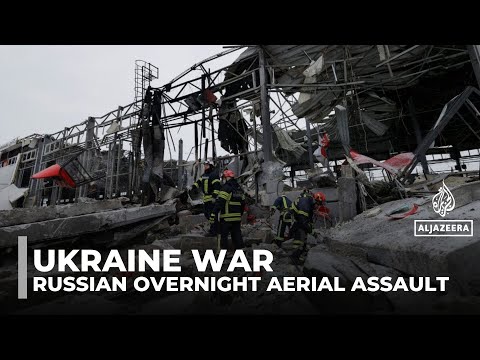
Temperatures hit -19°C in Kyiv in mid-January; by January 14, 471 apartment buildings had no heat. On January 24, Russia fired 396 drones and missiles during peace talks in Abu Dhabi between Russian, Ukrainian, and U.S. envoys, showing Russia's strategy of weaponizing winter infrastructure attacks. The attack put 80% of Ukraine on emergency power cuts, knocked out heating to half of Kyiv's apartment buildings, and left more than 800,000 Kyiv households without power the following day.
President Zelenskyy declared a state of emergency on January 14 — the first time since Russia's full-scale invasion that he publicly clashed with Kyiv Mayor Klitschko, whom he criticized for insufficient preparation. The government appointed Shmyhal as energy minister that day, ordered Ukrzaliznytsia and Naftogaz to import at least 50% of their electricity, and deployed more than 15,000 specialists working 24/7 on grid restoration. Whether Ukraine's grid survives depends on Russia's attack pace versus its dwindling air defense reserves and the 2,450 MW import ceiling from Europe.
Questions about this story
Free account needed to ask — your question is kept and asked for you right after sign-up. Answers are public.
No questions yet — be the first to ask.
Key Indicators
11 GW
Available generating capacity
Down from 14 GW on Jan 14 and 38 GW before the war; demand reached 18 GW on Jan 15
80%
Of Ukraine facing emergency power cuts
Following January 24 attack with 396 drones and missiles; 800,000+ Kyiv households still without power Jan 25
-10°C to -20°C
Kyiv temperatures in late January
Freezing conditions persist through late January with severe frost
2,450 MW
EU import capacity ceiling
Increased from 2,150 MW in December 2025; state companies ordered to import 50%
15,000+
Specialists working 24/7 on grid
Emergency crews deployed for restoration work as of January 16
20 events
Latest: January 24th, 2026 · 9 months ago
Showing 8 of 20
JK to step
Tap a bar to jump to that date
Jump to
January 2026
Massive 396-Weapon Attack Leaves 80% of Ukraine Without Power
LatestAttack
Russia launched 396 drones and missiles targeting energy infrastructure in Kyiv, Kharkiv, and Chernihiv. At least one killed, over 20 injured. 80% of Ukraine faced emergency power cuts; half of Kyiv's apartment buildings lost heating. Over 800,000 Kyiv households still without power the following day. Attack occurred during peace negotiations in Abu Dhabi.
Zelenskyy Demands Faster Energy Imports as Crisis Deepens
Response
President Zelenskyy ordered acceleration of electricity imports and equipment provision from partners. He reviewed midnight curfew to allow unlimited access to 'invincibility points' providing power and heat.
Government Orders State Companies to Import 50% of Electricity
Response
Prime Minister Svyrydenko announced that state giants Ukrzaliznytsia, Naftogaz, and Ukroboronprom must import at least half their electricity consumption to free domestic capacity for civilians. Energy Minister Shmyhal reported 15,000+ specialists working 24/7 on grid restoration.
Capacity Falls to 11 GW as Demand Hits 18 GW
Assessment
President Zelenskyy announced Ukraine's power system capacity had fallen to 11 GW while demand reached 18 GW, leaving the country unable to meet 39% of electricity needs. Shmyhal told parliament 'not a single power plant' has escaped Russian strikes.
Heating Restored to Most of Kyiv
Response
Power supply restored to all Kyiv residential buildings by morning of January 16, though 100 apartment buildings remained without heating—down from 471 on January 14. Emergency crews deployed 24 high-capacity generators and opened 1,300+ warming centers.
State of Emergency Declared
Political
Zelenskyy declared a state of emergency for the energy sector, establishing a 24-hour coordination headquarters. Government ordered maximum deregulation for backup equipment connections.
Zelenskyy-Klitschko Public Clash Over Crisis Response
Political
Zelenskyy criticized Kyiv for doing 'significantly less' than other cities like Kharkiv in preparing for energy attacks. Mayor Klitschko fired back, revealing the two leaders haven't met in four years and defending his teams' 'selfless work.'
Shmyhal Appointed Energy Minister
Political
Parliament approved former PM Denys Shmyhal as energy minister and first deputy PM with 248 votes, ending a two-month vacancy.
Second Major Attack in Four Days
Attack
Russia launched nearly 300 drones, 18 ballistic missiles, and 7 cruise missiles at eight regions. Four killed at a mail depot in Kharkiv. Oreshnik missile used for second time.
Klitschko Urges Kyiv Residents to Leave
Statement
Mayor Klitschko took the unprecedented step of telling residents to leave the city if possible due to the heating crisis. 70% of Kyiv was without electricity.
Devastating Attack on Kyiv
Attack
Russia launched 18 ballistic missiles, 7 cruise missiles, and 293 drones. Half of Kyiv's 6,000 apartment buildings lost heating. Four killed in the capital, including a paramedic in a double-tap strike.
2026
EU Import Capacity Increases to 2,450 MW
Response
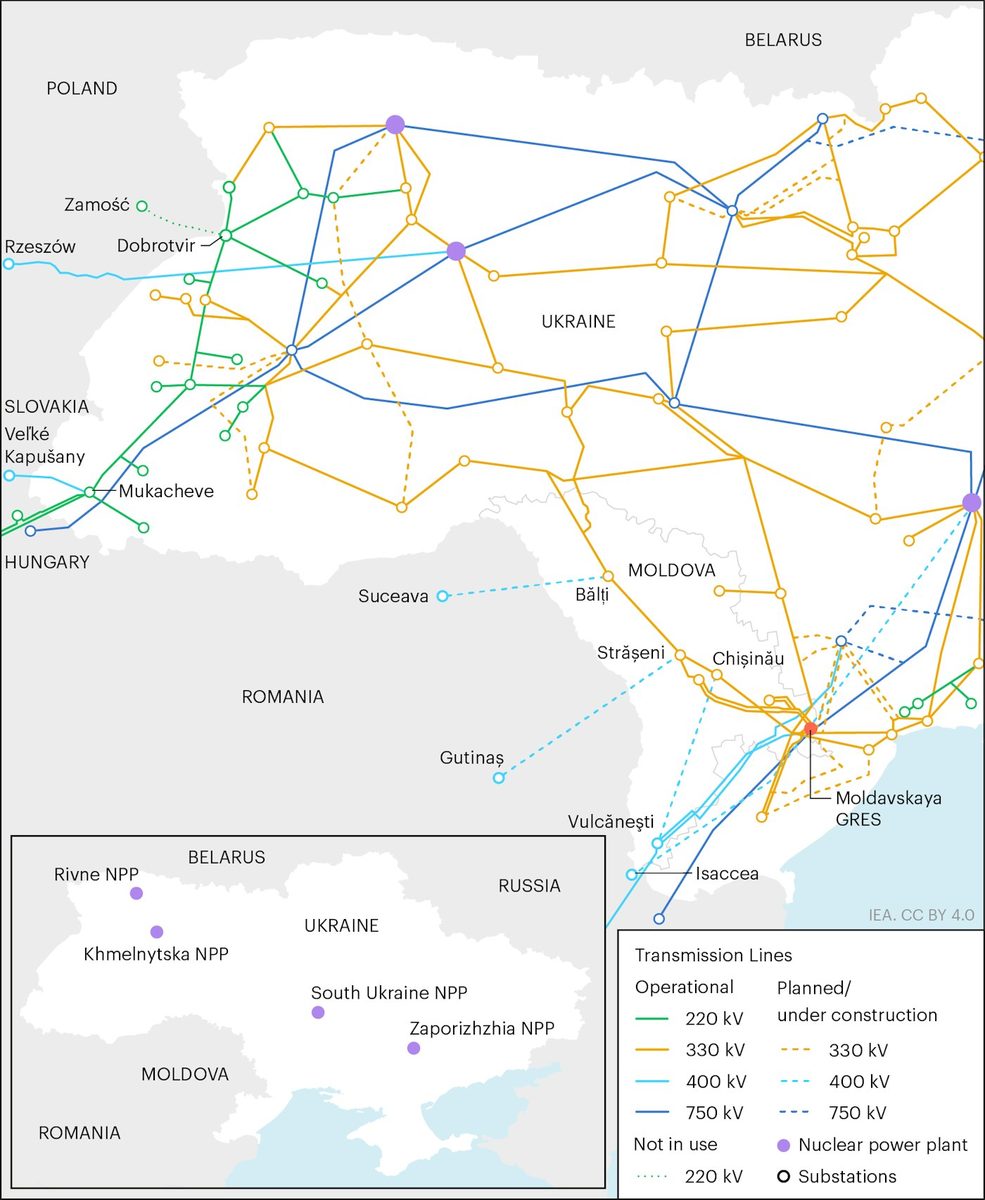
European transmission operators approved a 300 MW increase in import capacity to Ukraine-Moldova, reaching 2,450 MW.
December 2025
Christmas Attack Hits 40% of Kyiv Heating
Attack
Major strikes on December 25 and 27 left over 40% of Kyiv residential buildings without heating. Average power outages reached 9.5 hours per day in December.
Grid Collapse Warning Issued
Assessment
Ukrenergo CEO warned that total grid collapse was possible. ISW reported Russia was close to splitting Ukraine's grid east-west.
October 2025
Gas Infrastructure Targeted
Attack
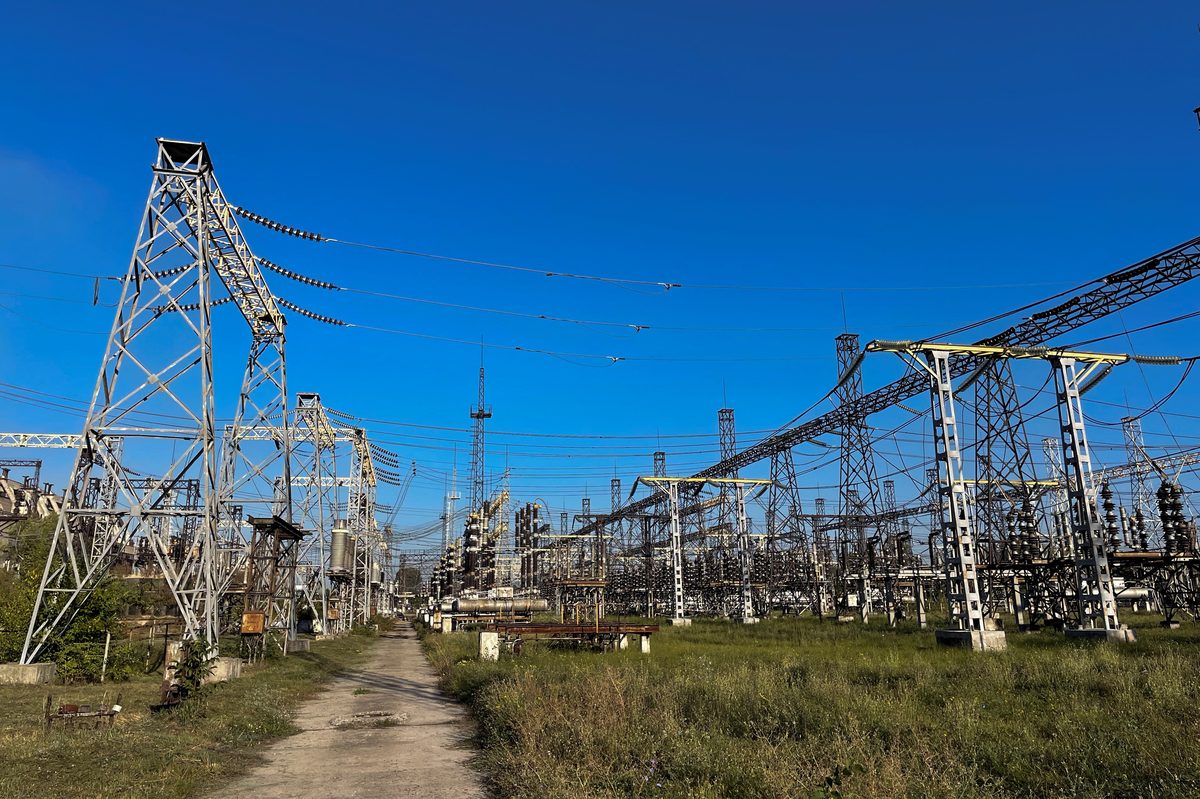
Russia's largest attack on Ukraine's gas infrastructure since 2022 knocked 60% of gas production offline, hitting facilities in Kharkiv and Poltava regions.
August 2024
Largest Attack Triggers First Unscheduled Blackout Since 2022
Attack
A major Russian assault left 8 million households without power and caused Kyiv's first unscheduled blackout since November 2022.
April 2024
Trypilska Plant Destroyed
Attack
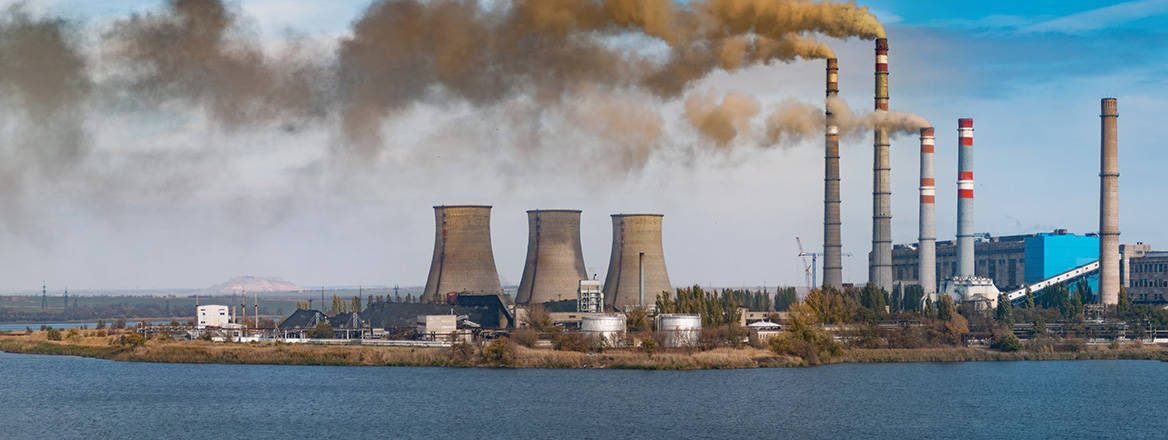
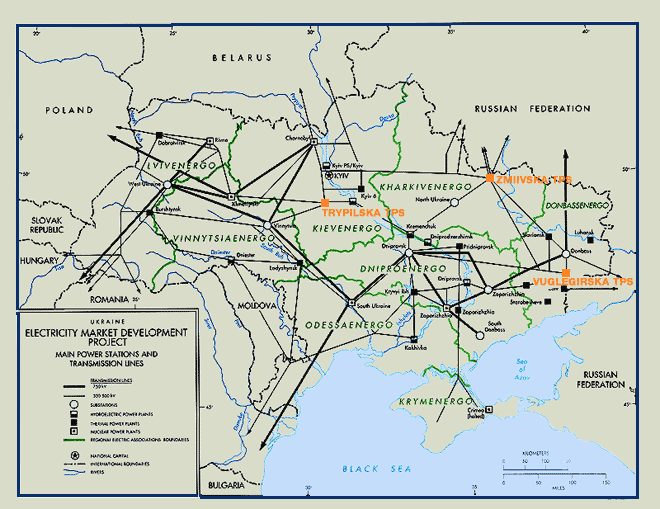
Russian strikes destroyed the Trypilska thermal power plant in Kyiv Oblast. Between March and May, Ukraine lost approximately 9 GW of generation capacity.
March 2024
Spring 2024 Campaign Begins
Attack
Russia resumed large-scale attacks on the power system, ultimately conducting 13 major strikes by year's end—more than 2022 and 2023 combined.
November 2022
Half of Ukraine's Grid Disabled
Impact
Nearly half of Ukraine's power grid went offline, leaving 10 million people without electricity. First major winter crisis of the energy war.
October 2022
Russia Launches First Mass Grid Attack
Attack
Russia struck power infrastructure across Ukraine with 84 cruise missiles and 24 drones, beginning the systematic campaign against civilian energy. By mid-December 2022, over 1,000 missiles and drones had hit the grid.
Scenarios
1
Grid Holds Through Winter, Crisis Recedes by Spring
Possible
Discussed by: Ukrenergo officials, Ukrainian energy ministry, DiXi Group analysts
If Russia cannot significantly escalate its attack rate—and analysts like Oleksandr Kharchenko argue it has already maximized its trajectory—Ukraine's combination of fortified substations, European imports, and distributed generators may keep the grid intact through the coldest weeks. Prime Minister Svyrydenko has suggested power cuts could improve by late January if no new major attacks occur. This scenario assumes air defense supplies remain adequate and European import capacity continues increasing.
2
Grid Splits East-West, Rolling Regional Blackouts
Possible
Discussed by: Institute for the Study of War, Washington Post, Semafor
ISW has warned Russia's campaign is close to severing Ukraine's grid along an east-west axis, which would leave eastern regions 'at the brink' of blackout and stress Kyiv's connection to western generators and nuclear plants. If key transmission substations fall, regions could face days-long outages rather than hours. This would force prioritization of heating infrastructure over industry, accelerating economic damage.
3
Total Grid Collapse Forces Mass Urban Evacuation
Unlikely
Discussed by: Ukrenergo CEO Vitaliy Zaichenko, energy security analysts
Ukrenergo's CEO has acknowledged total collapse into 'prolonged, nationwide blackouts' is possible if bombardment continues and air defense missiles run low. In this scenario, heating systems freeze, water treatment fails, and hospitals lose backup power. Klitschko's call for residents to leave Kyiv could scale nationwide. The UN has prepared a $2.31 billion humanitarian appeal for 2026 that assumes this level of displacement is possible.
4
Ceasefire Halts Attacks Before Spring, Reconstruction Begins
Uncertain
Discussed by: GLOBSEC, Russia Matters, superforecasters surveyed by UnHerd
If peace negotiations produce a ceasefire in early 2026—a possibility given Trump administration engagement and Russian economic pressures—the energy war would halt before further destruction. This would allow the $68 billion energy reconstruction effort to begin in earnest. However, analysts at King's College London note 'none of the conditions for a final resolution' are currently in place, making this scenario dependent on rapid diplomatic change.
Historical Context
3 moments from history that rhyme with this story — and how they unfolded.
1 of 3
March-June 1999
NATO Bombing of Serbia (1999)
During the Kosovo War, NATO attacked Serbia's power grid using 'soft bombs' that sprayed graphite on switching equipment, knocking out 70% of electricity for up to eight hours at a time. Power stations at Drmno, Kostolaca, Bajina Basta, Obrenovac, and Novi Sad were hit, affecting millions from the Hungarian border to Nis. Belgrade's water system, dependent on electric pumps, also failed.
Then
Serbia's government remained defiant for 78 days before agreeing to withdraw from Kosovo. Infrastructure attacks generated international criticism but NATO defended them as targeting the 'Yugoslav war machine.'
Now
The campaign demonstrated that grid attacks can pressure governments without invasion, but also showed limits—Milosevic capitulated only when ground invasion seemed imminent. Serbia's lasting distrust of NATO dates to these strikes.
Why this matters now
The Serbia campaign lasted 78 days; Russia's Ukraine energy campaign has lasted 28 months. Both show that grid attacks cause civilian suffering but don't guarantee capitulation. The key difference: Ukraine has European grid integration as a backup, which Serbia lacked.
2 of 3
September 1941-January 1944
Siege of Leningrad (1941-1944)
German forces surrounded Leningrad for 872 days, destroying utilities, water, energy and food supplies rather than attempting to capture the city. The siege killed an estimated 1.5 million people—mostly from starvation during the winter of 1941-42—from a prewar population of 3.2 million. It remains the deadliest siege in recorded history.
Then
The city held despite catastrophic civilian losses. The 'Road of Life' across frozen Lake Ladoga provided minimal supplies during winter months.
Now
Post-war, some historians classified the siege as genocide. It became central to Soviet and Russian national memory, making its invocation in the current conflict historically charged.
Why this matters now
Russia's energy campaign against Ukraine has drawn explicit comparisons to siege warfare—using infrastructure denial to pressure civilian populations through winter. Unlike Leningrad, Ukraine has external supply lines through European electricity imports and humanitarian aid, but the strategic logic is similar.
3 of 3
July 2012-December 2016
Battle of Aleppo (2012-2016)
Syrian government forces surrounded rebel-held eastern Aleppo, cutting electricity, water, and food supplies to 250,000 civilians. The UN estimated nearly 100,000 children lived under siege conditions. Hospitals were repeatedly bombed. In December 2016, UN Secretary-General Ban Ki-moon declared 'Aleppo is now a synonym for hell.'
Then
The siege ended with rebel evacuation in December 2016. Amnesty International documented the blockade as crimes against humanity.
Now
The siege tactics became a template for urban warfare through infrastructure denial. The Assad government retained power with Russian military support.
Why this matters now
Aleppo demonstrated how infrastructure denial can break urban resistance over years. Unlike Syria, Ukraine receives substantial Western military and humanitarian support, but the tactic of weaponizing winter through utility destruction follows the same playbook.