

Pull to refresh
Logo
Fanged camel named from a century-old museum collection

Fanged camel named from a century-old museum collection

New Capabilities

Vampyrocamelus welshi, a giraffe-like Miocene camel with bladed canines, gets a formal name in the first broad survey of North American camelids in over a century

Overview

Updated 2 hours ago

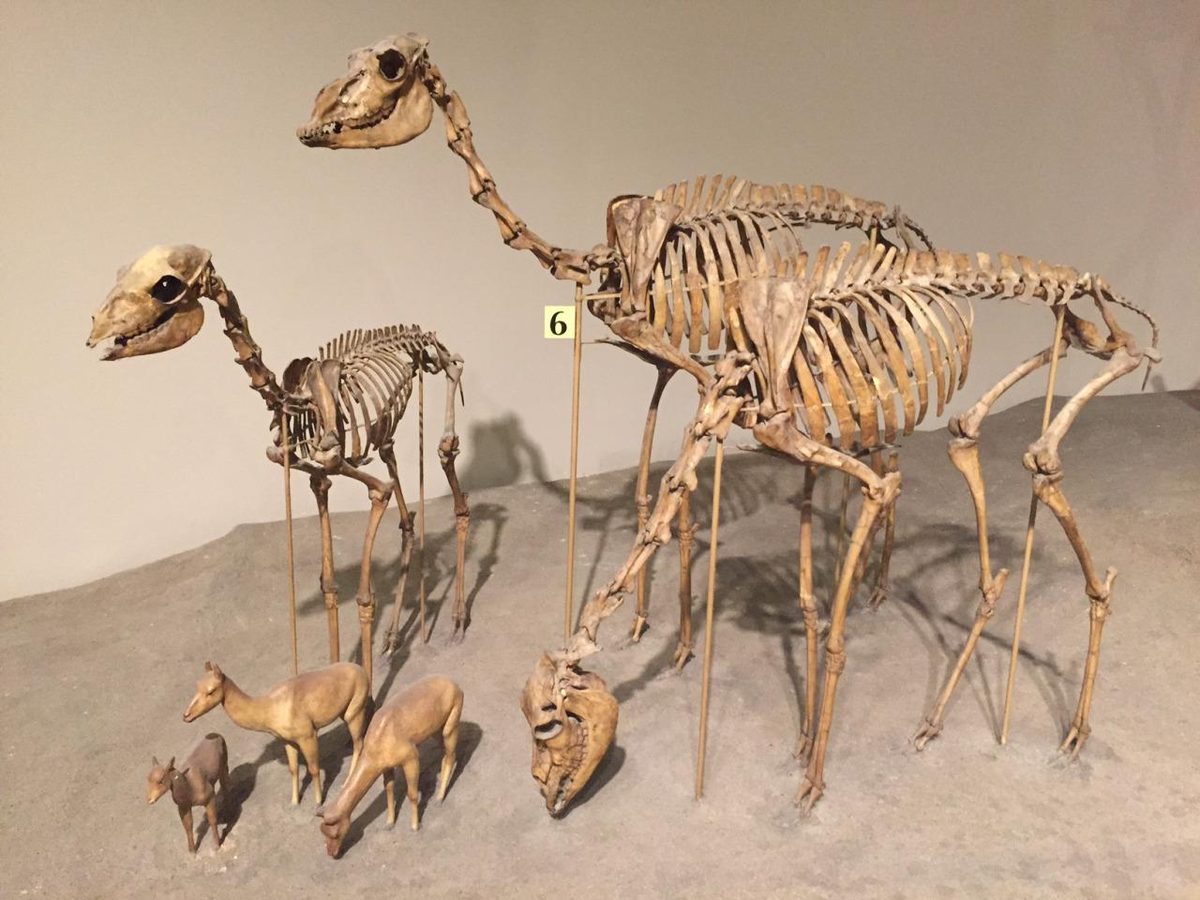
For decades, cabinets at the American Museum of Natural History held camel skulls labeled with a name nobody had ever formally published: "Machairocamelus," the knife camel. A monograph uploaded in November 2026 gave the animal a real name, Vampyrocamelus welshi, and a place in an extinct lineage of long-necked, lanky camels.

The description is part of the first comprehensive survey of North American camels in more than a century, drawn from a collection of roughly 200,000 mammal fossils. It shows that the continent where camels first evolved, about 46 million years ago, hosted a far wider range of forms than the handful of species alive today.

Why it matters

Every camel alive today descends from animals that evolved in North America and then vanished from it. This collection explains how they diversified first.

Questions about this story

Free account needed to ask — your question is kept and asked for you right after sign-up. Answers are public.

No questions yet — be the first to ask.

Key Indicators

200,000
Fossils in the Frick collection
The mammal fossil collection assembled by Childs Frick and moved to the American Museum of Natural History in the 1970s.
20,000
Camel specimens on one storage floor
Paleontologist Donald Prothero's estimate of camel fossils held on a single floor of the museum's storage.
5 cm
Length of each upper canine in males
Curved, knifelike front teeth found in male skulls; females lack them.
13 million years
Age of the Texas fossil beds
The Clarendon beds of Texas and Oklahoma, where most Vampyrocamelus skulls have been found.

Voices

Curated perspectives — historical figures and your fellow readers.

Sign up to generate historical perspectives on this story.

People Involved

Organizations Involved

Timeline

1900s November 2026

5 events Latest: Today
Tap a bar to jump to that date
  1. Science reports the find

    Today Media

    Science magazine describes the new genus and the museum collection behind it.

  2. Monograph names Vampyrocamelus welshi

    Research

    Marriott and colleagues publish a large-scale revision of North American camelids, formally naming the fanged camel.

  3. Prothero begins work on the camels

    Research

    Donald Prothero starts studying the Frick camel collection, a project that runs for four decades.

  4. Frick collection moves to New York

    Institution

    More than 200,000 mammal fossils move from Long Island's Roslyn Harbor to the American Museum of Natural History.

  5. Frick starts collecting mammal fossils

    Collection

    Childs Frick funds field crews that gather tens of thousands of mammal fossils, including camels later labeled "Machairocamelus."

Scenarios

1

Tooth-wear study pins down what the fangs were for

Possible Resolves by Q2 2029

Discussed by: Kristin Watmore, University of Southern California

Watmore noted that microscopic wear patterns on the canine enamel could show whether the blades were used in combat, for display, or for feeding. No such data exist yet. A microwear analysis of the Texas skulls would test the mate-competition explanation that Marriott favors.

2

Aepycamelus bones reclassified as Vampyrocamelus

Possible Resolves by End of 2030

Discussed by: The monograph's authors

The two genera are hard to tell apart beyond their teeth, and the monograph notes that many postcranial fossils assigned to the giraffe camel Aepycamelus may actually belong to Vampyrocamelus. Confirming that would require re-examining limb and body fossils in the same collection.

3

The revision names more new camels from the same drawers

Possible Resolves by End of 2030

Discussed by: Donald Prothero

Prothero says no one had done a comprehensive study of North American camels in over a century, and the monograph is a large-scale revision of the group. If one undescribed genus was sitting in the Frick cabinets, others may be too.

Historical Context

3 moments from history that rhyme with this story — and how they unfolded.

Pleistocene

Camels vanish from North America (about 13,000 years ago)

Camels evolved in North America roughly 46 million years ago and spread to Asia and South America. The last North American genus, Camelops, disappeared around 13,000 years ago, while descendants survived as llamas, alpacas and the Old World camels.

Then

North America lost its entire camel lineage within a few thousand years.

Now

The family persisted only on other continents, which is why camels today read as African or Asian animals rather than American ones.

Why this matters now

Explains why a North American camel discovery is surprising: the continent is where the family started, and where it died out.

1900s-1970s

The Frick collection (early 1900s to 1970s)

Millionaire paleontologist Childs Frick funded decades of fossil collecting, amassing more than 200,000 mammal specimens. His crews never formally named most of the camel material, though some cabinets carried the unpublished label "Machairocamelus."

Then

The collection sat largely unstudied for decades after arriving at the American Museum of Natural History.

Now

It became the main source of North American camel fossils, and the basis for the 2026 revision.

Why this matters now

The new genus was not found in the field. It was identified in museum storage, from fossils collected generations ago.

Pliocene

The Great American Interchange (about 3 million years ago)

A land bridge formed at the Isthmus of Panama, connecting North and South America. Armadillos and giant sloths moved north; the ancestors of jaguars, maned wolves and llamas moved south.

Then

Camelids crossed into South America and diversified there.

Now

South America kept llamas, vicuñas, alpacas and guanacos long after North America's camels were gone.

Why this matters now

Shows how a North American lineage ended up surviving elsewhere, which is why the fossil record here matters beyond the continent.

Sources

(6)