
Pull to refresh
Logo
Five new horned frog species found in Arunachal Pradesh

Five new horned frog species found in Arunachal Pradesh

New Capabilities

A five-year survey of the eastern Himalayas more than doubled the known species in the genus Jingophrys, including the first snail-eating frog recorded in its family

Overview

Updated 34 minutes ago

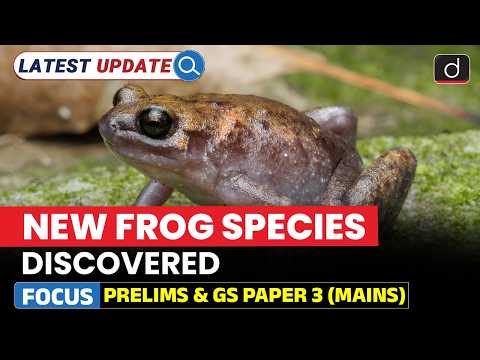
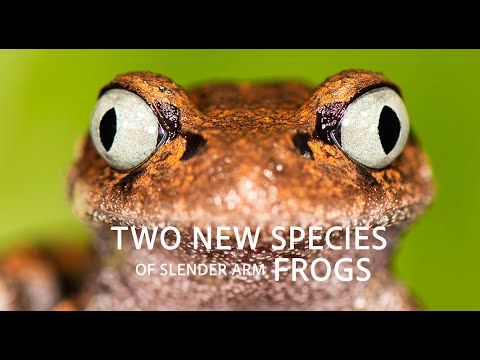
Biologists working in the eastern Himalayas have described five new species of tiny horned frogs, all from river valleys in Arunachal Pradesh. The study, published 11 November in Royal Society Open Science, more than doubles the known species count in the genus Jingophrys and raises India's total for the group from one to eight.

One of the five, Jingophrys tanogogo, eats snails. It is the first frog recorded doing so in India and the first in its family, Megophryidae, recorded with that diet anywhere. The DNA work also points to the Himalayas as a place where frog lineages split into new species on their own, not only a place species wandered into from elsewhere.

Why it matters

A snail-eating frog was living in a valley no biologist had surveyed. The region's species count is still a running estimate.

Questions about this story

Free account needed to ask — your question is kept and asked for you right after sign-up. Answers are public.

No questions yet — be the first to ask.

Key Indicators

5
New frog species described
All five belong to the genus Jingophrys and were found in Arunachal Pradesh.
8
Jingophrys species now known from India
Up from one before the study, a seven-fold increase.
4
Closely related species within a 10 km radius
The study found up to four congeners living within 10 kilometres of each other.
15.9 million years
Estimated age of the Jingophrys lineage
The genus's common ancestor likely crossed from Indo-Burma into the Himalayas around then.
11.3 to 4.1 million years ago
Window of rapid species splitting
Diversification overlapped with the strengthening South Asian monsoon.

Voices

Curated perspectives — historical figures and your fellow readers.

Sign up to generate historical perspectives on this story.

People Involved

Organizations Involved

Timeline

2 events Latest: Today
  1. Findings reported publicly by BBC News

    Today Media report

    BBC News reports the discovery, including the species named for the Tanii tribe and the local Apatani word for frog.

  2. Study names five new horned frog species

    Scientific publication

    Royal Society Open Science publishes the Jingophrys revision, adding five species and reporting snail-eating for the first time in the family.

Scenarios

1

At least one new species gets an IUCN Red List assessment

Possible Resolves by Q2 2029

Discussed by: The study authors, who say more work is needed on the species' biology and conservation needs

A formal extinction-risk category requires population and range data the paper does not yet provide. If researchers or a range-state authority submit an assessment, one of the five names would appear in the IUCN Red List database. Without that submission, the species stay formally unassessed regardless of how threatened they are.

2

Further surveys describe additional Jingophrys species

Likely Resolves by Nov 11, 2029

Discussed by: The paper's authors, who report unnamed lineages already identified and flag understudied areas between their survey sites

The study already recognises additional unnamed lineages that were not formally described. More fieldwork in the intervening river basins, particularly in Arunachal Pradesh, would produce another peer-reviewed description. The five rivers running north to south appear to separate populations, which predicts more distinct species in unsurveyed valleys.

3

Arunachal Pradesh adds formal protection in the Subansiri basin

Unlikely Resolves by Nov 11, 2030

Discussed by: No official proposal is on record; the scenario tests whether the discovery translates into habitat policy

Four of the five new species come from the Tale and Ziro valleys in the Subansiri River basin, an area with no protected status named in the study. A new protected area or a state wildlife notification covering those valleys would follow the pattern of discovery-driven conservation. The study itself makes no policy recommendation, so this depends on state action rather than the paper.

Historical Context

2 moments from history that rhyme with this story — and how they unfolded.

23 to 4 million years ago

Himalayan uplift and the strengthening monsoon (Miocene)

The collision of India with Eurasia pushed up the Himalayas and reshaped the river systems draining them. Around 10 million years ago the South Asian monsoon intensified, creating wet and dry seasons across terrain that already ranged from tropical valley to alpine slope.

Then

New ecological niches appeared along elevation gradients and between river valleys.

Now

The paper dates Jingophrys's rapid species splitting to roughly 11.3 to 4.1 million years ago, overlapping this period.

Why this matters now

It explains why so many similar frogs can live within a few kilometres of each other: the mountains and rivers kept dividing populations.

May 1992

Saola discovery in Vu Quang, Vietnam (1992)

A survey in Vu Quang Nature Reserve found remains of a large horned mammal unknown to science, later named the saola. It was the first new large mammal genus described in more than 50 years.

Then

The find drew international attention to Vietnam's Annamite mountains as an unexplored biodiversity hotspot.

Now

The saola became critically endangered and is rarely seen; the habitat that hid it turned out to be under heavy hunting pressure.

Why this matters now

A parallel for what a single survey in an under-studied Asian mountain range can turn up, and for how quickly a discovery becomes a conservation problem.

Sources

(3)