


Pull to refresh
Logo
Sudan's army detains ICC-wanted Ahmed Haroun after years in hiding

Sudan's army detains ICC-wanted Ahmed Haroun after years in hiding

Force in Play

The former Bashir security official was picked up a day after his first filmed interview in seven years

Overview

Updated 1 hour ago

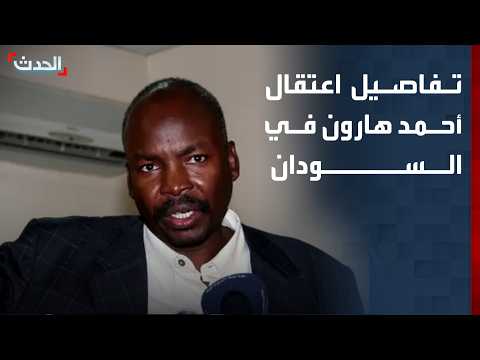
Ahmed Haroun has been a wanted man since 2007, when the International Criminal Court issued a warrant for his role in the Darfur campaign. On Sunday, Sudanese soldiers took him from his home in Omdurman, one day after he gave his first filmed interview in seven years.

The arrest puts the army in a bind. It has leaned on Islamist networks, including Haroun's, in its war against the Rapid Support Forces. Now it holds a man the court wants, and has to decide whether to hand him over or keep the case at home.

Why it matters

Whether Sudan sends Haroun to The Hague shows if ICC warrants can reach a wartime ally of the army, or only its enemies.

Questions about this story

Free account needed to ask — your question is kept and asked for you right after sign-up. Answers are public.

No questions yet — be the first to ask.

Key Indicators

42
Charges in the 2007 ICC warrant
20 counts of crimes against humanity and 22 counts of war crimes over Darfur in 2003 and 2004.
$5M
US reward offered in 2024
For information leading to his arrest.
1 day
Gap between podcast and detention
He appeared on Sudan Podcast on Saturday and was detained on Sunday.

Voices

Curated perspectives — historical figures and your fellow readers.

Sign up to generate historical perspectives on this story.

People Involved

Organizations Involved

Timeline

April 2007 November 2026

8 events Latest: Today
Tap a bar to jump to that date
  1. Haroun gives first filmed interview in years

    Politics

    On Sudan Podcast he backs the army and says his party is united with it against the Rapid Support Forces.

  2. Haroun becomes NCP chairman

    Politics

    He returns to politics as head of Bashir's former ruling party.

  3. US posts $5 million reward

    Diplomacy

    Washington offers the money for information leading to his arrest.

Scenarios

1

Sudan hands Haroun to The Hague

Unlikely Resolves by Q2 2028

Discussed by: ICC prosecutors, who say the case stays at the preliminary stage until he is transferred

A transfer means the army gives up a man whose Islamist network it has used in the war. Sudan has never voluntarily sent a Darfur suspect to the court; the only Darfur convict there, Ali Kushayb, surrendered himself.

2

Sudan tries Haroun at home and never sends him abroad

Possible Resolves by End of 2027

Discussed by: A Sudanese security official quoted by Agence France-Presse, who said Haroun was held under legal procedures

Keeping the case in Sudanese courts lets the army answer pressure without handing a former ally to a foreign tribunal. Sudan's justice system has stalled Darfur cases before.

3

Haroun is freed again without facing a court

Unlikely Resolves by Q2 2027

Discussed by: NRC, which notes it is unclear whether the arrest leads to any transfer

He walked out of Kober prison in 2023 as the war began. A shift in army control or a political bargain could open the same door again.

Historical Context

2 moments from history that rhyme with this story — and how they unfolded.

2020-2025

Ali Kushayb at the ICC (2020-2025)

The Janjaweed commander wanted for the same Darfur campaign surrendered in the Central African Republic in 2020. He became the first Darfur suspect in ICC custody and was convicted in 2025 of war crimes and crimes against humanity.

Then

He was sentenced to 20 years, the court's first Darfur conviction.

Now

The case showed the ICC can convict Darfur suspects, but only once a suspect is physically handed over.

Why this matters now

Haroun's fate turns on the same political decision Kushayb's did: whether whoever holds him is willing to send him abroad.

2006-2012

Charles Taylor at The Hague (2006-2012)

Liberia's former president was handed to the Special Court for Sierra Leone, which tried him at The Hague on charges tied to Sierra Leone's civil war.

Then

He was convicted in 2012 of aiding and abetting war crimes and crimes against humanity and sentenced to 50 years.

Now

The trial established that a former head of state can be tried internationally once his political protection collapses.

Why this matters now

It shows how international tribunals reach senior figures: not through warrants alone, but through the decision of whoever controls their custody.

Sources

(8)