
Pull to refresh
Logo
Daily Brief
Following
Why Ranks Sign Up
ICC investigates RSF leaders over Darfur atrocities

ICC investigates RSF leaders over Darfur atrocities

Rule Changes

Prosecutors say they now have direct evidence linking Sudan's Rapid Support Forces command to the el-Fasher and el-Geneina killings

Today: ICC reports evidence 'breakthrough'

Overview

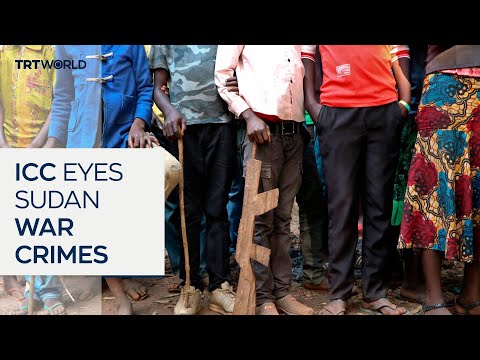
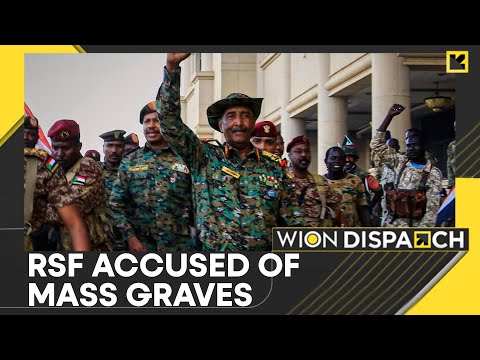
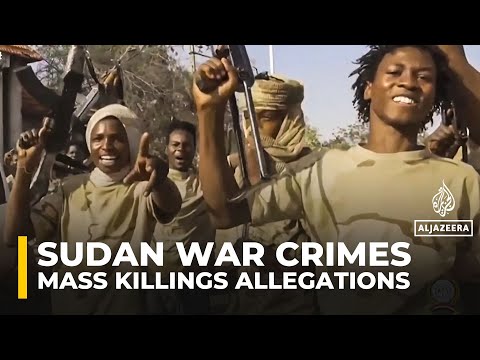
In October 2025, Sudan's Rapid Support Forces captured el-Fasher, the last army-held city in Darfur. The United Nations says the paramilitary killed more than 6,000 people there in three days.

On July 9, 2026, the International Criminal Court said it now has 'concrete' evidence tying the group's top commanders to those killings. That pushes a 21-year-old investigation past field reports and toward named suspects and possible arrest warrants.

Why it matters

It tests whether the world's permanent war-crimes court can reach the leaders of a paramilitary that still controls most of Darfur.

Questions about this story

No questions yet — be the first to ask.

Key Indicators

6,000+
Killed in el-Fasher
UN estimate for the three days after the RSF took the city in October 2025.
~15,000
Killed in el-Geneina, 2023
A UN panel's estimate of Masalit deaths in West Darfur early in the war.
1
ICC Darfur convictions so far
Militia commander Ali Kushayb, found guilty in October 2025 for crimes committed two decades ago.
21 years
Since the UN referred Darfur to the ICC
The Security Council handed the case to the court in March 2005.

Voices

Curated perspectives — historical figures and your fellow readers.

Ever wondered what historical figures would say about today's headlines?

Sign up to generate historical perspectives on this story.

Play

Exploring all sides of a story is often best achieved with Play.

Log in to play. Track your picks, climb the leaderboards. Log in Sign Up
Predict 4 ways this could play out. Contrarian picks score more — points lock when the scenario resolves. Log in to play
Higher or Lower Two numbers from this story. Guess which is bigger. 5 rounds to set a streak. Log in to play
Connections Sixteen names from the news. Find the four hidden groups of four. Log in to play

People Involved

Organizations Involved

Timeline

March 2005 July 2026

9 events Latest: Today
Tap a bar to jump to that date
  1. UN puts el-Fasher toll at 6,000

    Report

    A UN report details mass killings, sexual violence, and ethnic targeting during the RSF takeover.

  2. RSF takes el-Fasher

    Conflict

    The RSF captures Darfur's last army-held city. The UN later reports more than 6,000 killed in three days.

  3. US declares RSF genocide

    Statement

    The United States formally finds the RSF committed genocide in Darfur and sanctions Hemedti.

  4. Masalit killings in el-Geneina

    Conflict

    The RSF and allied militias kill up to 15,000 Masalit civilians in West Darfur, a UN panel later finds.

  5. Sudan's war begins

    Conflict

    Fighting breaks out between the army and the RSF, spreading quickly into Darfur.

Historical Context

3 moments from history that rhyme with this story — and how they unfolded.

March 2009

ICC charges Omar al-Bashir (2009)

The ICC issued an arrest warrant for Sudan's sitting president, Omar al-Bashir, over Darfur. It was the first time the court charged a serving head of state. A genocide count followed in 2010.

Then

Al-Bashir stayed in power and traveled abroad, with several countries refusing to arrest him.

Now

He was ousted in a 2019 coup and held in Sudan, but was never sent to The Hague. The warrant is still open.

Why this matters now

It shows the gap between an ICC charge and an actual arrest when the suspect's home state will not cooperate.

October 2025

Ali Kushayb conviction (2025)

After surrendering in 2020, former Janjaweed commander Ali Kushayb was convicted on 27 counts for the 2003-2004 Darfur campaign. It was the first conviction in the ICC's Darfur case.

Then

The verdict gave the court its first Darfur win and its first ruling on gender-based persecution.

Now

It proved the case can succeed, but only after two decades and a voluntary surrender.

Why this matters now

It sets the clock and the conditions for the new RSF evidence: results are possible, but they can take twenty years.

April 2012

Charles Taylor's conviction (2012)

The Special Court for Sierra Leone convicted former Liberian president Charles Taylor of aiding war crimes. He had fled and been given asylum before Nigeria handed him over in 2006.

Then

Taylor received a 50-year sentence, a first for a former head of state before an international court since Nuremberg.

Now

The case showed that a protected leader can still face trial once political cover disappears.

Why this matters now

It offers a path by which an RSF leader shielded today could still be tried if Sudan's politics shift.

Sources

(8)