

Pull to refresh
Logo
Gemini arrives on Apple CarPlay worldwide

Gemini arrives on Apple CarPlay worldwide

New Capabilities

Google moves its voice assistant from Android Auto and Google-built cars onto the iPhone's dashboard screen, in every language Gemini Live supports

Overview

Updated 40 minutes ago

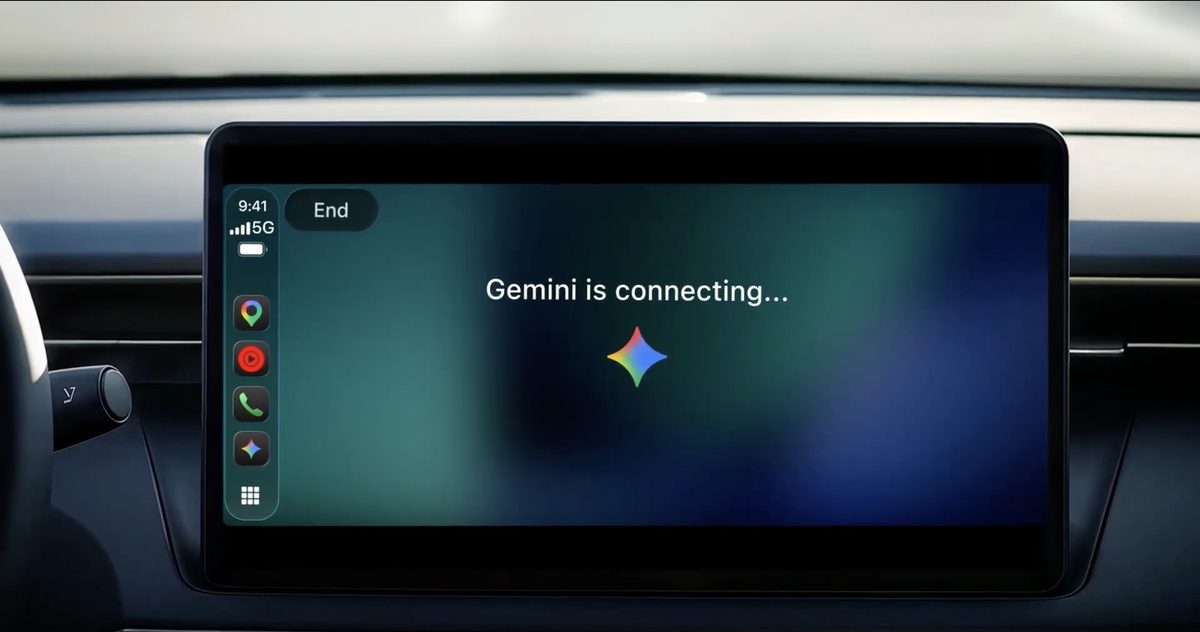
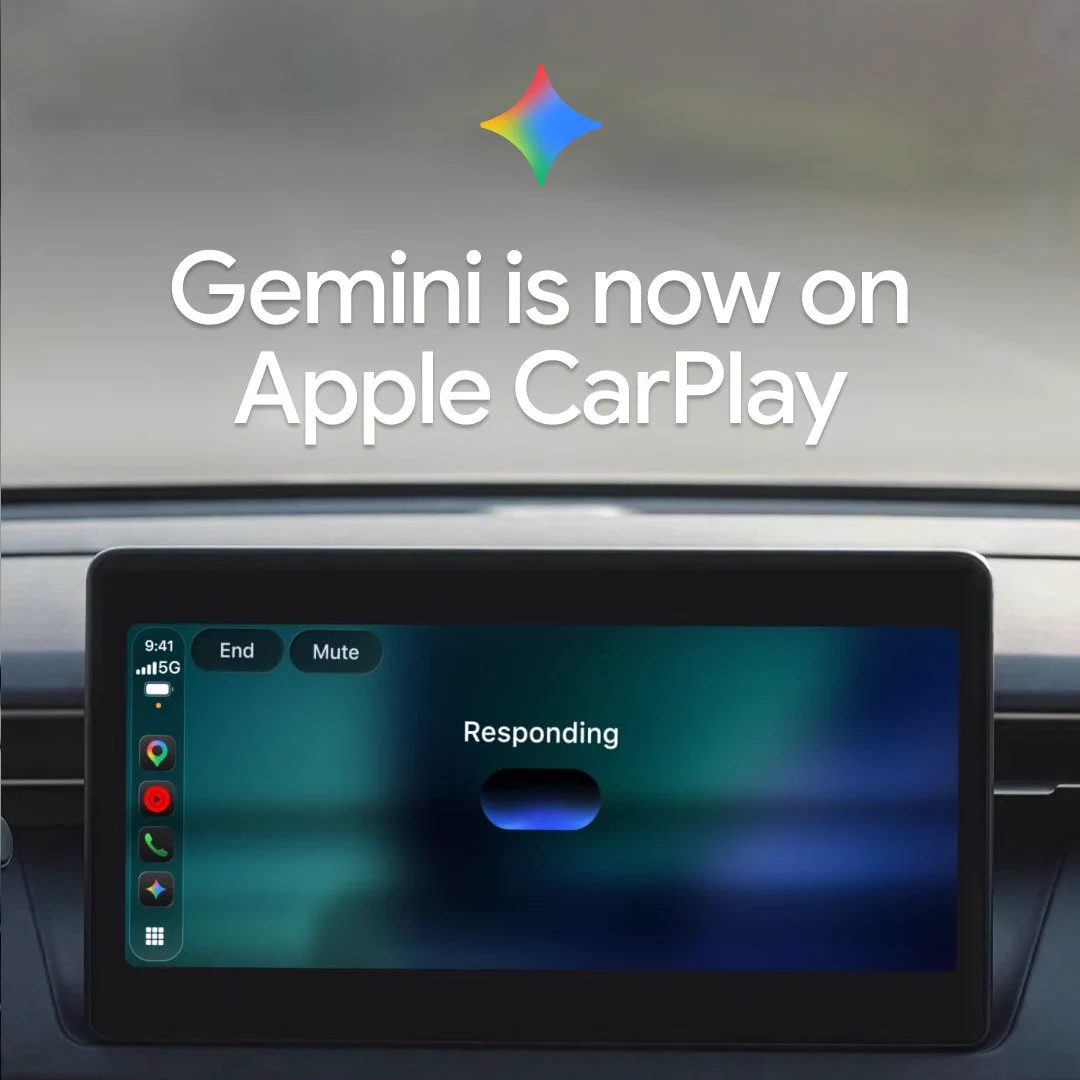
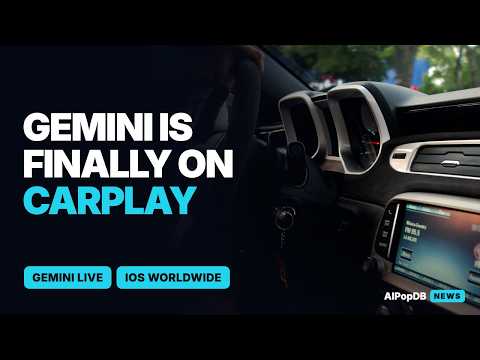
On November 11, Google put a Gemini icon on Apple CarPlay. Tap it and you can hold a live, interruptible conversation with the assistant from the car's screen: check a calendar, get an email thread summarized, or rehearse a presentation out loud on the drive in.

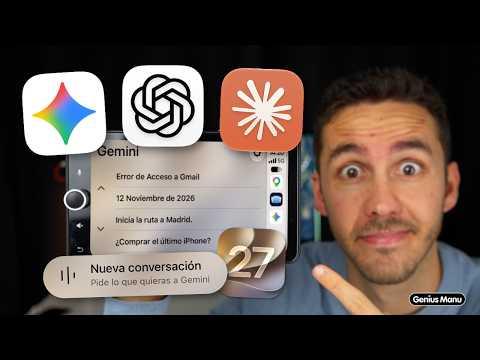
Before this, iPhone drivers could reach Gemini only through Google Maps inside CarPlay. Now it is a standalone app on the same screen that hosts ChatGPT, Claude, Grok, Copilot and Perplexity. The dashboard has become a storefront for assistants, and Google just stopped being the one waiting outside.

Why it matters

The car screen is now a contested surface where Google, Apple and OpenAI compete for the same hour of your commute.

Questions about this story

Free account needed to ask — your question is kept and asked for you right after sign-up. Answers are public.

No questions yet — be the first to ask.

Key Indicators

3
In-car platforms running Gemini Live
Android Auto, cars with Google built-in, and now Apple CarPlay.
0
Standalone Gemini apps on CarPlay before November 11
Gemini was previously reachable only inside Google Maps on CarPlay.
5
Other AI chat apps already on CarPlay
ChatGPT, Claude, Grok, Copilot and Perplexity, according to MacRumors.
~1 hour
Daily commute, per Google's blog post
Google's stated rationale for building the feature: an hour a day behind the wheel.

Voices

Curated perspectives — historical figures and your fellow readers.

Sign up to generate historical perspectives on this story.

People Involved

Organizations Involved

Timeline

2026 November 2026

4 events Latest: Today
Tap a bar to jump to that date
  1. Rollout confirmed as global and staged

    Today Rollout

    Coverage confirms the app is reaching iOS users worldwide, with the icon appearing gradually.

  2. Gemini app launches on Apple CarPlay

    Product launch

    Google releases a standalone Gemini app for CarPlay with Gemini Live, Gmail and Calendar access.

  3. Gemini reaches Android Auto and Google-built cars

    Product launch

    Google ships Gemini Live to its own in-car platforms before tackling CarPlay.

  4. Apple opens CarPlay to conversational AI apps

    Platform policy

    iOS 26.4 allows voice-based AI chat apps, and ChatGPT, Claude, Grok, Copilot and Perplexity arrive.

Scenarios

1

Google extends Gemini's personalization features to the European Economic Area

Possible Resolves by Q2 2027

Discussed by: Google's own launch post, which carves out the EEA and Nigeria

The CarPlay launch ships without Daily Brief and some personalization in the EEA and Nigeria, and without those features for users under 18 anywhere. If Google clears the regulatory and policy work behind that carve-out, the app becomes functionally identical across markets. If it does not, European drivers get a thinner assistant than American ones.

2

A road authority writes AI chatbots into its distracted-driving rules

Possible Resolves by Q2 2027

Discussed by: Australian road-rule coverage, which found no guidance covering AI assistants

Existing rules in New South Wales and Victoria cover calls, audio, navigation and, for learner and provisional drivers, phone use altogether. None of them names an AI assistant reading out an email summary. A regulator could close that gap by listing AI chat among prohibited phone functions, which would make the feature unusable for some drivers in some states.

3

Alphabet discloses Gemini usage inside cars

Unlikely Resolves by Feb 15, 2027

Discussed by: No one yet; Google has published no in-car usage figures

Google measures Gemini adoption in aggregate and has not broken out car usage. A quarterly earnings call is the most likely place for a number to surface, either as a user count or as a session figure tied to automotive surfaces. Without one, the size of the CarPlay audience stays unknown.

Historical Context

3 moments from history that rhyme with this story — and how they unfolded.

2014-2015

CarPlay and Android Auto launch (2014-2015)

Apple announced CarPlay in March 2014 and Google followed with Android Auto months later. Both let a phone take over the car's dashboard screen for navigation, calls and music. Automakers resisted at first, then shipped both across most models.

Then

Phone software displaced built-in infotainment as the interface drivers actually used.

Now

Apple and Google became the gatekeepers of the dashboard, deciding which app categories could appear there.

Why this matters now

The 2014 fight was over who owns the screen. The 2026 fight is over who supplies the voice coming out of it, and Apple is still the gatekeeper.

2013

Siri Eyes Free (2013)

Apple shipped a car mode that let drivers hold a steering-wheel button and talk to Siri through the car's speakers, without a touchscreen. It required automaker by automaker support.

Then

Adoption was patchy and limited to a set of cooperating brands.

Now

It previewed voice as the car interface, and was superseded when CarPlay put a full screen in the dash.

Why this matters now

Voice assistants entered cars a decade ago as a button. Gemini on CarPlay is the same idea with a language model and a tiled app behind it.

2018

Amazon Echo Auto (2018)

Amazon announced a small aftermarket device that piped Alexa into older cars through the phone, aiming at vehicles without modern infotainment.

Then

It sold as an accessory rather than a default.

Now

Voice assistants stayed peripheral in cars until the phone makers opened their projection systems to them.

Why this matters now

It shows the difference between an assistant bolted onto a car and one that lives on the screen the driver already looks at.

Sources

(8)