



Pull to refresh
Logo
Study finds Americas' tectonic collision happened earlier than thought

Study finds Americas' tectonic collision happened earlier than thought

New Capabilities

Magnetic signatures in Colombian volcanic rocks push the main collision back to before 10 million years ago

Today: Magnetic study pushes collision earlier

Overview

Updated 1 hour ago

For decades, geologists assumed the collision between Central and South America happened in a late-stage event. New magnetic evidence from volcanic rocks in Colombia shows the main collision occurred millions of years earlier than textbook timelines suggested.

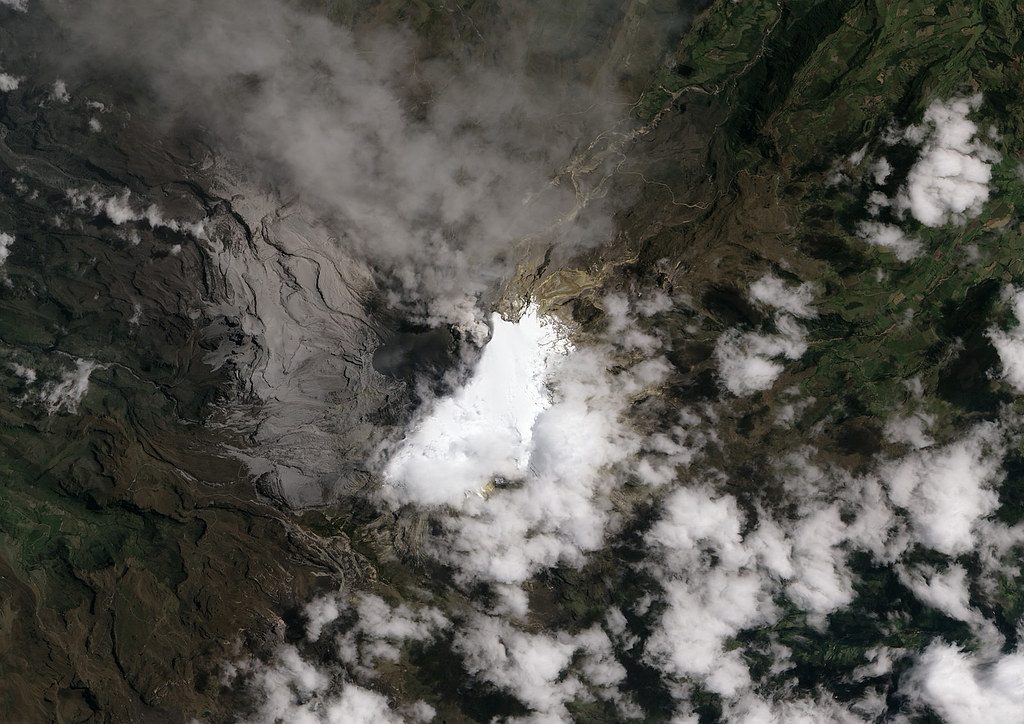
Rocks from the Combia Volcanic Province preserve their original magnetic fabric, a sign that the intense compression shaping the Northern Andes had already ended by the late Miocene. The most significant collision now appears to fall in the Oligocene-middle Miocene, before about 10 million years ago.

Why it matters

If the main collision happened before 10 million years ago, geologists must redraw models of Andean formation and the geological union of the Americas.

Questions about this story

Free account needed to ask — your question is kept and asked for you right after sign-up. Answers are public.

No questions yet — be the first to ask.

Key Indicators

Before ~10 Ma
End of major collision deformation
Magnetic evidence shows the most intense tectonic compression had ended before the late Miocene.
12–6 Ma
Age of studied volcanic rocks
Rocks from the Combia Volcanic Province preserve primary magnetic fabrics, indicating limited later deformation.
Oligocene–middle Miocene
Revised timing of main collision
The most significant collisional events between Central and South America occurred in this window.

Voices

Curated perspectives — historical figures and your fellow readers.

Ever wondered what historical figures would say about today's headlines?

Sign up to generate historical perspectives on this story.

Play

Exploring all sides of a story is often best achieved with Play.

Most of these play right now — no account needed. Sign up to save scores, keep a streak, and unlock Debate and Predict. Log in Sign Up
Predict 3 ways this could play out. Back the one you believe — contrarian picks score more when a scenario has a resolution date. Log in to play

People Involved

Organizations Involved

Timeline

April 2015 September 2026

3 events Latest: Today
  1. Magnetic study pushes collision earlier

    Today Study

    Magnetic fabric analysis of Combia volcanic rocks showed major deformation ended before the late Miocene, placing the main collision in the Oligocene-middle Miocene.

  2. O'Dea review defends late isthmus formation

    Study

    Exhaustive Science Advances review argued the Isthmus formed around 2.8 million years ago and cautioned against accepting pre-Pliocene isthmus claims.

  3. Zircon study suggests early land connection

    Study

    Camilo Montes and colleagues dated zircons from an ancient South American streambed, suggesting the continents connected before 13 million years ago.

Historical Context

3 moments from history that rhyme with this story — and how they unfolded.

April 2015 – August 2016

The 2015 Zircon Study vs. the 2016 Isthmus Review

Camilo Montes and colleagues dated zircons from an ancient South American streambed and concluded the continents connected before 13 million years ago. A year later, Aaron O'Dea's team published a comprehensive review defending the traditional ~2.8 million year isthmus, calling the earlier evidence inconclusive.

Then

The field split into early-connection and late-isthmus camps.

Now

The exchange sharpened the distinction between continental collision and the emergence of a land bridge.

Why this matters now

The new magnetic study enters this unresolved debate, pushing the collision itself earlier while leaving the land-bridge question open.

1960s

Seafloor Magnetic Anomalies and Plate Tectonics (1960s)

Geologists mapping magnetic stripes on the ocean floor found symmetrical patterns around mid-ocean ridges, providing hard evidence for seafloor spreading and the theory of plate tectonics.

Then

Magnetic reversals were quickly accepted as proof of plate motion.

Now

Magnetic analysis became a standard technique for reconstructing tectonic history.

Why this matters now

The new study applies magnetic techniques to continental volcanic rocks, reading deformation history from the orientation of magnetic minerals.

1970s–present

India-Asia Collision Timing Debate (1970s–present)

Geologists have long debated when India collided with Asia, with estimates ranging from 65 million to 35 million years ago. Paleomagnetism, sediment records, and mountain-building evidence each yield different dates.

Then

No single date gained universal acceptance.

Now

The debate showed how collision timing depends heavily on which evidence is used.

Why this matters now

The Americas collision faces the same problem: different methods produce different dates, and the new study adds magnetic evidence to the mix.

Sources

(5)