




Pull to refresh
Logo
Thirty Meter Telescope rejects La Palma backup site

Thirty Meter Telescope rejects La Palma backup site

New Capabilities

Rejection leaves Mauna Kea as the only candidate site, with U.S. federal funding still in question

Yesterday: Canaries respond to rejection

Overview

Updated 1 hour ago

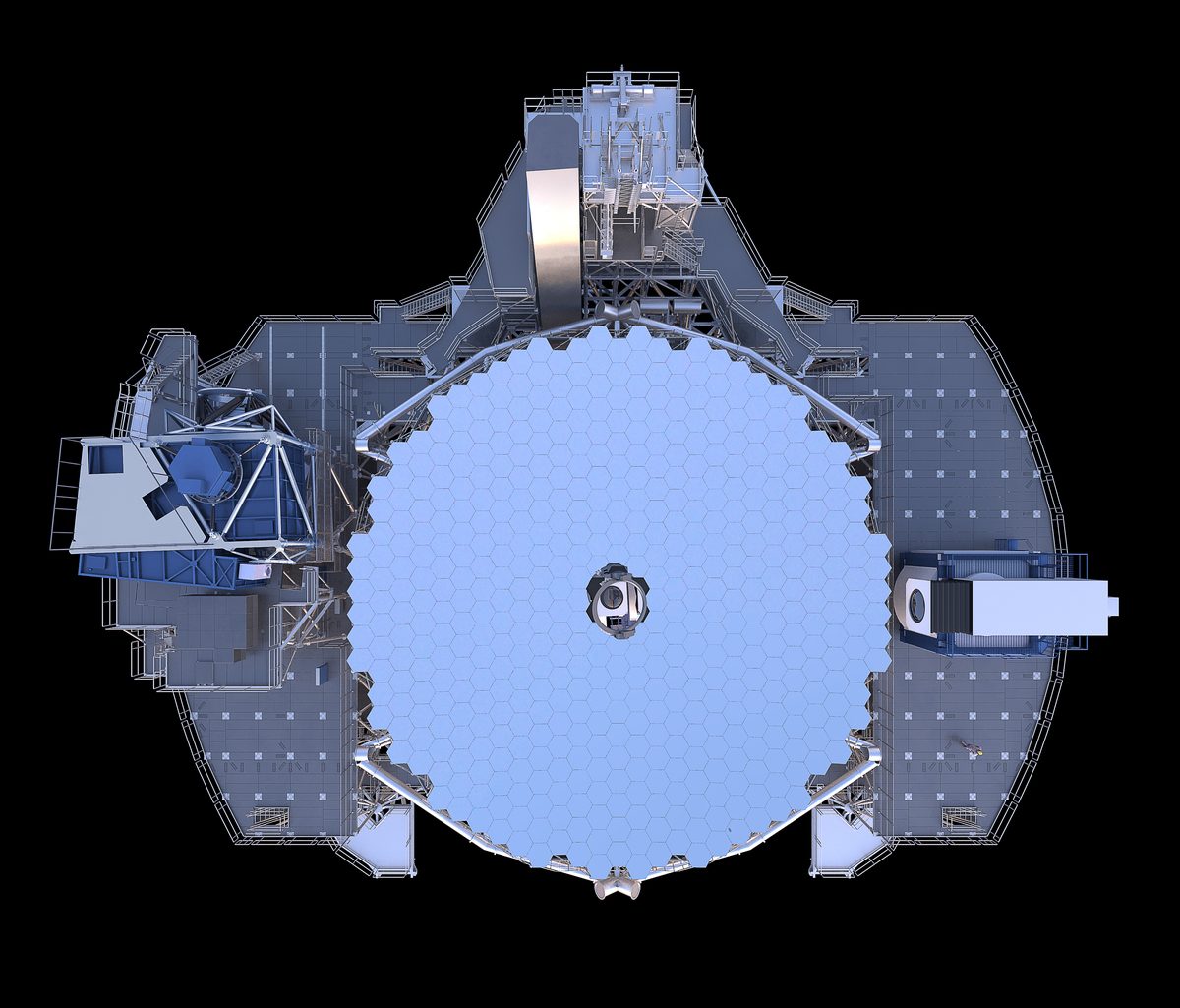
Spain's €1 billion bid to host the Thirty Meter Telescope on La Palma is dead. The consortium behind the giant observatory failed to reach consensus on the financing offer, ending the island's decade-long role as the project's official backup site.

That leaves Hawaii's Mauna Kea, where construction has been blocked by court rulings and protests since 2015, as the only remaining candidate site. The project's expected U.S. federal funding has been in question since the National Science Foundation dropped it from its 2025 budget request.

Why it matters

With no confirmed site and no federal funding, the Thirty Meter Telescope risks losing the race to its Chilean rival.

Questions about this story

Free account needed to ask — your question is kept and asked for you right after sign-up. Answers are public.

No questions yet — be the first to ask.

Key Indicators

€1 billion
Spain's rejected TMT financing offer
Comprised of €400 million in Spain's CDTI equity participation and a €600 million loan from the European Investment Bank and Official Credit Institute.
$1.6 billion
U.S. federal funding removed from TMT
The National Science Foundation's 2025 budget request dropped TMT from the Extremely Large Telescope program.
10 years
La Palma held official backup status
Roque de los Muchachos was named TMT's primary alternative in October 2016; the rejection came in September 2026.

Voices

Curated perspectives — historical figures and your fellow readers.

Ever wondered what historical figures would say about today's headlines?

Sign up to generate historical perspectives on this story.

People Involved

Organizations Involved

Timeline

October 2016 September 2026

8 events Latest: Yesterday
Tap a bar to jump to that date
  1. Canaries respond to rejection

    Latest Statement

    Canary Islands government laments the decision but says it won't give up and will continue defending La Palma's candidacy.

  2. TMT partners reject Spanish offer

    Decision

    TMT International Observatory partners fail to reach consensus on Spain's €1 billion financing proposal; La Palma construction plans suspended.

  3. Spain presents €1 billion offer

    Proposal

    Spain's science ministry and the European Investment Bank announce a financial framework of up to €1 billion to finance TMT construction on La Palma.

  4. Canaries declare TMT strategic

    Policy

    Canary Islands government declares the TMT project strategic for the archipelago, citing research, innovation, and economic diversification benefits.

  5. NSF removes TMT funding

    Funding

    NSF budget request drops TMT from Extremely Large Telescope consideration, removing about $1.6 billion in potential federal funding.

  6. NSF evaluates telescope candidates

    Funding

    National Science Foundation names TMT and Giant Magellan Telescope candidates for Extremely Large Telescope program; says only one can be funded.

  7. Hosting agreement signed

    Agreement

    TMT International Observatory and the IAC sign an agreement detailing conditions for housing, operating, and eventually dismantling the telescope on La Palma.

  8. La Palma named official backup

    Decision

    TMT board selects Roque de los Muchachos as primary alternative to Hawaii after evaluating sites in Spain, Chile, Mexico, China, and India.

Scenarios

1

TMT breaks ground on Mauna Kea

Possible Resolves by End of 2027

Discussed by: Hawaii Gov. Josh Green and the state's congressional delegation; TMT project manager Fengchuan Liu called the footprint option feasible in April 2026

With La Palma out, TMT pursues the only remaining site. Hawaii officials have pushed for building on the footprint of the decommissioned Caltech Submillimeter Observatory, an approach Liu told the Mauna Kea Stewardship and Oversight Authority could work. If TMT secures a permit for that location and settles its NSF funding question, construction could begin.

2

TMT loses federal funding race to Chilean rival

Possible Resolves by Q2 2027

Discussed by: National Science Foundation's 2025 budget request and 2024 evaluation flagged TMT's site uncertainty

NSF completes its Extremely Large Telescope review and selects the Giant Magellan Telescope in Chile, cutting TMT's federal funding. Without federal support and with no confirmed site, TMT's international partners can't assemble the remaining billions needed. The project stalls indefinitely.

3

Canary Islands talks reopen

Unlikely Resolves by Q2 2027

Discussed by: Canary Islands government spokesperson Alfonso Cabello said the region will continue defending La Palma despite the rejection

Spain revises its offer or addresses the specific concerns that split TMT partners. The Canary Islands executive says it won't surrender, and the rejection was about financial consensus, not site quality. With Mauna Kea's path still legally and politically fraught, the consortium could return to the table with Spain on new terms.

Historical Context

2 moments from history that rhyme with this story — and how they unfolded.

1987–1993

Superconducting Super Collider cancellation (1993)

Congress approved a $4.4 billion particle accelerator in Texas. Costs ballooned past $12 billion, and in 1993 the House voted to kill the project after contractors had already excavated 14 miles of tunnels.

Then

Thousands of physicists lost work, and massive tunnels were left vacant underground.

Now

The U.S. ceded leadership in high-energy physics to Europe, which built the Large Hadron Collider.

Why this matters now

TMT depends on federal funding through the NSF, making it vulnerable to the same funding calculus that killed the Superconducting Super Collider.

1970s–1996

Mauna Kea observatory conflicts (1970s–1990s)

As telescopes multiplied on Mauna Kea, Native Hawaiian groups raised concerns about the cultural and religious significance of the summit. The W.M. Keck Observatory's twin 10-meter telescopes, completed in 1996, faced some of the sharpest early opposition.

Then

Agreements created the Mauna Kea Science Reserve and later a stewardship authority.

Now

Protests against TMT in 2015–2019 grew directly from decades of unresolved conflict over the mountain.

Why this matters now

The Hawaii conflict that made La Palma the backup in the first place built on long-standing tension over the summit—tension that still shapes TMT's only remaining site option.

Sources

(11)