



Pull to refresh
Logo
Global smartphone shipments hit 14-year low amid memory shortage

Global smartphone shipments hit 14-year low amid memory shortage

Money Moves

AI infrastructure demand for memory chips drives up costs, forcing vendors to cut shipments and prioritize premium devices

Today: Omdia and IDC release preliminary Q3 data

Overview

Updated 1 hour ago

Global smartphone shipments fell 20% year-on-year in the third quarter of 2026, the worst Q3 in 14 years. The cause is a memory chip shortage: AI infrastructure projects have cornered supply, pushing component costs up roughly 350% since last year.

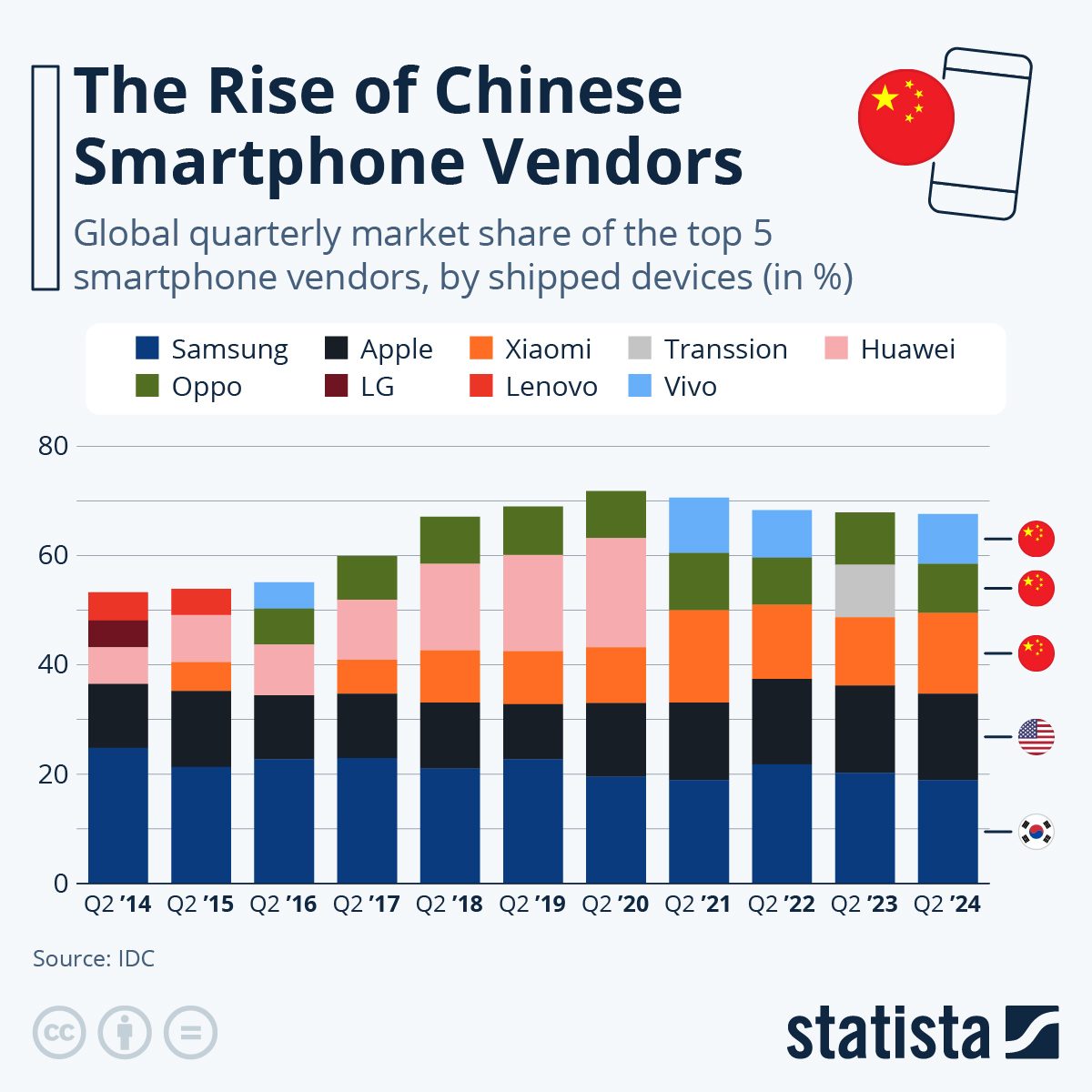
Vendors are cutting shipments of low-margin devices, raising prices, and shifting focus to premium models. Samsung and Apple now control 45% of the market, up about 8 points from a year ago, while Xiaomi, OPPO, and vivo all posted double-digit declines.

Why it matters

Consumers face higher phone prices and fewer budget options, and smaller vendors risk losing market presence they may never regain.

Questions about this story

Free account needed to ask — your question is kept and asked for you right after sign-up. Answers are public.

No questions yet — be the first to ask.

Key Indicators

22%
Q3 2026 YoY shipment decline
IDC reported the steepest quarterly decline on record, at 255.3 million units.
255.3M
Q3 2026 global shipments
Lowest third-quarter total since 2012, per IDC.
~350%
Memory cost increase since 2025
AI infrastructure projects have cornered memory chip supply, per IDC.
45%
Samsung + Apple combined share
Up about 8 percentage points from a year earlier, per Omdia.

Voices

Curated perspectives — historical figures and your fellow readers.

Ever wondered what historical figures would say about today's headlines?

Sign up to generate historical perspectives on this story.

People Involved

Organizations Involved

Timeline

2025 October 2026

6 events Latest: Today
Tap a bar to jump to that date
  1. Omdia and IDC release preliminary Q3 data

    Today Market data

    Omdia estimates a 20% YoY decline; IDC reports 22% to 255.3 million units, the steepest quarterly drop on record.

  2. Counterpoint reports worst Q3 since 2012

    Market data

    Counterpoint's preliminary data shows Q3 shipments fell 20% YoY, the lowest third-quarter level in 14 years.

  3. Apple cuts iPhone 18 orders by 15-20%

    Corporate

    Apple reduces iPhone 18 orders amid soft demand and rising component costs, per October data.

  4. Transsion shares fall 7% in Hong Kong debut

    Market

    The Chinese low-cost phone maker, focused on African markets, sees its shares drop 7% on debut amid the downturn.

  5. Q2 2026 shipments decline 6% year-on-year

    Market data

    Omdia records a 6% YoY decline in Q2 2026, the first sign of the downturn that would accelerate sharply in Q3.

  6. Memory costs begin surging as AI infrastructure projects corner supply

    Market shift

    AI infrastructure projects begin consuming memory chip supply, driving component costs up roughly 350% over the following year.

Scenarios

1

Memory costs ease, market returns to growth by 2028

Possible Resolves by End of 2028

Discussed by: IDC

IDC's Nabila Popal says the market has not yet reached the bottom, with growth constrained through 2027 and recovery pushed to 2028 at least. If memory costs stabilize and consumer demand recovers, shipments could return to year-on-year growth.

2

Premium shift accelerates, entry-level market shrinks

Likely Resolves by Q2 2027

Discussed by: Omdia

Omdia analysts say vendors are prioritizing average selling price growth and portfolio optimization. If memory costs stay elevated, vendors will keep cutting entry-level devices, pushing consumers toward premium models or refurbished devices.

3

Samsung and Apple consolidate further

Possible Resolves by Q1 2027

Discussed by: Omdia, IDC

Both companies are gaining share as mass-market competitors struggle. Omdia notes their combined share rose 8 points to 45%. If the trend continues, they could exceed 50% combined.

Historical Context

2 moments from history that rhyme with this story — and how they unfolded.

2020-2021

Global chip shortage (2020-2021)

Pandemic demand for electronics collided with supply disruptions, causing a global semiconductor shortage. Automakers cut production, and consumer electronics prices rose as manufacturers allocated scarce chips to high-margin products.

Then

Production cuts, price increases, and allocation of scarce chips to premium products.

Now

Companies diversified supply chains, and governments invested in domestic chip production, including the U.S. CHIPS Act.

Why this matters now

Like today's memory shortage, the 2020-21 crisis forced vendors to prioritize high-margin products and reshaped competitive positions.

2022

Smartphone market downturn (2022)

Post-pandemic demand normalization, inflation, and economic uncertainty caused smartphone shipments to fall sharply. IDC reported record quarterly declines as consumers delayed upgrades.

Then

Vendors cut shipments, focused on premium devices, and reduced entry-level portfolios.

Now

The market shifted toward premium devices, and average selling prices rose.

Why this matters now

The current downturn follows a similar pattern but is driven by supply-side constraints (memory costs) rather than demand-side weakness.

Sources

(10)