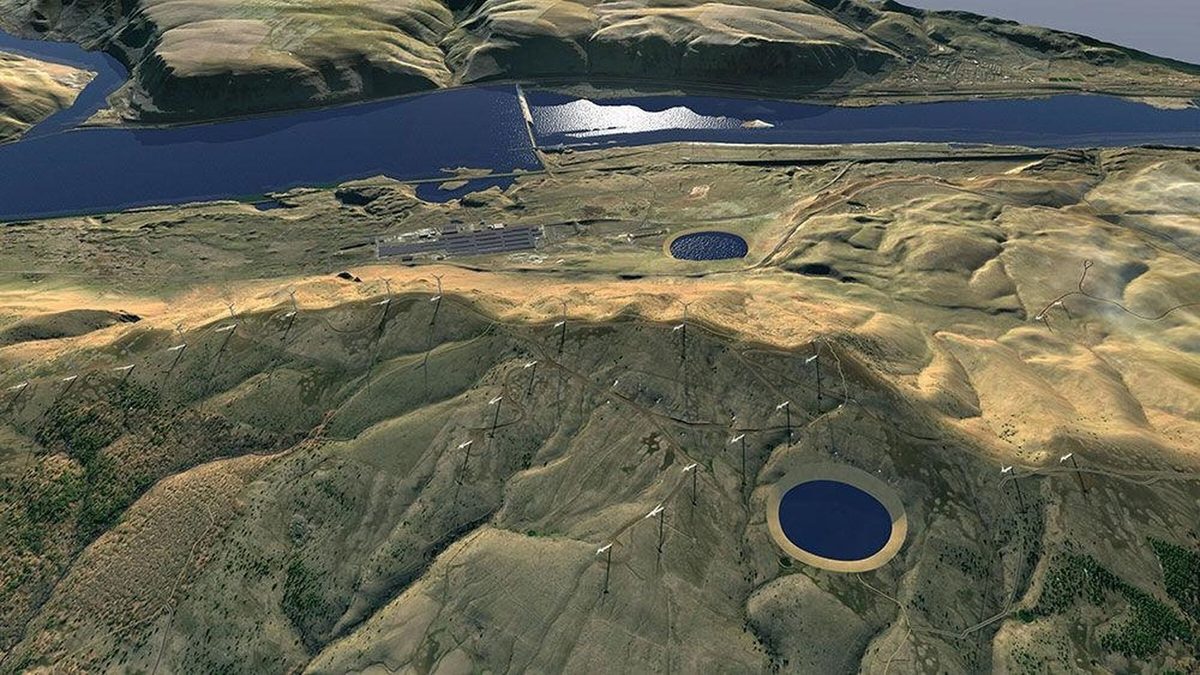
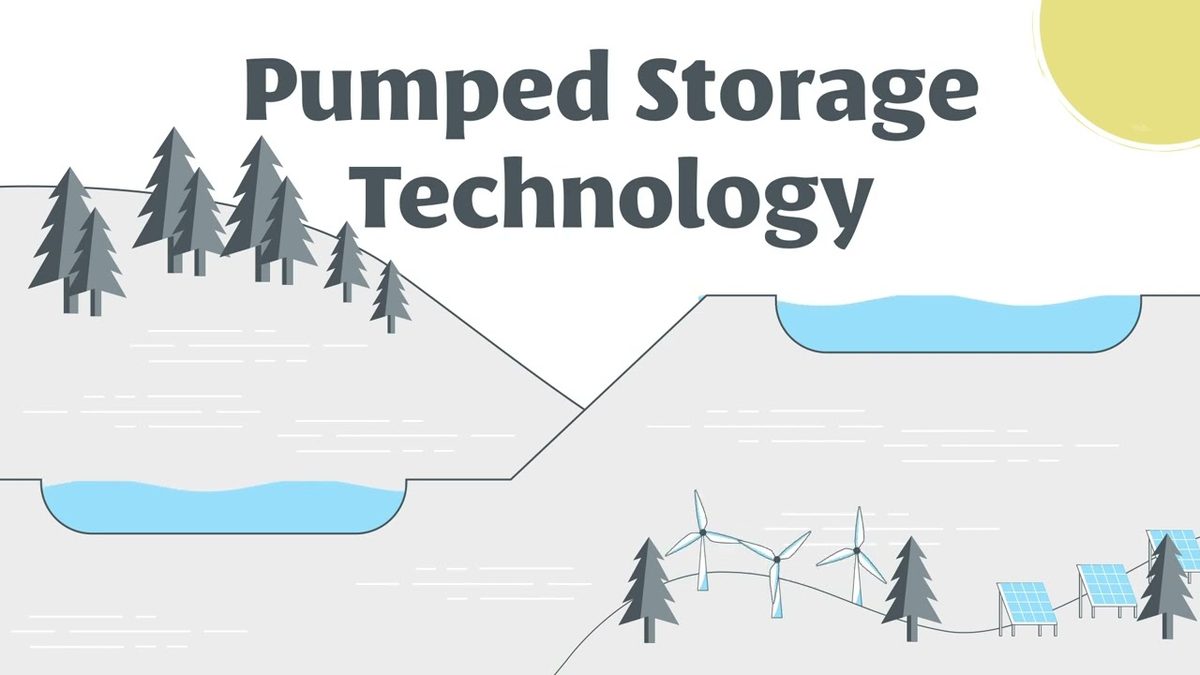
The Federal Energy Regulatory Commission has issued a 40-year license for a $2 billion pumped-storage hydropower facility on land the Yakama Nation considers sacred. The 1,200-megawatt Goldendale Energy Storage Project would function as a giant battery for the Pacific Northwest grid—pumping water uphill when power is cheap, releasing it through turbines when demand spikes. The site, known to the Yakama as Pushpum or 'mother of all roots,' has been used for ceremonies, fishing, and gathering traditional foods for centuries.
The decision lands at a crossroads: the region's push toward renewable energy versus indigenous rights to protect sacred lands. Washington's Department of Ecology and FERC both concluded the project would cause 'significant and unavoidable adverse impacts' on tribal communities, yet federal regulators approved it anyway. Tribal nations and environmental groups now have 30 days to request rehearing, likely leading to court appeals; construction could begin in 2027 and operation is planned for 2032.
Questions about this story
Free account needed to ask — your question is kept and asked for you right after sign-up. Answers are public.
No questions yet — be the first to ask.
Key Indicators
1,200 MW
Generation Capacity
Enough electricity to power 500,000 homes for up to 12 hours
$2B
Project Cost
Investment from Copenhagen Infrastructure Partners and Rye Development
40 years
License Duration
FERC operating license issued January 22, 2026
4+
Opposing Tribes
Yakama, Nez Perce, Warm Springs, and Umatilla nations oppose the project
17 events
Latest: February 2nd, 2026 · 8 months ago
Showing 8 of 17
JK to step
Tap a bar to jump to that date
Jump to
February 2026
Yakama Nation condemns FERC decision
LatestOpposition
Chairman Gerald Lewis says federal agencies are 'rewarding bad actors.' Tribes and environmental groups have 30 days to request rehearing.
January 2026
FERC issues 40-year license
Approval
Federal Energy Regulatory Commission grants construction and operating license. Project has two years to break ground.
January 2025
State upholds water permit on appeal
Legal
Washington's Pollution Control Hearings Board rejects appeal by tribes and environmental groups, affirming water quality certification.
February 2024
FERC adopts tribal deference policy
Regulatory
FERC announces it will not issue permits for projects on tribal reservation lands if the tribe objects. Policy does not cover ceded lands like Goldendale site.
May 2023
Washington issues water quality certification
Regulatory
Department of Ecology grants Section 401 certification, reversing 2021 denial. Tribes and environmental groups appeal.
December 2022
Final state environmental review completed
Regulatory
Washington releases final EIS, finding 'significant and unavoidable adverse impacts' on tribal historic sites and culturally important plants.
July 2022
Four tribes call on Inslee to oppose project
Opposition
Yakama, Nez Perce, Warm Springs, and Umatilla nations jointly urge Washington's governor to block the project.
June 2022
Draft environmental impact statement released
Regulatory
State releases draft EIS followed by three public hearings during two-month comment period.
June 2021
Washington denies water permit
Legal
Department of Ecology denies water quality certification without prejudice, citing incomplete information.
January 2021
Environmental impact review begins
Regulatory
Washington Department of Ecology initiates environmental impact statement process after determining likely significant impacts.
2021
Yakama Nation formally opposes project
Opposition
Tribal Council resolution states project would destroy nine Traditional Cultural Properties of religious significance.
Danish investment firm Copenhagen Infrastructure Partners takes ownership through its Flagship Fund CI V.
March 2020
Washington declares project 'statewide significance'
Regulatory
Governor Jay Inslee signs legislation granting the project expedited permitting as a 'project of statewide significance.'
2009
Early pumped storage proposal surfaces
Development
Klickitat County Public Utility District proposes a similar pumped storage project at the site, called the JD Pool project.
2005
Smelter site capped and closed
Background
Contaminated smelter site is capped. Developers will later pledge $10 million for further cleanup.
1990
Site added to hazardous waste list
Regulatory
Washington Department of Ecology adds the former smelter site to its Hazardous Sites List.
1969
Aluminum smelter opens at site
Background
Columbia Gorge Aluminum smelter begins operations at what is now the Goldendale project site. The facility operates until 2003.
Scenarios
1
Appeals Fail, Construction Proceeds in 2027
Likely
Discussed by: Project developers; industry analysts at International Water Power magazine
FERC denies rehearing requests and court challenges are rejected or move slowly. With the 40-year license and state permits in hand, construction begins by 2027 as planned. The project becomes operational by 2032, providing 1,200 MW of grid storage to the Pacific Northwest. This outcome seems most likely given the project's designation as 'statewide significance' and the recent appeal rejection.
2
Court Blocks Project Over Consultation Failures
Possible
Discussed by: Columbia Riverkeeper attorneys; tribal legal experts
Opponents successfully argue in federal court that FERC failed to adequately consult with tribal nations or conduct proper environmental review. A judge vacates the license and orders additional consultation, similar to the Dakota Access Pipeline pattern where courts have repeatedly found consultation failures. This could delay the project for years.
3
State Court Challenge Halts Development
Possible
Discussed by: Washington State Standard reporting; project opponents
A state permit challenge currently in Washington's Court of Appeals succeeds, blocking construction even with federal approval in place. Projects require both state and federal permits to proceed. This scenario would force developers to restart portions of the state permitting process.
A change in federal administration leads to policy review of energy projects on indigenous sacred sites. New FERC commissioners could expand the 2024 tribal deference policy to cover ceded lands, not just reservation lands. The license could be revoked or conditions imposed that make the project financially unviable.
Historical Context
3 moments from history that rhyme with this story — and how they unfolded.
1 of 3
2016-2020
Dakota Access Pipeline and Standing Rock (2016-2020)
Energy Transfer Partners built a crude oil pipeline crossing under the Missouri River near the Standing Rock Sioux Reservation without, the tribe argued, adequate consultation. The pipeline route was originally planned near Bismarck but moved over concerns about the state capital's water supply. Protests in 2016 became the largest gathering of Native Americans in over a century.
Then
A federal judge in 2020 ordered the pipeline emptied and shut down until the Army Corps completed a full environmental impact statement, but an appeals court stayed that order.
Now
The pipeline continues operating. The case established precedent that courts will scrutinize tribal consultation processes, but also showed limits of legal challenges once infrastructure is built.
Why this matters now
Goldendale opponents cite consultation failures similar to those alleged at Standing Rock. The DAPL experience shows that legal victories may come too late to stop projects, and that federal approval can proceed despite documented tribal opposition.
2 of 3
2014-2025
Oak Flat and Resolution Copper (2014-2025)
Congress in 2014 attached a land transfer to a must-pass defense bill, giving 2,422 acres of Tonto National Forest—including Oak Flat, sacred to Western Apache peoples—to Resolution Copper for one of the world's largest copper mines. The site had been protected from mining since President Eisenhower's 1955 order.
Then
The Supreme Court in May 2025 declined to block the transfer, with only Justices Gorsuch and Thomas dissenting. A federal appeals court temporarily halted the transfer in August 2025.
Now
The case established that the government can authorize destruction of sacred sites on federal land without violating religious freedom laws—a precedent that weakens tribal claims to protect sacred sites outside reservations.
Why this matters now
Like Oak Flat, Pushpum is sacred land outside reservation boundaries. The Oak Flat precedent suggests courts may not block projects on religious freedom grounds, leaving tribes dependent on consultation requirements and political pressure.
3 of 3
1899-2019
Snoqualmie Falls Hydropower (1899-2019)
Puget Sound Energy built what became the world's first underground hydropower plant at Snoqualmie Falls, sacred to the Snoqualmie Tribe as the place of human creation. The tribe fought for decades to protect the falls. In 2005, FERC required increased flows during May and June to generate the sacred mists.
Then
Puget Sound Energy signed a 40-year lease to continue operations in 2004 despite tribal protests.
Now
In 2019, the Snoqualmie Tribe purchased the Salish Lodge and 45 surrounding acres for $125 million, gaining significant influence over the site's future.
Why this matters now
Snoqualmie shows that FERC can impose conditions protecting tribal interests even while approving projects. It also demonstrates that tribes sometimes achieve long-term goals through economic power when legal and political strategies fail.