
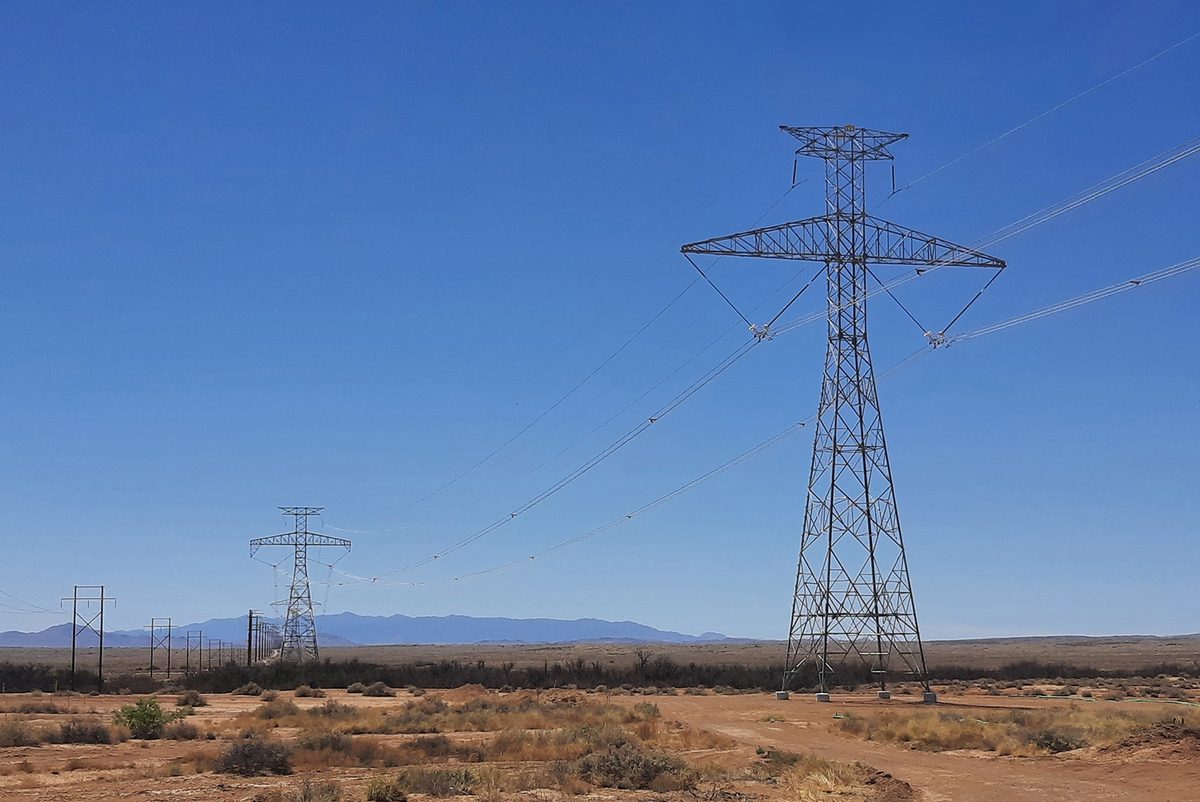
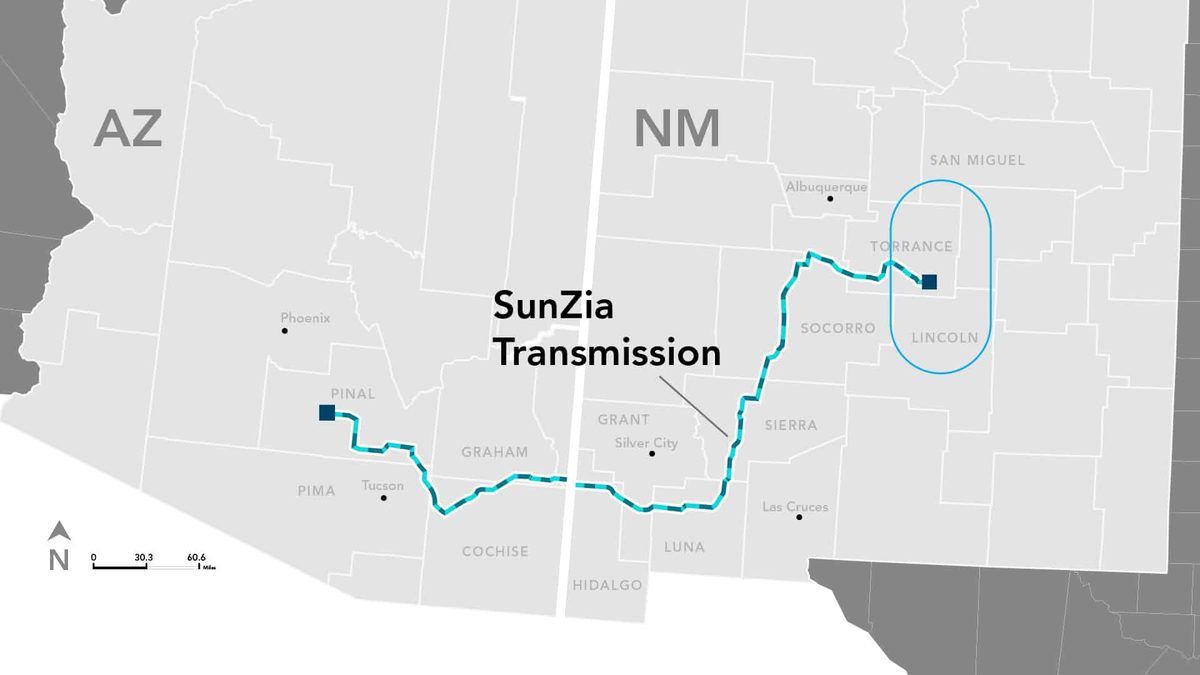
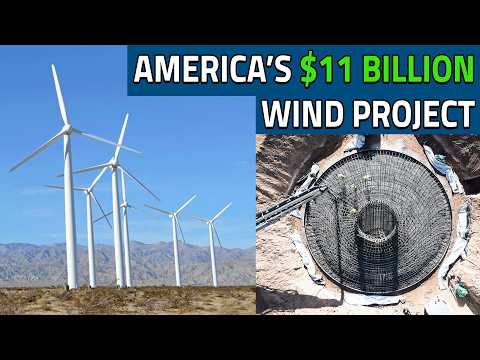
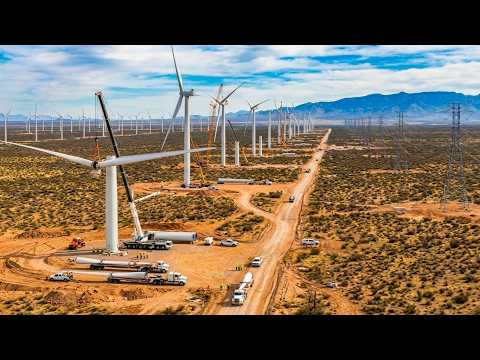
For seventeen years, the idea of connecting New Mexico's powerful winds to California's power-hungry cities remained stuck in regulatory limbo. On September 1, 2023, construction finally began on SunZia, a $11 billion project that will become the largest clean energy infrastructure build in American history—a 550-mile high-voltage transmission line paired with the Western Hemisphere's biggest wind farm.
When operational in 2026, SunZia will deliver 3,000 megawatts of wind power to Arizona and California—more electricity than the Hoover Dam generates. The project marks a rare breakthrough in a country where nearly 2,600 gigawatts of renewable projects sit waiting for grid connections, and where the average transmission line takes over a decade to permit. Pattern Energy's success in navigating federal, state, and tribal approvals offers a template—or a cautionary tale about timeline—for the dozens of major transmission projects needed to decarbonize the American grid.
Click a figure to generate their perspective on this story
Debate Arena
Two rounds, two personas, one winner. You set the crossfire.
Choose Your Battle
Watch two AI personas debate this story using real evidence
Make predictions and set the crossfire to earn XP and cred
Select Your Champions
Choose one persona for each side of the debate
DEBATE TOPIC
SIDE A (PRO)
Select debater for this side:
✓
SIDE B (CON)
Select debater for this side:
✓
Choose personas with different perspectives for a more dynamic debate
VS
Get ready to make your prediction...
Round of
Claim
Evidence
Stakes
Crossfire Answer
Closing Statement
Claim
Evidence
Stakes
Crossfire Answer
Closing Statement
Your Crossfire Question
Generating arguments...
Who's Got This Round?
Make your prediction before the referee scores
Correct predictions earn +20 XP
Evidence
40%
Logic
30%
Detail
20%
Style
10%
Round Results
Your Pick!
+20 XP
Your Pick
Not this time
Evidence (40%)
Logic (30%)
Detail (20%)
Style (10%)
Overall Score
/10
Your Pick!
+20 XP
Your Pick
Not this time
Evidence (40%)
Logic (30%)
Detail (20%)
Style (10%)
Overall Score
/10
Set the Crossfire
Pick the question both personas must answer in the final round
Crafting crossfire questions...
Choosing a question earns +10 XP crossfire bonus
🏆
Total XP Earned
Cred Change
Predictions
Debate Oracle! You called every round!
Sharp Instincts! You know your debaters!
The Coin Flip Strategist! Perfectly balanced!
The Contrarian! Bold predictions!
Inverse Genius! Try betting the opposite next time!
XP Breakdown
Base completion+20 XP
Rounds played ( rounds x 5 XP)
+ XP
Correct predictions ( correct x 20 XP)
+ XP
Crossfire bonus+10 XP
Accuracy
%
Prediction History
Round
You picked:
✓✗
Keep debating to level up your credibility and unlock achievements
People Involved
Hunter Armistead
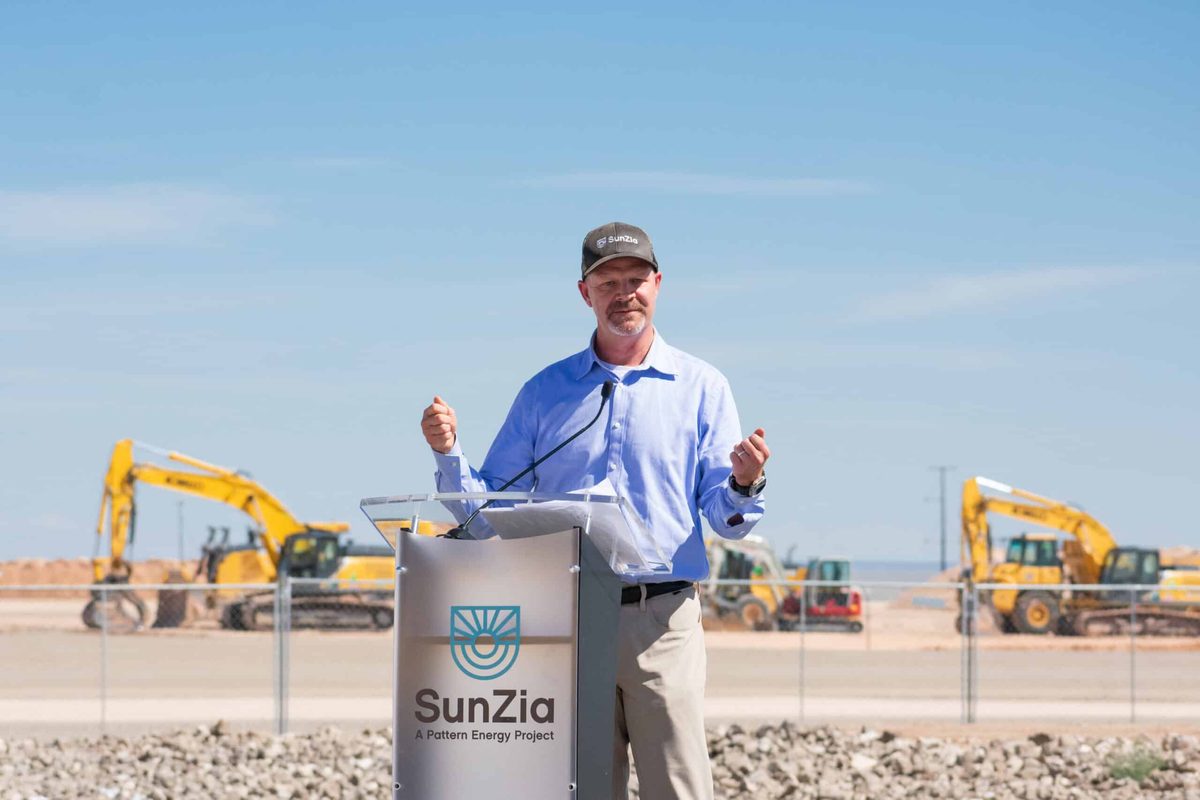
Chief Executive Officer, Pattern Energy (Leading construction and commercial operations)
Deb Haaland
Secretary of the Interior (2021-2025) (Former Cabinet Secretary; attended groundbreaking)
Organizations Involved
PA
Pattern Energy Group LP
Private Renewable Energy Developer
Status: Project Owner and Developer
San Francisco-based renewable energy company that acquired SunZia in 2021 and secured the largest clean energy financing in U.S. history.
BU
Bureau of Land Management
Federal Agency
Status: Permitting Authority
Federal agency that manages public lands and issued the final permits for SunZia's 550-mile route across federal territory.
TO
Tohono O'odham Nation
Tribal Nation
Status: Plaintiff in Federal Lawsuit
Arizona tribal nation that filed federal lawsuit challenging SunZia's route through the culturally significant San Pedro Valley.
Timeline
Appeals Court Revives Tribal Challenge
Legal
The Ninth Circuit Court of Appeals reinstates the tribal lawsuit, ruling that plaintiffs plausibly alleged the Interior Department failed to properly consult on whether the San Pedro Valley should be designated a historic property.
Federal Court Dismisses Tribal Lawsuit
Legal
A Tucson federal judge denies the tribes' request for an injunction and dismisses the lawsuit challenging SunZia's permits.
Tribal Coalition Files Federal Lawsuit
Legal
The Tohono O'odham Nation, San Carlos Apache Tribe, and Archaeology Southwest file a federal lawsuit alleging the Interior Department illegally approved permits without proper tribal consultation.
$11 Billion Financing Closes
Financial
Pattern Energy closes $11 billion in non-recourse financing, the largest clean energy infrastructure financing in U.S. history, enabling full construction of both the transmission line and wind farm.
Clean Power Alliance Signs 575 MW Agreement
Commercial
Clean Power Alliance, serving Southern California communities, signs a 15-year power purchase agreement for 575 megawatts of SunZia wind power.
Construction Paused Over Tribal Concerns
Legal
The Bureau of Land Management temporarily halts construction in Arizona's San Pedro Valley after the Tohono O'odham Nation and San Carlos Apache Tribe raise concerns about impacts to religious and cultural sites.
Groundbreaking Ceremony in New Mexico
Construction
Secretary of the Interior Deb Haaland and federal, state, and local officials break ground on the SunZia transmission line at the East Converter Station site near Corona, New Mexico.
Power Purchase Agreements Signed
Commercial
Pattern Energy announces long-term power purchase agreements with Shell Energy North America and the University of California system for portions of SunZia Wind's output.
Federal Government Issues Final Approval
Regulatory
The Bureau of Land Management issues the Record of Decision for SunZia, completing the National Environmental Policy Act review and authorizing construction on federal lands.
New Mexico Approves Transmission Line
Regulatory
The New Mexico Public Regulation Commission grants approval for the SunZia transmission project after the company submitted enhanced application materials.
Pattern Energy Acquires SunZia
Corporate
Pattern Energy purchases SunZia outright from Southwest Power Group, taking over development of both the transmission line and wind project.
New Mexico Rejects Initial Application
Regulatory
The New Mexico Public Regulation Commission rejects SunZia's transmission line application and requests a more detailed submission.
Arizona Corporation Commission Approves Route
Regulatory
After a 10-year planning process, Arizona regulators approve the transmission line's Certificate of Environmental Compatibility.
Right-of-Way Application Filed
Regulatory
Southwest Power Group applies to the Bureau of Land Management for permission to build a major transmission line across Arizona and New Mexico.
Southwest Power Group Begins Planning
Development
Utilities, developers, and government officials meet in the Southwest to discuss grid expansion. Southwest Power Group proposes a transmission line connecting New Mexico's wind resources to western markets.
Scenarios
1
SunZia Begins Commercial Operations in 2026
Discussed by: Pattern Energy project announcements, Department of Energy projections, utility analysts
Construction proceeds on schedule despite ongoing litigation. The transmission line energizes in late 2025, with full wind farm operations beginning in early 2026. California utilities receive the contracted power, and the project demonstrates that large-scale renewable transmission can be built in the United States—albeit on a 20-year timeline.
2
Ninth Circuit Ruling Forces Remediation in San Pedro Valley
Discussed by: Archaeology Southwest, tribal advocates, environmental law experts
The revived federal lawsuit results in a ruling that the Bureau of Land Management violated consultation requirements. While the transmission line is largely complete, Pattern Energy is required to fund archaeological surveys, cultural preservation, or mitigation payments to affected tribes. The case sets precedent for future renewable energy projects crossing tribal lands.
3
Project Delays Push Operations to 2027
Discussed by: Energy industry analysts, grid operators
Supply chain disruptions, labor shortages, or legal complications delay completion of either the transmission line or wind farm. California utilities that signed power purchase agreements must find alternative sources, and the project's economics weaken as interest costs mount on the $11 billion financing.
4
SunZia Model Spurs Wave of Similar Projects
Discussed by: American Council on Renewable Energy, transmission developers, clean energy advocates
The successful completion of SunZia provides a roadmap for other stalled transmission projects. Federal permitting reforms and demonstrated investor appetite for large-scale renewable infrastructure unlock projects like Grain Belt Express and TransWest Express, beginning to address the 2,600 gigawatts of generation waiting in interconnection queues.
Historical Context
Pacific Intertie (1970)
1964-1970
What Happened
The federal government built a 846-mile high-voltage direct current transmission line from the Columbia River dams in Oregon to Los Angeles, connecting the hydropower-rich Pacific Northwest to Southern California's growing electricity demand. At the time, it was the world's longest HVDC line.
Outcome
Short Term
Los Angeles gained access to cheap hydroelectric power, reducing dependence on local fossil fuel generation.
Long Term
The Pacific Intertie remains operational today, transmitting up to 3,100 megawatts and serving as a model for long-distance renewable energy transmission.
Why It's Relevant Today
SunZia follows the Pacific Intertie template: connecting remote renewable resources to distant urban markets via HVDC technology. The six-year timeline from authorization to operation in the 1960s contrasts sharply with SunZia's 17-year development cycle.
Plains & Eastern Clean Line Collapse (2018)
2010-2018
What Happened
Clean Line Energy proposed a 720-mile HVDC transmission line to carry 4,000 megawatts of Oklahoma wind power to Tennessee and the Southeast. Despite securing a federal participation agreement in 2016, the project failed to obtain state permits and landowner agreements across Arkansas.
Outcome
Short Term
The Department of Energy and Clean Line mutually terminated their partnership in March 2018. The company sold off its project assets.
Long Term
Plains & Eastern became a cautionary tale about transmission development, demonstrating that federal support alone cannot overcome state-level opposition and landowner resistance.
Why It's Relevant Today
SunZia succeeded where Plains & Eastern failed, partly because Pattern Energy secured state approvals in both Arizona and New Mexico before seeking final federal authorization. The contrast illustrates why major transmission projects typically take decades.
TransWest Express Breakthrough (2023)
2005-2023
What Happened
The Anschutz Corporation proposed a 728-mile HVDC line from Wyoming wind farms to Nevada, applying for federal permits in 2008. After 15 years of environmental review and route modifications, the Bureau of Land Management authorized construction in April 2023.
Outcome
Short Term
Construction began in 2024, with the project designed to deliver 3,000 megawatts of Wyoming wind to the Western grid.
Long Term
TransWest and SunZia together demonstrate that mega-transmission projects can reach construction—but only with patient capital willing to wait two decades for returns.
Why It's Relevant Today
TransWest and SunZia broke ground within months of each other after similar 15-17 year development cycles. Their simultaneous progress suggests the renewable transmission logjam may finally be breaking.