
Pull to refresh
Logo
Daily Brief
Following
Why Ranks Sign Up
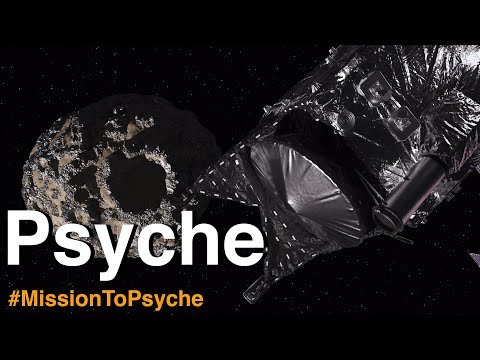
NASA's Psyche mission to a metal asteroid

NASA's Psyche mission to a metal asteroid

New Capabilities

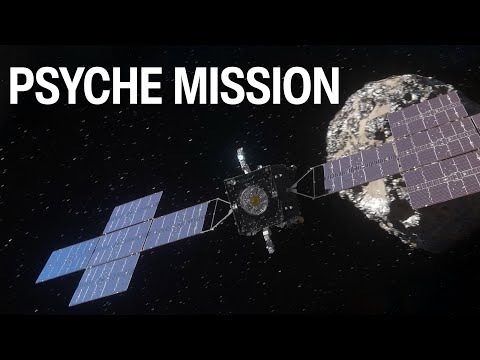
The first attempt to study what may be the exposed iron core of an early planet

August 2029: Scheduled arrival at 16 Psyche

Overview

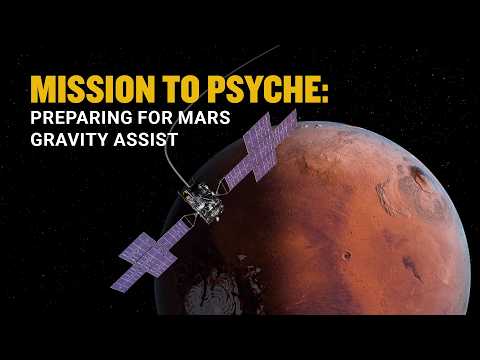
On Friday, NASA's Psyche spacecraft slipped past Mars at about 12,333 mph, flying within roughly 2,800 miles of the planet's surface. Mars's gravity bent its path and added speed, pointing the probe toward a metal asteroid still 280 million miles away.

Why it matters

Earth's iron core sits 1,800 miles underground. Psyche may let scientists study a planetary core directly for the first time.

Play on this story Voices Debate Predict

Key Indicators

2,800 mi
Closest approach to Mars
How near the spacecraft came to the Martian surface during the May 15 flyby.
12,333 mph
Spacecraft speed at flyby
Velocity relative to Mars during closest approach.
Aug 2029
Scheduled arrival
When Psyche is expected to enter orbit around asteroid 16 Psyche.
173 mi
Width of the target asteroid
16 Psyche is one of the largest objects in the main asteroid belt.
2.2B mi
Total cruise distance
Path length the spacecraft will travel from Earth launch to asteroid arrival.

Interactive

Exploring all sides of a story is often best achieved with Play.

Ever wondered what historical figures would say about today's headlines?

Sign up to generate historical perspectives on this story.

People Involved

Organizations Involved

Timeline

  1. Scheduled arrival at 16 Psyche

    Milestone

    Psyche is scheduled to enter orbit around the asteroid 16 Psyche in August 2029, beginning a 26-month science campaign at four progressively lower altitudes.

  2. Psyche flies past Mars for gravity assist

    Maneuver

    Psyche passed within roughly 2,800 miles of Mars at about 12,333 mph, using the planet's gravity to bend its path toward the asteroid without burning propellant. The spacecraft also exercised its magnetometer, gamma-ray and neutron spectrometer, and imaging instruments, returning the first new science data of the mission.

  3. Laser comms reach beyond Mars distance

    Tech demo

    The DSOC instrument sent engineering data to Earth from 140 million miles away, farther than the average distance from Earth to Mars.

  4. Deep Space Optical Communications sends first laser data

    Tech demo

    A laser instrument riding on Psyche transmitted data to a telescope on Earth from nearly 10 million miles away. It was the first laser communication test from beyond the Moon.

  5. Psyche launches on Falcon Heavy

    Launch

    Psyche lifted off from Kennedy Space Center on a SpaceX Falcon Heavy rocket. The spacecraft separated cleanly and JPL acquired its signal an hour later.

  6. NASA delays the launch by a year

    Setback

    NASA postponed Psyche's planned 2022 launch after engineers found that flight software had not been adequately tested before integration. The slip pushed arrival at 16 Psyche from 2026 to 2029.

  7. NASA picks Psyche for its Discovery program

    Decision

    NASA selected Psyche as the 14th mission in its Discovery program of low-cost planetary science missions. The agency committed roughly $850 million to the project at selection.

Scenarios

Predict which scenario wins. Contrarian picks score more — points lock in when the scenario resolves.

Log in to predict. Track your picks, climb the leaderboard. Log in Sign Up
1

Psyche enters orbit at 16 Psyche in August 2029

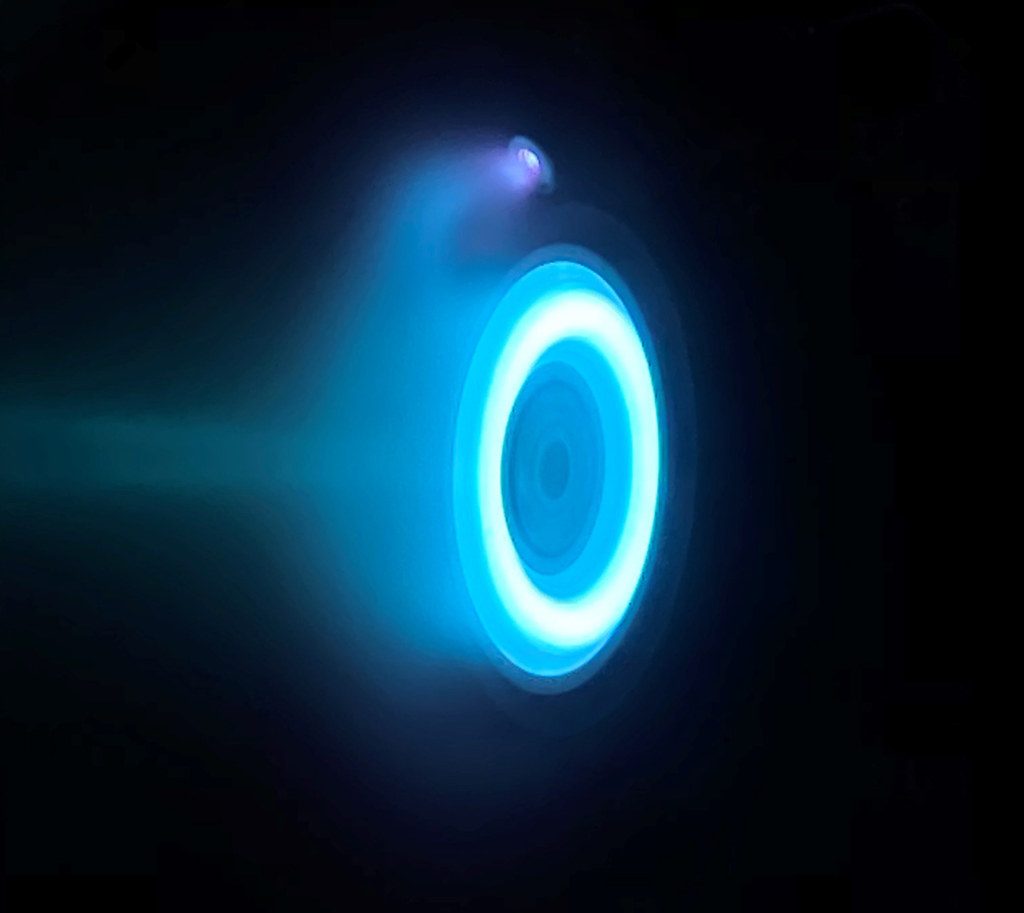
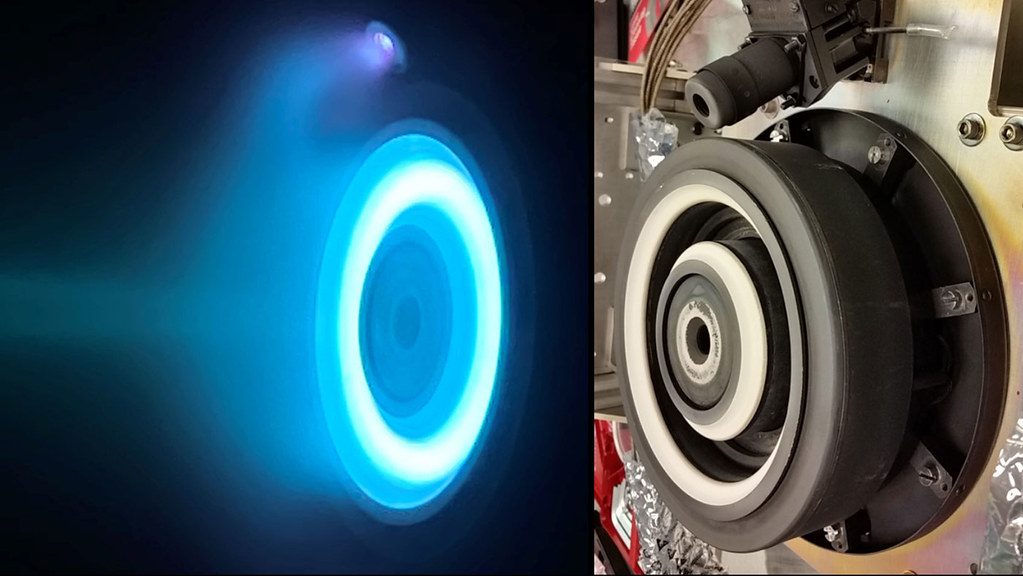
After three more years of cruise on its electric thrusters, Psyche reaches the asteroid and lets 16 Psyche's gravity capture it. The spacecraft then maps the asteroid from four orbital altitudes over 26 months. JPL has run this kind of approach before with Dawn at Vesta and Ceres, which is the closest precedent for what Psyche is trying to do.

Resolves by: 2029-12-31
Source: NASA JPL official mission status updates
Discussed by: NASA, JPL mission planners, Psyche science team at ASU
Consensus
2

Psyche fails to reach 16 Psyche

Spacecraft on multi-year cruises sometimes lose communication, suffer thruster failures, or take micrometeoroid hits. Psyche's electric propulsion runs almost continuously. A sustained thruster failure or a serious anomaly during the cruise could end the mission before arrival. The Mars flyby tested the science instruments but did not prove out the ion drive's full lifetime.

Resolves by: 2029-12-31
Source: NASA Science Mission Directorate announcements
Discussed by: Spaceflight risk analysts, NASA independent review boards
Consensus
3

Mission data confirms 16 Psyche is mostly metal

Older radar studies suggested 16 Psyche is largely iron-nickel, supporting the planetary-core idea. Hubble observations published in 2020 raised doubts, hinting at more rock and less metal than expected. Psyche's magnetometer and gamma-ray spectrometer should settle the composition question once it spends months in orbit.

Resolves by: 2031-12-31
Source: Peer-reviewed publications by the Psyche science team
Discussed by: Planetary scientists at ASU, JPL, and the broader research community
Consensus
4

Mission data shows 16 Psyche is mostly rock

If Psyche's instruments find a weak magnetic signature and a rocky surface, the planetary-core hypothesis dies. The asteroid would still teach scientists about main-belt objects, but it would not be the window into planet interiors NASA pitched in 2017.

Resolves by: 2031-12-31
Source: Peer-reviewed publications by the Psyche science team
Discussed by: Same researchers, opposite finding
Consensus

Historical Context

Galileo's gravity-assist tour to Jupiter (1989)

October 1989 to December 1995

What Happened

NASA's Galileo spacecraft launched from the shuttle Atlantis on a path that needed three gravity assists to reach Jupiter. It swung past Venus once and Earth twice over six years, picking up enough speed each time to reach the outer solar system.

Outcome

Short Term

Galileo arrived at Jupiter in December 1995. It dropped a probe into Jupiter's atmosphere and orbited the planet for eight years.

Long Term

Gravity assists became the default way for NASA to send heavy spacecraft to outer planets. Cassini, New Horizons, and Psyche all use the same trick.

Why It's Relevant Today

Psyche's Mars flyby is the same maneuver Galileo pioneered. Without it, the spacecraft would need a much larger rocket or much more propellant.

Dawn mission to Vesta and Ceres

September 2007 to November 2018

What Happened

NASA's Dawn spacecraft launched in 2007 to orbit two main-belt asteroids: Vesta from 2011 to 2012, then Ceres from 2015 until the mission ended. It used solar-electric propulsion, the same kind Psyche uses, to travel between them.

Outcome

Short Term

Dawn produced the first detailed maps of both bodies. It showed Vesta is differentiated, with a metallic core, and Ceres has a salt-rich crust.

Long Term

Dawn proved that ion drives can move spacecraft into and out of asteroid orbits. NASA built Psyche on what Dawn learned.

Why It's Relevant Today

Psyche's propulsion, science approach, and target type all trace back to Dawn. Dawn answered whether you could orbit two asteroids; Psyche tries to do the same with a third.

NEAR Shoemaker at asteroid Eros

February 2000 to February 2001

What Happened

NASA's NEAR Shoemaker probe reached the near-Earth asteroid Eros in February 2000 and orbited it for a year. In February 2001 it touched down on the surface, the first soft landing on an asteroid.

Outcome

Short Term

NEAR returned the first close images and spectra of an S-type asteroid. The data showed Eros is a loose rubble pile of older material.

Long Term

The mission opened asteroid science to direct study and led to OSIRIS-REx, Hayabusa, and DART. NASA started taking small bodies seriously.

Why It's Relevant Today

NEAR is Psyche's grandparent. It proved you can park a spacecraft at an asteroid and do real science. Psyche tries to do the same at a metal target.

Sources

(3)