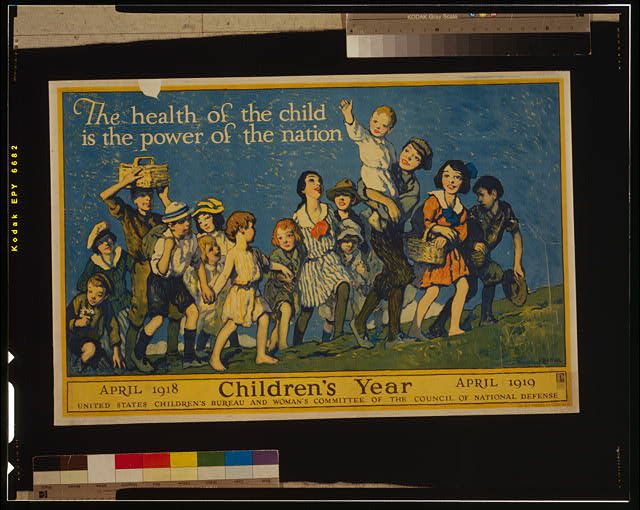
In 1900, one in seven babies born in the United States or United Kingdom died before their first birthday. By 2017, the rate had fallen to roughly 4-6 per 1,000—a decline exceeding 95%. This transformed how families experience childbirth and early childhood.
The causes were not primarily high-tech medicine. Before widespread vaccination or antibiotics, infant mortality had already plummeted—driven by clean water, pasteurized milk, sanitation systems, and public education campaigns that taught mothers about hygiene. The 20th century proved that most infant deaths were never inevitable; they were infrastructure failures waiting to be fixed.
Questions about this story
Free account needed to ask — your question is kept and asked for you right after sign-up. Answers are public.
No questions yet — be the first to ask.
Key Indicators
140→4
Deaths per 1,000 (UK, 1900-2017)
UK infant mortality rate fell from approximately 140 per 1,000 live births in 1900 to 3.8 in 2017
95%+
Reduction in infant mortality
US and UK infant mortality declined by more than 95% over 117 years
3.1%
Annual decline rate (US, 1915-2000)
US infant mortality fell from 99.9 to 6.9 per 1,000 at a pace of 3.1% per year
5→99%
Hospital births (US, 1900-1963)
Hospital delivery rose from under 5% in 1900 to 99% by 1963
19 events
Latest: December 31st, 2017 · 9 years ago
Showing 8 of 19
JK to step
Tap a bar to jump to that date
Jump to
December 2017
UK and US Infant Mortality Below 6 per 1,000
LatestMilestone
UK infant mortality reaches 3.8 per 1,000; US reaches 5.9 per 1,000. Both countries have achieved more than 95% reduction since 1900.
January 1990
Surfactant Therapy Transforms Preterm Survival
Medical Advance
Synthetic surfactant therapy becomes standard care for premature infants, dramatically improving survival for extremely preterm babies.
May 1980
Smallpox Declared Eradicated
Global Health
WHO certifies global eradication of smallpox—the first (and still only) human disease eliminated through vaccination.
May 1974
WHO Launches Expanded Immunization Programme
Global Health
WHO establishes the Expanded Programme on Immunization, aiming to vaccinate all children against six major diseases by 1990.
January 1963
Measles Vaccine Licensed
Vaccination
First measles vaccine licensed in the US. Measles vaccination would eventually prevent an estimated 60% of all vaccine-preventable deaths worldwide.
October 1960
First American NICU Opens
Medical Advance
Louis Gluck opens the first American neonatal intensive care unit at Yale New Haven Hospital. By the 1970s, NICUs become standard in developed countries.
April 1955
Salk Polio Vaccine Approved
Vaccination
Jonas Salk's polio vaccine is declared safe and effective, launching mass immunization campaigns that would nearly eliminate paralytic polio.
January 1950
Infant Mortality Reaches ~30 per 1,000
Milestone
US and UK infant mortality falls to approximately 30 per 1,000 live births. Hospital delivery has risen from 5% (1900) to 88%.
January 1943
Penicillin Mass Production Begins
Medical Advance
Industrial production of penicillin enables widespread antibiotic treatment, reducing infant deaths from bacterial infections including pneumonia and sepsis.
January 1935
Infant Mortality Reaches ~56 per 1,000
Milestone
US and UK infant mortality falls to approximately 56 per 1,000 live births—a 60% decline from 1900, achieved largely before antibiotics or widespread vaccination.
January 1927
London Milk 85% Pasteurized
Public Health
Pasteurization of London milk supply reaches 85%, contributing to sharp decline in infant deaths from tuberculosis and diarrheal disease.
November 1921
Sheppard-Towner Act Signed
Legislation
President Harding signs the first federal social welfare law, providing matching grants to states for prenatal clinics, visiting nurses, and midwife training.
January 1914
Infant Care Pamphlet Published
Public Health
Children's Bureau publishes first edition of Infant Care pamphlet, providing hygiene and nutrition guidance. Over 50 years, 45 million copies reach American families.
April 1912
US Children's Bureau Established
Policy
President Taft signs legislation creating the Children's Bureau, the first federal agency dedicated to child welfare. Julia Lathrop becomes its first chief.
January 1908
US Cities Begin Chlorinating Water
Infrastructure
American cities begin large-scale water chlorination. Filtering and chlorinating water supplies becomes a central public health strategy against waterborne disease.
January 1900
Infant Mortality at ~140 per 1,000
Baseline
UK and US infant mortality rates stand at approximately 140 deaths per 1,000 live births. In US cities, up to 30% of infants die before age one.
January 1880
Infant Incubator Invented
Medical Technology
Stéphane Tarnier develops the infant incubator in Paris, adapting technology used for chicken eggs to keep premature babies warm.
January 1864
Pasteur Develops Pasteurization
Scientific Advance
Louis Pasteur demonstrates that heating liquids kills microorganisms. Applied to milk, this process would eventually prevent an estimated 500,000 infant deaths from contaminated milk (1850-1950).
May 1847
Semmelweis Implements Hand-Washing
Medical Discovery
Hungarian physician Ignaz Semmelweis orders hand-washing in chlorinated lime at Vienna General Hospital, reducing childbed fever deaths from 18% to under 2%.
Scenarios
1
Global Convergence: Low-Income Countries Match 1935 Developed-World Rates
Possible
Discussed by: UNICEF, Gates Foundation, Our World in Data analyses
Low- and middle-income countries currently have infant mortality rates (~53 per 1,000) comparable to the US in 1935. If they follow the same trajectory—scaling sanitation, clean water, and basic healthcare—global infant mortality could fall below 20 per 1,000 within two decades. This scenario requires sustained investment in infrastructure rather than high-tech medicine.
2
Antibiotic Resistance Reverses Gains
Possible
Discussed by: WHO, Lancet, PLOS Medicine antimicrobial resistance studies
Drug-resistant infections already kill an estimated 200,000 newborns annually. If resistance spreads faster than new antibiotics are developed, neonatal sepsis and pneumonia deaths could surge—particularly in regions with weak health systems. WHO projects AMR could cause 10 million deaths annually by 2050 without intervention.
3
US Infant Mortality Gap Persists
Likely
Discussed by: CDC, Peterson-KFF Health System Tracker, JAMA studies
The US infant mortality rate (5.9 per 1,000 in 2017) remains 50-75% higher than peer nations like Finland (2.3) or Japan (2.0). Racial disparities are stark: Black infants die at more than twice the rate of white infants. Without addressing preterm birth rates and healthcare access, the US may remain an outlier among wealthy nations.
4
Climate Change Creates New Vulnerabilities
Possible
Discussed by: Wellcome Trust, Environmental Health journal, WHO climate-health assessments
Rising temperatures and water scarcity could increase diarrheal disease, malnutrition, and infection rates among infants in vulnerable regions. Children in areas already struggling with sanitation face compounding risks. This scenario is most threatening in sub-Saharan Africa and South Asia.
Historical Context
3 moments from history that rhyme with this story — and how they unfolded.
1 of 3
1831-1866
Victorian England Cholera Epidemics (1831-1866)
Four cholera epidemics killed over 100,000 people in Britain. In 1854, physician John Snow traced a Soho outbreak to a contaminated water pump, providing early evidence that disease spread through water rather than "bad air." His findings were initially rejected by authorities committed to miasma theory.
Then
Snow's pump handle removal stopped the Soho outbreak, but London's medical establishment remained skeptical for years.
Now
Snow's work eventually catalyzed massive investment in water and sewer infrastructure. The 1866 epidemic, largely confined to areas still using contaminated water, proved his theory correct and transformed public health policy.
Why this matters now
The cholera epidemics established that infrastructure—not individual behavior—was the key to preventing waterborne disease. The same insight drove the early 20th-century infant mortality decline: clean water and sanitation saved far more infant lives than medical treatment.
2 of 3
1918-1919
1918 Influenza Pandemic
The deadliest pandemic in modern history killed 50-100 million people worldwide. In the United States, it caused the only 20th-century increase in child mortality rates. Pregnant women faced mortality rates as high as 27%, and surviving mothers suffered elevated rates of miscarriage and preterm birth.
Then
US child mortality rate temporarily increased in the late 1910s, interrupting the steady decline.
Now
The pandemic demonstrated the vulnerability of public health gains to infectious disease outbreaks and accelerated investment in public health infrastructure and research.
Why this matters now
The 1918 pandemic shows that progress in infant mortality is not guaranteed—infectious disease outbreaks can reverse decades of gains. This parallel informs current concerns about antimicrobial resistance and emerging pathogens.
3 of 3
1890-1927
US Milk Wars (1890s-1920s)
Contaminated milk killed an estimated 500,000 infants between 1850 and 1950 through tuberculosis, diarrheal diseases, and other infections. Despite pasteurization being available since the 1860s, many physicians and dairy interests opposed mandatory pasteurization, arguing it diminished nutritional value or represented government overreach.
Then
Cities that adopted pasteurization requirements saw immediate drops in infant mortality; those that resisted did not.
Now
By 1927, 85% of London's milk supply was pasteurized. Universal pasteurization became standard practice, eliminating one of the leading causes of infant death.
Why this matters now
The pasteurization debate mirrors modern vaccine hesitancy: a life-saving technology resisted on grounds of perceived naturalness, government overreach, or disputed science. Public health progress often required overcoming commercial and ideological opposition.