
Pull to refresh
Logo
Daily Brief
Following
Why
The 44% drop in maternal deaths

The 44% drop in maternal deaths

New Capabilities
By Newzino Staff |

From 385 to 216 per 100,000 births: a 25-year campaign to make childbirth survivable

January 1st, 2023: Global MMR reaches 197 per 100,000

Overview

In 1990, approximately 532,000 women died each year from pregnancy and childbirth complications. By 2015, that number had fallen to 303,000—a 44% reduction in the maternal mortality ratio, from 385 to 216 deaths per 100,000 live births. The decline represents one of the largest coordinated public health efforts in history, driven by expanded access to skilled birth attendants, emergency obstetric care, and basic medical interventions like antibiotics and blood transfusions.

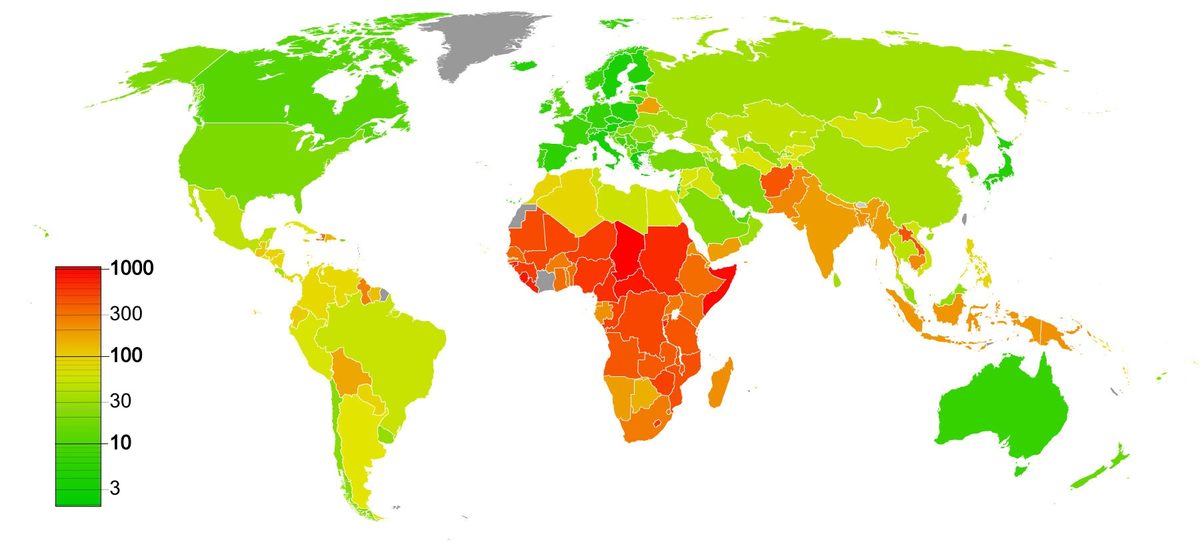
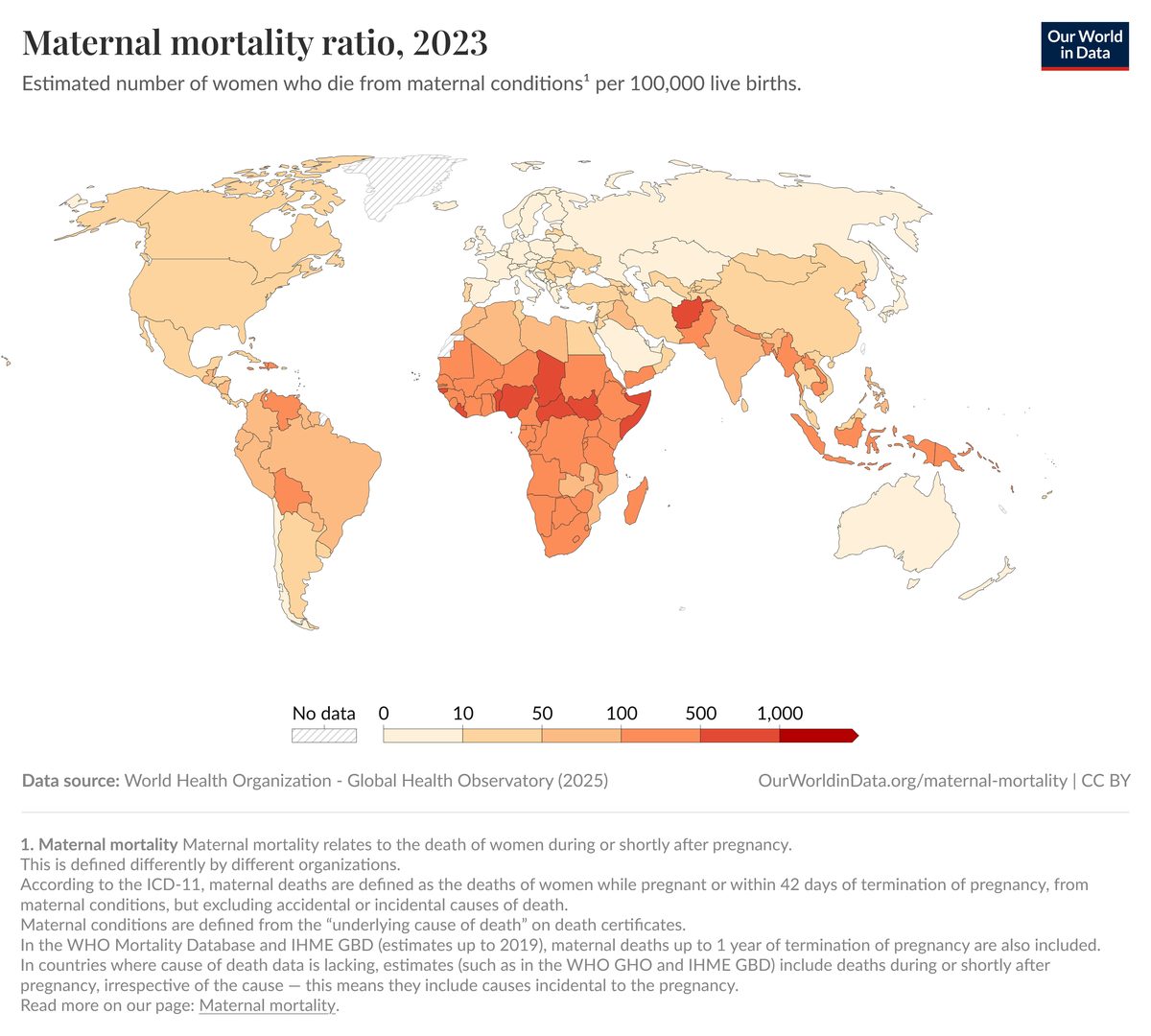
The progress, while substantial, fell short of the Millennium Development Goal target of a 75% reduction. Regional disparities remain stark: sub-Saharan Africa's 2015 rate of 546 deaths per 100,000 births was 45 times higher than high-income countries' rate of 12. The UN has set a new target of fewer than 70 maternal deaths per 100,000 by 2030, requiring annual reductions of 7.5%—more than double the 2.3% achieved during the MDG era.

Key Indicators

44%
Decline in MMR (1990-2015)
Global maternal mortality ratio dropped from 385 to 216 per 100,000 live births over 25 years
303,000
Annual maternal deaths (2015)
Down from 532,000 in 1990, representing 229,000 fewer deaths per year
71%
Births with skilled attendants (2014)
Up from 59% in 1990; skilled attendance is the primary intervention for reducing deaths
546 vs. 12
Sub-Saharan Africa vs. high-income MMR
A 45-fold gap persists between the highest and lowest mortality regions

Interactive

Exploring all sides of a story is often best achieved with Play.

Ever wondered what historical figures would say about today's headlines?

Sign up to generate historical perspectives on this story.

Sign Up

Debate Arena

Two rounds, two personas, one winner. You set the crossfire.

People Involved

Halfdan Mahler
Halfdan Mahler
WHO Director-General (1973-1988) (Deceased (2016))
Ignaz Semmelweis
Ignaz Semmelweis
Pioneer of antiseptic obstetrics (Deceased (1865))

Organizations Involved

WO
World Health Organization
UN Specialized Agency
Status: Lead agency for maternal mortality estimation and target-setting

Coordinates the UN Maternal Mortality Estimation Inter-Agency Group and sets global health targets.

United Nations Population Fund
UN Agency
Status: Key implementing partner for maternal health programs

Focuses on reproductive health, family planning, and maternal health in developing countries.

Timeline

  1. Global MMR reaches 197 per 100,000

    Data

    Latest estimates show 260,000 annual maternal deaths. Progress has resumed but remains insufficient to meet 2030 target of 70 per 100,000.

  2. Progress stalls: MMR at 223 per 100,000

    Data

    Annual rate of reduction falls to negligible levels during first five SDG years. COVID-19 pandemic further disrupts maternal health services.

  3. Global MMR reaches 216 per 100,000

    Milestone

    UN Maternal Mortality Estimation Inter-Agency Group reports 44% decline from 1990 baseline. Annual deaths fall to 303,000—substantial progress but short of 75% target.

  4. SDG 3.1 sets new target: MMR below 70 by 2030

    Policy

    Sustainable Development Goals establish more ambitious maternal mortality target, requiring 7.5% annual reductions—more than double the MDG-era rate.

  5. Millennium Development Goal 5 adopted

    Policy

    UN General Assembly adopts MDG 5: reduce maternal mortality by 75% between 1990 and 2015. Target 5B aims for universal access to reproductive health.

  6. MDG baseline: 385 maternal deaths per 100,000

    Data

    UN establishes 1990 as baseline year for measuring progress. An estimated 532,000 women die annually from pregnancy-related causes.

  7. Safe Motherhood Initiative launched in Nairobi

    Policy

    WHO, UNFPA, and World Bank sponsor conference establishing global goal to halve maternal deaths by 2000. Over 500,000 women were dying annually.

  8. Alma-Ata Declaration on primary health care

    Policy

    WHO and UNICEF establish primary health care as the foundation for achieving "Health for All," setting stage for maternal health initiatives.

  9. Maternal mortality begins precipitous decline

    Trend shift

    Introduction of sulfonamide antibiotics triggers rapid decline in maternal deaths across industrialized countries. By 1960, rates converge around 60 per 100,000.

  10. Semmelweis introduces hand hygiene

    Medical breakthrough

    Hungarian physician Ignaz Semmelweis mandates chlorine hand-washing at Vienna General Hospital, cutting maternal deaths from 18% to 2% within months.

Scenarios

1

SDG Target Met: Global MMR Falls Below 70 by 2030

Discussed by: WHO, UNFPA technical reports; optimistic projections contingent on major investment increases

Achieving the SDG target requires 11.6% annual reductions from 2021-2030—four times the current rate. This scenario requires massive expansion of skilled birth attendance in sub-Saharan Africa and South Asia, universal access to emergency obstetric care, and elimination of the 18 million births still occurring without skilled assistance. Few analysts consider this likely without unprecedented resource mobilization.

2

Continued Gradual Progress: MMR Reaches 140-160 by 2030

Discussed by: World Bank, Lancet analyses; reflects extrapolation of current trends

If the 2.7% annual decline rate from the MDG era resumes, global MMR would reach roughly 140-160 by 2030—better than 2020 but missing the SDG target by a factor of two. This trajectory would still save approximately 50,000-80,000 additional lives annually compared to 2015 levels. Regional disparities would persist.

3

Progress Reverses: Climate, Conflict, and Funding Cuts Drive Deaths Up

Discussed by: UNFPA warnings; some regional analyses of fragile states

Climate-related disasters, armed conflicts, economic crises, or reduced international health funding could reverse gains. Sub-Saharan Africa, where 70% of maternal deaths occur, faces overlapping vulnerabilities. Pandemic disruptions showed how quickly progress can stall—maternal health services were among the first to be deprioritized during COVID-19.

4

Convergence Model: Low-Income Countries Replicate Sri Lanka's Success

Discussed by: Center for Global Development case studies; public health researchers studying Sri Lanka and Malaysia

Sri Lanka halved its maternal mortality ratio every 7-12 years through sustained investment in midwifery, free universal care, and referral systems—achieving rates comparable to industrialized countries despite limited GDP. If high-burden countries adopted similar sector-wide approaches with political commitment, rapid convergence is possible. Ethiopia, Rwanda, and Bangladesh have shown accelerated progress using adapted versions of this model.

Historical Context

Smallpox Eradication Campaign (1967-1980)

1967-1980

What Happened

WHO launched an intensified campaign to eliminate smallpox, a disease killing 300 million people in the 20th century alone. The $300 million effort combined mass vaccination with targeted surveillance-containment strategies. The US and Soviet Union cooperated despite Cold War tensions. The last natural case occurred in Somalia in 1977.

Outcome

Short Term

WHO certified global eradication in December 1979, making smallpox the first human disease eliminated.

Long Term

The campaign saves over $1 billion annually in vaccination costs alone. It established the model for coordinated global health campaigns and proved disease eradication was achievable.

Why It's Relevant Today

Like maternal mortality reduction, smallpox eradication required sustained international coordination, standardized interventions, and investment in health infrastructure in low-income countries. Both campaigns faced skepticism about feasibility and required decades of effort.

Child Mortality Decline (1990-2015)

1990-2015

What Happened

Under-5 deaths fell from 12.7 million to 5.9 million annually—a 53% decline. The drop resulted from expanded vaccination, oral rehydration therapy, nutrition programs, and malaria interventions. Sub-Saharan Africa's rate of reduction quadrupled from 1.6% annually in the 1990s to 4.1% in 2000-2015.

Outcome

Short Term

An estimated 122 million children's lives were saved between 1990 and 2015.

Long Term

Demonstrated that major mortality reductions are achievable in low-resource settings with targeted interventions. Provided proof of concept for MDG framework.

Why It's Relevant Today

Child and maternal mortality share common determinants and interventions. Progress on child mortality outpaced maternal mortality (53% vs. 44% reduction), partly because maternal deaths require more complex health system responses including emergency surgical capacity.

Semmelweis and the Conquest of Puerperal Fever (1847-1940s)

1847-1940s

What Happened

Ignaz Semmelweis discovered that hand hygiene could prevent childbed fever, cutting maternal deaths from 18% to 2% in his ward. His findings were rejected by the medical establishment; antisepsis only became standard after germ theory was accepted decades later. Sulfonamide antibiotics in the 1930s and penicillin in the 1940s finally made puerperal sepsis treatable.

Outcome

Short Term

Semmelweis was ostracized and died in an asylum. Antiseptic techniques spread slowly through the late 19th century.

Long Term

By 1960, maternal mortality in industrialized countries had fallen to roughly 60 per 100,000—one-fortieth of 19th century rates. Sepsis dropped from causing half of maternal deaths to a small fraction.

Why It's Relevant Today

The century-long gap between Semmelweis's discovery and widespread adoption illustrates how social and institutional factors—not just medical knowledge—determine health outcomes. Today's challenge is similar: the interventions to prevent most maternal deaths exist; the barrier is access and implementation.

10 Sources: