
Pull to refresh
Logo
Daily Brief
Following
Why Sign Up
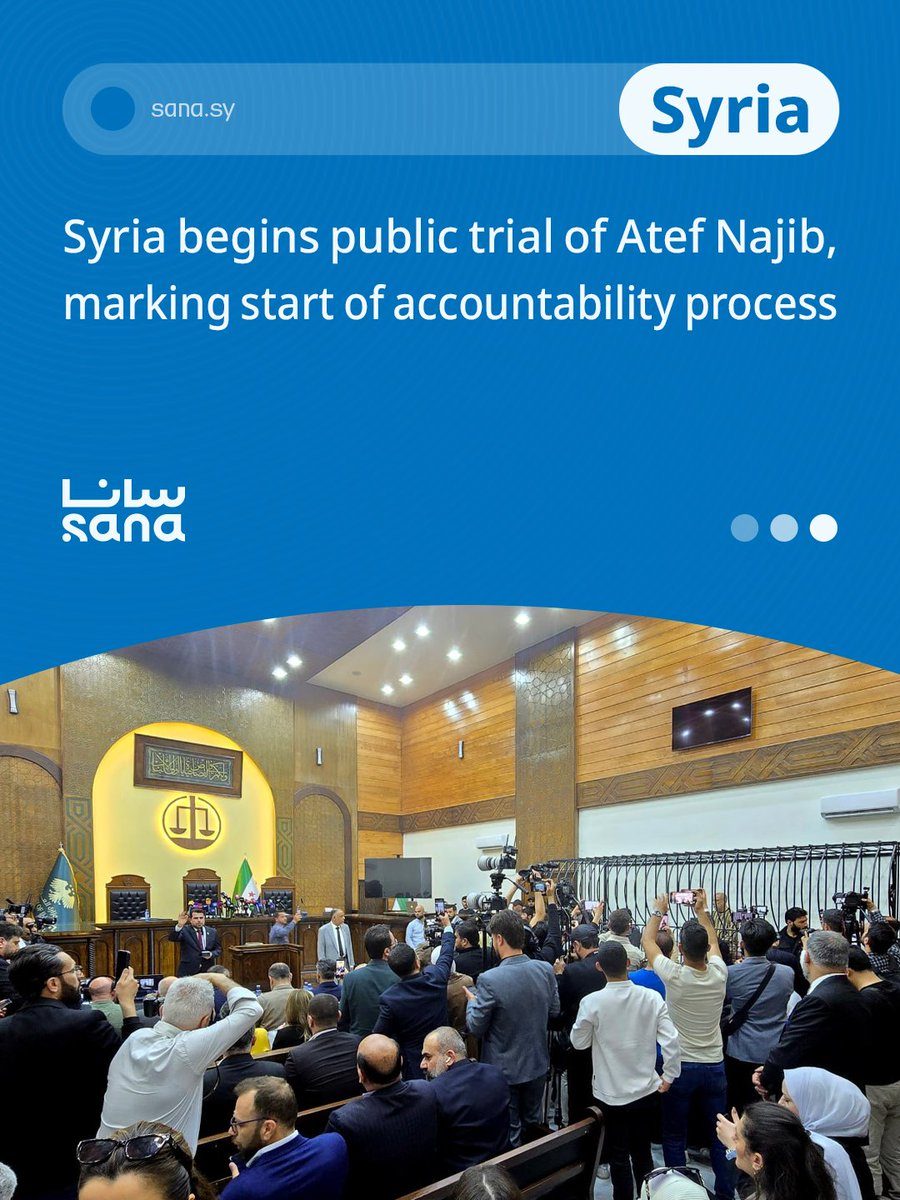
Syria opens first public trial of Assad-era officials

Syria opens first public trial of Assad-era officials

Rule Changes
By Newzino Staff |

Atef Najib appears in Damascus court; Bashar and Maher al-Assad tried in absentia

May 10th, 2026: Next hearing scheduled

Overview

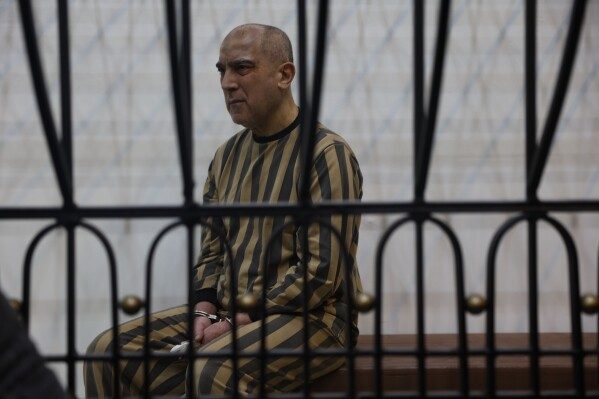
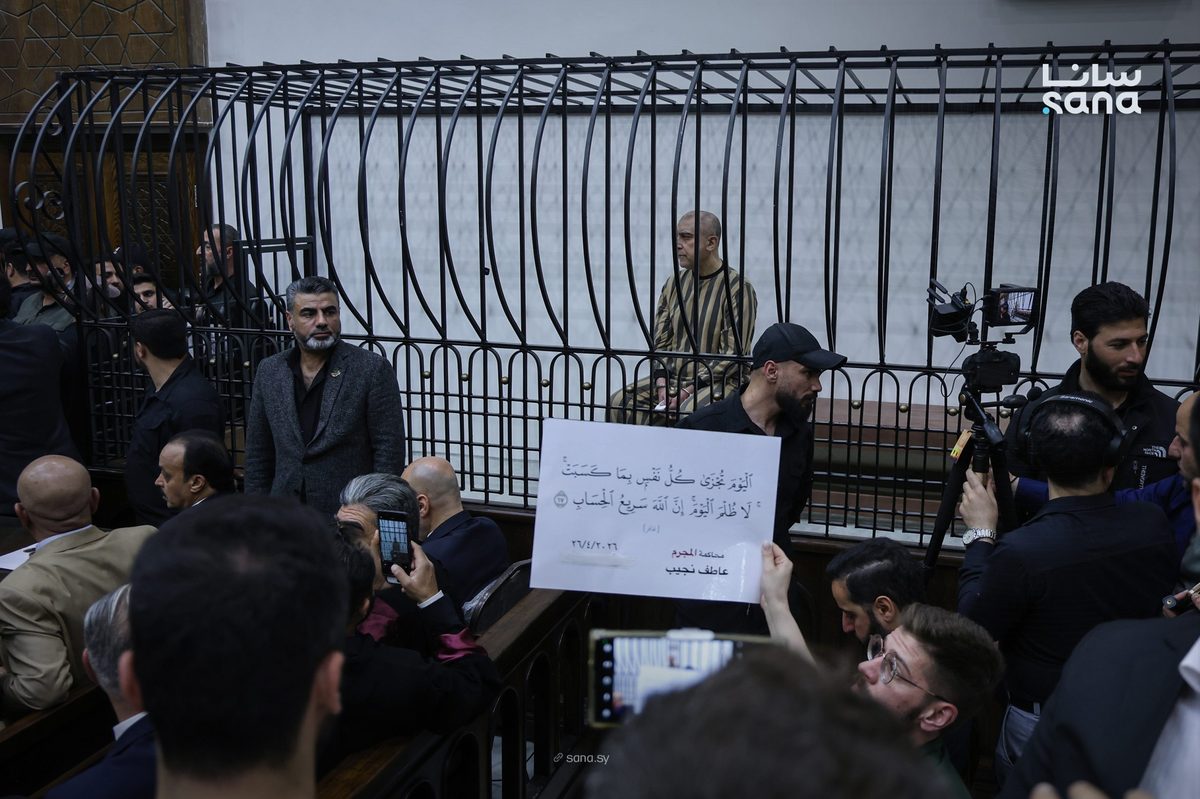
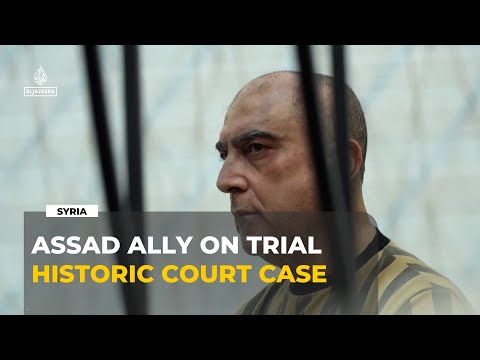
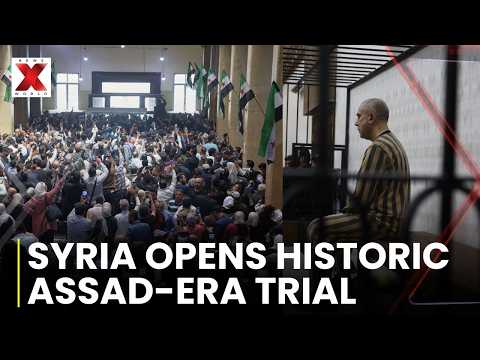
On April 26, 2026, a brigadier general in a brown prison uniform stepped into an iron cage at Damascus's Palace of Justice. Atef Najib — Bashar al-Assad's cousin and the man whose 2011 detention of graffiti-scrawling teenagers in Deraa lit the fuse of Syria's civil war — became the first official of the fallen regime to face a public trial. Above him, prosecutors displayed a photograph of Hamza al-Khatib, the 13-year-old whose tortured body became the war's first martyr image.

Why it matters

Whether Syria can prosecute its own war criminals at home will determine if post-Assad rule rests on law or on revenge.

Key Indicators

~500K
Estimated war dead
Civilians and combatants killed during Syria's 14-year civil war.
6
Defendants charged
One in custody (Najib); five tried in absentia, including Bashar and Maher al-Assad.
15 yrs
From graffiti to gavel
The Deraa boys were detained in March 2011; the first trial opened April 2026.
Jan 2025
Najib captured
Syrian security forces arrested him weeks after Assad's fall; he was held over a year before indictment.
May 10
Next hearing
Substantive proceedings resume in 2026; Sunday's session was preparatory only.

Interactive

Exploring all sides of a story is often best achieved with Play.

Ever wondered what historical figures would say about today's headlines?

Sign up to generate historical perspectives on this story.

Sign Up

Debate Arena

Two rounds, two personas, one winner. You set the crossfire.

People Involved

Organizations Involved

Timeline

  1. Next hearing scheduled

    Legal

    Substantive proceedings against Najib and the in-absentia defendants are set to resume.

  2. First public trial opens in Damascus

    Legal

    Najib appears at the Palace of Justice in a brown prison uniform; Assad, his brother Maher, and four security chiefs are charged in absentia. The session is preparatory; Najib is not questioned.

  3. Tadamon massacre suspect arrested

    Arrest

    Interior Minister Anas Khattab announces capture of Amjad Youssef, the ex-intelligence officer filmed executing civilians in the 2013 Tadamon massacre that killed 288 people.

  4. Transitional justice commission created

    Institutional

    President Ahmed al-Sharaa issues Decree No. 20 establishing the National Commission for Transitional Justice and a separate Missing Persons Commission.

  5. Najib captured

    Arrest

    Syrian transitional security forces apprehend Atef Najib, the highest-ranking Assad relative seized inside Syria.

  6. ICC prosecutor visits Damascus

    International engagement

    International Criminal Court prosecutor travels to Syria at al-Sharaa's invitation; Syria's foreign minister later meets him in The Hague.

  7. Assad regime falls

    Regime change

    Rebel forces led by Hayat Tahrir al-Sham enter Damascus; Bashar and Maher al-Assad flee to Russia, ending 24 years of family rule.

  8. Hamza al-Khatib's body returned

    Public revelation

    The 13-year-old's mutilated corpse is delivered to his family, and images spread across Arab and global media, galvanizing the uprising.

  9. Deraa protests turn deadly

    Escalation

    Demonstrators demanding the boys' release are shot by security forces, marking the first fatalities of what becomes Syria's civil war.

  10. Deraa boys arrested for graffiti

    Inciting incident

    Roughly 15 teenagers in Deraa are detained for spraying anti-regime slogans, including 'It's your turn, Doctor' — a reference to Assad's ophthalmology background — on a school wall. Najib's political security branch oversees their interrogation.

Scenarios

1

Najib convicted; trial becomes template for cascade of cases

Discussed by: International Center for Transitional Justice; Syrians for Truth and Justice; Atlantic Council MENASource analysts

Prosecutor Khatab's 'this will be neither the first nor the last' becomes literal. A conviction supported by victim testimony and documentary evidence sets procedural precedents that the National Commission feeds into successive trials of provincial security chiefs, military judges, and Captagon-trade operators. The transitional government wins legitimacy at home and rebuilds Western diplomatic ties on the strength of credible domestic accountability.

2

Trial criticized as victor's justice; international observers withdraw

Discussed by: Human Rights Watch; EuroMed Rights; UN Syria Commission of Inquiry

Defense lawyers and rights groups argue the proceedings violate fair-trial standards: no defense team yet named, judges drawn from the Assad-era bench, and a commission mandate that excludes opposition crimes. If observers conclude the courts cannot deliver impartial verdicts — particularly on the Captagon-trade and Suwayda-related charges — international support migrates toward The Hague or a hybrid tribunal, leaving domestic trials politically isolated.

3

Russia refuses extradition; in-absentia verdicts carry symbolic weight only

Discussed by: Middle East Eye legal analysts; Brookings Doha Center

Moscow continues to shelter the Assad brothers, mirroring its decades-long pattern of harboring allied autocrats. In-absentia convictions accumulate but remain unenforceable. Najib's trial proceeds in Damascus, but the marquee defendants never face a Syrian courtroom, capping the accountability project well below what victims' families demand.

4

ICC steps in for crimes outside the commission's mandate

Discussed by: International Centre for Counter-Terrorism; ICTJ

The ICC prosecutor — already invited to Damascus — opens a parallel track for crimes the National Commission cannot or will not pursue, including violations by HTS-aligned units, ISIS, and SDF. A division of labor emerges: domestic courts handle Assad-era cases; The Hague handles non-state actor crimes. This patches the mandate gap but creates jurisdictional friction within Syria.

Historical Context

Trial of Saddam Hussein (2005-2006)

October 2005 – December 2006

What Happened

Iraq's Special Tribunal tried the deposed dictator in Baghdad for the 1982 Dujail massacre of 148 Shia villagers. Saddam was convicted and hanged on December 30, 2006, with shaky cellphone footage of taunts at the gallows leaking globally within hours.

Outcome

Short Term

Three defense lawyers were assassinated during proceedings, and a chief judge resigned over political interference. The execution inflamed sectarian tensions just as Iraq slid into civil war.

Long Term

The tribunal became a cautionary tale: domestic post-regime courts can deliver verdicts but struggle to deliver legitimacy when judges, prosecutors, and security all come from one side of the conflict.

Why It's Relevant Today

Syria faces the same structural risk — using existing domestic courts staffed in part by Assad-era jurists to try Assad-era officials. How the Najib bench handles defense rights, witness protection, and political pressure will determine whether the trial reads as accountability or replay.

Argentina's Trial of the Juntas (1985)

April – December 1985

What Happened

A civilian federal court in Buenos Aires tried nine commanders of the 1976-83 military dictatorship for kidnapping, torture, and murder during the Dirty War. Five were convicted, including Generals Videla and Viola, who received life sentences.

Outcome

Short Term

The civilian-led prosecution — built on the CONADEP truth commission's report 'Nunca Más' — became a global model for domestic transitional justice without recourse to international tribunals.

Long Term

Subsequent amnesty laws were eventually overturned; by the 2010s, hundreds more officers had been convicted. The original trial's credibility carried successor cases for three decades.

Why It's Relevant Today

Argentina shows what Syria's transitional government may be aiming at: domestic ownership of accountability, anchored by a high-profile inaugural trial that establishes evidentiary and procedural standards. The contrast is that Argentina had nine years of democratic recovery before trial; Syria has 16 months.

Khmer Rouge Tribunal (ECCC), Cambodia

2006 – 2022

What Happened

A hybrid Cambodian-UN court in Phnom Penh tried surviving senior Khmer Rouge officials for the 1975-79 Cambodian genocide that killed 1.7 million people. Pol Pot died before trial; Comrade Duch (chief of the Tuol Sleng prison), Nuon Chea, and Khieu Samphan were convicted.

Outcome

Short Term

Convictions arrived three to four decades after the crimes — far too late for most surviving victims.

Long Term

The court is widely cited for thorough documentation but criticized for cost ($337 million for three convictions) and political interference by the Hun Sen government, which blocked further indictments.

Why It's Relevant Today

Cambodia is the warning case: post-conflict accountability that drags too long, costs too much, and submits to political limits delivers neither closure nor deterrence. Syria's transitional government has signaled urgency — the test is whether commission-to-courtroom timelines hold for the next dozen cases, not just the first.

Sources

(12)