


Pull to refresh
Logo
ICEYE unveils Gen5 radar satellite with 11-centimeter resolution

ICEYE unveils Gen5 radar satellite with 11-centimeter resolution

New Capabilities

Government buyers get the sharper mode at 1,800 MHz of bandwidth; commercial customers stay at 16 centimeters

Overview

Updated 56 minutes ago

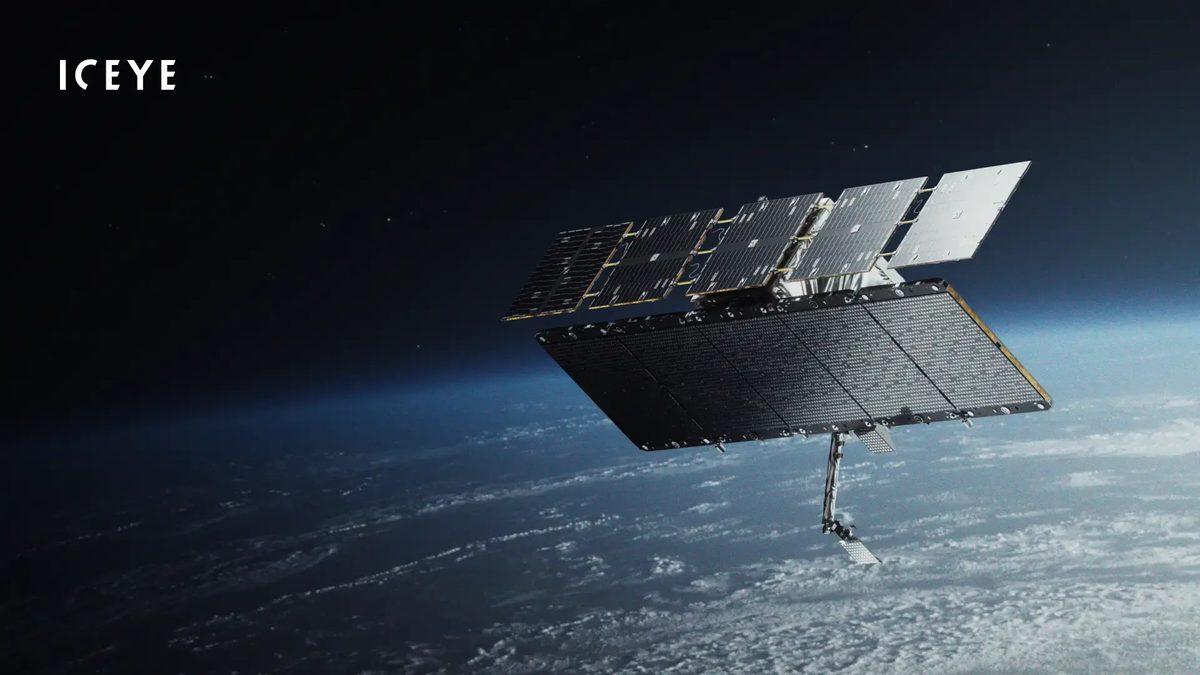
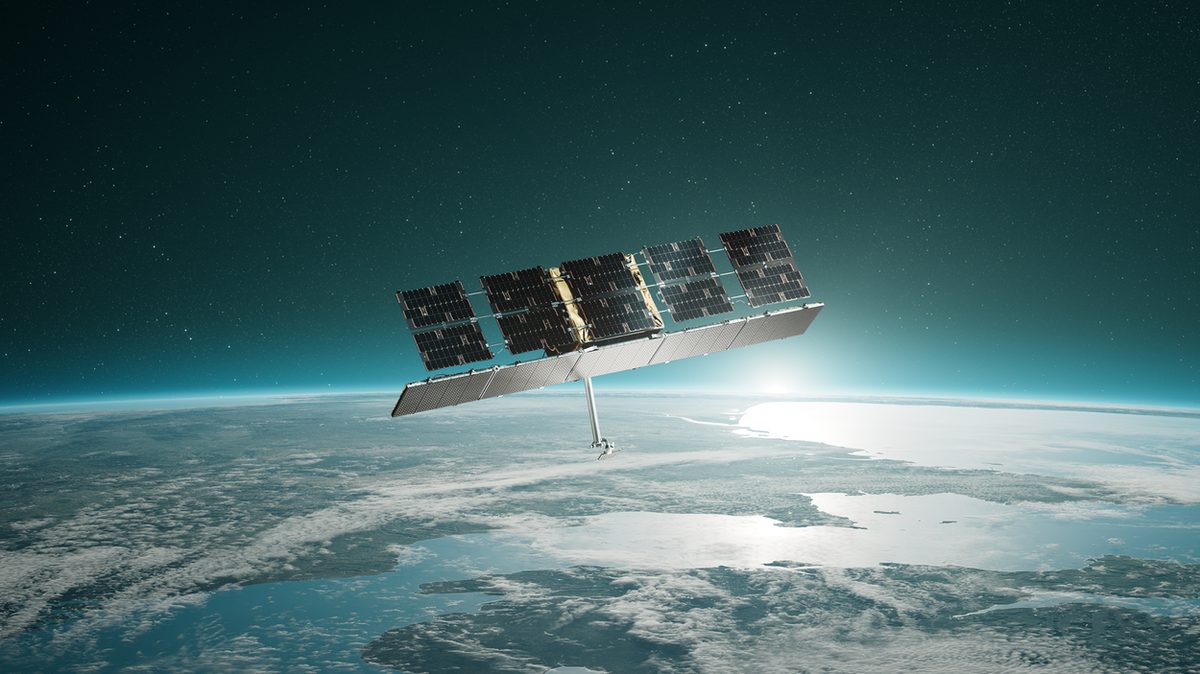
ICEYE says its new Gen5 radar satellite can resolve objects 11 centimeters across, roughly four inches, for government customers. Everyone else gets 16 centimeters, the same figure the previous generation offered.

The sharper number comes from a wider slice of radio spectrum: 1,800 megahertz instead of 1,200. That wider slice does not obviously fit inside the X-band allocation the International Telecommunication Union sets aside for Earth-observation radar, so the 11-centimeter mode depends on regulatory decisions ICEYE has not detailed.

Why it matters

Sharper radar imagery works through clouds and darkness, changing what a government can identify from orbit and who may buy it.

Questions about this story

Free account needed to ask — your question is kept and asked for you right after sign-up. Answers are public.

No questions yet — be the first to ask.

Key Indicators

11 cm
Government-mode ground resolution
Requires 1,800 MHz of bandwidth and compliance with ITU radio rules.
16 cm
Resolution available to all customers
Same figure ICEYE's Gen4 offered at 1,200 MHz.
1,800 MHz
Bandwidth of the government mode
Fifty percent wider than the 1,200 MHz commercial mode.
5
Satellite generations in eight years
ICEYE says it aims for a new generation about every 18 months.

Voices

Curated perspectives — historical figures and your fellow readers.

Sign up to generate historical perspectives on this story.

People Involved

Organizations Involved

Timeline

2018 November 2026

4 events Latest: Yesterday
Tap a bar to jump to that date
  1. ICEYE unveils Gen5

    Latest Product

    Government mode reaches 11 centimeters at 1,800 MHz; all customers get 16 centimeters at 1,200 MHz.

  2. Gen4 goes commercial at 16 centimeters

    Product

    High-resolution coverage area expands from 150 kilometers to 400 kilometers.

  3. First Gen4 satellite launches

    Launch

    SpaceX's Transporter-13 mission carries the first fourth-generation spacecraft.

  4. ICEYE's first radar generation reaches orbit

    Launch

    The company begins building a constellation of small synthetic aperture radar satellites.

Scenarios

1

Gen5 reaches orbit and the 11-centimeter mode operates

Possible Resolves by End of 2028

Discussed by: ICEYE's own announcement, which gives no launch date or pricing

ICEYE flies Gen5 and publishes imagery at 11-centimeter resolution collected under a spectrum assignment the ITU accepts. The company has said the mode is subject to ITU compliance but has not said which frequencies it would use or what compliance requires.

2

Spectrum rules cap the government mode at 1,200 MHz

Possible Resolves by End of 2027

Discussed by: TechTimes analysis of ITU allocations and WRC-23 study timelines

The 1,800 MHz mode cannot fit inside the 1,200 MHz X-band allocation for Earth-observation radar, and coexistence studies are not due before 2031. If regulators do not open more spectrum, Gen5's government tier stays at the same 16 centimeters everyone else gets.

3

A sovereign Gen5 customer signs within a year

Likely Resolves by Nov 16, 2027

Discussed by: ICEYE, which says a full system can be operational 12 months after signing

A government buys a complete Gen5 system — spacecraft, ground segment, software and training — and ICEYE delivers it inside the 12-month window it advertises. The company made a similar offer for Gen4 but has not published contract terms.

Historical Context

3 moments from history that rhyme with this story — and how they unfolded.

November 2015

World Radiocommunication Conference (2015)

ITU member states widened the allocation for Earth-exploration active sensors, including radar satellites, to 9,200–10,400 MHz. That span is exactly 1,200 MHz, and parts of it are shared with radionavigation and radiolocation services that radar satellites must not disrupt.

Then

Radar satellite operators gained a defined band in which to design their systems.

Now

The 1,200 MHz ceiling became the practical limit on radar bandwidth, and therefore on resolution, for a decade.

Why this matters now

Gen5's 1,800 MHz government mode is 50 percent wider than that allocation, which is why ICEYE attaches an ITU compliance caveat to its sharpest number.

March–September 2025

ICEYE Gen4 (2025)

ICEYE flew its first fourth-generation satellite in March 2025 and made the generation commercially available that September at up to 16 centimeters, with high-resolution coverage expanding from 150 kilometers to 400 kilometers.

Then

16 centimeters became ICEYE's standard commercial offering.

Now

Gen5 matches that 16-centimeter figure for all customers, so the only new resolution tier is the government-only 11-centimeter mode.

Why this matters now

It sets the baseline Gen5 is measured against: the commercial product did not get sharper, only the restricted one did.

2014 guidance

U.S. export-control threshold for radar spacecraft

A Harvard export-compliance summary of Category XV of the U.S. Munitions List said radar remote-sensing spacecraft are controlled unless the radar is centered between 1 and 10 GHz with bandwidth under 300 MHz. Gen5's 1,200 MHz commercial mode sits well above that threshold.

Then

High-bandwidth radar satellites fell under U.S. export licensing.

Now

Non-U.S. builders began marketing their systems as free of those restrictions to sovereign buyers.

Why this matters now

ICEYE says a complete Gen5 system can be delivered free of ITAR restrictions, a claim it has not documented and that the bandwidth figures make worth scrutinizing.

Sources

(10)