
Pull to refresh
Logo
Bleached corals recover within weeks by touching healthy neighbors

Bleached corals recover within weeks by touching healthy neighbors

New Capabilities

Stanford study shows brief physical contact transfers life-giving algae to dying corals

Today: Study published in Science Advances

Overview

Updated 45 minutes ago

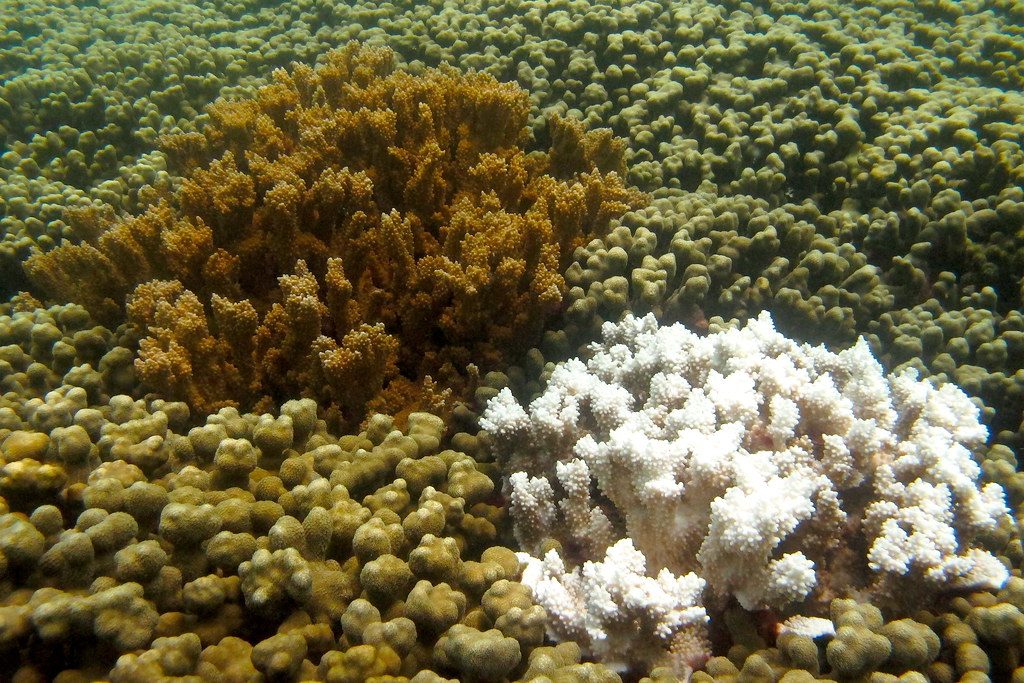
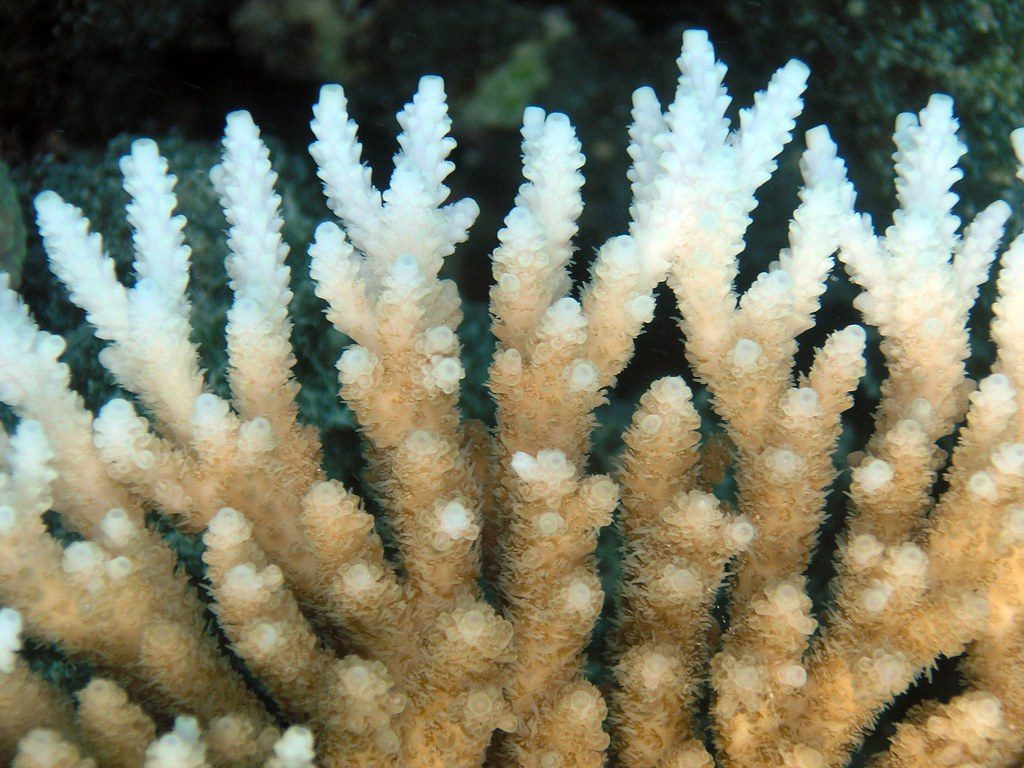
Ghostly white corals on the brink of death returned to full health in a laboratory within seven weeks through brief physical contact with healthy clones. That is the fastest documented bleaching recovery on record, according to a study published October 14 in Science Advances.

The mechanism is surprisingly simple: when a bleached coral fragment touches a healthy one of the same genetic make-up, their tissues fuse and microscopic channels align. The healthy coral pushes dinoflagellate symbionts into its dying partner, and those algae start dividing roughly every four days — about ten times faster than recovery rates observed on wild reefs.

Why it matters

Coral reefs host a third of known marine species and protect coastlines from storms, but warming oceans trigger bleaching that is often lethal. This discovery reveals a natural recovery pathway scientists had not documented before, offering a potential foundation for new restoration methods.

Questions about this story

Free account needed to ask — your question is kept and asked for you right after sign-up. Answers are public.

No questions yet — be the first to ask.

Key Indicators

7 weeks
Full recovery time for contacted corals
All bleached fragments in contact with healthy corals achieved 100% polyp recovery within 8 weeks; one recovered in 4 weeks.
3 days
Time for symbiont transfer to begin
Beneficial algae moved from healthy to bleached fragments within three days of contact.
~4 days
Symbiont population doubling time
During the second week of contact, algae in bleached fragments doubled every four days — up to 10x faster than wild recovery.
100%
Polyp recovery rate in contacting fragments
All bleached corals in contact with healthy corals reached full polyp recovery; 4 of 5 isolated corals showed 5-20% or died.

Voices

Curated perspectives — historical figures and your fellow readers.

Ever wondered what historical figures would say about today's headlines?

Sign up to generate historical perspectives on this story.

People Involved

Organizations Involved

Timeline

2025 October 2026

2 events Latest: Today
  1. Study published in Science Advances

    Today Publication

    Research shows bleached corals fully recover within seven weeks through brief contact with healthy clones; 1 week of contact is sufficient for independent recovery.

  2. Palumbi notices unusual coral recovery in lab

    Observation

    Two coral fragments from the same colony tipped over in a tank and touched; color returned to the bleached fragment at the contact point.

Scenarios

1

Algae harvesting enables reef-scale restoration

Possible Resolves by Oct 14, 2027

Discussed by: Stanford research team (Collins, Palumbi)

Researchers develop a method to extract symbionts from healthy corals long before heat waves hit, culture them in bulk, and deliver them to bleached corals. This sidesteps the same-genet requirement because the symbionts, not the corals, are what transfer. The team plans to test this approach in the coming months.

2

Contact method stays confined to laboratory

Likely Resolves by Oct 14, 2028

Discussed by: Coral scientists cited by Science (including Baker, University of Miami)

The same-genet requirement makes large-scale application impractical. Pairing every bleached coral with a genetically identical healthy copy is not feasible at reef scale. The method remains a scientific demonstration of a natural mechanism rather than a restoration tool.

3

Symbiont-only delivery works across genetic boundaries

Possible Resolves by Oct 14, 2027

Discussed by: Stanford team

Because the genetic mismatch problem applies to the corals rather than the symbionts, extracting and reintroducing symbionts in large batches may work regardless of coral genotype. This would broaden the approach beyond clone pairings and make it applicable to mixed reefs.

Historical Context

2 moments from history that rhyme with this story — and how they unfolded.

1998-2024

Global coral bleaching events (1998, 2016, 2024)

Ocean heat waves triggered mass bleaching across the Great Barrier Reef and reefs worldwide, with some events killing over half the corals in affected areas. The 2016 event hit 91% of the Great Barrier Reef.

Then

Reefs lost large portions of living coral cover; recovery took years where it occurred at all.

Now

Corals normally recover by reabsorbing free-floating algae or repopulating residual symbionts, processes too slow to prevent mortality.

Why this matters now

The new study shows a recovery pathway an order of magnitude faster than these natural mechanisms, achieved through tissue fusion between genetically identical corals.

2000s-2020s

Coral restoration and transplantation efforts (2000s-2020s)

Marine biologists developed coral gardening, fragment transplantation, and selective breeding to restore damaged reefs. These methods are labor-intensive and have struggled to scale.

Then

Localized successes in reef patches, but restoration lagged far behind bleaching damage.

Now

The field remains limited by the gap between restoration capacity and the scale of reef loss.

Why this matters now

The discovery of contact-mediated symbiont transfer adds a previously unknown natural mechanism to the restoration toolkit, potentially informing faster intervention methods.

Sources

(4)