



Pull to refresh
Logo
Social Security 2027 COLA set at 3.6% as inflation accelerates to 3.7%

Social Security 2027 COLA set at 3.6% as inflation accelerates to 3.7%

Rule Changes

Average monthly benefit rises $75 starting in January, the largest increase in three years

2 days ago: SSA announces 3.6% COLA for 2027

Overview

Updated 1 hour ago

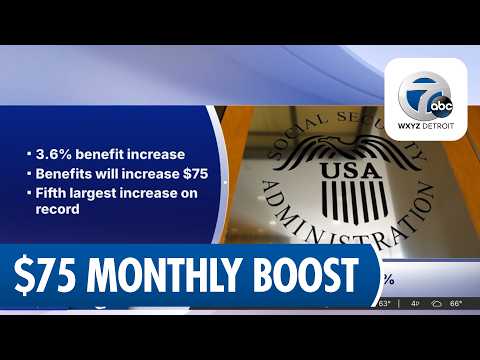
The Social Security Administration set the 2027 cost-of-living adjustment at 3.6% on October 14. The Labor Department's Bureau of Labor Statistics reported the same day that headline inflation hit 3.7% in September, up from 3.4% in August. The benefit increase, the largest in three years, still lands a tenth of a percentage point below the latest price reading.

The gap is small but the stakes are large. Some 72 million retirees and disabled workers depend on the adjustment, which averages $75 more per month starting in January. Meanwhile, average wages rose just 3% in September, meaning the typical worker's buying power is eroding too. The COLA is calculated using a narrower index, the Consumer Price Index for Urban Wage Earners and Clerical Workers, which averaged 3.6% over July through September. The Cato Institute argues that index overstates inflation and that switching to a more accurate measure, the chained CPI, would cut the program's long-term shortfall by 12%.

Why it matters

If inflation outpaces the benefit increase, retirees on fixed incomes lose purchasing power, and the gap compounds with each annual adjustment.

Questions about this story

Free account needed to ask — your question is kept and asked for you right after sign-up. Answers are public.

No questions yet — be the first to ask.

Key Indicators

3.6%
2027 COLA rate
Social Security and SSI benefits increase 3.6% starting January 2027.
3.7%
September headline CPI
Consumer price index rose 3.7% year-over-year in September, up from 3.4% in August.
$75
Average monthly benefit increase
The typical Social Security retirement benefit rises by $75 per month in 2027.
72 million
Social Security recipients affected
Nearly 72 million people receive monthly benefits; about 7.3 million more get SSI.
3.9%
September CPI-W
The COLA's base index rose 3.9% in September, above its 3.6% three-month average.
65 months
Consecutive months CPI above 2%
Annual inflation has exceeded the Federal Reserve's 2% target for more than five years.

Voices

Curated perspectives — historical figures and your fellow readers.

Ever wondered what historical figures would say about today's headlines?

Sign up to generate historical perspectives on this story.

Organizations Involved

Timeline

October 2026 January 2027

5 events Latest: 2 days ago
Tap a bar to jump to that date
  1. COLA appears in Social Security checks

    Upcoming Scheduled implementation

    The 3.6% increase shows up in January benefit payments for 72 million recipients.

  2. SSI payments increase takes effect

    Upcoming Scheduled implementation

    About 7.3 million Supplemental Security Income beneficiaries begin receiving 3.6% higher payments.

  3. SSA announces 3.6% COLA for 2027

    Latest Policy announcement

    Social Security Administration sets cost-of-living adjustment at 3.6%, lifting average retirement benefits $75 a month starting in January.

  4. BLS reports September inflation at 3.7%

    Data release

    Headline consumer price index accelerates to 3.7% from 3.4% in August; the COLA's CPI-W index hits 3.9%.

  5. Cato Institute publishes COLA critique

    Analysis

    Cato modeling says chained CPI would cut Social Security spending $188 billion over 2027-2036.

Scenarios

1

Inflation stays above 3% through mid-2027, eroding the 3.6% raise

Likely Resolves by Q2 2027

Discussed by: NPR, PBS NewsHour analysts; BLS data shows inflation accelerating from 3.4% to 3.7% between August and September

If September's 3.7% reading marks a continuing trend, the 3.6% COLA will have lost value in real terms within a few months of taking effect. September CPI-W of 3.9% suggests the index underpinning next year's COLA is also running hot, pointing to upward pressure on the 2028 adjustment.

2

Congress introduces chained CPI legislation for Social Security COLA

Unlikely Resolves by End of 2027

Discussed by: Cato Institute, which models $188 billion in savings over 2027-2036

Cato's analysis argues the current COLA overpays because CPI-W covers only about a third of the population and doesn't account for consumer substitution. If budget pressure on Social Security builds, lawmakers could introduce a bill adopting the chained CPI. The political risk is real: changing the COLA formula effectively cuts future benefit growth and has historically drawn strong opposition from retiree advocacy groups.

3

2028 COLA comes in above 3.6%, catching up to inflation

Possible Resolves by Oct 15, 2027

Discussed by: Reuters, which notes September's CPI-W rose 3.9%, above the 3.6% three-month average

The annual COLA reflects the average of CPI-W over July, August, and September. September's 3.9% reading is already above the 3.6% average that set the 2027 adjustment. If prices keep rising through 2027's third quarter, the 2028 COLA would land above 3.6%, giving retirees an increase that at least matches the prior year's inflation rate.

Historical Context

2 moments from history that rhyme with this story — and how they unfolded.

1973-1981

The 1970s inflation surge (1973-1981)

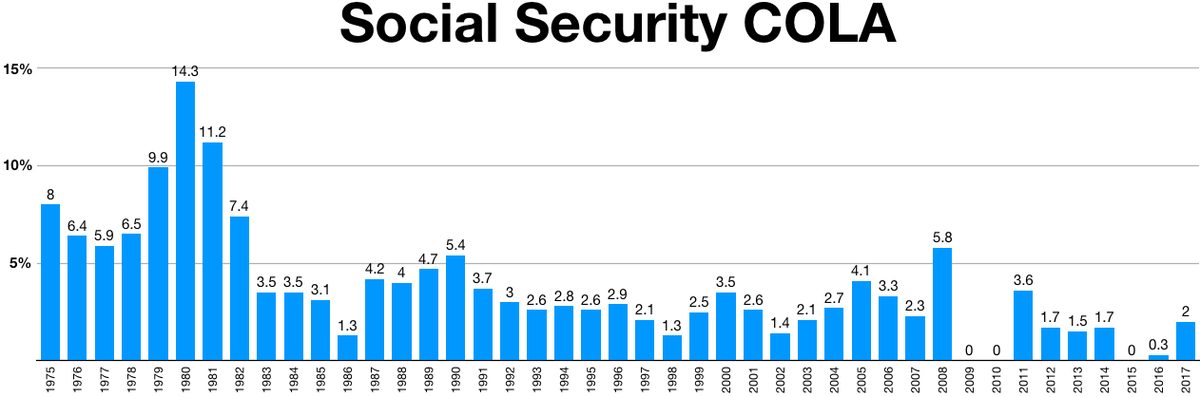
Congress tied Social Security COLAs to the CPI in 1972, with automatic adjustments starting in 1975. Inflation then surged to double digits, peaking above 13% in 1979-1980. The trailing-data formula meant retirees' checks repeatedly lagged the current price level, and ad-hoc catch-up payments were required.

Then

Congress passed supplemental increases in some years to make up ground, and inflation eventually cooled in the early 1980s after the Federal Reserve raised interest rates sharply.

Now

The episode established that automatic COLA is a lagging indicator: it measures past inflation and can miss accelerating price changes.

Why this matters now

The same lag operates today: the 2027 COLA reflects July-September 2026 prices, while inflation accelerated to 3.7% in September, just above the 3.6% adjustment.

January 2023

The 8.7% COLA paid in January 2023

After inflation hit 9.1% in mid-2022, the Social Security Administration announced an 8.7% COLA for 2023, the largest since 1981. By the time the increase took effect, inflation had cooled sharply, leaving retirees with a real gain in purchasing power.

Then

Retirees received the largest nominal benefit increase in four decades, and real benefits rose as inflation decelerated through 2023.

Now

The example shows the COLA can overshoot as well as undershoot, depending on whether inflation is rising or falling when the adjustment is calculated.

Why this matters now

The 2027 case is the mirror image: inflation is rising into the benefit year, so the 3.6% adjustment may not keep pace with prices that are still accelerating.

Sources

(11)