Anchor

Interstellar comet 3I/ATLAS is bursting with methanol
New CapabilitiesALMA finds the third interstellar visitor is packed with methanol, a chemical signature unlike most solar system comets
Today: Methanol-rich chemistry reportedNew here? Follow stories to track developments over time. Create a free account to get updates when stories you care about change.
Overview
Updated 1 hour ago3I/ATLAS is only the third object ever confirmed to pass through our solar system from another star system. New ALMA observations show it is one of the most methanol-rich comets ever measured, with alcohol-to-hydrogen-cyanide ratios of roughly 70 and 120.
The methanol is a chemical fingerprint of how another planetary system made its icy bodies. The data also show the alcohol outgasses from tiny grains in the coma, not just the comet's core — the first time such behavior has been traced in an interstellar object.
Why it matters
Every interstellar comet is a direct sample of another star system. 3I/ATLAS shows they can be chemically unlike anything in ours.
Questions about this story
Free account needed to ask — your question is kept and asked for you right after sign-up. Answers are public.
No questions yet — be the first to ask.
Key Indicators
70 and 120
Methanol-to-HCN production ratio
Two observing runs found ratios of roughly 70 and 120, among the highest ever measured in a comet.
3
Confirmed interstellar objects in our solar system
3I/ATLAS is the third, after 1I/'Oumuamua and 2I/Borisov.
>258 km
Coma-scale methanol source size
Statistical analysis shows methanol also comes from icy grains in the coma, at 99% confidence.
Related Media
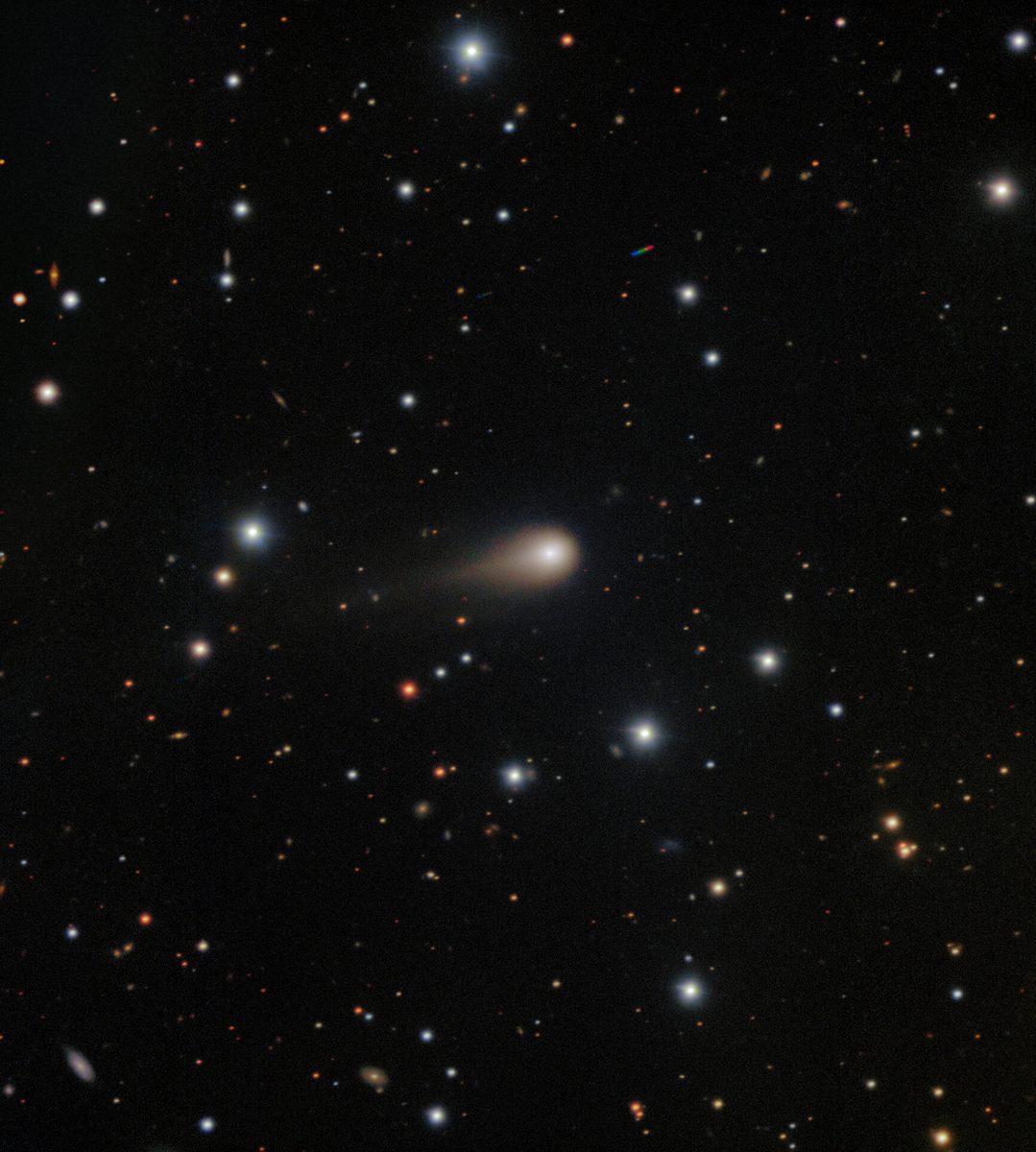
Growing Tail of Interstellar Comet 3I-ATLAS (noirlab2525b)
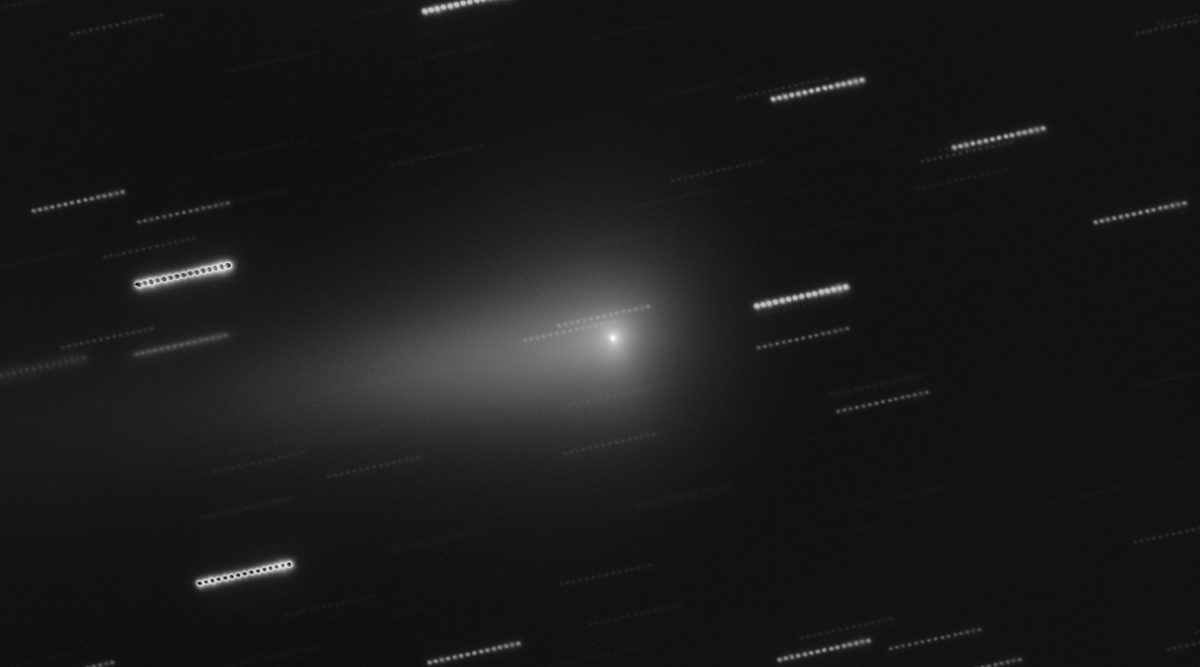
VLT image of interstellar comet 3I-ATLAS (18 January 2026) (eso2608a)
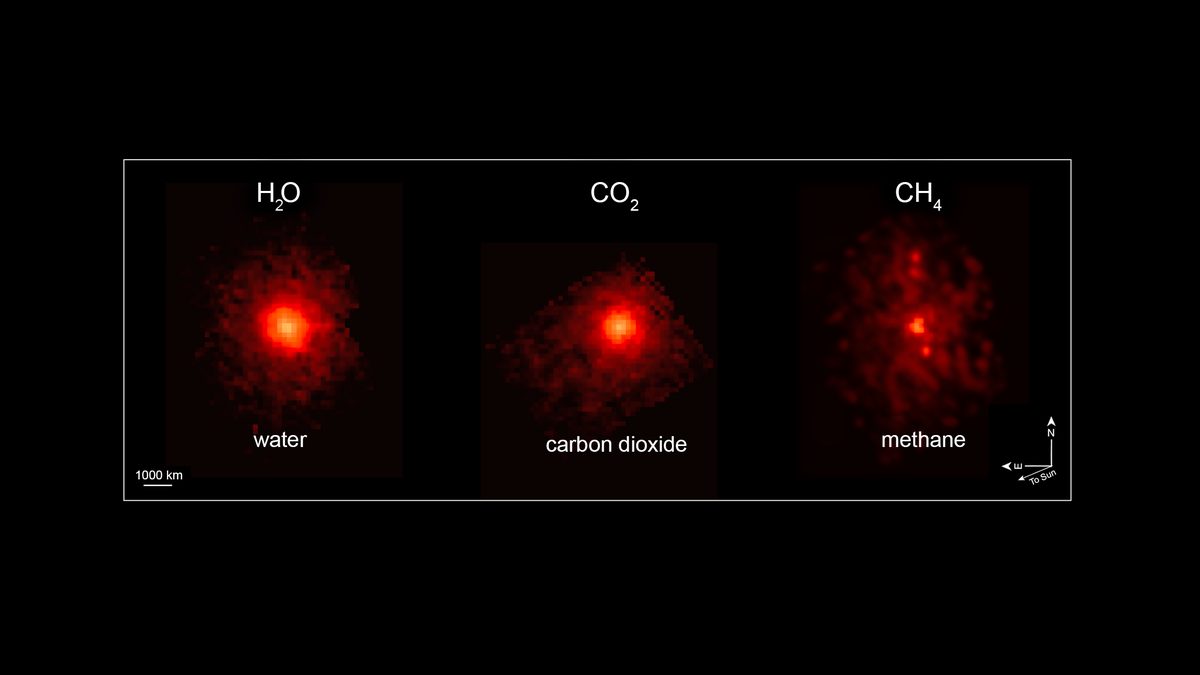
Webb sniffs methane from interstellar Comet 3I-ATLAS (55307778009)
42.2K views
14:26
Chemical Load of 3I/Atlas TOXIC ! Scientists detected Methanol ...
On the Pulse with Silki
8.6K views
3:00
3I/ATLAS Brings Rare Chemical Clues From Beyond Our Solar ...
WION
53.4K views
10:38
3I ATLAS
NASASpaceNews
Images from Openverse under Creative Commons licenses. Videos from YouTube.
Voices
Curated perspectives — historical figures and your fellow readers.
Play
Exploring all sides of a story is often best achieved with Play.
Most of these play right now — no account needed. Sign up to save scores, keep a streak, and unlock Debate and Predict.
Log in
Sign Up
Higher or Lower
A number from this story, against one from elsewhere in the news — guess which is bigger, then keep the chain going. 5 rounds, 3 strikes; a miss costs a strike and resets your streak.
Example
Anchor
EU tariff revenue
$52B
Big for this kind of number
Mystery
Pentagon AI contract
?
Round 1
Streak: 0
Mystery
?
Keyboard: ↓/L lower · ↑/H higher
0 pts
Best streak: 0 · Rounds: 0
0 points — sign up to put that on the leaderboard.
Now try on this story
Connections
Sixteen names from the news. Find the four hidden groups of four. Four mistakes max.
Loading today's puzzle…
0/4 groups
Mistakes
Sign up to keep a daily streak — a new puzzle lands every day.
Now try on this story
Exit debate?
Your progress in this debate will be lost.
How it works
- 1 Two AI personas square off on this story.
- 2 You predict who'll win each round — correct picks earn XP.
- 3 One crossfire question is yours to fire. Pick it carefully.
Couldn't generate a topic
Select Your Champions
Choose one persona for each side of the debate
DEBATE TOPIC
Choose personas with different perspectives for a more dynamic debate.
SIDE A (PRO)
Select debater for this side:
No debate personas available right now.
SIDE B (CON)
Select debater for this side:
No debate personas available right now.
VS
Get ready to make your prediction...
Round of
Claim
Evidence
Stakes
Crossfire Answer
Closing Statement
Claim
Evidence
Stakes
Crossfire Answer
Closing Statement
Your Crossfire Question
Generating arguments...
Who's Got This Round?
Make your prediction before the referee scores
The referee scores both sides on
Correct predictions earn +20 XP
· Press 1 or 2 to pick
Evidence
40%
Logic
30%
Detail
20%
Style
10%
Round Results
Your Pick
Not this time
(%)
Overall Score
/10
Your Pick
Not this time
(%)
Overall Score
/10
Set the Crossfire
Pick the question both personas must answer in the final round
Crafting crossfire questions...
Choosing a question earns +10 XP crossfire bonus
🏆
Total XP Earned
Cred Change
Predictions
Debate Oracle! You called every round!
Sharp Instincts! You know your debaters!
The Coin Flip Strategist! Perfectly balanced!
The Contrarian! Bold predictions!
Inverse Genius! Try betting the opposite next time!
XP Breakdown
Base completion
+20 XP
Rounds played ( rounds x 5 XP)
+ XP
Correct predictions ( correct x 20 XP)
+ XP
Crossfire bonus
+10 XP
Accuracy
%
Prediction History
Round
You picked:
✓
✗
Now try on this story
Keep debating to level up your credibility and unlock achievements
People Involved
Organizations Involved
ALMA – Citizens for Cyprus
Radio telescope observatory
Conducted the observations of 3I/ATLAS
A 66-antenna radio array in Chile's Atacama Desert that detected methanol and hydrogen cyanide in 3I/ATLAS.
National Radio Astronomy Observatory (NRAO)
Federal research center
U.S. partner in ALMA; lead authors of the study
The U.S. partner in ALMA whose researchers led the methanol analysis of 3I/ATLAS.
Timeline
August 2025 September 2026
4 events
Latest: Today
Tap a bar to jump to that date
-
Methanol-rich chemistry reported
Today Research publicationResearchers publish methanol-to-HCN ratios of about 70 and 120, ranking 3I/ATLAS among the most methanol-rich comets ever measured.
-
Observation campaign closes
ObservationThe final methanol run places 3I/ATLAS at 1.7 astronomical units from the Sun, with methanol production rising sharply toward perihelion.
-
Hydrogen cyanide detected in the coma
ObservationALMA measures HCN, whose production traces direct sublimation from the comet's nucleus.
-
ALMA begins methanol observations of 3I/ATLAS
ObservationThe Atacama Compact Array first detects methanol in 3I/ATLAS while the comet sits 2.6 astronomical units from the Sun.
Historical Context
3 moments from history that rhyme with this story — and how they unfolded.
2016–2018
Comet C/2016 R2 (Pan-STARRS)
C/2016 R2 is a solar system comet from the Oort Cloud distinguished by extraordinary carbon monoxide and ion-driven chemistry. It held the highest methanol-to-HCN ratio measured in any comet until 3I/ATLAS.
Then
It became a test case for how comet chemistry varies with formation conditions.
Now
It remains the sole local reference point for extreme methanol enrichment.
Why this matters now
The only comet with a higher methanol-to-HCN ratio than 3I/ATLAS is this local oddball, sharpening the view that 3I/ATLAS formed under unusual conditions.
October 2017
1I/'Oumuamua (2017)
The Pan-STARRS telescope spotted a fast-moving object on October 19, 2017, later named 1I/'Oumuamua — Hawaiian for "scout." It was the first object confirmed to come from beyond our solar system, with an elongated shape and no visible coma.
Then
Its odd acceleration and absence of outgassing sparked years of debate over whether it was an asteroid, a comet, or something stranger.
Now
It broke the assumption that comets must look like comets and established a naming system for interstellar objects.
Why this matters now
1I/'Oumuamua showed interstellar objects can defy easy classification; 3I/ATLAS now shows they can also be chemically extreme.
August 2019
2I/Borisov (2019)
Amateur astronomer Gennady Borisov found the second interstellar object, 2I/Borisov, on August 30, 2019. Unlike 'Oumuamua, it developed a proper coma, and telescopes detected hydrogen cyanide and carbon monoxide.
Then
Its chemistry resembled typical solar system comets, easing fears that interstellar objects were fundamentally strange.
Now
It set a baseline expectation that interstellar comets behave like local ones — a baseline 3I/ATLAS now challenges.
Why this matters now
The extreme methanol enrichment in 3I/ATLAS breaks the pattern Borisov established.
Sources
(7)Related Stories
Six icy moons hide liquid oceans beneath their shells
New Capabilities
Updated 2 days ago
The K2-18b biosignature hunt
New Capabilities
Updated May 19
Curiosity rover finds new class of organic molecules on Mars
New Capabilities
Updated May 31
Star formation across the universe drops sharply while hydrogen fuel holds steady
New Capabilities
Updated 3 days ago
The exoplanet revolution: 30 years, 6,000 worlds
New Capabilities
Updated May 19
Astronomers detect a 10-sided decagon forming at Saturn's south pole
New Capabilities
Updated 3 days ago