
Pull to refresh
Logo
Canadian telescope detects 9-billion-year-old hydrogen signal on its own

Canadian telescope detects 9-billion-year-old hydrogen signal on its own

New Capabilities

CHIME's standalone detection opens a cheaper path to mapping cosmic expansion and probing dark energy

3 days ago: Detection reported to the public

Overview

Updated 1 hour ago

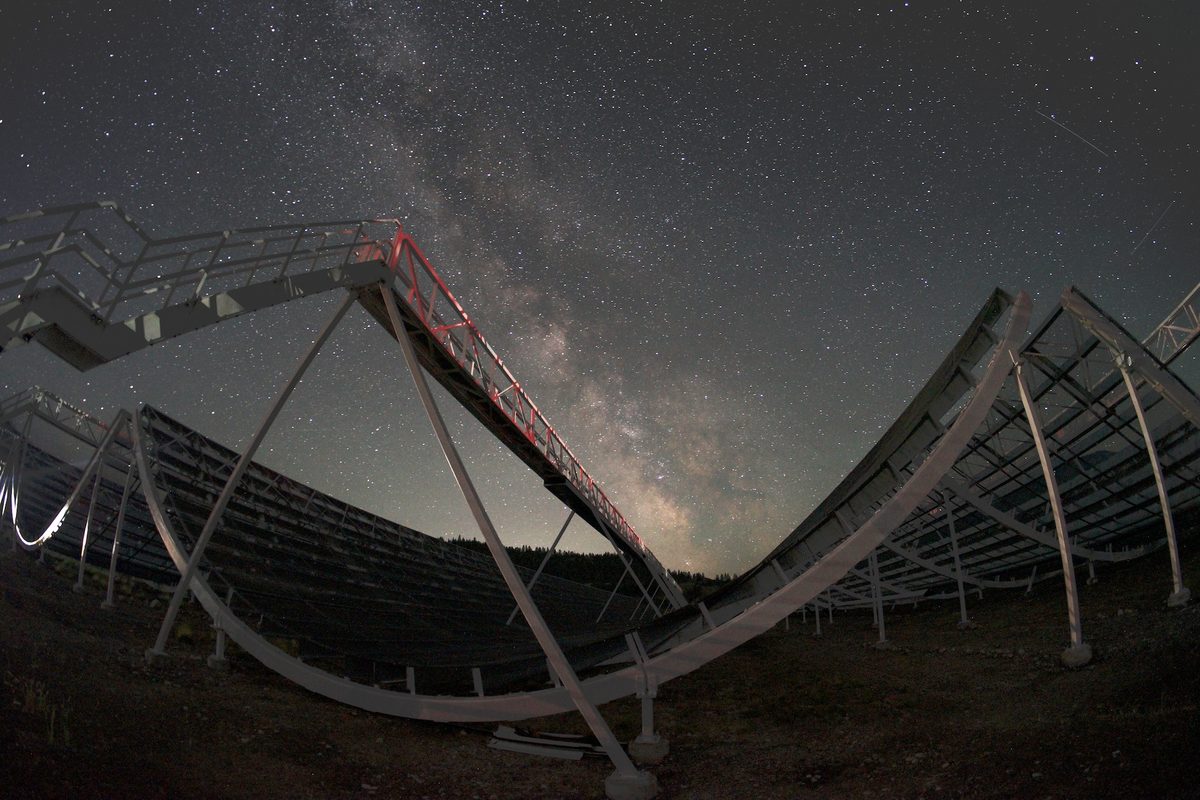
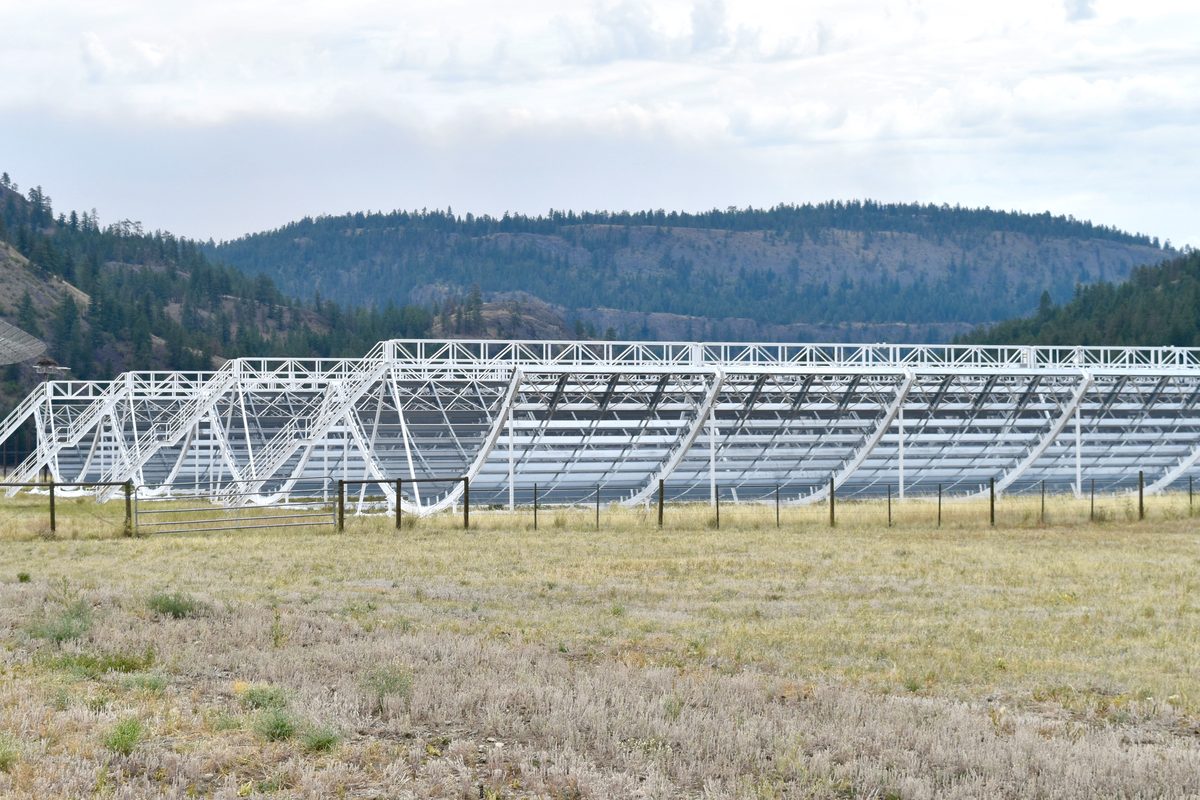
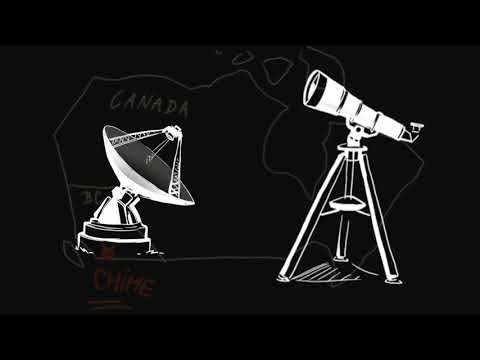
A Canadian radio telescope has detected the faint glow of hydrogen gas emitted 9 billion years ago, using only its own observations for the first time. The Canadian Hydrogen Intensity Mapping Experiment (CHIME), near Penticton, British Columbia, pulled the signal from 94 nights of data collected in 2019.

The result validates a cheaper way to map the distant universe. CHIME traces how hydrogen is spread across space, letting astronomers reconstruct cosmic expansion and investigate dark energy, the unexplained force accelerating the universe's growth. Competing galaxy surveys cost millions more and only see regions dense enough for stars to form.

Why it matters

CHIME can now probe dark energy, the force accelerating cosmic expansion, at a fraction of galaxy-survey cost.

Questions about this story

Free account needed to ask — your question is kept and asked for you right after sign-up. Answers are public.

No questions yet — be the first to ask.

Key Indicators

~9 billion years
Light travel time of detected hydrogen signal
The glow left the universe when it was about 5 billion years old.
~2%
Share of hydrogen in neutral atomic form at that epoch
Consistent with other measurements of the same period, per co-author Shabbir Shaikh.
94 nights
Nights of observation data used
All collected by CHIME in 2019, with no data from other telescopes.

Voices

Curated perspectives — historical figures and your fellow readers.

Ever wondered what historical figures would say about today's headlines?

Sign up to generate historical perspectives on this story.

People Involved

Organizations Involved

Timeline

2019 October 2026

3 events Latest: 3 days ago
  1. Detection reported to the public

    Latest Announcement

    ScienceDaily and other outlets report CHIME's detection as a new tool for studying dark energy.

  2. Findings published in The Astrophysical Journal

    Science

    Two companion papers report the standalone hydrogen detection and what it reveals about matter distribution.

  3. CHIME gathers observation data

    Science

    The telescope collects 94 nights of observations that later anchor the hydrogen detection.

Scenarios

1

CHIME pushes hydrogen maps back to 3-billion-year-old universe

Likely Resolves by End of 2028

Discussed by: CHIME team members quoted in the University of British Columbia release

The team states it is working to extend the technique to when the universe was only 3 billion years old. That means extracting an even fainter signal from roughly seven years of accumulated data. Success would confirm the method scales to earlier epochs and deepens the dark-energy investigation.

2

CHIME hydrogen maps yield first dark-energy constraint

Possible Resolves by Q2 2029

Discussed by: University of British Columbia news release

With hydrogen maps of large-scale structure, CHIME can reconstruct how the universe expanded over time. The team says this lets researchers test competing explanations of dark energy independently. A published constraint on expansion history would be the first scientific payoff from the new capability.

3

CHIME's method spreads to other radio telescopes

Possible Resolves by End of 2029

Discussed by: Commentary in The Clarity and Scibeat

CHIME's standalone detection proves the autocorrelation method works. Other hydrogen-intensity experiments could adopt it, avoiding the need for expensive galaxy surveys. A second instrument publishing a similar result would confirm the approach is broadly viable.

Historical Context

3 moments from history that rhyme with this story — and how they unfolded.

1989-1992

COBE satellite maps cosmic microwave background (1989-1992)

NASA's Cosmic Background Explorer satellite mapped the faint microwave glow left over from the Big Bang. Its 1992 detection of tiny temperature fluctuations provided the first direct picture of the seeds of galaxy formation.

Then

The result confirmed the Big Bang model and earned team leader John Mather a share of the 2006 Nobel Prize in Physics.

Now

It opened precision cosmology, leading to later missions like WMAP and Planck that pinned down the universe's age and composition.

Why this matters now

Like CHIME's hydrogen glow, COBE pulled an extremely faint signal out of cosmic background noise to open a new window on the universe's history.

1998

Type Ia supernova surveys reveal cosmic acceleration (1998)

Two rival teams, the Supernova Cosmology Project and the High-Z Supernova Search Team, tracked distant exploding stars to measure cosmic expansion. Both found expansion was accelerating, not slowing as gravity alone would predict.

Then

The discovery introduced dark energy as an unexplained force driving expansion.

Now

It won the 2011 Nobel Prize in Physics and made dark energy a central goal of astronomy.

Why this matters now

CHIME's hydrogen maps aim to measure the same expansion and test competing explanations of dark energy using an independent method.

2018

EDGES reports cosmic dawn hydrogen signal (2018)

The Experiment to Detect the Global Epoch of Reionization Signature reported an unexpectedly strong hydrogen absorption signal from the cosmic dawn. The claim implied the early universe was cooler than models predicted.

Then

The headlined claim drew intense scrutiny from the physics community.

Now

Follow-up analyses questioned the result, and it remains contested, showing how hard it is to isolate faint hydrogen signals.

Why this matters now

CHIME's team spent over a year validating its own detection to avoid a similar false alarm.

Sources

(7)