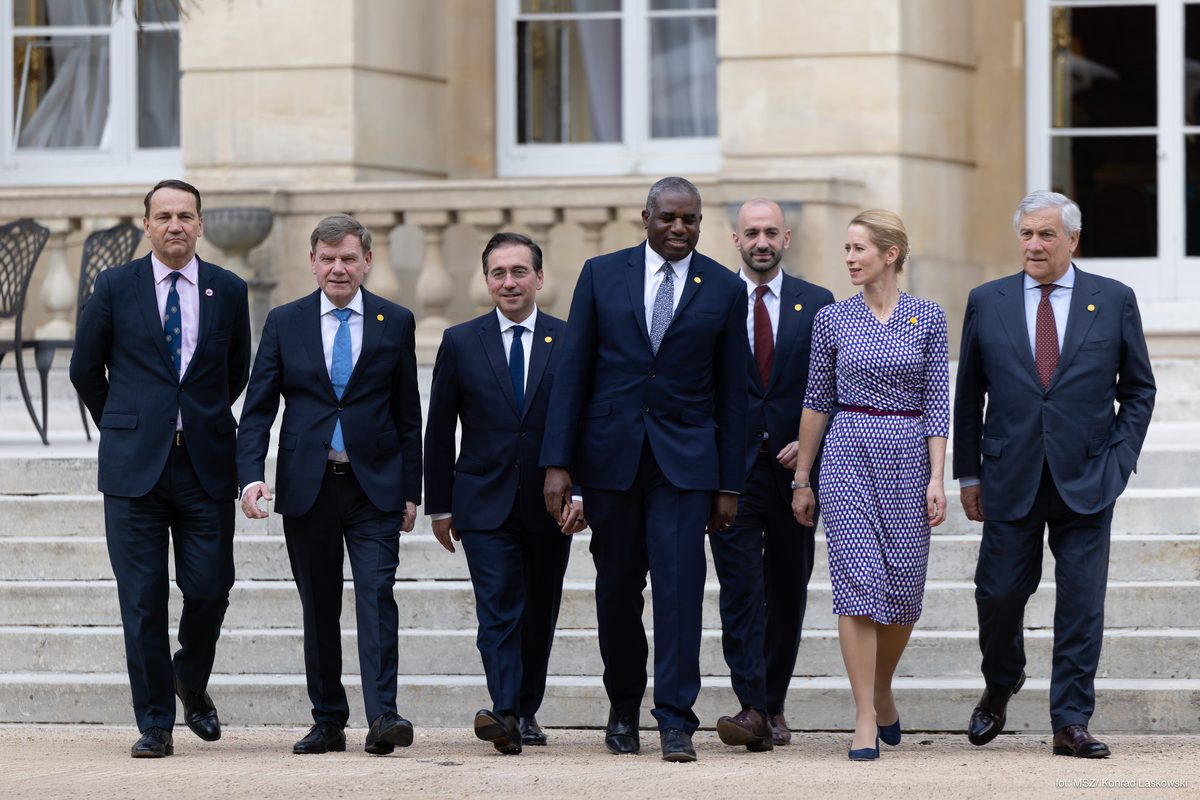
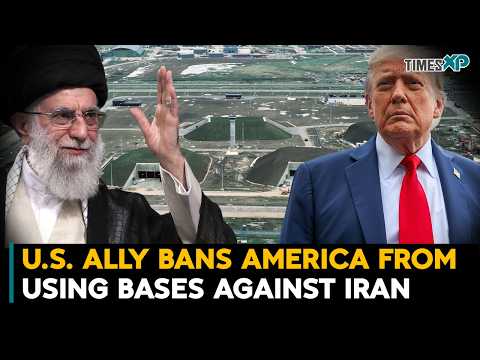
Switzerland sold $119 million in arms to the United States in 2025 before halting all new orders on March 20, 2026, and closing its airspace to US military flights linked to the Iran war. Italy followed on March 22 with a suspension of new US arms export licenses. On March 30, Spain closed its airspace and blocked US military base use for Iran war operations, citing violations of international law.
The European Union and key NATO allies including the UK, France, Germany, and Spain have refused military involvement in the US-Israeli conflict against Iran. EU foreign affairs chief Kaja Kallas declared 'This is not our war,' while the Trump administration is signaling delays in F-35 and Patriot deliveries to restricting nations. Oil prices remain elevated amid the Strait of Hormuz closure.
Why it matters
Europe's bans isolate the US military effort. The actions strain NATO cooperation.
Questions about this story
Free account needed to ask — your question is kept and asked for you right after sign-up. Answers are public.
No questions yet — be the first to ask.
Key Indicators
$119M
Swiss arms exports to the US (2025)
Annual value of Swiss weapons sales now frozen by the export ban.
3
European countries restricting US arms/operations
Switzerland (arms/airspace), Italy (arms), Spain (airspace/bases) have imposed restrictions over the Iran war.
$126/bbl
Peak Brent crude price
Oil prices surged over 40% from pre-war levels after Iran closed the Strait of Hormuz.
70%
Drop in Strait of Hormuz tanker traffic
Iran's closure of the strait has disrupted roughly one-fifth of the world's oil supply.
14 events
Latest: March 30th, 2026 · 6 months ago
Showing 8 of 14
JK to step
Tap a bar to jump to that date
Jump to
March 2026
Spain closes airspace and bases to US military flights involved in Iran war
LatestNeutrality
Spanish Defense Minister Margarita Robles confirmed closure of Spanish airspace and joint military bases to US aircraft tied to the Iran war, extending prior restrictions and forcing US rerouting. Robles framed it as opposition to a unilateral conflict violating international law, with exemptions only for emergencies.
Italy suspends new US arms export licenses over Iran war
Neutrality
Italy's government announced it will halt all new weapons export licenses to the United States for the duration of the Iran conflict, citing humanitarian concerns and the scale of civilian impact. The move mirrors Switzerland's March 20 decision and represents the first major follow-on arms restriction by a European NATO member.
Trump administration signals potential F-35 delivery delays to Switzerland
Retaliation
A senior US State Department official told Swiss media that the US is 'reviewing all defense cooperation' with Switzerland and may delay delivery of F-35 fighter jets and Patriot missile systems in response to the arms export ban. The statement echoes warnings made by Swiss parliamentarian Reto Nause.
EU foreign ministers convene emergency session on allied defense fracture
Diplomacy
The European Union called an emergency meeting of foreign ministers to discuss the widening rift with the United States over the Iran war and to coordinate member-state responses to potential US retaliation against arms-restricting countries.
Switzerland halts all new arms exports to the US
Neutrality
The Swiss Federal Council formally banned all new war materiel export licenses to the United States for the duration of the conflict, citing the War Materiel Act and constitutional neutrality obligations. Existing licenses remain valid.
Seven nations issue joint statement on Hormuz
Diplomacy
The UK, France, Germany, Italy, the Netherlands, Japan, and Canada released a joint statement on the Strait of Hormuz situation without committing to military action.
EU rejects US call to join Strait of Hormuz operation
Diplomacy
European leaders unanimously refused Trump's demand that they contribute military forces to reopen the Strait of Hormuz. Trump called NATO allies 'cowards' and threatened consequences for the alliance.
Switzerland bars US combat-linked military flights
Neutrality
The Swiss Federal Council rejected two US reconnaissance plane overflight requests while approving three non-combat transport flights. Further combat-linked flights would be denied.
Iran closes the Strait of Hormuz
Military
Iran shut down the strait through which roughly 20% of the world's oil supply passes. Tanker traffic dropped approximately 70%, sending oil prices surging.
Iran retaliates with mass drone and missile strikes
Military
Iran launched hundreds of drones and ballistic missiles at Israel and at US military bases across Bahrain, Jordan, Kuwait, Qatar, Saudi Arabia, Turkey, and the UAE.
February 2026
US and Israel launch surprise strikes on Iran
Military
Joint US-Israeli airstrikes hit multiple sites across Iran, killing Supreme Leader Khamenei, the defense minister, the IRGC commander, and other top officials. The strikes came during active nuclear negotiations.
Iran says nuclear deal 'within reach'
Diplomacy
Iranian Foreign Minister Abbas Araghchi declared a 'historic' agreement was close ahead of Geneva talks. Oman-mediated negotiations had reported 'substantial progress.'
December 2025
Swiss Parliament relaxes arms export rules
Policy
Switzerland abolished its ban on re-exporting Swiss weapons, allowing sales to 25 mostly Western countries—including the US—even if they are involved in conflict.
March 2025
Trump demands Iran dismantle nuclear program
Diplomacy
President Trump sent a letter to Supreme Leader Khamenei demanding full nuclear dismantlement and an end to proxy support, with a two-month deadline. Khamenei rejected the demands as 'excessive and outrageous.'
Scenarios
1
War ends quickly, restrictions lifted, alliance recovers
Unlikely
Discussed by: Le News, Swiss defence analysts
If the Iran conflict ends within weeks—through a ceasefire, regime change, or negotiated settlement—Switzerland lifts restrictions as it did after the 2003 Iraq War, and arms trade resumes. The broader transatlantic rift heals as the crisis fades. This is the optimistic scenario, but it requires a conflict resolution that currently has no visible path.
2
Prolonged war triggers US retaliation against Swiss defense procurement
A months-long conflict keeps the arms ban in place and the US retaliates by delaying or conditioning delivery of Switzerland's F-35 fighter jets and Patriot missile defense systems. Switzerland accelerates its pivot toward European alternatives like the Eurosam SAMP/T. The rift reshapes Swiss defense procurement away from American equipment for a generation.
3
More European countries impose arms restrictions on the US
Possible
Discussed by: Council on Foreign Relations, Chatham House analysts
Switzerland's decision emboldens other European arms exporters—particularly those already uneasy about the conflict—to restrict weapons sales to the US or Israel. Countries that suspended Israeli arms sales in 2024 (Italy, Netherlands, Belgium, Spain) may extend similar logic to the US. This would represent an unprecedented collective European arms embargo against an American war effort.
The whiplash between December 2025's relaxation of arms export rules and March 2026's neutrality-based freeze exposes a deep contradiction in Swiss policy. Parliament's reform was designed to let Switzerland act as a reliable Western arms supplier; the Iran war immediately overrode it. The resulting debate forces Switzerland to choose between deeper integration with European defense structures and strict traditional neutrality.
5
US retaliation triggers European defense pivot away from American systems
Possible
Discussed by: Swiss defense analysts, European Council on Foreign Relations, NATO observers
If the US delays or cancels F-35 and Patriot deliveries to Switzerland and Italy, both countries accelerate procurement of European alternatives (Eurosam SAMP/T, Eurofighter Typhoon). This triggers a cascade: other European nations facing similar pressure choose European systems over American ones. Within 18 months, NATO's integrated air defense architecture fractures as member states operate incompatible systems. The US loses decades of defense industrial dominance in Europe.
Historical Context
3 moments from history that rhyme with this story — and how they unfolded.
1 of 3
March 2003
Switzerland bans US military overflights during Iraq War (2003)
When the US invaded Iraq without United Nations authorization, the Swiss Federal Council banned coalition military aircraft from Swiss airspace under the same neutrality principles invoked today. Foreign Minister Micheline Calmy-Rey publicly condemned the war and contacted ambassadors of all belligerent nations. However, Switzerland did not halt arms exports to the US—weapons shipments continued throughout the conflict.
Then
The overflight ban was a diplomatic irritant but did not seriously strain US-Swiss relations, as Switzerland was one of many neutral states opposing the war.
Now
The restrictions were lifted after hostilities ended. The decision not to also ban arms exports in 2003 drew criticism as inconsistent, which may have influenced the more comprehensive 2026 response.
Why this matters now
The 2026 decision mirrors and exceeds the 2003 precedent. Switzerland closed airspace again but added an arms export ban—suggesting the government learned from criticism that banning overflights while allowing weapons sales was contradictory.
2 of 3
March 2003
Turkey denies US troop transit for Iraq northern front (2003)
The Turkish parliament voted 264-250 against allowing 62,000 American troops to transit Turkey to open a northern front against Iraq, falling three votes short of the required majority. The US had offered Turkey approximately $6 billion in grants and up to $24 billion in loans. Public opinion was overwhelmingly opposed—roughly 90% of Turks rejected the war.
Then
The US lost its northern front and had to reroute the 4th Infantry Division to Kuwait, fundamentally altering its invasion plan. Turkey forfeited the massive aid package.
Now
The decision poisoned US-Turkish military relations for years. In July 2003, US troops detained and hooded 11 Turkish soldiers in northern Iraq—an incident that became a lasting symbol of the rift.
Why this matters now
Turkey's refusal shows that even close military allies will block US war logistics when domestic opinion turns decisively against a conflict. The 2026 European refusal is broader and more unanimous than Turkey's narrow three-vote margin.
3 of 3
December 1972
Sweden-US diplomatic crisis over Vietnam War (1972)
After President Nixon ordered massive B-52 bombing of Hanoi and Haiphong, Swedish Prime Minister Olof Palme compared the bombings to Nazi atrocities in a radio address, listing 'Guernica, Oradour, Babi Yar, Katyn, Lidice, Sharpeville, and Treblinka' and adding 'Hanoi, Christmas 1972.' The Nixon administration called the comparison a 'gross insult.'
Then
Washington withdrew its ambassador from Stockholm and told Sweden not to send a replacement. Diplomatic relations were frozen for over a year. The US delayed delivery of Redeye air defense missiles to Sweden.
Now
Relations did not fully normalize until 1974. The episode demonstrated that the US can and does impose real costs on smaller nations that publicly oppose its wars—even without formal alliances at stake.
Why this matters now
The Palme episode is the clearest historical example of a neutral European country suffering concrete US retaliation for opposing an American war. Swiss lawmakers warning about delayed F-35 and Patriot deliveries are drawing on exactly this pattern.