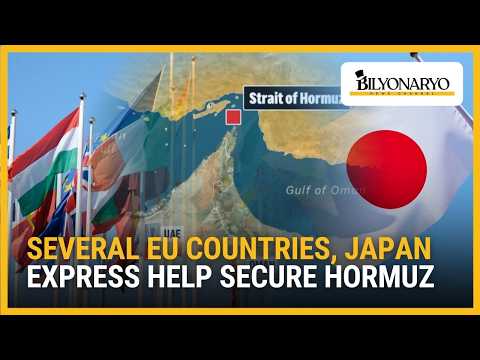
Western powers and Japan pledge to secure the Strait of Hormuz after Iran shuts the world's most important oil chokepoint
Force in Play
US-Iran exchange fire in the strait; 'Project Freedom' abandoned after Gulf allies block US airbases; Iran formalizes toll regime as peace talks collapse
US-Iran exchange fire in the strait; 'Project Freedom' abandoned after Gulf allies block US airbases; Iran formalizes toll regime as peace talks collapse
Iran shut the Strait of Hormuz on February 28, 2026, after US-Israeli strikes, cutting off roughly a fifth of global oil supply. The US-Iran ceasefire, extended by Trump on April 21, holds formally. But Iran's May 10 counter-proposal demanded Iranian sovereignty over the strait, an end to all US sanctions, and an immediate lifting of the naval blockade. Trump called the response "totally unacceptable," and roughly 1,500 commercial vessels remain trapped inside the Persian Gulf.
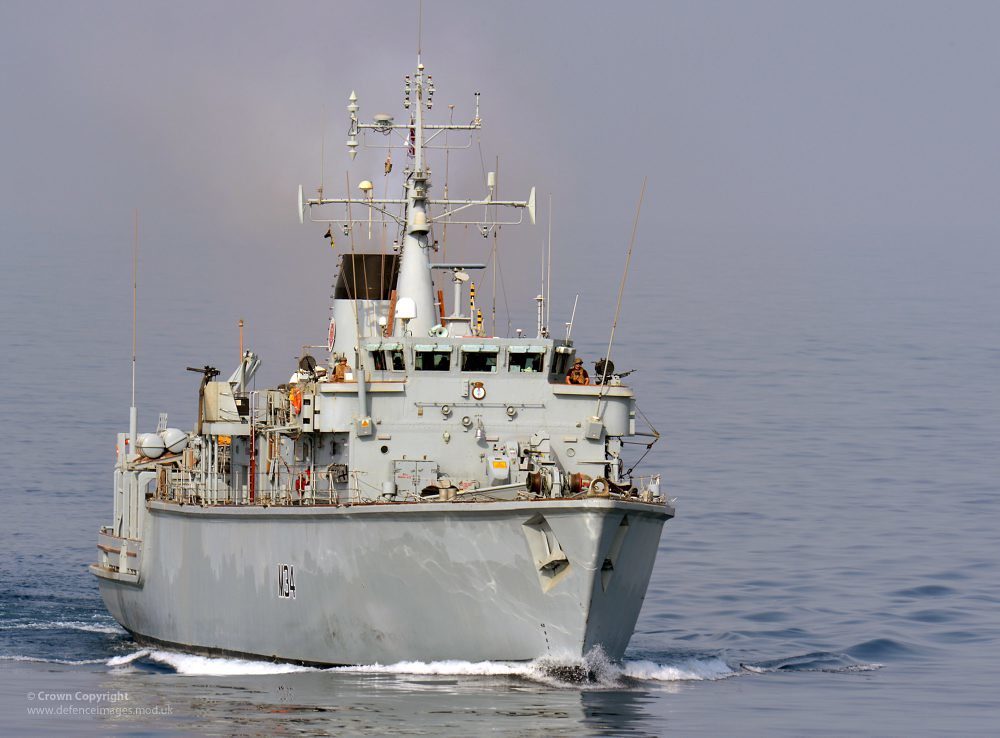
The US tried to force transit open on May 4 with "Project Freedom," a Navy-escorted corridor, but abandoned it within 48 hours after Saudi Arabia and Kuwait denied US access to their airbases. On May 7, US destroyers clashed with Iranian forces in the strait, sending oil prices to about $101 a barrel. The UK moved HMS Dragon, a Type 45 destroyer, toward the region on May 11, as UK and French defence ministers prepare to chair the first formal meeting of the 40-nation coalition.
Why it matters
1,500 ships trapped inside the Gulf and a collapsed peace proposal mean the world's most important oil chokepoint stays shut.
Questions about this story
Free account needed to ask — your question is kept and asked for you right after sign-up. Answers are public.
1
Why is Japan so interested in this?
Japan is the third-largest importer of oil through the Strait of Hormuz and sources roughly 95% of its crude from the Middle East — a closure there is an existential economic threat, not a distant geopolitical problem.
Why it matters: At sustained oil prices above $120 a barrel, analysts estimate Japan's GDP would fall roughly 0.6% below baseline in 2026, with stagflation risk — so Tokyo has strong national-interest reasons to join any coalition pushing the strait back open.
—About 93% of Japan's crude oil imports transit the Strait of Hormuz, with Saudi Arabia and the UAE as its dominant suppliers.
—Japan is the third-largest destination for Hormuz oil flows (10.9% of throughput), behind only China (37.7%) and India (14.7%).
—Japan signed the March 19 and March 22 joint statements alongside the US, UK, France, and Germany, directly co-committing to steps to secure passage.
—Tokyo released 80 million barrels from strategic reserves — equivalent to 45 days of domestic demand — to cushion the immediate supply shock after the strait closed February 28.
Some analysts, including East Asia Forum, argue Japan's strategic reserves buy only temporary relief and that the country needs structural energy diversification — meaning the coalition mission, even if successful, doesn't fix Japan's underlying vulnerability.
AI-generated with web search — may be wrong. Check the linked sources.
Key Indicators
~20M
Barrels of oil per day normally transiting the strait
Roughly 34% of global seaborne crude oil trade passes through Hormuz — making it the world's most important energy chokepoint.
40/week
Commercial ship crossings of the strait
Down from roughly 120 crossings per day before the crisis. Lloyd's List counted only 40 crossings in the entire week ending May 3. Roughly 1,500 commercial vessels are now anchored inside the Persian Gulf, unable to exit.
~$104
Brent crude price per barrel (current)
Oil rose to about $104 after Trump called Iran's May 10 counter-proposal "totally unacceptable." The EIA forecasts a Q2 2026 peak near $115 if the conflict persists.
51+
Nations in the European-led Hormuz coalition
51 countries participated in the Paris summit. Military planners from 30+ nations met at Northwood on April 22-23 to advance operational plans. HMS Dragon is now pre-positioned in the Middle East.
~1,500
Commercial vessels trapped inside the Persian Gulf
As of early May, roughly 1,500 commercial ships are anchored inside the Persian Gulf, unable to transit to open water through the closed strait.
Images from Openverse under Creative Commons licenses.
Videos from YouTube.
Voices
Curated perspectives — historical figures and your fellow readers.
George Orwell
(1903-1950) ·Modernist · satire
Fictional AI pastiche — not real quote.
"A coalition which pledges to act only when conditions exist that nobody is creating is not a coalition but a committee — and committees, as any honest man will tell you, exist precisely to ensure that nothing is ever done while maintaining the appearance of doing everything."
0% found this insightful
Ever wondered what historical figures would say about today's headlines?
Sign up to generate historical perspectives on this story.
29 events
Latest: May 11th, 2026 · 5 months ago
Showing 8 of 29
JK to step
Tap a bar to jump to that date
Jump to
May 2026
HMS Dragon deployment confirmed; UK-France defence ministers to chair first 40-nation coalition meeting
LatestMilitary
The Royal Navy formally confirmed HMS Dragon's redeployment toward the Middle East. UK Defence Secretary John Healey and French Defence Minister Catherine Vautrin are set to co-chair the first defence ministers' meeting of the 40-plus-nation coalition, the next formal step after the Northwood planning conference.
Iran sends counter-proposal via Pakistan; Trump calls it 'totally unacceptable'
Diplomatic
Iran transmitted its formal response to the US peace proposal through Pakistani mediators. The counter-proposal demanded Iranian sovereignty over the strait, lifting of all US sanctions, and an immediate end to the US naval blockade upon signing. Trump called the response "totally unacceptable" on Truth Social; Brent crude rose to about $104.50 a barrel.
UK deploys HMS Dragon toward Middle East ahead of potential coalition mission
Military
The Royal Navy announced HMS Dragon, a Type 45 air-defence destroyer, was being redeployed from the Eastern Mediterranean toward the Middle East to pre-position for a potential coalition mission in the Strait of Hormuz. The deployment is supported by Wildcat helicopters armed with Martlet missiles and is part of UK-France coalition planning with over 40 partner nations.
US and Iran trade fire in the strait; Iran publishes formal PGSA transit rules; oil spikes 7.5%
Military
Three US Navy destroyers transiting the strait came under attack. US Central Command said it "intercepted unprovoked Iranian attacks" and struck back; Iran claimed it caused significant damage to US vessels and accused the US of firing first. Oil prices jumped roughly 7.5% to about $101 a barrel, and Iran published formal Vessel Information Declaration requirements under the PGSA, requiring ships to pre-register cargo, ownership, and crew details before crossing.
Iran creates Persian Gulf Strait Authority; Project Freedom abandoned after Saudi airbase denial
Military
Iran stood up the Persian Gulf Strait Authority (PGSA), a new body requiring all vessels to file a 40-question "Vessel Information Declaration" before transiting the strait. Trump also paused "Project Freedom" the same day, publicly citing diplomatic progress. NBC News reported the real reason: Saudi Arabia and Kuwait had denied the US access to their airbases, saying the operation risked escalation and was unlikely to work.
US launches 'Project Freedom' escort corridor; fires on Iranian boats attacking ships
Military
President Trump announced "Project Freedom," a US Navy-escorted transit corridor to move stranded commercial vessels out of the Strait of Hormuz. US forces sank six Iranian small boats that were targeting civilian ships. Two commercial vessels completed the transit before the operation was paused.
April 2026
Northwood planning conference: 30+ nations advance coalition military plans
Military
Military planners from more than 30 nations met at the UK's Permanent Joint Headquarters at Northwood over two days to advance operational plans for a defensive Hormuz mission. The UK and France co-led the sessions, drawing on the mandate from the April 17 Paris summit of 51 countries. UK PM Starmer reported afterward that more than 12 nations had volunteered to join the mission.
Trump extends ceasefire indefinitely at Pakistan's request
Diplomatic
President Trump extended the Pakistan-mediated ceasefire until Iran could submit a unified negotiating proposal, citing Iran's "seriously fractured" government and a request from Pakistan's Field Marshal Asim Munir and Prime Minister Shehbaz Sharif. The US naval blockade of Iranian ports continued, and Trump directed the military to remain ready.
Iran confirms receiving new US proposals via Pakistan mediation
Diplomatic
Iran's Supreme National Security Council confirmed it had received fresh US proposals transmitted through Pakistan's mediation channel and was reviewing them. Iran said a second round of negotiations remained 'contingent on the United States aligning its demands with battlefield realities,' and characterized the US blockade of Iranian ports as a ceasefire violation.
Iran reverses course: IRGC fires on tankers, re-closes strait citing US blockade
Military
Within 24 hours of declaring the strait open, Iran reversed course. The IRGC announced the Strait of Hormuz was again closed, fired on the VLCC tanker Sanmar Herald approximately 20 nautical miles off Oman, and forced two Indian-flagged ships to turn back. The IRGC warned that any vessel approaching Hormuz would be treated as 'cooperating with the enemy and will be targeted.' Iran cited the continuing US naval blockade of Iranian ports as a ceasefire violation justifying the re-closure.
Iran briefly declares strait open for ceasefire duration; oil prices plunge
Diplomatic
Iran's Foreign Minister declared that 'in line with the ceasefire, the passage for all commercial vessels through the Strait of Hormuz is completely open for the remaining period of the ceasefire,' causing oil prices to sharply drop. Macron and Starmer welcomed the announcement but said it 'must be permanent.' The brief opening was reversed within 24 hours.
No date set for second US-Iran talks as ceasefire expiry looms; Iran-linked ships find alternate routes
Diplomatic
With the ceasefire set to expire April 21, no date had been set for a second round of negotiations. Brent crude remained near $100 per barrel. Bloomberg reported Iran-linked ships were taking new paths into the Persian Gulf to bypass blockade enforcement.
US declares blockade 'fully implemented'; Pakistan resumes mediation ahead of April 21 deadline
Diplomatic
The White House declared the blockade fully operational while signaling it could be lifted if Iran returned to negotiations. Pakistan confirmed both sides were discussing a second round of talks, and a key Pakistani diplomat traveled to Tehran to keep channels open, but no date was set.
Enforcement gaps emerge as Iran opens $2M alternate toll channel; Paris conference announced
Military
On the first full day of the blockade, at least three vessels—including two US-sanctioned tankers—transited the strait, exposing enforcement limits for non-Iranian-port-bound ships. Iran established an alternate shipping lane north of Larak Island charging up to $2 million per vessel. Macron and Starmer separately announced the April 17 Paris conference on a defensive multinational Hormuz mission.
US naval blockade of Iranian ports takes effect; UK declines to join; China condemns action
Military
CENTCOM implemented the blockade at 10 a.m. ET, deploying more than 10,000 US personnel across a dozen warships to intercept vessels entering or departing Iranian ports. Marines from the 31st Marine Expeditionary Unit and Navy SEALs were positioned for boarding operations; two Avenger-class minesweepers were dispatched toward the region. The UK government announced it would not support the blockade; China called it 'dangerous and irresponsible.'
Islamabad talks collapse after 21 hours; Trump announces naval blockade of Iran
Diplomatic
US-Iran face-to-face negotiations in Islamabad—led by VP JD Vance, special envoy Steve Witkoff, and Jared Kushner—collapsed after more than 21 hours over Iran's refusal to abandon its nuclear weapons program. Trump responded by announcing a naval blockade of all Iranian ports; Brent crude spiked roughly 7% to $102 per barrel.
US Navy destroyers transit Strait of Hormuz for first time since Iran war began
Military
Two US Navy guided-missile destroyers, USS Frank E. Peterson Jr. and USS Michael Murphy, crossed the Strait of Hormuz—the first American naval transit since late February. US Central Command emphasized freedom of navigation and mine clearance prep; reports noted IRGC threats. Trump claimed US forces had begun 'clearing' the strait after destroying Iranian mine-laying boats.
UK-hosted coalition of 40+ nations convenes to coordinate Hormuz response
Diplomatic
Over 40 countries met in a UK-hosted multinational coalition meeting to coordinate diplomatic, economic, and potential naval tools to reopen the Strait of Hormuz. Norwegian Foreign Minister Espen Barth Eide reported participants discussed joint diplomatic pressure via the UN and possible sanctions, though no concrete enforcement measures were agreed. The United States notably did not attend, with President Trump arguing that oil-dependent nations should resolve the issue themselves.
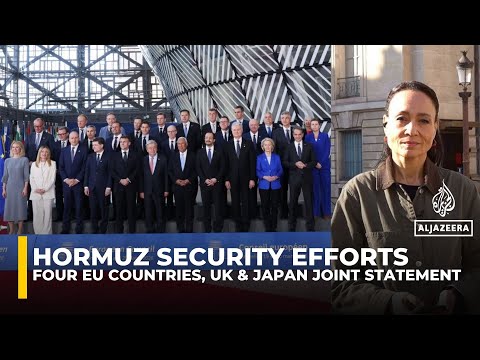
A coalition of 22 nations including the U.S., UK, France, Germany, Japan, Australia, and UAE issued a joint statement condemning Iran's closure and attacks on commercial vessels, invoking UNSCR 2817 and UNCLOS, pledging steps to secure passage, and backing IEA's 400M barrel strategic reserve release.
Belgium conditionally commits to Hormuz mission
Diplomatic
Belgium's core Cabinet agreed to participate in securing the strait, but only after a lasting ceasefire and within a clear international legal framework. The government also disclosed military support appeals from Oman, the UAE, and Saudi Arabia.
28-nation joint statement pledges readiness to secure passage
Diplomatic
The UK, France, Germany, Italy, the Netherlands, Japan, and more than 20 additional countries issued a joint statement expressing readiness to contribute to safe passage through the strait — but conditioned on a ceasefire and international mandate.
U.S. begins aerial campaign to reopen the strait
Military
The United States launched an aerial campaign targeting Iranian military positions controlling the strait, escalating from economic pressure to direct military action to force the passage open.
Trump reverses, then calls NATO 'cowards'
Diplomatic
After allies rejected his demands, Trump briefly said the U.S. didn't need help, then called NATO members "cowards" for refusing to contribute.
EU foreign ministers reject Hormuz military involvement
Diplomatic
EU High Representative Kaja Kallas reported "no appetite" among EU foreign ministers to extend Operation Aspides' mandate to Hormuz. Multiple European governments declared the Iran conflict was not their war.
Trump demands NATO allies send warships
Diplomatic
President Trump called on NATO allies to contribute naval forces to reopen the strait, warning it would be "very bad for the future of NATO" if they refused.
Oil prices surge past $100 per barrel
Economic
Brent crude surpassed $100 per barrel for the first time in four years, eventually peaking at $126, as the strait closure removed roughly a fifth of global oil supply from the market.
IRGC claims 'complete control' of the strait
Military
Iran's Revolutionary Guards announced they had established complete control of the Strait of Hormuz. Tanker traffic dropped roughly 70%, with over 150 ships anchoring outside the passage.
IRGC officially declares Strait of Hormuz closed
Military
The Islamic Revolutionary Guard Corps confirmed the strait was closed to all shipping and threatened to set fire to any vessels attempting passage.
February 2026
U.S.-Israeli strikes on Iran trigger strait closure
Military
Joint U.S.-Israeli military strikes hit targets across Iran, including a strike that killed Supreme Leader Ali Khamenei. Iran's IRGC responded by beginning to block commercial shipping through the Strait of Hormuz.
Scenarios
1
U.S. aerial campaign breaks IRGC grip, coalition deploys under ceasefire
Possible
Discussed by: Defense Intelligence Agency assessments and Western military analysts
The U.S. aerial campaign degrades IRGC naval capabilities enough to force a de facto ceasefire. Iran, facing mounting military losses and potential internal pressure, agrees to stop blocking the strait. The multinational coalition then deploys under an international mandate — possibly a United Nations Security Council resolution or an expanded EMASoH framework — to escort commercial vessels and maintain freedom of navigation. Oil prices decline but remain elevated as trust rebuilds slowly.
2
Prolonged standoff: strait remains contested for months
Iran absorbs U.S. airstrikes but maintains enough asymmetric capability — mines, fast boats, shore-based anti-ship missiles — to keep the strait functionally closed or too dangerous for unescorted commercial traffic. The multinational coalition never deploys because the ceasefire condition is never met. Oil prices stabilize above $100 as alternative pipeline capacity (Saudi Arabia and UAE have 3.5-5.5 million barrels per day of bypass capacity) partially compensates. Global supply chains adapt to sustained disruption.
3
Coalition fractures, U.S. acts unilaterally to force strait open
Possible
Discussed by: Analysts at Xinhua, Middle East Eye, and European security commentators
Allied conditions prove impossible to satisfy — no ceasefire materializes, no international mandate emerges. The coalition dissolves into rhetorical support without operational substance. The U.S. escalates unilaterally, deploying naval forces to escort tankers through the strait without allied participation. This succeeds operationally but deepens the transatlantic rift, with European allies facing accusations of free-riding on American military power to secure their own energy supply.
4
Diplomatic breakthrough: Iran agrees to reopen strait in exchange for de-escalation
Unlikely
Discussed by: European diplomatic sources, EU foreign ministers advocating for moratorium on attacks
A diplomatic track — possibly mediated by Oman, which has historically served as a backchannel between Iran and the West — produces an agreement where Iran reopens the strait in exchange for a halt to strikes on Iranian civilian infrastructure and oil facilities. The European Council's call for a "comprehensive moratorium on attacks on civilian infrastructure" becomes the basis for negotiations. The multinational coalition then deploys as a confidence-building measure.
5
Coalition fractures into competing blocs: European-led diplomacy vs. U.S. unilateral action
Possible
Discussed by: Diplomatic analysts and Middle East observers
Trump's decision to skip the April 3 coalition meeting and signal that the U.S. will not lead diplomatic efforts creates a strategic split. Europe pursues UN and sanctions-based pressure while the U.S. continues aerial operations independently. The coalition dissolves into rhetorical coordination without operational unity, with European nations pursuing diplomatic solutions while the U.S. escalates militarily. This deepens transatlantic divisions and leaves the strait contested between competing strategies.
6
Ceasefire expires April 21 without renewal, full hostilities resume
Possible
Discussed by: PBS NewsHour, NBC News, Al Jazeera diplomatic correspondents
With no second round of US-Iran talks scheduled and the Pakistan-mediated ceasefire expiring April 21, a return to active hostilities is the default outcome absent a diplomatic breakthrough. Iran retains incentive to hold out — the toll channel generates revenue and the blockade has enforcement gaps — while the US may escalate aerial operations if the blockade fails to compel Iranian capitulation. European coalition planning accelerates but remains contingent on the conflict ending, leaving no immediate multilateral alternative to unilateral US action.
7
Iran uses strait access as a revolving pressure valve in negotiations
Possible
Discussed by: Diplomatic analysts following Iran's April 17 opening and April 18 reversal
Iran's 24-hour reversal — opening the strait April 17 and closing it again April 18 after firing on ships — suggests Tehran may be deploying strait access as a tactical bargaining chip rather than as a fixed position. Under this scenario, Iran periodically signals openness to reopening the strait to extract diplomatic concessions (ceasefire extensions, sanctions relief, softened nuclear demands) while retaining operational closure as leverage. This creates a volatile on-again-off-again dynamic that delays a definitive resolution, keeps oil markets in turmoil, and complicates coalition planning by giving each side periodic but unreliable glimpses of de-escalation.
8
Iran's PGSA toll regime becomes the de facto new normal for strait transit
Possible
Discussed by: Maritime law experts and Gulf security analysts cited by CNN and Gulf News
Iran uses the ceasefire period to build out PGSA infrastructure and create facts on the ground. Trading partners — especially China and India — quietly comply with the 40-question declaration and pay tolls rather than risk cargo disruption. The strait reopens to commercial traffic but on Iranian terms, generating toll revenue that partially offsets sanctions losses and leaving Iran with structural control over the waterway regardless of the nuclear outcome.
9
Gulf states broker a diplomatic reset after breaking with Washington
Possible
Discussed by: NBC News and The Defense Post reporting on Saudi Arabia and Kuwait's Project Freedom veto
Saudi Arabia and Kuwait's refusal to provide airbases for Project Freedom signals that Gulf monarchies are prioritizing regional stability over alignment with Washington's maximum-pressure strategy. If Saudi Arabia and the UAE move more openly toward Iran — opening backchannel talks or recognizing PGSA transit permits — they could force a diplomatic reset that gives Iran better terms than the current US proposal, fracturing US-Gulf alignment and accelerating a negotiated reopening on Tehran's terms.
Historical Context
3 moments from history that rhyme with this story — and how they unfolded.
1 of 3
July 1987 - September 1988
Operation Earnest Will — the 'Tanker War' (1987-1988)
During the Iran-Iraq War, Iran attacked Kuwaiti oil tankers to punish Kuwait for backing Iraq. The U.S. responded by reflagging 11 Kuwaiti tankers under the American flag and escorting them through the Persian Gulf with Navy warships. The operation involved direct clashes with Iranian forces, including the mining of the USS Samuel B. Roberts and the retaliatory destruction of two Iranian oil platforms and multiple naval vessels in Operation Praying Mantis.
Then
The escort operation kept oil flowing but at significant cost — 37 U.S. sailors died when the USS Stark was struck by Iraqi missiles, and the USS Vincennes accidentally shot down Iran Air Flight 655, killing 290 civilians.
Now
Established the precedent that the U.S. would use military force to maintain freedom of navigation through the strait. The operation demonstrated both the feasibility and the danger of active convoy escort in contested waters.
Why this matters now
The current coalition faces the same core dilemma: escort operations in the strait carry real military risk, and Iran's asymmetric capabilities make the passage dangerous even for advanced navies. The 1987-88 experience shows that securing the strait requires accepting combat, not just signaling readiness.
2 of 3
May - September 2019
2019 Persian Gulf tanker attacks and the formation of Operation Sentinel
Iran's IRGC attacked six commercial tankers with limpet mines near the Strait of Hormuz, shot down a U.S. surveillance drone, and seized the British-flagged Stena Impero. The attacks followed the U.S. withdrawal from the Iran nuclear deal and reimposition of sanctions. The U.S. formed Operation Sentinel, a multinational patrol mission, while France separately proposed what became EMASoH — a European alternative that allowed allies to participate without joining a U.S.-led force.
Then
Attacks stopped after a few months, but revealed how easily Iran could disrupt strait traffic with deniable, low-cost operations.
Now
Created the two parallel security frameworks — one American, one European — that now form the institutional backdrop for the 2026 coalition. Belgium joined EMASoH, which is why its current "conditional commitment" builds on an existing relationship rather than starting from scratch.
Why this matters now
The 2019 episode showed that European nations insist on operating independently from U.S. command structures in the Gulf. That same instinct — participate in security, but not under American direction — is driving the current coalition's conditions. The institutional split between Operation Sentinel and EMASoH persists.
3 of 3
November 1956 - June 1967
Suez Crisis multinational force (1956-1967)
After Britain, France, and Israel invaded Egypt over Gamal Abdel Nasser's nationalization of the Suez Canal, the United Nations deployed its first peacekeeping force — the United Nations Emergency Force (UNEF) — to secure the canal zone and enable withdrawal. The force required Cold War-era diplomatic negotiations and a United Nations mandate, and took weeks to assemble despite the immediate economic urgency of reopening the canal.
Then
UNEF allowed the canal to reopen and the invading forces to withdraw while saving face. But the force was deployed only after the fighting stopped — not during it.
Now
Set the lasting precedent that international forces secure waterways after conflict, not during it. The requirement for a ceasefire before deployment became standard practice.
Why this matters now
The current coalition's insistence on a ceasefire before deployment echoes Suez precisely. International maritime security forces have historically arrived after the shooting stops — which means the strait may remain closed until the U.S. and Iran reach some form of cessation, regardless of how many countries sign pledges.