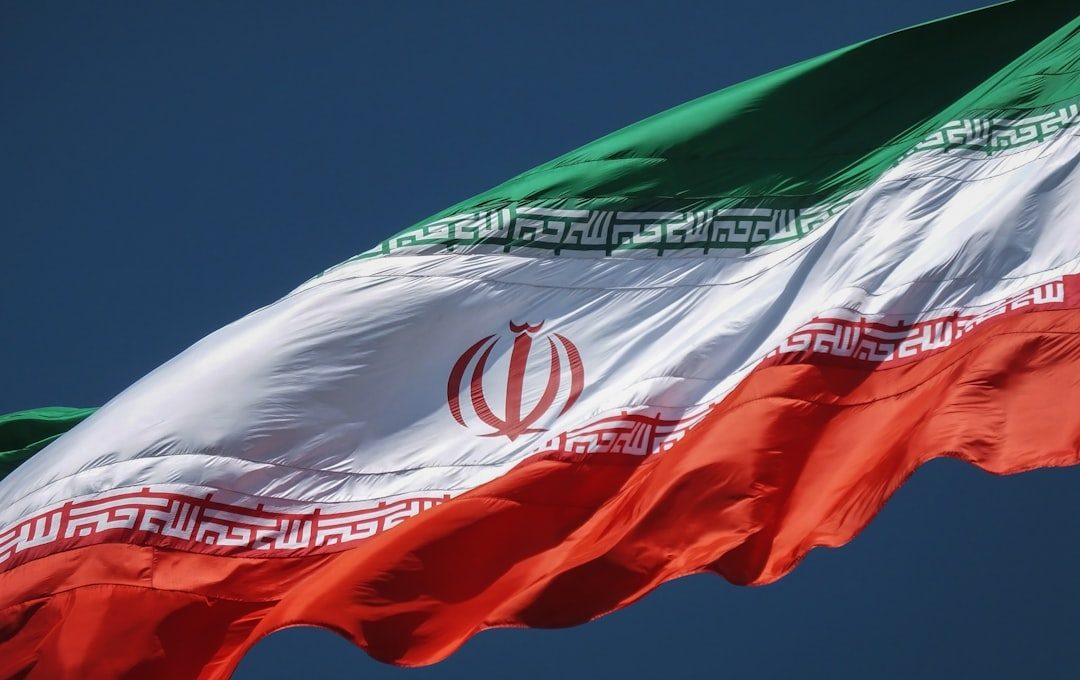
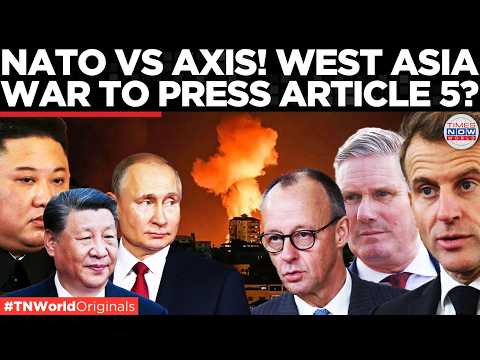
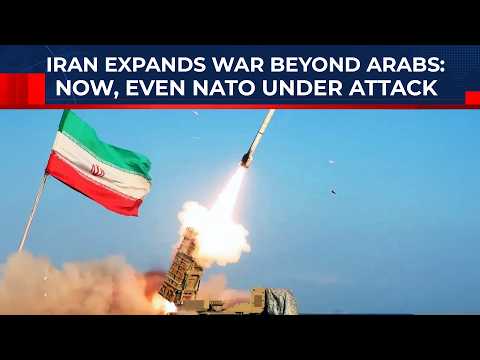
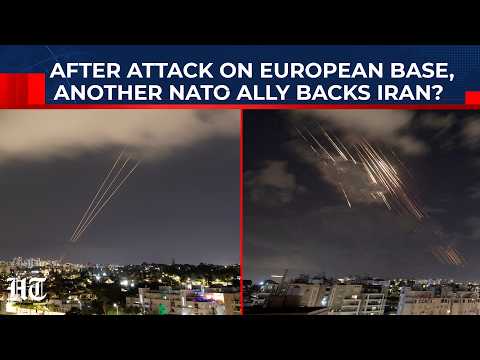
For 23 days since February 28, 2026, the US and Israel have conducted bombing campaigns against Iran under Operations Epic Fury and Roaring Lion, prompting Iranian retaliation against US bases and NATO sites including French bases in Abu Dhabi, RAF Akrotiri in Cyprus, and a missile over Turkey. France authorized US support aircraft at Istres on March 5 with strict limits, but on March 16 European NATO allies rejected President Trump's demands for military assistance to reopen the Iranian-blocked Strait of Hormuz—Trump called the rejection a 'very foolish mistake' and declared the US needs no one's help.
UK Prime Minister Keir Starmer authorized US defensive strikes from British bases while resisting wider military involvement. NATO Secretary General Mark Rutte said the alliance would not discuss Article 5 despite Iranian fire on allied territory. The Strait of Hormuz remains blocked, cutting off 20% of global crude supplies.
Why it matters
Strait closure threatens global energy prices and supplies; NATO members are divided on how to respond, risking alliance cohesion.
Questions about this story
Free account needed to ask — your question is kept and asked for you right after sign-up. Answers are public.
No questions yet — be the first to ask.
Key Indicators
23
Days of US-Israeli strikes on Iran
Coordinated bombing campaign began February 28, 2026, targeting leadership, nuclear facilities, and military sites
1,045+
Reported deaths in Iran
Iranian state media figure as of day five, with over 6,000 wounded; no updated totals available
~0
Tanker traffic through Strait of Hormuz
Iran effectively closed the strait with drones on March 2, halting roughly 20% of global crude oil transit; NATO rejects US call to reopen militarily
5
NATO-linked sites struck by Iranian fire
French base in Abu Dhabi, RAF Akrotiri in Cyprus, ballistic missile intercepted over Turkey, Gulf bases hosting Western forces, plus failed strike on Diego Garcia
Images from Openverse under Creative Commons licenses.
Videos from YouTube.
Voices
Curated perspectives — historical figures and your fellow readers.
Mark Twain
(1835-1910) ·Gilded Age · wit
Fictional AI pastiche — not real quote.
"It is a curious thing about great alliances — they hold together magnificently right up until the moment someone is actually asked to do something."
0% found this insightful
G. K. Chesterton
(1874-1936) ·Edwardian · satire
Fictional AI pastiche — not real quote.
"It is the peculiar genius of modern alliance-craft that a nation may bomb its neighbour's neighbour, draw its friends into the subsequent fire, and then denounce those friends as cowards for declining to enlarge the conflagration — all while insisting it needs no one's help, which is the one thing the evidence abundantly confirms."
0% found this insightful
Ever wondered what historical figures would say about today's headlines?
Sign up to generate historical perspectives on this story.
17 events
Latest: March 21st, 2026 · 6 months ago
Showing 8 of 17
JK to step
Tap a bar to jump to that date
March 2026
Iran launches failed missiles at US-UK Diego Garcia base
LatestMilitary
Iran fired two intermediate-range ballistic missiles at the remote US-UK base in the Indian Ocean; both failed or were intercepted with no damage. Strike followed UK authorization of US use of British bases for Hormuz operations.
Trump renounces NATO assistance on Truth Social
Diplomacy
President Trump posted that the US does not need NATO, Japan, Australia, or South Korea's help in the Iran war, following allies' refusal to join Hormuz reopening efforts.
European NATO allies reject Trump's Hormuz support call
Diplomacy
US-aligned NATO nations in Europe rebuffed President Trump's request for military help to reopen the Strait of Hormuz, with EU's Kaja Kallas stating 'this is not Europe’s war.'
UK authorizes US use of British bases for defensive Iran strikes
Military
Prime Minister Keir Starmer allowed US forces to use UK bases for 'defensive' strikes on Iran, with Ukrainian specialists aiding Gulf drone defenses; UK resists wider war involvement.
France opens Istres base to US support aircraft
Military
France authorized US refueling aircraft to use the Istres air base in southern France, stipulating they must not participate in offensive operations against Iran. Four KC-135 tankers arrived. The move marks the first direct basing support from a major NATO ally.
US House also rejects war powers resolution
Legislative
The House of Representatives followed the Senate in rejecting a bipartisan measure to constrain the president's authority to continue the war without congressional authorization.
NATO forces intercept Iranian missile over Turkey
Military
NATO air defenses destroyed an Iranian ballistic missile inside Turkish airspace — the first instance of Iranian fire entering NATO territory. Secretary General Rutte ruled out invoking Article 5.
US Senate rejects war powers resolution on Iran
Legislative
The Senate voted 47-53 against a resolution to halt Trump's Iran strikes without congressional authorization. Only one Republican, Rand Paul, supported the measure.
Macron addresses the nation, deploys carrier group
Military
Macron condemned the US-Israeli strikes as outside international law but said Iran bore "primary responsibility" for the war. He ordered the Charles de Gaulle carrier to the Mediterranean, deployed air defenses to Cyprus, and began evacuating French nationals.
Iranian drone strikes Royal Air Force base in Cyprus
Military
A Shahed-type drone struck the runway at RAF Akrotiri in Cyprus, prompting a partial evacuation. The United Kingdom said it was "not at war" despite the attack.
Iran closes the Strait of Hormuz
Economic
Iran's Islamic Revolutionary Guard Corps confirmed it had closed the strait using drones, halting roughly 20% of global crude oil transit. Tanker traffic dropped to near zero.
Iranian drones strike French base in Abu Dhabi
Military
Two Iranian drones hit a warehouse at Camp de la Paix, the French military facility in Abu Dhabi. The strike caused a fire but no casualties, making it the first direct Iranian attack on French forces.
France, Germany, UK issue joint statement condemning Iranian strikes
Diplomacy
The three European powers condemned Iran's "indiscriminate" attacks on countries in the region.
February 2026
US and Israel launch strikes on Iran
Military
Operation Epic Fury (US) and Operation Roaring Lion (Israel) began with coordinated strikes on Tehran, Isfahan, Qom, and other cities. Supreme Leader Ali Khamenei was killed in an airstrike on his compound.
Iran retaliates with missiles and drones across the Gulf
Military
Iran launched missiles and drones at Israel and US military bases in Qatar, Bahrain, Kuwait, Saudi Arabia, the United Arab Emirates, Jordan, and Iraq. Airports in Dubai, Abu Dhabi, and Kuwait were struck.
Iran's foreign minister says deal 'within reach'
Diplomacy
Iranian Foreign Minister Abbas Araghchi said a "historic" agreement to avert conflict was possible ahead of Geneva talks.
Trump issues 10-day ultimatum to Iran
Diplomacy
President Trump gave Iran a 10-day deadline to reach a deal on its nuclear program or face military attack.
Scenarios
1
NATO allies deepen support roles without joining combat
Likely
Discussed by: CNBC analysis and European defense policy commentators
European allies continue expanding logistical, defensive, and basing support to the United States while maintaining the legal distinction that they are not combatants. France's 'service station, not a fighter jet' framing becomes the template. Other NATO members with Gulf bases or regional assets follow suit. The line holds as long as Iran does not escalate attacks specifically targeting European homelands, but each new defensive deployment narrows the gap between support and participation.
2
Iran targets European infrastructure, triggering Article 5 debate
Possible
Discussed by: Foundation for Defense of Democracies, Al Jazeera analysts, NATO watchers
Iran escalates attacks against NATO-linked targets — a direct strike on Cyprus that kills European service members, or a sustained campaign against Gulf bases hosting French or British troops. Pressure mounts to invoke Article 4 consultations or Article 5 mutual defense. The complication: Article 5 was designed for defensive wars, not situations where an ally initiated hostilities. Internal NATO disagreement over whether the clause applies could fracture the alliance.
3
France leads European coalition to reopen Strait of Hormuz
Possible
Discussed by: Macron in his March 3 address, European energy policy analysts
With the Strait of Hormuz closed and European energy markets under severe stress, Macron's stated willingness to pursue a military operation to reopen the waterway becomes operational. A European-led naval coalition, possibly including the UK, forms independently of Operation Epic Fury with a narrow maritime security mandate. This would represent the largest independent European military operation in decades and could put European forces in direct confrontation with Iranian naval assets.
4
European backlash forces governments to withdraw support
Possible
Discussed by: Al Jazeera reporting on European public opinion, antiwar movements
Public opposition to any involvement in a war that European leaders themselves have called illegal intensifies. Macron's dual posture — condemning the strikes while enabling them — becomes politically untenable. Governments pull back basing access and defensive deployments, leaving the US more isolated but reducing the risk of European entanglement. This would mirror aspects of the 2003 Iraq War, when French and German opposition to US policy defined transatlantic relations for years.
5
US goes alone on Hormuz operation, isolating from NATO
Likely
Discussed by: Trump statements, Al Jazeera analysis, TIME reporting
Frustrated by NATO rebuffs, Trump launches unilateral US naval operation to escort tankers and clear the Strait of Hormuz, using UK bases for defensive support but without broader alliance backing. Success reopens oil flows but heightens solo US exposure to Iranian retaliation; failure exacerbates energy crisis and transatlantic strains.
Historical Context
3 moments from history that rhyme with this story — and how they unfolded.
1 of 3
January-February 1991
France joins Gulf War coalition under Operation Daguet (1991)
France deployed roughly 20,000 troops, 14 ships, 75 aircraft, and 350 tanks to the US-led coalition to liberate Kuwait from Iraqi occupation. The French contingent, operating under the codename Daguet, captured the Al-Salman airfield 150 kilometers inside Iraqi territory within 48 hours.
Then
France suffered no combat aircraft losses and accomplished its ground objectives rapidly. The operation reinforced France's standing as a capable military partner.
Now
The 1991 deployment set the template for French defense agreements with Gulf states — the Abu Dhabi base that was struck by Iranian drones in 2026 traces directly to defense cooperation formalized after the Gulf War.
Why this matters now
France's Gulf War participation established the defense agreements and permanent military presence now pulling it into the 2026 conflict. The base infrastructure Iran targeted exists because of commitments made 35 years ago.
2 of 3
September 2001
NATO invokes Article 5 after September 11 attacks (2001)
One day after the September 11 attacks killed nearly 3,000 people, NATO invoked Article 5 — its mutual defense clause — for the first and only time in the alliance's history. All 19 members at the time agreed the attacks on the United States constituted an attack on all.
Then
NATO deployed surveillance aircraft over the US and launched naval operations in the Mediterranean. Individual allies joined the US invasion of Afghanistan.
Now
The invocation set the only precedent for Article 5 in practice, but critics later argued the broad interpretation contributed to a 20-year war in Afghanistan that most allies grew reluctant to sustain.
Why this matters now
The 2001 precedent is precisely what makes the 2026 situation awkward for NATO. Article 5 was triggered when a member was attacked. In 2026, a member started the war and adversary retaliation is hitting allied territory — a scenario the treaty's drafters never anticipated.
3 of 3
March 2003
France opposes Iraq War but grants US airspace access (2003)
France, under President Jacques Chirac, led international opposition to the US invasion of Iraq, with Foreign Minister Dominique de Villepin delivering a famous speech at the United Nations Security Council. Despite the political rupture, France still granted the US military access to French airspace for overflights. Turkey, by contrast, refused to allow US ground forces to stage from its territory, forcing a last-minute rewrite of invasion plans.
Then
France's opposition defined transatlantic relations for years. 'Freedom fries' entered the American lexicon. The US invaded Iraq without a UN mandate and without France.
Now
France's stance was largely vindicated as the Iraq War's justifications collapsed, but the episode demonstrated that even strong political opposition didn't translate into a complete severance of military cooperation.
Why this matters now
France's 2026 posture inverts the 2003 pattern: this time Paris is publicly condemning the war while providing more active military support, not less. The contrast reveals how Iran's direct attacks on French forces have shifted the calculus from political opposition toward defensive necessity.