
Astronauts keep aging space station running with summer spacewalk series
Built WorldA NASA-ESA pair swaps a failing communications antenna as the ISS heads toward retirement in 2030
Today: Astronauts swap the high-speed antennaNew here? Follow stories to track developments over time. Create a free account to get updates when stories you care about change.
Overview
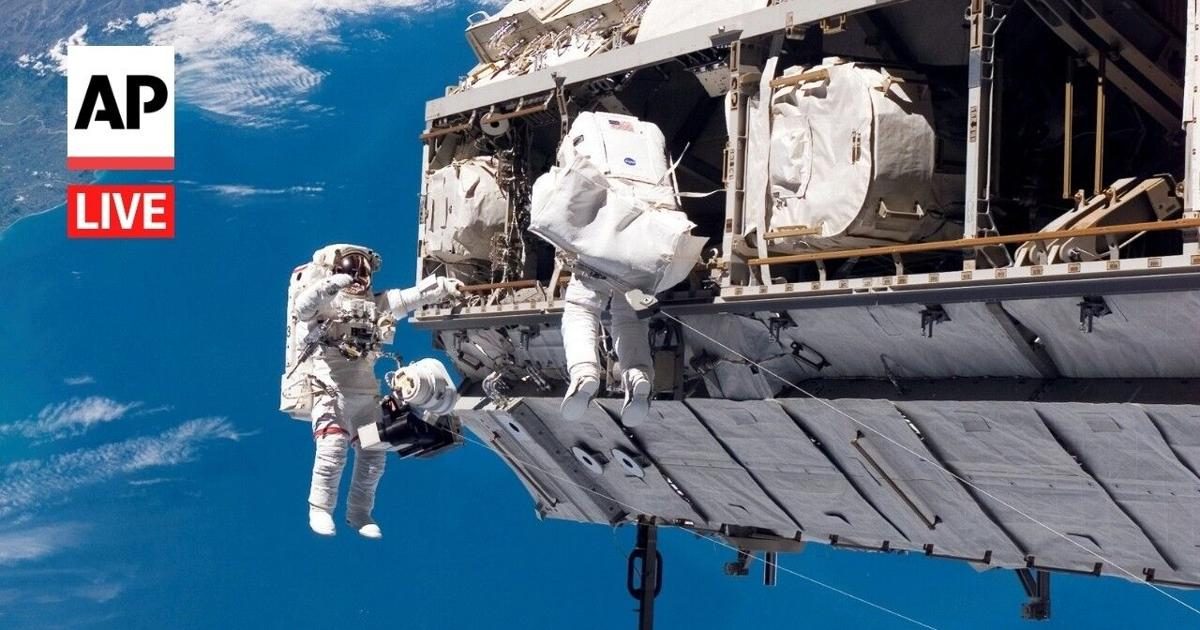
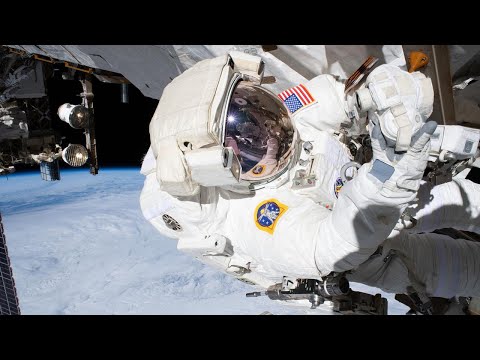
Updated 1 hour agoThe space station's main high-speed link to Houston was wearing out. On August 18, 2026, two astronauts floated outside and swapped the aging antenna for a spare, restoring a backup for the data and voice that keep the crew safe.
The roughly six-and-a-half-hour outing was the second of three spacewalks NASA planned for the summer. It also put Sophie Adenot in the record books as the first French woman to work in the vacuum of space.
Why it matters
A working, redundant high-speed link to Mission Control is what lets the station run experiments and keep its crew safe as the lab ages toward retirement.
Questions about this story
Free account needed to ask — your question is kept and asked for you right after sign-up. Answers are public.
No questions yet — be the first to ask.
Key Indicators
Voices
Curated perspectives — historical figures and your fellow readers.
Play
Exploring all sides of a story is often best achieved with Play.
Higher or Lower
A number from this story, against one from elsewhere in the news — guess which is bigger, then keep the chain going. 5 rounds, 3 strikes; a miss costs a strike and resets your streak.
Keyboard: ↓/L lower · ↑/H higher
0 points — sign up to put that on the leaderboard.
Connections
Sixteen names from the news. Find the four hidden groups of four. Four mistakes max.
Sign up to keep a daily streak — a new puzzle lands every day.
Exit debate?
Your progress in this debate will be lost.
- 1 Two AI personas square off on this story.
- 2 You predict who'll win each round — correct picks earn XP.
- 3 One crossfire question is yours to fire. Pick it carefully.
Couldn't generate a topic
Select Your Champions
Choose one persona for each side of the debate
DEBATE TOPIC
Choose personas with different perspectives for a more dynamic debate.
Select debater for this side:
No debate personas available right now.
Select debater for this side:
No debate personas available right now.
Who's Got This Round?
Make your prediction before the referee scores
The referee scores both sides on
Round Results
Set the Crossfire
Pick the question both personas must answer in the final round
Debate Oracle! You called every round!
Sharp Instincts! You know your debaters!
The Coin Flip Strategist! Perfectly balanced!
The Contrarian! Bold predictions!
Inverse Genius! Try betting the opposite next time!
XP Breakdown
Prediction History
People Involved
Organizations Involved
The U.S. space agency that operates the American segment of the ISS and directs its spacewalks.
Europe's space agency and an ISS partner, whose astronaut Sophie Adenot joined the antenna spacewalk.
Timeline
July 2026 August 2026
-
Astronauts swap the high-speed antenna
Today SpacewalkMenon and Adenot spend about 6.5 hours replacing the aging space-to-ground antenna on the Z1 truss with a spare, restoring comms redundancy. Adenot becomes the first French woman to spacewalk.
-
NASA reschedules the next spacewalk
DecisionNASA moves the antenna-swap spacewalk to August 18 so engineers can evaluate the spacesuit hardware. The sensor returned to normal after the suit came off.
-
First spacewalk ends with a suit sensor glitch
SpacewalkJessica Meir and Menon finish a 6-hour, 27-minute spacewalk prepping a power channel. A CO2 sensor in Menon's suit reads oddly near the end.
-
Menon reaches the station
MissionAnil Menon launches on Soyuz MS-29 with two cosmonauts for his first spaceflight, joining Expedition 74.
Historical Context
3 moments from history that rhyme with this story — and how they unfolded.
Skylab repair spacewalks (1973)
Skylab lost a heat shield and a solar panel at launch. Astronauts Pete Conrad, Joseph Kerwin, and Paul Weitz ran risky spacewalks to free a jammed array and rig a sunshade, saving the station from overheating.
The crew restored power and cooling, making the station habitable.
The repairs proved humans could fix major hardware in orbit, a founding case for hands-on station upkeep.
Like the antenna swap, Skylab showed that a station's survival can hinge on astronauts fixing a single failing system by hand.
STS-120 solar array repair (2007)
A solar array tore as crews unfurled it on the ISS. Scott Parazynski rode a 90-foot boom to the damaged panel and stitched it with makeshift cufflinks while it carried live current.
The array deployed fully and resumed generating power.
It became a model for improvised, high-stakes spacewalk repairs on the station's core systems.
Both cases turn on a spacewalk to rescue a critical station system, here power, on August 18, high-speed communications.
Cristoforetti spacewalk (2022)
Italy's Samantha Cristoforetti became the first European woman to perform a spacewalk, working outside the ISS during her second long-duration mission.
She completed installation and outfitting tasks on the station's exterior.
Her walk widened who does the physically hardest work in orbit for Europe's astronaut corps.
Adenot's spacewalk extends that line, making her the second European woman and first French woman to do the job.
