

Pull to refresh
Logo
Earth's newest temporary moonlet confirms an orbit predicted in 1878

Earth's newest temporary moonlet confirms an orbit predicted in 1878

New Capabilities

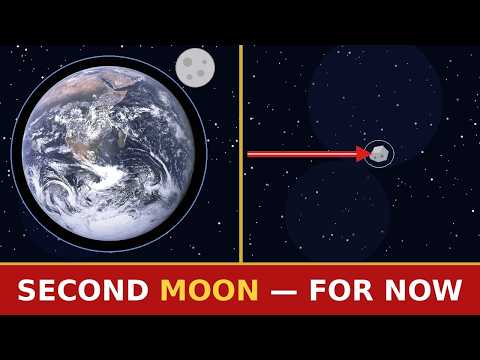
2026 QQ8 has been bound to Earth since April and leaves December 7. Its 225-day stay is also the first proof that a rock can be told apart from a spent rocket stage in orbit.

Overview

Updated Yesterday

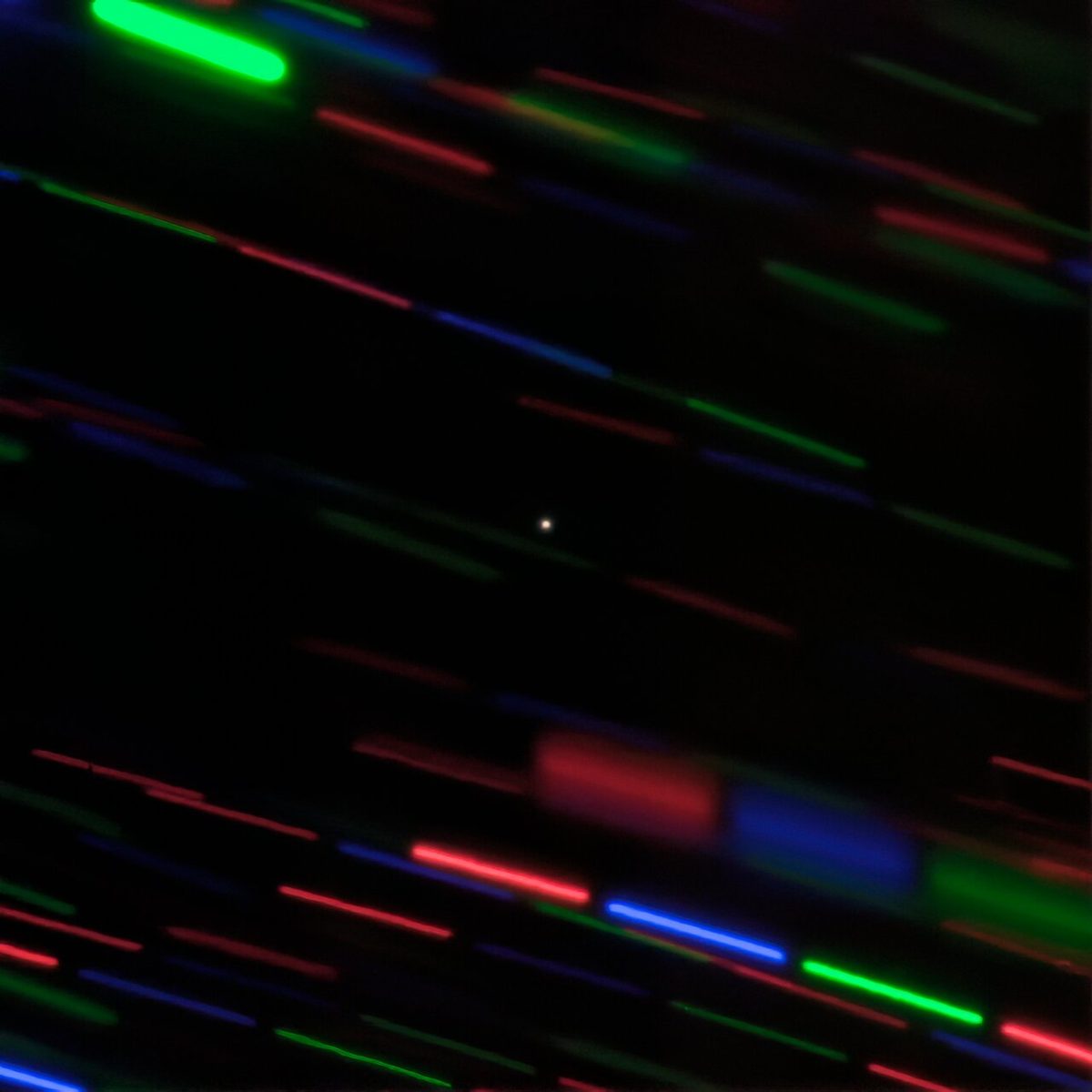
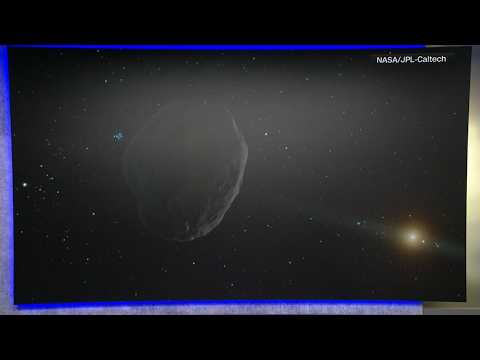
A rock roughly 2.5 metres across has been gravitationally bound to Earth since 26 April. It is the first object ever observed on an orbit the American astronomer and mathematician George William Hill calculated in 1878.

Astronomers designated it 2026 QQ8 and confirmed it is natural rock, not a discarded rocket part. Its 225-day stay puts it among the longest 0.3 percent of modelled temporary captures, and its path drifts slowly about 90 degrees from the direction of the Sun, the signature of Hill's 'maximum lunation' orbit.

Why it matters

Earth probably carries a captured rock at any given time. Confirming Hill's orbit tells astronomers where to point telescopes to find the next one.

Questions about this story

Free account needed to ask — your question is kept and asked for you right after sign-up. Answers are public.

No questions yet — be the first to ask.

Key Indicators

225
Days bound to Earth
Captured 26 April 2026 and predicted to escape on 7 December 2026.
2.5 m
Estimated diameter
A size calculated from brightness assuming the reflectivity of lunar basalt.
5
Natural temporary companions found
2026 QQ8 is the fifth discovered, and the fourth since 2020.
0.3%
Share of flybys captured longer
Only a sliver of modelled temporary flybys stay as long as QQ8.

Voices

Curated perspectives — historical figures and your fellow readers.

Sign up to generate historical perspectives on this story.

People Involved

Organizations Involved

Timeline

1878 December 2026

8 events Latest: Yesterday
Tap a bar to jump to that date
  1. Predicted departure

    Upcoming Orbital event

    The object is expected to escape Earth's gravitational influence and resume a heliocentric orbit.

  2. Sunlight pressure rules out space debris

    Latest Research

    Two preprints report radiation pressure far too weak for a hollow rocket stage, plus reflectance matching stony asteroids or lunar basalt.

  3. Orbit pinned down from 73 observations

    Data

    NASA JPL's Horizons system publishes a solution built on 94 days of tracking.

  4. Officially a natural satellite

    Announcement

    The Minor Planet Center designates the object 2026 QQ8 and classifies it as a temporarily captured object.

  5. Sárneczky identifies the object

    Discovery

    Konkoly Observatory astronomer Krisztián Sárneczky makes the first identification.

  6. QQ8 enters Earth's gravitational grip

    Orbital event

    The object crosses into Earth's Hill sphere and becomes bound to the planet.

  7. Suspected space junk, pulled from the confirmation page twice

    Setback

    The Minor Planet Center removes the object as suspected debris; astronomers coordinate follow-up through the Minor Planet Mailing List.

  8. Hill calculates the maximum lunation orbit

    Theory

    George William Hill describes a path where a small body lingers for months near the points 90 degrees from the Sun.

Scenarios

1

QQ8 leaves on schedule and stops being Earth's satellite

Likely Resolves by Dec 20, 2026

Discussed by: Fedorets et al. orbital analysis and the NASA JPL Horizons ephemeris

The orbital solution has the object escaping Earth's influence on 7 December 2026. Confirmation comes from watching its distance from Earth pass the edge of the Hill sphere and from solutions showing it unbound. No observations so far suggest a different outcome.

2

Infrared spectra settle whether QQ8 came from the Moon

Possible Resolves by End of 2027

Discussed by: Bolin et al., VLT/Keck/Gemini characterization preprint

Visible-light reflectance already matches two Apollo 17 basalt samples, which would make QQ8 a chip of lunar rock blasted off by an impact. The team says the match is not conclusive, because ordinary stony asteroids look similar. Infrared measurements could separate the two.

3

Another temporary companion turns up before 2028

Possible Resolves by End of 2027

Discussed by: Fedorets et al., whose models predict at least one temporary companion at any given time

Theory says Earth almost always has at least one captured rock. Discovery rates have run at roughly one every two to three years for orbiters and flybys combined. If the follow-up pipeline that struggled with QQ8 is fixed, survey telescopes should produce the next one sooner.

Historical Context

3 moments from history that rhyme with this story — and how they unfolded.

1878

Hill's maximum lunation orbit (1878)

The American astronomer and mathematician George William Hill worked out that a small body accompanying Earth around the Sun could almost stall in the co-rotating frame. It would linger for months roughly 90 degrees from the direction of the Sun, in what he called an orbit of maximum lunation.

Then

The configuration stayed theoretical. It appeared in models of temporary satellite capture but had no observational test.

Now

2026 QQ8 is the first object found on such a path, 148 years later.

Why this matters now

The old prediction is why astronomers recognised QQ8's slow drift near the quadrature points for what it was, rather than an oddity to be explained from scratch.

2020

2020 CD3, the two-year minimoon (2020)

A small asteroid was found orbiting Earth in 2020, already captured years earlier. It stayed gravitationally bound for about 2.7 years before escaping.

Then

It was classified as a temporarily captured orbiter, the category astronomers call a minimoon.

Now

It sits among the longest 4 percent of modelled orbiters, while 2026 QQ8 sits among the longest 0.3 percent of flybys.

Why this matters now

Two of the five discovered temporary companions have now had exceptionally long stays, which is why researchers say the standard capture model needs another look.

2022 and 2024

2022 NX1 and 2024 PT5, the one-month flybys (2022 and 2024)

Two small objects were confirmed as temporary captures of Earth. Each stayed gravitationally bound for roughly a month before escaping.

Then

Both were classified as temporarily captured flybys rather than minimoons.

Now

They set the working assumption that these captures are brief.

Why this matters now

QQ8's 225 days broke that assumption, and its discovery was the first to arrive with an orbital explanation attached.

Sources

(6)