
Pull to refresh
Logo
Daily Brief
Following
Why Sign Up
Japan arms itself with long-range missiles for the first time since World War II

Japan arms itself with long-range missiles for the first time since World War II

Force in Play
By Newzino Staff |

Tokyo deploys domestically built missiles capable of reaching mainland China, accelerating the most significant shift in Japanese military posture since 1945

March 9th, 2026: Japan deploys first domestically developed long-range missiles

Overview

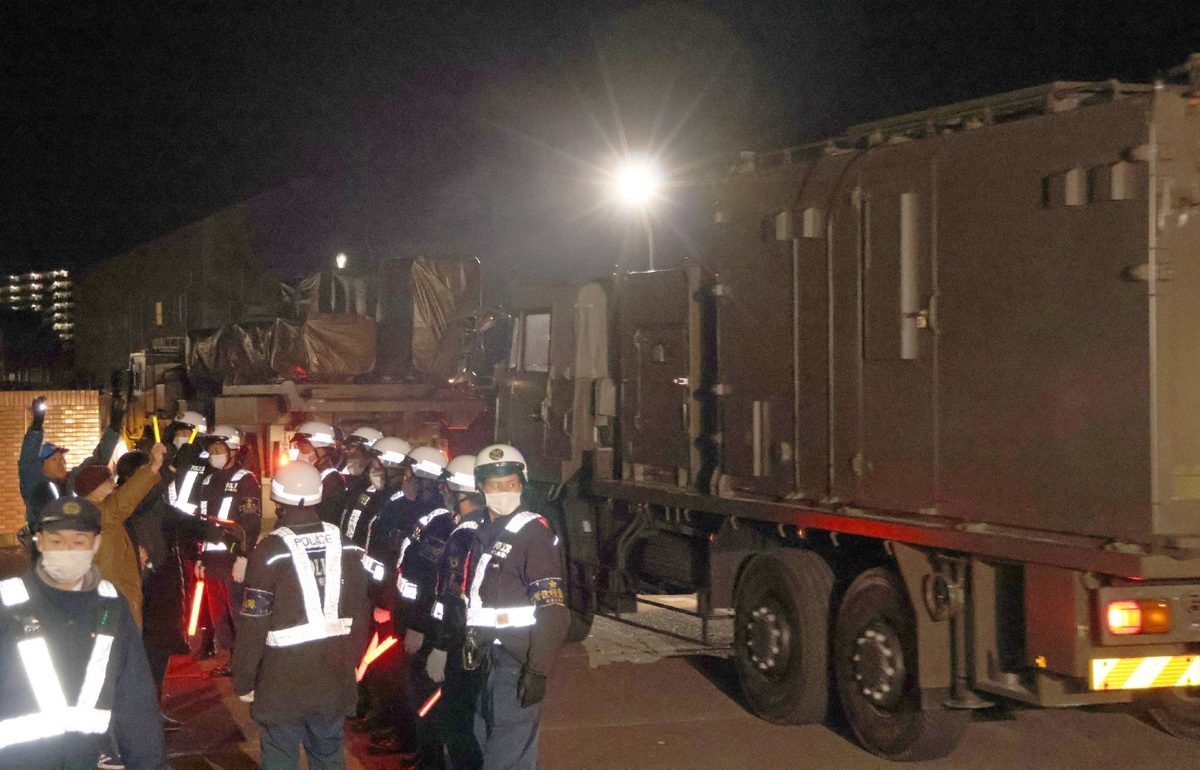
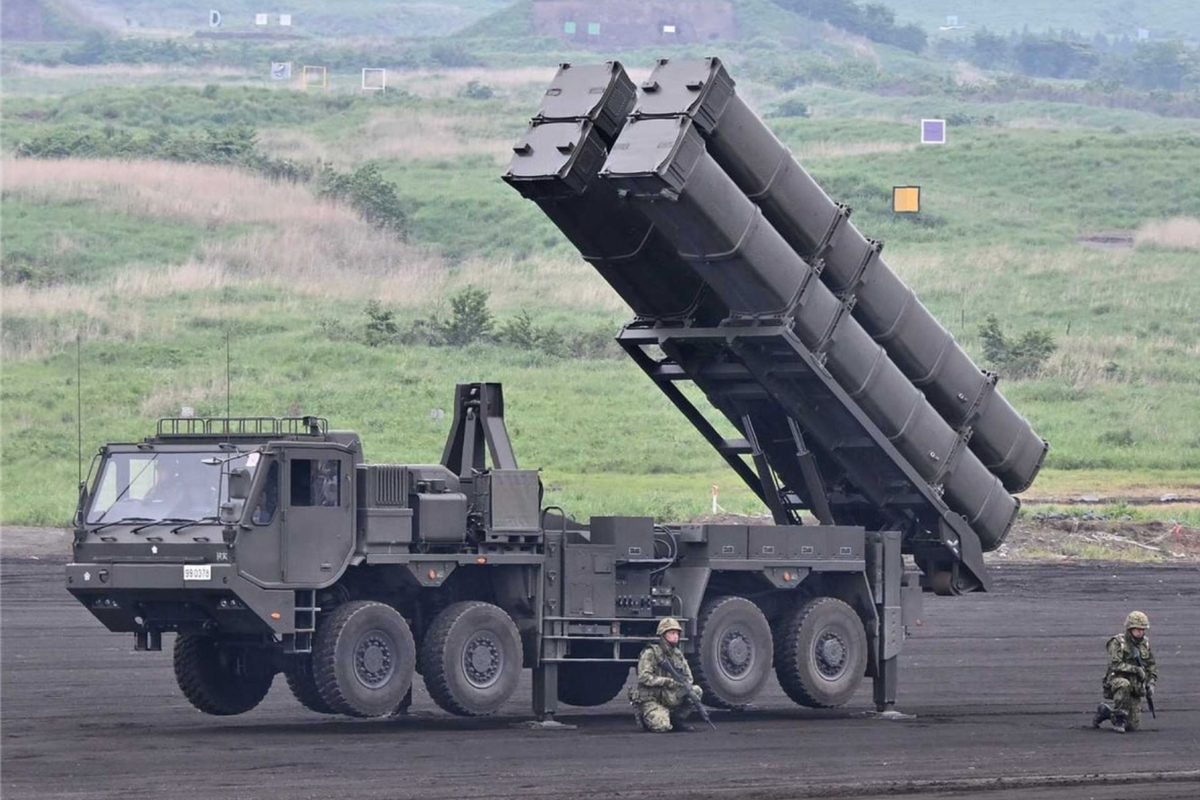
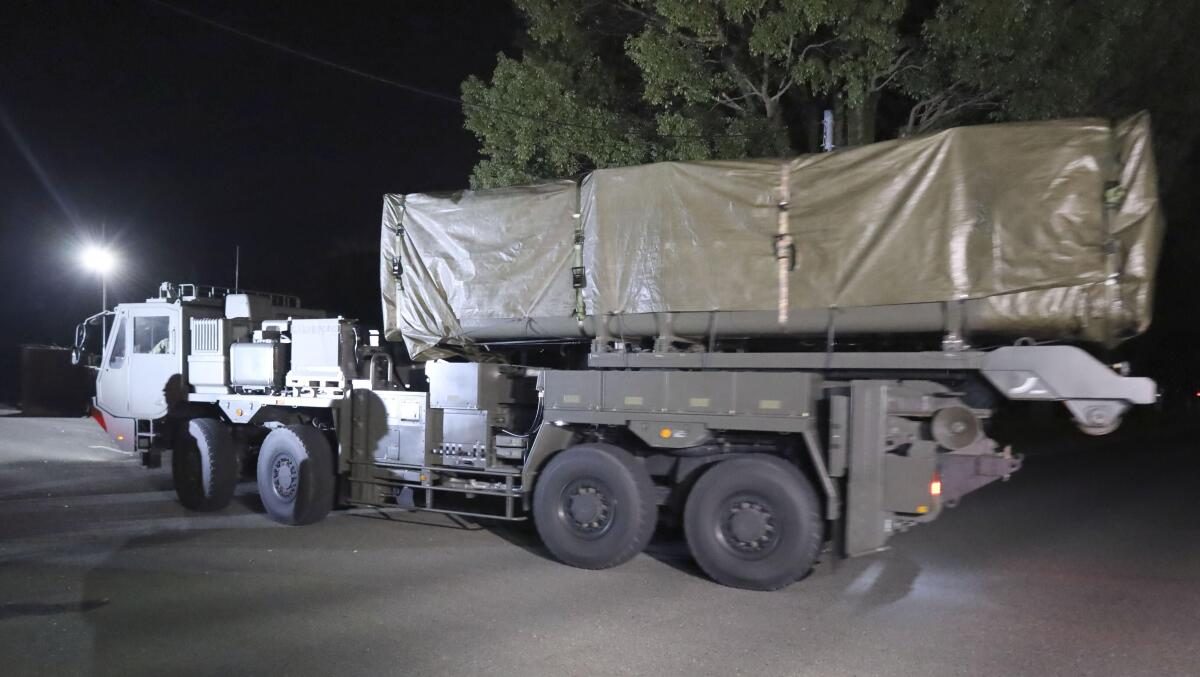
For eight decades, Japan's military existed under a constitutional leash: no offensive weapons, no power projection, no ability to strike an enemy beyond its own shores. That era ended on March 9, 2026, when trucks carrying upgraded Type-12 missiles rolled into Camp Kengun in Kumamoto under cover of darkness. Built by Mitsubishi Heavy Industries, the missiles can hit targets roughly 1,000 kilometers away—enough to reach mainland China—and represent Japan's first domestically developed long-range strike weapons.

Key Indicators

1,000 km
New missile strike range
The upgraded Type-12 extends Japan's reach fivefold, from 200 km to roughly 1,000 km, enough to hit targets on mainland China.
$58B
Fiscal year 2026 defense budget
A record for the twelfth consecutive year, pushing Japan past its target of spending 2% of gross domestic product on defense one year early.
400
Tomahawk missiles on order
Japan signed a deal for 400 American-made Tomahawk cruise missiles with a range of 1,600 km, with deliveries scheduled through 2027.
80 years
Duration of Japan's offensive-weapons abstention
Japan has not possessed weapons capable of striking foreign territory since the end of World War II in 1945.

Interactive

Exploring all sides of a story is often best achieved with Play.

Ever wondered what historical figures would say about today's headlines?

Sign up to generate historical perspectives on this story.

Sign Up

Debate Arena

Two rounds, two personas, one winner. You set the crossfire.

People Involved

Organizations Involved

Timeline

  1. Japan deploys first domestically developed long-range missiles

    Deployment

    Upgraded Type-12 missiles arrive at Camp Kengun in Kumamoto after an overnight transport from Camp Fuji, marking Japan's first deployment of domestically built weapons capable of striking targets 1,000 km away. Kumamoto's governor says the prefecture was never notified. Full deployment is scheduled by March 31.

  2. China launches Justice Mission 2025 military exercises around Taiwan

    Military

    The People's Liberation Army Eastern Theater Command conducts large-scale exercises around Taiwan, simulating a blockade of major ports and energy supply interdiction, in what analysts assess as a direct response to Japan's defense posture shift and Takaichi's Taiwan remarks.

  3. Japan approves record $58 billion defense budget

    Budget

    Takaichi's cabinet approves 9.04 trillion yen ($58 billion) in defense spending for fiscal year 2026, a record for the twelfth consecutive year, including $6.2 billion for standoff missile capability.

  4. Takaichi tells parliament a Taiwan attack could trigger Japanese military response

    Statement

    In remarks to the Diet, Takaichi states that China using military force against Taiwan could lead Japan to exercise collective self-defense and deploy the Self-Defense Forces—the first time a sitting Japanese prime minister has made such a declaration.

  5. Takaichi becomes Japan's first female prime minister

    Political

    Sanae Takaichi, a defense hawk and protégée of the late Shinzo Abe, takes office after winning the Liberal Democratic Party leadership contest, pledging to further accelerate Japan's military buildup.

  6. Japan deploys first hypersonic missile battalions

    Deployment

    The Ground Self-Defense Force establishes two Hyper Velocity Gliding Projectile battalions in Kyushu and Hokkaido, Japan's first operational hypersonic strike units.

  7. Japan approves export of next-generation fighter jets

    Policy

    Tokyo further eases export rules to permit sales of the next-generation fighter being co-developed with Britain and Italy, marking Japan's first defense collaboration beyond the United States.

  8. Japan signs deal for 400 American Tomahawk cruise missiles

    Procurement

    Tokyo finalizes the purchase of 200 Block IV and 200 Block V Tomahawk missiles from the United States, with a range of roughly 1,600 km and deliveries scheduled from 2025 through 2027.

  9. Japan relaxes arms export restrictions for the first time

    Policy

    The Kishida cabinet loosens the postwar ban on arms exports, allowing Japan to sell finished lethal weapons—including Patriot missiles—to licensing countries for the first time since 1945.

  10. Japan adopts new national security strategy authorizing counterstrike

    Policy

    The Kishida government releases three landmark security documents—a National Security Strategy, National Defense Strategy, and Defense Buildup Program—authorizing long-range strike capability against enemy missile bases and pledging to raise defense spending to 2% of gross domestic product by 2027.

  11. Cabinet approves development of upgraded Type-12 missile

    Procurement

    Japan's cabinet greenlights Mitsubishi Heavy Industries to develop an extended-range variant of the Type-12 surface-to-ship missile, expanding its range from 200 km to roughly 1,000 km and adding land-attack capability.

  12. Abe reinterprets constitution to allow collective self-defense

    Policy

    Prime Minister Shinzo Abe's cabinet reinterprets Article 9 to legalize collective self-defense, allowing Japan to use force to defend allied nations under attack—even if Japan itself is not directly threatened.

Scenarios

1

Japan completes full counterstrike architecture by 2028

Discussed by: International Institute for Strategic Studies (IISS), The Diplomat, Hudson Institute analysts

Japan fields the complete missile portfolio outlined in its 2022 strategy: upgraded Type-12s across multiple platforms (ground, ship, aircraft), 400 operational Tomahawks on modified destroyers, and hypersonic glide weapons with ranges exceeding 2,000 km. Combined with new intelligence satellites coming online in 2026–2029, this gives Japan a credible, independent strike capability against targets across the western Pacific. Defense spending stabilizes at or above 2% of gross domestic product. The buildup proceeds on schedule with manageable domestic opposition, fundamentally altering the regional military balance.

2

China-Japan tensions escalate into sustained economic and military confrontation

Discussed by: Center for Strategic and International Studies, American Enterprise Institute, analysts tracking the 2025–2026 diplomatic crisis

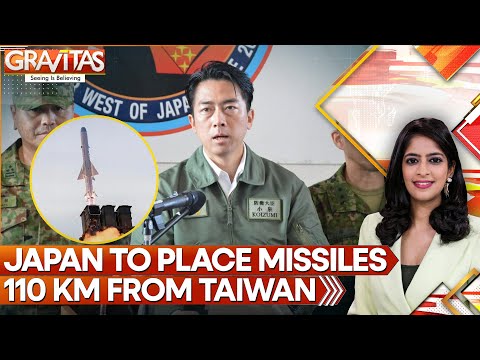
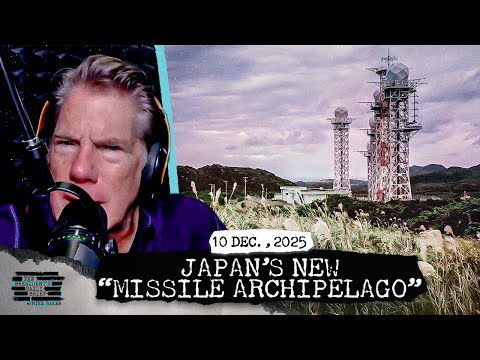
Beijing expands its economic pressure campaign beyond seafood bans and rare earth restrictions to target Japanese manufacturing supply chains, while increasing military activity near the Senkaku Islands and southwestern Japanese waters. Japan responds by accelerating deployments to its Nansei island chain, including medium-range missiles on Yonaguni Island just 110 km from Taiwan. The spiral deepens the diplomatic rupture without crossing into armed conflict, creating a sustained cold confrontation that reshapes trade and security alliances across East Asia.

3

Domestic opposition slows or constrains Japan's military expansion

Discussed by: Chatham House, Japan Times editorial analyses, local government officials including Kumamoto Governor Kimura

The covert Kumamoto deployment galvanizes broader public opposition, joining existing resistance in Okinawa and other communities hosting new military installations. Legal challenges invoking Article 9 gain traction, and local governments refuse cooperation with missile site construction. The constitutional tension—Japan acquiring weapons its own constitution appears to prohibit—becomes a central issue in the next election. While unlikely to reverse the buildup entirely, sustained opposition could slow deployments, limit basing options, and force the government to seek constitutional amendment rather than continued reinterpretation.

4

A Taiwan crisis tests Japan's counterstrike commitment in practice

Discussed by: Council on Foreign Relations, Global Taiwan Institute, RAND Corporation analysts

A serious Chinese military escalation around Taiwan—whether a blockade, quarantine, or kinetic action—forces Japan to decide whether Takaichi's statements were policy commitments or political rhetoric. Invoking collective self-defense to aid the United States in a Taiwan scenario would be the first offensive use of Japanese military force since 1945 and would face enormous legal, political, and public resistance regardless of the government's stated position. The gap between declared capability and political willingness to use it becomes the central strategic question in the Indo-Pacific.

Historical Context

West Germany's Rearmament and NATO Entry (1955)

October 1954 – May 1955

What Happened

A decade after its unconditional surrender, West Germany was permitted to rearm and join the North Atlantic Treaty Organization (NATO), reversing the Allied policy of demilitarization. The Paris Agreements of October 1954 ended the occupation regime, and the Bundeswehr was formally established in November 1955 with an initial force of 101 volunteers. The decision was driven by Cold War imperatives—the Korean War had demonstrated that Western Europe needed more conventional military power to deter the Soviet Union.

Outcome

Short Term

West Germany began building a military force that eventually reached 495,000 personnel, becoming NATO's largest European conventional force. Domestic opposition was significant—polls showed a majority of West Germans initially opposed rearmament.

Long Term

Germany's military remained tightly integrated into multinational command structures, preventing unilateral force projection and embedding German power within an alliance framework. This model of constrained rearmament within alliance structures is the closest historical precedent to Japan's current path.

Why It's Relevant Today

Japan faces a structurally similar challenge: rebuilding offensive military capability eight decades after defeat and disarmament, driven by a perceived threat from a nearby great power, while managing domestic resistance rooted in postwar pacifism. Like West Germany, Japan is building strike capability within an alliance framework (the U.S.-Japan Security Treaty) rather than as an independent military power.

China's Anti-Secession Law and the Third Taiwan Strait Crisis Aftermath (2005)

March 2005

What Happened

China's National People's Congress passed the Anti-Secession Law, which codified Beijing's claim that it could use "non-peaceful means" if Taiwan moved toward formal independence. The law followed the 1995–1996 Third Taiwan Strait Crisis, when China fired missiles into waters near Taiwan and the United States responded by sending two aircraft carrier battle groups. Japan had largely stayed on the sidelines during that crisis.

Outcome

Short Term

Japan and the United States issued a joint statement in February 2005 identifying Taiwan Strait stability as a "common strategic objective" for the first time—a significant diplomatic shift for Tokyo.

Long Term

The 2005 joint statement began the slow process of Japan publicly acknowledging a security interest in Taiwan, a trajectory that has now culminated in Takaichi's 2025 statement about potential military involvement.

Why It's Relevant Today

The 20-year arc from Japan calling Taiwan a "common strategic objective" in 2005 to a prime minister declaring potential military intervention in 2025 illustrates how gradually Japan's posture has shifted. Each step appeared incremental; the cumulative effect is transformational.

South Korea's Cruise Missile Development Program (2000s–2010s)

2001–2017

What Happened

South Korea developed its own family of land-attack cruise missiles—the Hyunmoo series—to create an independent capability to strike North Korean missile and nuclear sites. Starting with the 500 km-range Hyunmoo-3A in 2006, Seoul progressively extended range to 1,000 km (Hyunmoo-3B) and then 1,500 km (Hyunmoo-3C), while also developing the Hyunmoo-2 ballistic missile series. The program accelerated after North Korea's nuclear tests.

Outcome

Short Term

South Korea gained a credible independent strike capability against North Korean targets without relying solely on American forces.

Long Term

The missile buildup became a permanent feature of the Korean Peninsula security environment, contributing to an ongoing arms race dynamic. North Korea cited South Korean missile development as justification for its own accelerated weapons programs.

Why It's Relevant Today

Japan's missile development follows a similar pattern: a democratic U.S. ally building independent long-range strike capability in response to a perceived threat, after decades of relying on American military power. South Korea's experience suggests that once a country begins this path, the capability expands rather than contracts, and regional rivals treat it as justification for their own buildups.

Sources

(14)