
Pull to refresh
Logo
Kentucky appeals court denies NCAA second bid to halt eligibility order

Kentucky appeals court denies NCAA second bid to halt eligibility order

Rule Changes Louisville, KY local

More than three dozen student-athletes can play while Wells v. NCAA continues.

Overview

Updated 1 hour ago

Seth Trimble transferred to Louisville for a fifth college season. On Oct. 30, the Kentucky Court of Appeals denied the NCAA's second emergency appeal, leaving a temporary restraining order in place that lets him and more than three dozen other athletes play.

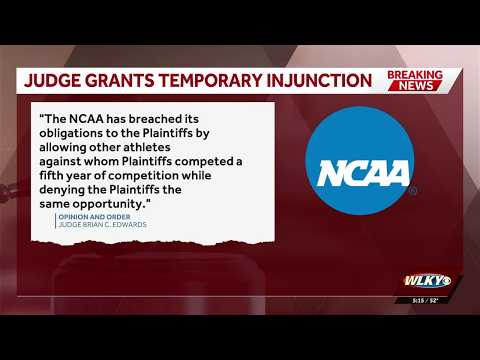
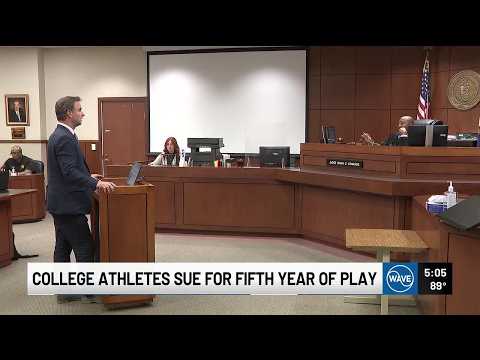
The order covers the 2026-27 season while the lawsuit continues in Jefferson County Circuit Court. The suit seeks a fifth season for Class of 2022 players whose eligibility ran out after the 2025-26 season.

Why it matters

If the order holds, dozens of players get a fifth season. If it falls, teams lose starters mid-season.

Monday: what changed in Louisville, KY

One short email a week with the openings, closings, permits and council votes we covered. Free. Unsubscribe in one click.

Questions about this story

Free account needed to ask — your question is kept and asked for you right after sign-up. Answers are public.

No questions yet — be the first to ask.

Key Indicators

10
Original plaintiffs
Student-athletes who filed the suit on Aug. 12, 2026.
27
Athletes added
Plaintiffs amended the complaint on Aug. 27 to add them.
5
Seasons sought
The suit seeks a fifth season under the NCAA's eligibility model.

Voices

Curated perspectives — historical figures and your fellow readers.

Sign up to generate historical perspectives on this story.

People Involved

Organizations Involved

Timeline

August 2026 October 2026

5 events Latest: Today
Tap a bar to jump to that date

Scenarios

1

Kentucky Appeals Court Leaves Eligibility Order in Place Through 2026-27

Likely Resolves by Q1 2027

Discussed by: Sports law analysts and local reporters covering Wells v. NCAA

The Kentucky Court of Appeals denies further NCAA requests to dissolve the order, or a new injunction keeps the plaintiffs eligible. Teams keep Trimble, Wells, Afari and Mack for the full season while the trial court case continues.

2

NCAA Wins Appeal and Players Are Ruled Ineligible Mid-Season

Possible Resolves by Jan 31, 2027

Discussed by: NCAA and its attorneys

The NCAA wins a further appeal or the trial court refuses a new injunction. The plaintiffs lose eligibility for 2026-27, forcing Louisville and Kentucky to adjust rosters during the season.

3

Trial Court Enters Permanent Injunction or Settlement

Uncertain Resolves by Q2 2027

Discussed by: Plaintiffs' attorneys

The Jefferson County Circuit Court goes beyond the temporary order and grants a longer injunction, or the parties settle. The case sets a local precedent for Class of 2022 athletes seeking a fifth season.

Historical Context

2 moments from history that rhyme with this story — and how they unfolded.

June 2021

NCAA v. Alston (2021)

The Supreme Court upheld a lower court ruling that the NCAA's limits on education-related benefits violated antitrust law. The decision let schools offer more benefits to athletes but did not strike down all eligibility rules.

Then

The NCAA began allowing additional education benefits.

Now

The case showed courts could force changes to national college sports rules.

Why this matters now

It is the main precedent for courts reviewing NCAA rules, though Wells v. NCAA targets eligibility rather than benefits.

2024-2025

Pavia v. NCAA (2024-25)

Vanderbilt quarterback Diego Pavia sued the NCAA over rules that counted junior college seasons against Division I eligibility. A federal judge granted a preliminary injunction in December 2024, letting him play in 2025 while the case continued.

Then

Pavia remained eligible for the 2025 season.

Now

The case added to pressure on the NCAA's eligibility rules and showed how quickly courts can change a player's status.

Why this matters now

Like Wells v. NCAA, it used a court order to let an athlete play while a challenge to NCAA eligibility rules proceeded.

Sources

(2)