


Pull to refresh
Logo
Malaysia's economy grows 5.3% in third quarter, beating forecasts

Malaysia's economy grows 5.3% in third quarter, beating forecasts

Money Moves

AI-driven semiconductor demand powers manufacturing as growth eases from Q2's 6% pace

Yesterday: Q3 advance estimate shows 5.3% growth

Overview

Updated Yesterday

Malaysia's economy grew 5.3% in the third quarter, beating the 5.1% median forecast in a Bloomberg survey of economists. The advance estimate from the Department of Statistics, released October 16, shows manufacturing accelerating to 7.5% on global demand for AI chips; mining was the only major sector to contract.

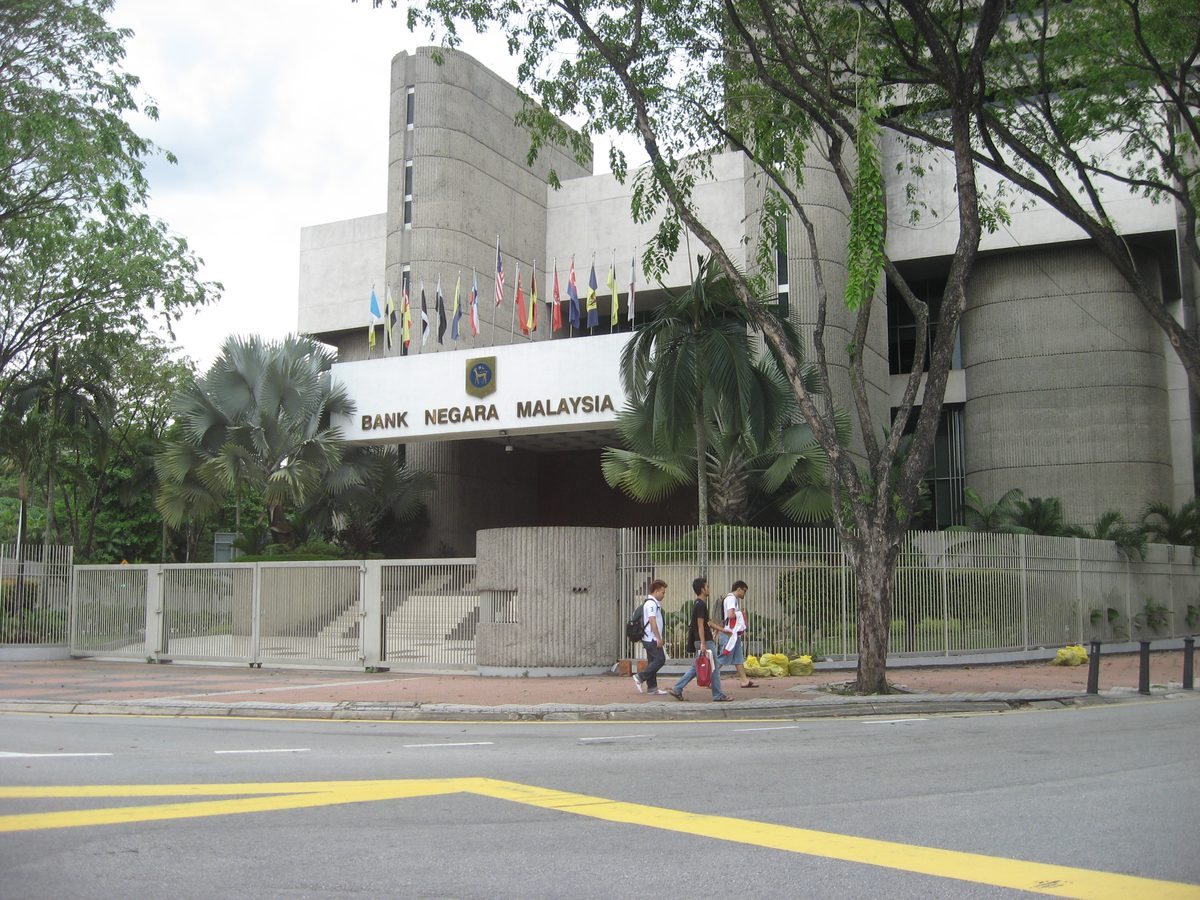
Nine-month growth reached 5.5%, up from 4.8% a year earlier, putting 2026 on track to beat the government's 4.8-5.3% forecast range. Economists at OCBC expect Bank Negara Malaysia to raise its 2.75% benchmark rate by January, and swaps markets price a 76% chance of a hike within six months. RHB and CIMB see a November hold.

Why it matters

Malaysia's AI-driven growth signals global tech demand is still running hot, an indicator for semiconductor supply chains and Southeast Asian investors.

Questions about this story

Free account needed to ask — your question is kept and asked for you right after sign-up. Answers are public.

No questions yet — be the first to ask.

Key Indicators

5.3%
Q3 2026 GDP growth, year-on-year
Beat the 5.1% median forecast in a Bloomberg survey; slowed from 6.0% in Q2.
4.6%
Q3 growth, quarter-on-quarter
Accelerated from 1.9% in the second quarter, showing momentum building.
5.5%
First nine months growth
Up from 4.8% in the same period of 2025.
7.5%
Manufacturing growth in Q3
Accelerated from 7.3% in Q2, led by electrical, electronic and optical products.
-4.9%
Mining and quarrying growth in Q3
The only major sector to contract, as crude oil and condensate production fell.
2.75%
Bank Negara Malaysia benchmark rate
Held steady since a May 2025 cut amid global tariff uncertainty.

Voices

Curated perspectives — historical figures and your fellow readers.

Ever wondered what historical figures would say about today's headlines?

Sign up to generate historical perspectives on this story.

People Involved

Organizations Involved

Timeline

May 2025 November 2026

10 events Latest: Yesterday
Tap a bar to jump to that date
  1. Final Q3 GDP figures due

    Upcoming Announcement

    Department of Statistics scheduled to release final third-quarter GDP data, subject to revision.

  2. Q3 advance estimate shows 5.3% growth

    Latest Economic Data

    Department of Statistics reports third-quarter GDP up 5.3%, beating the 5.1% Bloomberg survey forecast.

  3. Banks publish 2026 growth forecasts after GDP print

    Economic Data

    RHB kept its 2026 forecast at 5.4%, Kenanga at 5.3%, and CIMB said the Q3 reading points to a modest overshoot of its 5.0% projection.

  4. Bank Negara governor says economy likely to grow about 5% in 2026

    Policy

    Abdul Rasheed Ghaffour said Malaysia's diverse growth sources should cushion the economy against any slowdown in the AI boom.

  5. Government raises 2026 growth forecast to 4.8%-5.3%

    Policy

    Finance Ministry lifts its projection for the second time this year, citing resilient exports and investment.

  6. PM Anwar announces cash aid and higher minimum wage for 2027

    Policy

    Prime Minister Anwar Ibrahim announced more cash aid and a higher minimum wage for 2027 to ease cost-of-living pressures.

  7. Exports surge 45.5% year-on-year

    Trade Data

    August exports hit RM191.1 billion, driven by electrical and electronics products on AI demand.

  8. First-quarter growth comes in at 5.4%

    Economic Data

    Economy expands 5.4% year-on-year in Q1, setting a strong pace for the year.

  9. Second-quarter growth accelerates to 6.0%

    Economic Data

    GDP rises 6.0% in Q2, bringing first-half growth to 5.7%.

  10. Bank Negara cuts policy rate to 2.75%

    Policy

    Central bank lowers benchmark rate amid global tariff uncertainty, citing a need for monetary support.

Scenarios

1

Bank Negara Malaysia raises benchmark rate by April 2027

Possible Resolves by Apr 16, 2027

Discussed by: Bloomberg-compiled swaps market; BNM governor Abdul Rasheed Ghaffour

Swaps markets price about a 76% probability of a rate hike within six months after BNM dropped its description of policy as 'appropriate' in September. Governor Abdul Rasheed says the change gives the central bank greater room to respond. A hike becomes more likely if inflation accelerates or the Middle East conflict keeps energy prices elevated. It becomes less likely if growth moderates sharply or inflation stays within the government's 1.5%-2.5% forecast range.

2

Full-year 2026 growth lands at 5% or higher

Likely Resolves by Feb 28, 2027

Discussed by: Finance Ministry (raised forecast to 4.8%-5.3%); Bank Muamalat chief economist Mohd Afzanizam Abdul Rashid

With nine-month growth at 5.5%, the economy needs only a modest fourth quarter to finish above 5%. Export momentum is strong, with August exports up 45.5% year-on-year, and data-center construction is supporting the construction sector. The main risks are a sharp cooling in AI demand or broader Middle East escalation. A fourth-quarter slowdown below 4% would pull the annual figure under 5%.

3

Final Q3 figures confirm the 5.3% advance estimate

Likely Resolves by Nov 18, 2026

Discussed by: Department of Statistics Malaysia (advance figures are preliminary)

The advance estimate beat the 5.1% median economist forecast in a Bloomberg survey, suggesting the underlying data is solid. Revisions between advance and final readings are usually small. The construction sector's 6% growth, supported by data-center projects, and manufacturing's 7.5% expansion are the main pillars. A large revision would require late-quarter trade or output data to shift substantially.

4

Bank Negara Malaysia raises benchmark rate by January 2027

Possible Resolves by Jan 31, 2027

Discussed by: OCBC economist Lavanya Venkateswaran; Bloomberg-compiled swaps market

OCBC expects Bank Negara Malaysia to raise its rate by 25 basis points, with January the baseline and November a close call; RHB and CIMB expect a November hold. Swaps markets price about 76% probability of a hike within six months. A hike is more likely if inflation accelerates or growth holds above trend, and less likely if the AI boom cools quickly.

Historical Context

2 moments from history that rhyme with this story — and how they unfolded.

2017-2018

The 2017-2018 semiconductor supercycle

Global chip demand surged in 2017 and 2018 as smartphones, data centers, and connected devices drove semiconductor sales to record levels. Electronics exporters across Asia, including Malaysia, posted strong growth on the back of the boom. Malaysia's electrical and electronics sector was the main engine of its export performance during this period.

Then

Malaysian exports rose strongly through 2018 before the cycle cooled as memory chip prices collapsed in 2019.

Now

The episode underscored how heavily Malaysia's growth depends on global technology demand cycles.

Why this matters now

Today's AI-driven chip boom repeats this pattern at a larger scale, with data-center construction adding a new source of demand on top of semiconductor exports.

1999-2001

The 2000 dot-com boom and bust

The late-1990s technology investment boom lifted electronics exporters across Asia before the bubble burst in 2000. Semiconductor sales collapsed as telecom and internet capital spending dried up, dragging manufacturing growth across the region for two years.

Then

Asian electronics exporters, including Malaysian manufacturers, saw sharp revenue declines in 2001.

Now

The crash showed how quickly tech-led booms can unwind when capital spending stops, a cautionary note for economies built on a single technology cycle.

Why this matters now

The current AI infrastructure boom carries a similar concentration risk: if data-center and AI capital spending slows, Malaysia's export-driven growth would face a sudden headwind.

Sources

(13)