
Pull to refresh
Logo
Brain atlas maps 25.5 million cells in the basal ganglia

Brain atlas maps 25.5 million cells in the basal ganglia

New Capabilities

Twenty-six papers catalog a deep-brain region tied to Parkinson's, Huntington's and schizophrenia

Overview

Updated 2 hours ago

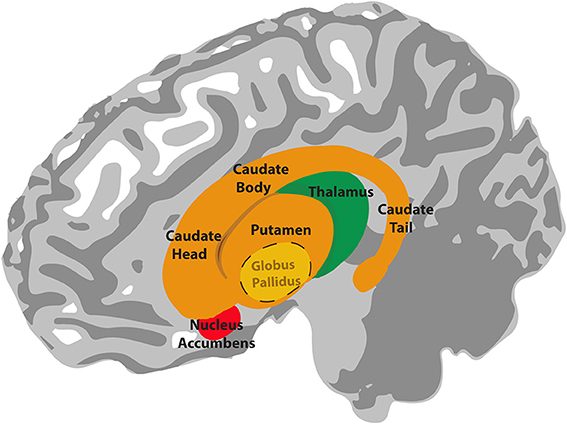
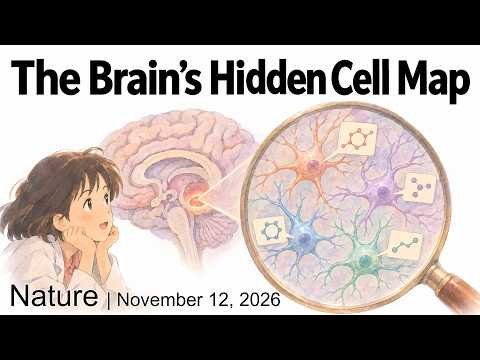
The basal ganglia are clusters of cells deep in the brain that help govern movement, mood and decision-making. On November 12, a consortium of hundreds of scientists in nine countries published the most detailed cell-by-cell map of the region yet: 25.5 million cells from humans, macaques and marmosets, described across 26 papers.

The map gives researchers a reference for asking which specific cells go wrong in Parkinson's disease, Huntington's disease, schizophrenia and addiction. It also shows that cell populations which look identical under a microscope can differ sharply in which genes they switch on.

Why it matters

A shared cell map lets researchers aim at specific neuron types instead of whole brain regions, the level at which most neurological drugs have failed.

Questions about this story

Free account needed to ask — your question is kept and asked for you right after sign-up. Answers are public.

No questions yet — be the first to ask.

Key Indicators

25.5M
Brain cells profiled
21 million from six human brains, 3 million from macaques, 1.5 million from marmosets.
26
Papers published
Spread across Cell, Cell Reports, Cell Systems, Cell Genomics and Neuron.
61
Cell types conserved across primates
Cell types found in humans, macaques and marmosets, unchanged over 76 million years.
$500M
NIH program funding
The Brain Initiative Cell Atlas Network launched in 2022 to build reference maps of mammalian brains.

Voices

Curated perspectives — historical figures and your fellow readers.

Sign up to generate historical perspectives on this story.

People Involved

Organizations Involved

Timeline

2022 November 2026

2 events Latest: 3 days ago
  1. Consortium publishes 26-paper basal ganglia atlas

    Latest Research

    25.5 million cells from humans, macaques and marmosets, with data openly released.

  2. NIH launches BICAN

    Funding

    A $500 million program to build reference maps of mammalian brains.

Scenarios

1

Independent lab confirms the STR D2 SMYD2-HTR7 neuron as a schizophrenia target

Possible Resolves by Q2 2029

Discussed by: Nelson Johansen and outside researchers quoted by National Geographic, including Laramie Duncan and Talia Lerner

The atlas flagged a rare striatum neuron carrying both dopamine D2 and serotonin HTR7 receptors, with schizophrenia genetic risk enriched in that population. Confirmation requires a separate group to show the cells behave differently in affected tissue or that manipulating them changes disease-relevant outcomes in an animal model. Johansen has said future work should test exactly that.

2

BICAN releases a whole-brain primate atlas

Likely Resolves by End of 2030

Discussed by: Michael Hawrylycz, who described the basal ganglia map as a scaffold for the rest of the brain

The consortium's stated goal is reference maps covering the whole mammalian brain, not one region. The basal ganglia framework, annotation scheme and data pipeline are designed to be extended. A whole-brain release would be the clearest signal that the approach scales beyond a single structure.

3

Atlas findings reach a clinical trial

Unlikely Resolves by End of 2031

Discussed by: Researchers quoted by the Financial Times and National Geographic, who stress that functional validation comes first

The collection includes a redesigned gene therapy that reduced Parkinson's tremors in animal models with a less invasive delivery route. Turning any atlas-derived target into a human trial requires toxicology, dosing and regulatory review, which typically takes years. A first-in-human trial would be the first hard evidence that the map changes treatment.

Historical Context

2 moments from history that rhyme with this story — and how they unfolded.

1990-2003

Human Genome Project (1990-2003)

An international consortium spent 13 years and about $2.7 billion sequencing the roughly 3 billion base pairs of human DNA. The project published a working draft in 2000 and a finished reference in 2003.

Then

The reference sequence became the coordinate system for nearly all subsequent human genetics.

Now

It did not produce treatments on its own. Its value came from what other labs could do once a shared reference existed, from disease-gene discovery to consumer genomics.

Why this matters now

The basal ganglia atlas is the same kind of infrastructure: a reference that other labs annotate against instead of rebuilding. Its payoff will be measured in what gets built on top of it.

April 2013

BRAIN Initiative launch (2013)

The Obama administration announced a multi-agency research program to map brain activity, with the National Institutes of Health as a lead funder. Early grants went toward tools for recording and labeling neural circuits.

Then

Funding shifted toward technology development rather than single-lab disease studies.

Now

The program grew into large consortium efforts, including the cell atlas network that produced this collection.

Why this matters now

BICAN is a direct descendant of that 2013 decision. The atlas is what a decade of tool-building and consortium organizing produces.

Sources

(8)