


Pull to refresh
Logo
MIT model pairs 3D crystal structures with text to help AI identify materials

MIT model pairs 3D crystal structures with text to help AI identify materials

New Capabilities

New system outperforms text-only AI at finding battery electrolyte candidates by 'seeing' atomic arrangements

Today: MIT publishes CLaC model in Nature Communications

Overview

Updated 49 minutes ago

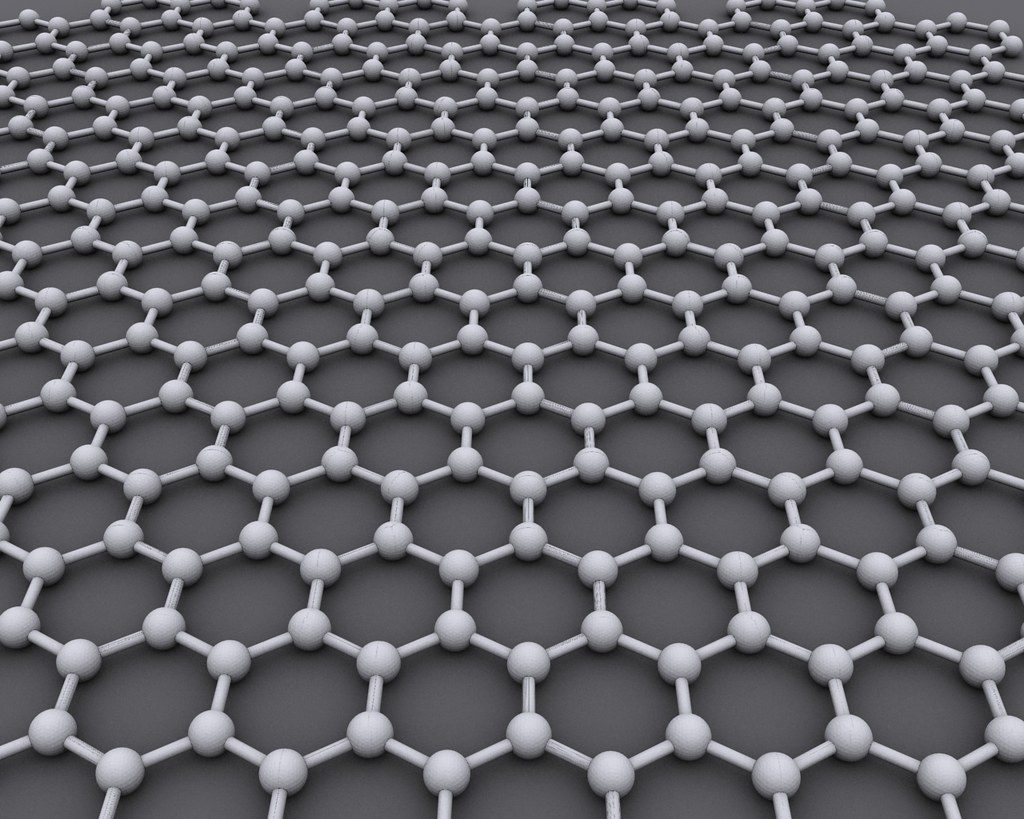
A materials database stores crystal structures, but the AI reading it could only see text, not the 3D arrangement of atoms. MIT researchers published a model in Nature Communications that merges the two, giving the AI a direct view of atomic geometry and bonding.

When asked to find lithium-ion solid-state battery electrolytes, the model ranked its top 30 candidates with an average band gap of 3.23 electron volts. Two picks, Li6PClO5 and Li4SiO4, had been independently identified as promising by other labs.

Why it matters

AI that reads atomic structure could screen battery and electronics materials in days, shortening discovery cycles that today run for years.

Questions about this story

Free account needed to ask — your question is kept and asked for you right after sign-up. Answers are public.

No questions yet — be the first to ask.

Key Indicators

95.4%
Zero-shot composition matching accuracy
CLaC trained on synthetic narratives matched structures to the right composition description at 95.4%, versus 17.8% for a Gemma text baseline.
34.0%
Crystal system classification accuracy
The model's weak point, roughly on par with its text baseline and tied to small batch size and imbalanced training data.
2
Top picks independently flagged as promising
Li6PClO5 (ranked 4th) and Li4SiO4 (ranked 9th) were both identified as electrolyte candidates in unrelated work.

Voices

Curated perspectives — historical figures and your fellow readers.

Ever wondered what historical figures would say about today's headlines?

Sign up to generate historical perspectives on this story.

People Involved

Organizations Involved

Timeline

2011 October 2026

3 events Latest: Today
  1. MIT publishes CLaC model in Nature Communications

    Today Research

    Contrastive language-crystal model aligns 3D crystal structures with text, beating text-only AI at materials identification.

  2. MatterChat structure-aware materials LLM published

    Research

    Berkeley Lab and partners introduce a multimodal LLM bridging atomic potentials with language models.

  3. Materials Project database launched

    Background

    Open computational database of materials properties seeded by the Materials Genome Initiative.

Scenarios

1

A CLaC-predicted material is synthesized and validated as a solid electrolyte

Likely Resolves by End of 2027

Discussed by: MIT researchers Ju Li and Elsa Olivetti; the Nature Communications paper's authors

Independent labs test CLaC's battery electrolyte candidates, synthesize one, and confirm it works. The approach then spreads to labs studying batteries, semiconductors, and catalysts, giving researchers a faster way to shortlist materials before expensive experiments.

2

CLaC's accuracy limits stall adoption in materials labs

Possible Resolves by Jan 31, 2028

Discussed by: The paper's own limitations section; ittechwire analysis

Crystal system classification stays weak at 34%, dataset biases persist, and real performance depends on defects, interfaces, and processing the ideal crystal model ignores. The community treats the model as promising but not yet ready to replace experimental screening.

3

Structure-aware AI consolidates into a unified materials discovery platform

Possible Resolves by Q2 2027

Discussed by: MatterChat developers (Berkeley Lab, NERSC); the trend toward multimodal materials AI

CLaC's structure-and-language alignment merges with MatterChat-style interatomic potential bridges and instruction following. The result is a platform that screens candidates, generates structures, and converses with researchers, becoming a standard interface for materials design.

Historical Context

2 moments from history that rhyme with this story — and how they unfolded.

November 2020

AlphaFold (2020)

DeepMind's AlphaFold won the CASP14 protein-folding competition, predicting protein 3D structures from amino acid sequences at near-experimental accuracy. The breakthrough gave biologists a way to see proteins' folded shapes without costly lab work.

Then

DeepMind released its predictions openly, and research groups worldwide began using them to study proteins within months.

Now

Structural AI became a foundational tool in biology; the successor AlphaFold2 later covered nearly all cataloged proteins.

Why this matters now

AlphaFold showed that giving AI 3D structural understanding of molecules transforms discovery. CLaC aims to do the same for inorganic crystal structures.

June 2011

Materials Genome Initiative (2011)

The Obama administration launched a federal program to accelerate materials discovery through computation, data sharing, and advanced tools. It funded the infrastructure that now hosts large crystal-structure databases.

Then

The initiative spurred growth of open computational databases like the Materials Project at Lawrence Berkeley National Laboratory.

Now

Those databases became the training bedrock for machine-learning materials models, including the data CLaC draws on.

Why this matters now

CLaC's training data comes from the Materials Project, a direct product of the Materials Genome Initiative. The model is the latest step in that program's data-sharing vision.

Sources

(4)