
Pull to refresh
Logo
Daily Brief
Following
Why Sign Up
Myanmar junta moves Aung San Suu Kyi from prison to house arrest

Myanmar junta moves Aung San Suu Kyi from prison to house arrest

Force in Play
By Newzino Staff |

Five years after the coup, the new military-backed president commutes the rest of her sentence to a designated residence

Today: Suu Kyi transferred from prison to house arrest

Overview

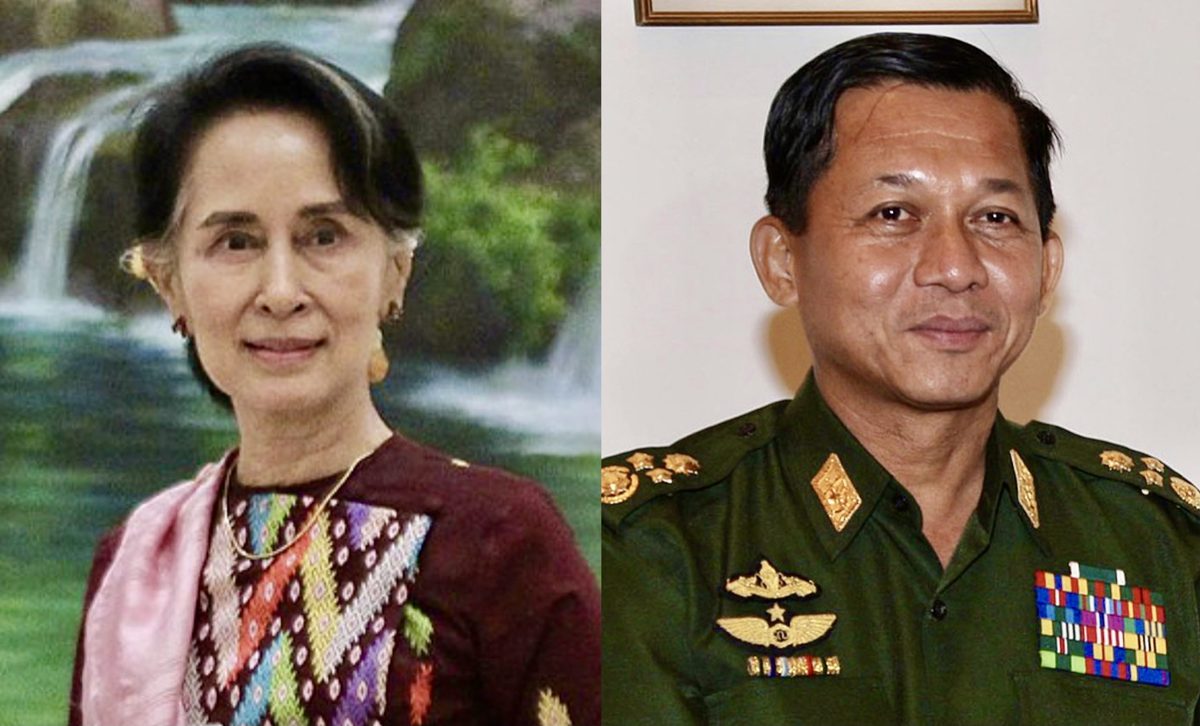
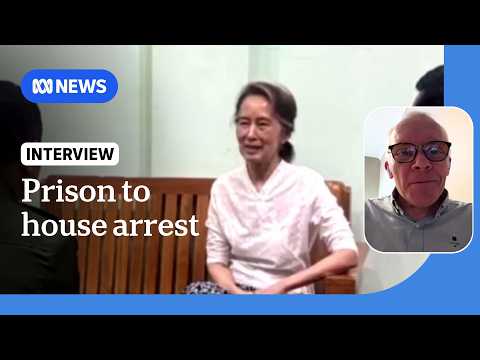
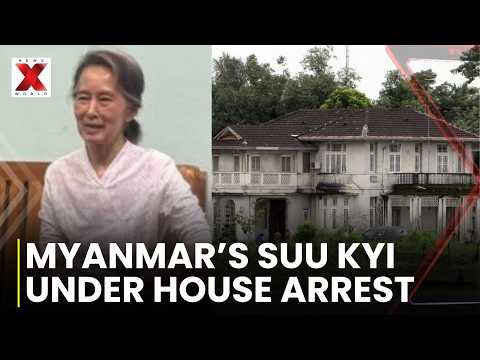
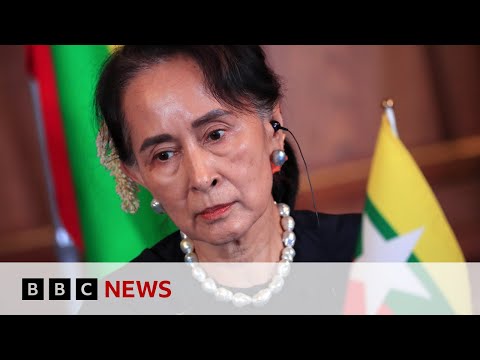
Aung San Suu Kyi is 80 years old and has been in state custody since soldiers pulled her out of bed on February 1, 2021. On April 30, 2026, Myanmar's state broadcaster MRTV announced that the country's new president — the same general who led the coup against her — had commuted the rest of her 18-year sentence to be served at a 'designated residence.' She is no longer in Naypyidaw prison, but the location of the residence has not been disclosed and her son and lawyers have had no contact with her.

Why it matters

Myanmar's junta is testing whether cosmetic concessions can buy international legitimacy while its civil war and political detentions continue.

Key Indicators

80
Suu Kyi's age
She has spent more than five of her last five years in some form of state custody.
33 yrs
Original sentence
Imposed across 19 charges including corruption and election fraud, all rejected by her supporters as fabricated.
18 yrs 9 mo
Current sentence
Two amnesties in April 2026 cut the term; more than 13 years remain to serve.
739 / 1,025
USDP seats won
The military's proxy party swept the 2025-26 election. Suu Kyi's NLD was barred from running.
Apr 10, 2026
Min Aung Hlaing inaugurated
The 2021 coup leader became civilian president three weeks before transferring Suu Kyi.

Interactive

Exploring all sides of a story is often best achieved with Play.

Ever wondered what historical figures would say about today's headlines?

Sign up to generate historical perspectives on this story.

Sign Up

Debate Arena

Two rounds, two personas, one winner. You set the crossfire.

People Involved

Organizations Involved

Timeline

  1. Suu Kyi transferred from prison to house arrest

    Detention

    MRTV announces the 80-year-old has been moved from Naypyidaw prison to a 'designated residence' for the remaining 18 years and 9 months of her sentence; family and lawyers say location undisclosed and contact denied.

  2. Mass amnesty cuts sentences by one-sixth

    Clemency

    Blanket prison-term reduction trims more than four years from Suu Kyi's remaining sentence; thousands of prisoners receive amnesties.

  3. Inauguration at the Pyidaungsu Hluttaw

    Political

    Min Aung Hlaing sworn in, formally converting his junta authority into the office of president.

  4. Min Aung Hlaing elected president by parliament

    Political

    Pro-military legislature votes 429-155 to install the coup leader as civilian president.

  5. Polling concludes; military proxy declared winner

    Political

    Union Solidarity and Development Party wins 739 of 1,025 seats. Critics call the result engineered.

  6. Junta-organized election begins

    Political

    Three-phase vote starts under emergency rules; NLD dissolved and unable to participate. UN and ASEAN reject the process.

  7. Operation 1027 reshapes the war

    Military

    Three-Brotherhood Alliance offensive in Shan State takes major towns; junta begins losing significant territory and personnel.

  8. Sentence cut to 27 years in junta amnesty

    Clemency

    Six-year reduction granted under partial pardon; she remains in solitary detention in Naypyidaw.

  9. Final verdicts bring sentence to 33 years

    Legal

    The last of 19 convictions, mostly corruption-related, totals 33 years across multiple closed trials denied independent observers.

  10. First convictions handed down

    Legal

    Closed-door court sentences her to four years on incitement and Covid-19 violation charges; later reduced to two by junta order.

  11. Military seizes power; Suu Kyi detained

    Coup

    Tatmadaw arrests Suu Kyi and other NLD leaders hours before parliament was due to convene, citing unproven 2020 election fraud.

Scenarios

1

Junta uses house arrest to court foreign capitals, sentence quietly fades

Discussed by: The Diplomat, NPR, Asia-focused analysts including the International Crisis Group

Min Aung Hlaing's government leans on the optics of the move to push for relief from Western sanctions and re-engagement with ASEAN. Suu Kyi remains incommunicado but the formal sentence is gradually reduced through further Buddhist-holiday amnesties, never erased, never enforced. She becomes a stage prop for legitimacy rather than a political actor.

2

Suu Kyi is allowed limited family contact but no political voice

Discussed by: United Nations Special Rapporteur on Myanmar, Burma Campaign UK

Pressure from regional partners, particularly Japan and ASEAN states, secures sporadic visits from her son or doctors. The junta uses the access to defuse criticism without conceding political ground. The NLD remains dissolved, the civil war continues, and her detention conditions ease while her legal status does not.

3

She dies in custody before the sentence ends

Discussed by: Human rights groups, Kim Aris, Myanmar opposition figures

At 80 with reported health problems and more than 13 years still to serve, the realistic question is whether the sentence outlives her. A death in custody — even formally 'at home' — would deepen Myanmar's international isolation and could galvanize the resistance, but would not by itself shift the junta's military position.

4

Resistance forces unseat the junta and free her

Discussed by: National Unity Government, Foundation for Defense of Democracies

The Steering Council for the Emergence of a Federal Democratic Union, uniting the NUG with major ethnic armed organizations, continues to take territory. A collapse of junta control in or near Naypyidaw would force the question of her release. Most analysts see this as a multi-year scenario, not an imminent one.

Historical Context

1990 Myanmar election annulled (1990)

May 1990

What Happened

Suu Kyi's NLD won 392 of 492 parliamentary seats — roughly 80 percent — in Myanmar's first multi-party vote in three decades. The ruling State Law and Order Restoration Council, surprised by the scale of the loss, refused to convene parliament and arrested or exiled dozens of NLD MPs.

Outcome

Short Term

Suu Kyi remained under house arrest, where she had been since July 1989. Senior NLD figures formed a government-in-exile, the National Coalition Government of the Union of Burma.

Long Term

The military ruled directly for another 21 years, only handing partial power to a quasi-civilian government in 2011. The annulment became the template for treating elections as discardable when they go the wrong way.

Why It's Relevant Today

The 2025-26 election plays the same move in reverse: this time the junta organized the vote to ensure its proxy won. The mechanism is identical — the regime decides which results count.

Suu Kyi's earlier house arrests (1989-2010)

July 1989 - November 2010

What Happened

Suu Kyi spent nearly 15 of these 21 years detained at her family home on Yangon's University Avenue, in three separate stretches. She refused offers to leave the country in exchange for freedom, including when her husband Michael Aris was dying of cancer in 1999.

Outcome

Short Term

Each release was conditional and revocable; the junta repeatedly re-detained her when her political activity exceeded their tolerance. She received the Nobel Peace Prize in absentia in 1991.

Long Term

Released in November 2010 after a similarly stage-managed election, she went on to win the 2015 vote and govern until the 2021 coup. The pattern — release, political opening, re-detention — repeated.

Why It's Relevant Today

House arrest is not a softer sentence; it is the junta's preferred mode of control because it isolates her without producing the international outcry of prison. The 2026 transfer slots into a 37-year-old playbook.

Nelson Mandela transferred from prison to house at Victor Verster (1988)

December 1988 - February 1990

What Happened

South Africa's apartheid government moved Mandela from Pollsmoor Prison to a warden's house at Victor Verster Prison, where he lived alone with a chef and could receive visitors. He remained legally a prisoner serving a life sentence and conducted secret negotiations with the regime from the house.

Outcome

Short Term

The move signaled Pretoria's willingness to talk without committing to release. Mandela used the access to negotiate the framework that produced his February 1990 unconditional release.

Long Term

The transfer became the prelude to the unbanning of the African National Congress and the start of formal transition talks. It was a real concession that produced real change — but only because the regime had decided change was coming.

Why It's Relevant Today

House arrest can be a step toward release, or a way to stall it. The Mandela parallel is the optimistic scenario for Suu Kyi; the 1989-2010 Burmese pattern is the pessimistic one. Which one applies depends on whether Min Aung Hlaing actually intends to negotiate, and there is no public evidence he does.

Sources

(11)