


Pull to refresh
Logo
SpaceX launches Crew-13 to the International Space Station

SpaceX launches Crew-13 to the International Space Station

New Capabilities

Four astronauts leave Cape Canaveral for a six-month stay; the eight-hour trip is the fastest US arrival yet.

Today: Crew-13 lifts off from Cape Canaveral

Overview

Updated 1 hour ago

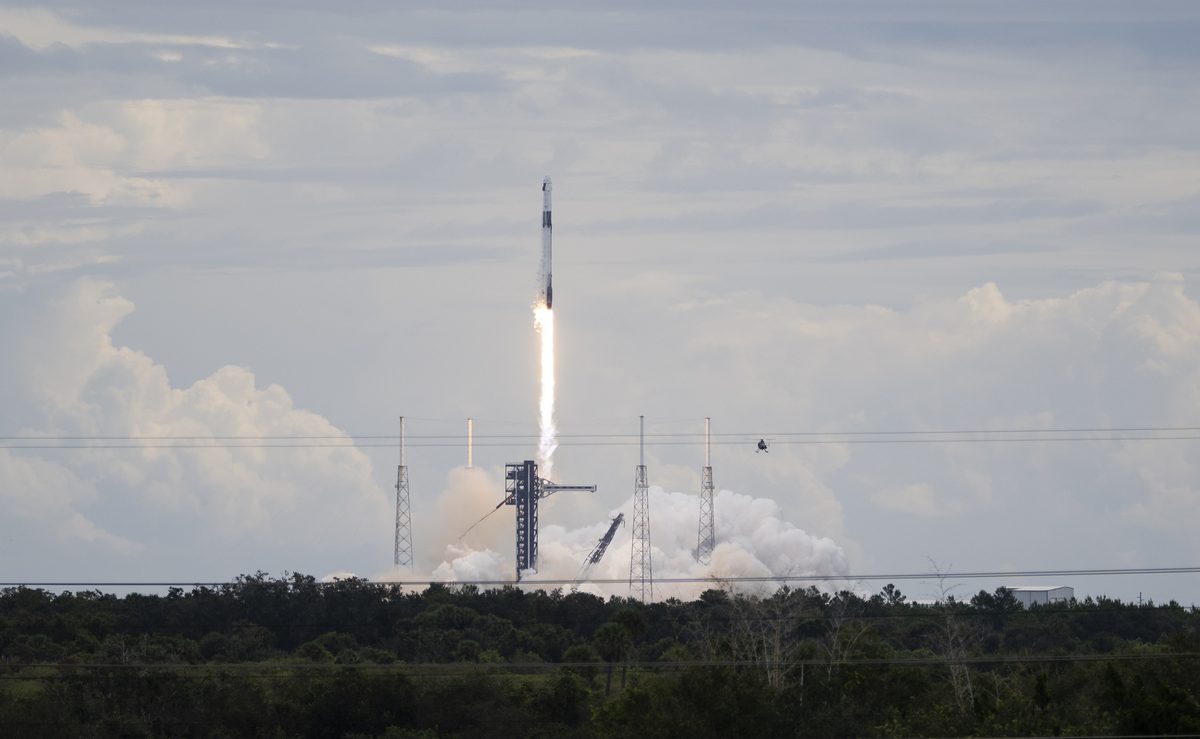
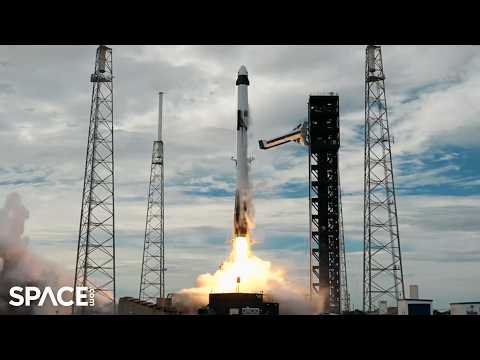
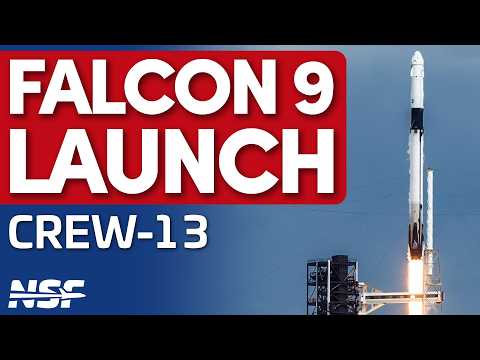
SpaceX launched four astronauts toward the International Space Station on Thursday morning. A Falcon 9 rocket lifted off at 11:10 a.m. EDT from Cape Canaveral Space Force Station in Florida, carrying NASA astronauts Jessica Watkins and Luke Delaney, Canadian Space Agency astronaut Joshua Kutryk, and Roscosmos cosmonaut Sergey Teteryatnikov.

The crew will reach the station in about eight hours, the fastest launch-to-docking arrival of any US spacecraft. They will spend up to six months running experiments on stem-cell tissue for Parkinson's and heart disease research, crop production in orbit, and new medical monitoring equipment.

Why it matters

SpaceX has flown every NASA crew rotation since 2020; Crew-13 extends that run and keeps the ISS fully staffed through early 2027.

Questions about this story

Free account needed to ask — your question is kept and asked for you right after sign-up. Answers are public.

No questions yet — be the first to ask.

Key Indicators

4
Crew members launched
Two NASA astronauts, one Canadian, and one Russian cosmonaut.
~8 hours
Launch-to-docking time
Fastest arrival of any US spacecraft at the space station.
170 days
Watkins' prior time in space
Commander's total from her 2022 Crew-4 flight; most for any Black woman.
13
SpaceX operational NASA crew missions
Crew-13 is the 13th operational rotation since the 2020 test flight.

Voices

Curated perspectives — historical figures and your fellow readers.

Ever wondered what historical figures would say about today's headlines?

Sign up to generate historical perspectives on this story.

People Involved

Organizations Involved

Timeline

February 2026 October 2026

5 events Latest: Today
Tap a bar to jump to that date
  1. Crew-13 lifts off from Cape Canaveral

    Today Launch

    Falcon 9 lifts off; four astronauts begin an eight-hour trip to the station.

  2. Docking expected at Harmony module

    Today Mission milestone

    Grace docks at the station's Harmony module, fastest US arrival on record.

  3. Launch pushed back to fix leak

    Decision

    NASA and SpaceX delay the mission from mid-September to troubleshoot the propulsion system leak.

  4. Oxidizer leak found on Crew-13's Dragon

    Technical issue

    A leak of oxidizer is detected in the capsule's propulsion system during processing.

  5. Crew-12 launches to the ISS

    Launch

    SpaceX's previous crew rotation lifts off; they remain on station until Crew-13 arrives.

Scenarios

1

Crew-13 completes its six-month rotation and returns safely

Likely Resolves by Apr 30, 2027

Discussed by: NASA mission planning and the standard SpaceX crew flight profile

The crew docks at 7 p.m., takes over station operations from Crew-12, and runs experiments for roughly six months. Crew-14 launches around February or March 2027 to replace them, and Crew-13 splashes down off the coast of Southern California.

2

Mission extension pushes Crew-13's return past six months

Possible Resolves by Q1 2027

Discussed by: Crew-12's extension sets a precedent

Schedule slips, resupply delays, or technical issues extend the rotation. Crew-12 stayed about 7.5 months because Crew-13's launch slipped; a similar delay for Crew-14 could push Crew-13's return into spring 2027.

3

Crew-13 returns early due to a technical or medical issue

Unlikely Resolves by Mar 1, 2027

Discussed by: Contingency planning; the capsule had an oxidizer leak before launch

A problem with the Dragon capsule or a medical emergency forces an early return. Rare but not unprecedented in station history; the crew would undock from the ISS and descend before completing the full rotation.

Historical Context

3 moments from history that rhyme with this story — and how they unfolded.

May 2020

SpaceX Demo-2 (May 2020)

SpaceX flew its first crewed mission, carrying NASA astronauts Doug Hurley and Bob Behnken to the station. It was the first crewed launch from US soil since the Space Shuttle retired in 2011.

Then

The mission succeeded, ending nine years of US reliance on Russia's Soyuz capsules for crew transport.

Now

It launched SpaceX into the role of NASA's primary crew provider, which has now flown 13 operational rotations.

Why this matters now

Crew-13 is the direct continuation of that capability, now routine enough that NASA treats crew rotations as standard operations.

July 1975

Apollo-Soyuz Test Project (July 1975)

American and Soviet spacecraft docked in orbit for the first time, with astronauts Thomas Stafford, Vance Brand, and Deke Slayton shaking hands with cosmonauts Alexei Leonov and Valery Kubasov.

Then

The project demonstrated that rival superpowers could cooperate in space.

Now

It set the template for joint space operations that later produced the Space Station partnership, which now includes NASA, Roscosmos, the Canadian Space Agency, and the European Space Agency.

Why this matters now

Crew-13 carries a Russian cosmonaut on a US vehicle, the same kind of cross-national crew arrangement that has kept the station staffed for decades.

July 2011

STS-135, final Space Shuttle flight (July 2011)

Atlantis lifted off on the final Space Shuttle mission, closing NASA's 30-year shuttle program and leaving the US without a domestic crew launch vehicle.

Then

NASA bought seats on Russia's Soyuz for astronaut transport to the station.

Now

The gap spurred the Commercial Crew program, which selected SpaceX and Boeing to build new capsules. SpaceX's Crew Dragon became operational in 2020.

Why this matters now

Crew-13 flies the system that replaced the shuttle, on the fifth and final Dragon capsule SpaceX built.

Sources

(10)