
Pull to refresh
Logo
Giant wētāpunga population grows in the wild after 15-year breeding push

Giant wētāpunga population grows in the wild after 15-year breeding push

New Capabilities

World's heaviest insect moves from Nationally Endangered to Increasing after 11,000 wild releases

October 2nd, 2026: Study confirms four wild generations born

Overview

Updated 1 hour ago

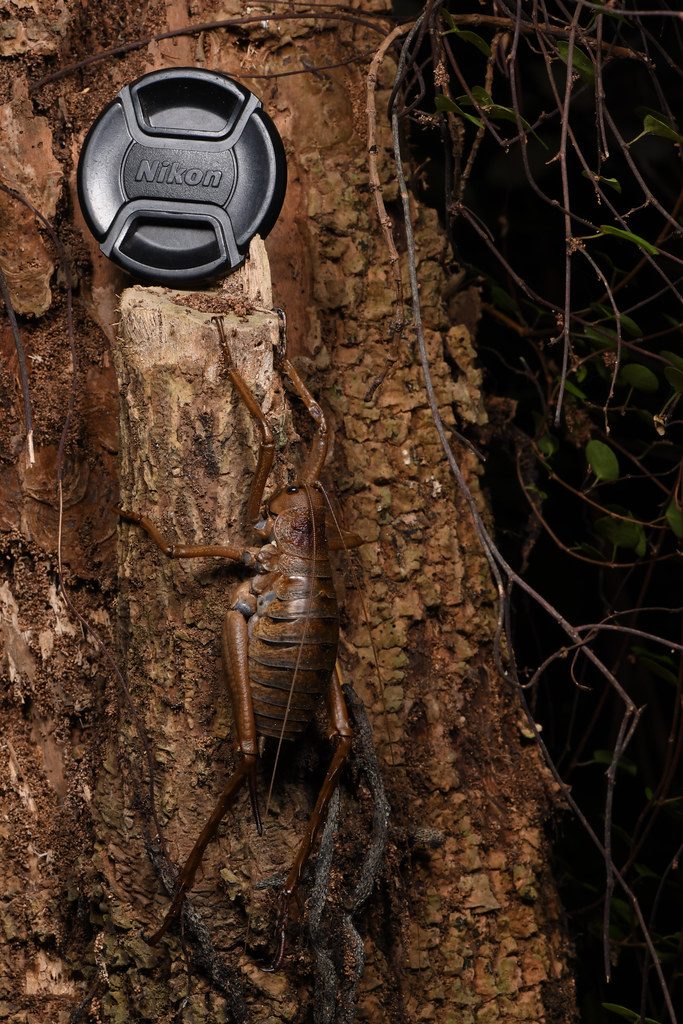
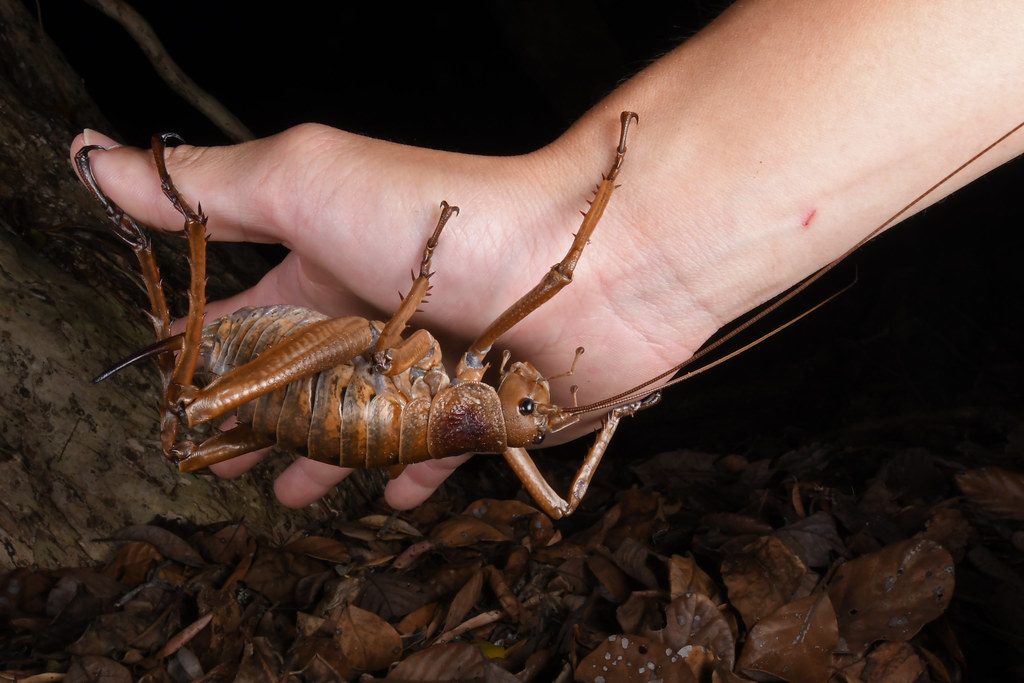
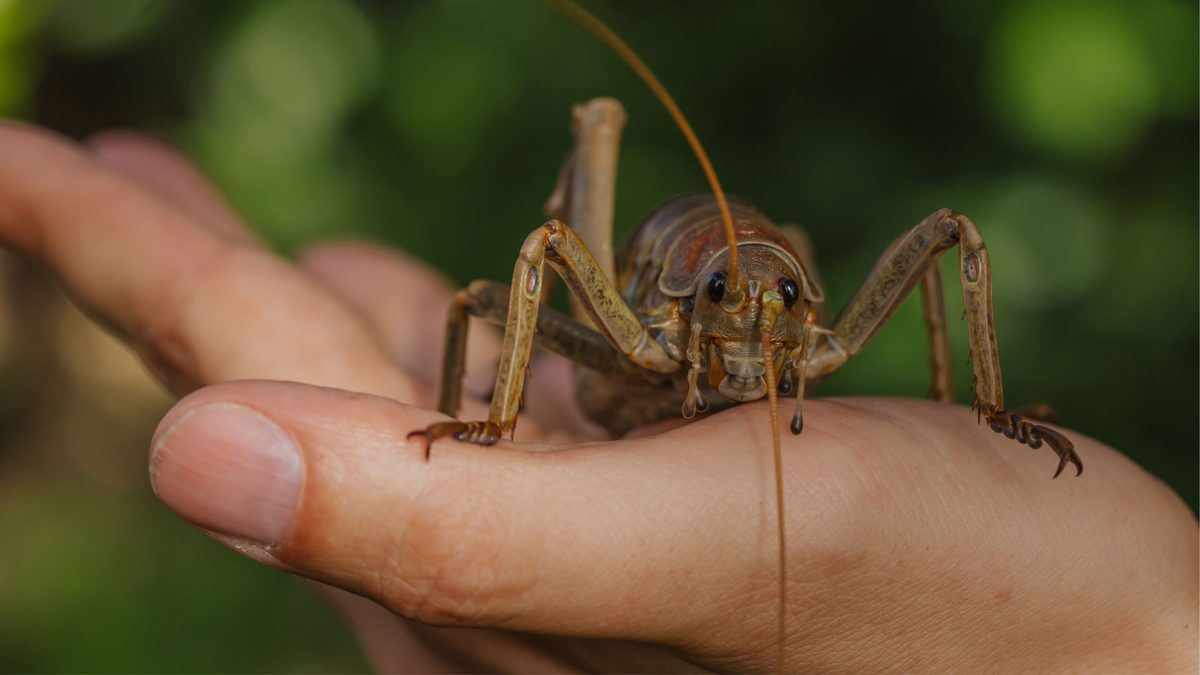
An insect that can weigh as much as a mouse is officially on the rise in New Zealand. The wētāpunga, the world's heaviest insect, has grown from one remnant population on a single predator-free island to thousands across 10 wild sites, after a 15-year breeding programme released 11,000 of them.

The programme started after surveys showed the last wild survivors were too few to move directly. Zoos bred the insects in bulk, and the techniques now inform efforts to recover other critically endangered invertebrates, from native weevils to stag beetles.

Why it matters

The breeding programme pulled the world's heaviest insect back from extinction and now gives New Zealand a working template for recovering other critically endangered species.

Questions about this story

Free account needed to ask — your question is kept and asked for you right after sign-up. Answers are public.

No questions yet — be the first to ask.

Key Indicators

11,000
wētāpunga released into the wild
Raised at Auckland Zoo and Butterfly Creek, released since 2010 across predator-free islands and fenced sanctuaries.
45
translocations to new wild sites
Spread across 10 new sites, per the 2026 study.
8,874
wētāpunga bred at Auckland Zoo (2014-2025)
Communal breeding techniques let the zoo scale production after 2014.
4
generations confirmed on Motuora and Tiritiri Matangi
Internationally recognized as proof the island populations are self-sustaining.
Nationally Increasing
conservation status (2022)
Upgraded from Threatened - Nationally Endangered in 2004.

Voices

Curated perspectives — historical figures and your fellow readers.

Ever wondered what historical figures would say about today's headlines?

Sign up to generate historical perspectives on this story.

People Involved

Organizations Involved

Timeline

2004 October 2026

10 events Latest: October 2nd, 2026 · 1 week ago
Tap a bar to jump to that date
  1. Study confirms four wild generations born

    Latest Research

    Paper documents at least four wētāpunga generations on Motuora and Tiritiri Matangi, proving self-sustaining populations.

  2. 11,000 released across islands and sanctuaries

    Translocation

    Releases reached eight predator-free islands and two mainland fenced sanctuaries.

  3. Status upgraded to Nationally Increasing

    Conservation

    Threat classification improved from Nationally Endangered, reflecting the programme's results.

  4. Auckland Zoo scales up communal breeding

    Conservation

    Refined communal creches boosted productivity, driving releases of 8,874 insects through 2025.

  5. Auckland Zoo opens second breeding colony

    Conservation

    Second colony set up, greatly expanding the programme and refining husbandry.

  6. Releases extend to Tiritiri Matangi

    Translocation

    Second island site added in the Hauraki Gulf.

  7. First releases onto Motuora Island

    Translocation

    First wētāpunga released onto predator-free Motuora Island in the Hauraki Gulf.

  8. Surveys find remnant population too small

    Research

    Surveys on Te Hauturu-o-Toi between 2005-2009 showed the population was too small to translocate directly.

  9. Founding colony collected for breeding

    Conservation

    A small number of wētāpunga collected from Te Hauturu-o-Toi to start a breeding colony at Butterfly Creek.

  10. Wētāpunga listed as Nationally Endangered

    Conservation

    Before the breeding programme, the species was listed as Threatened - Nationally Endangered.

Scenarios

1

Mainland wētāpunga turn self-sustaining

Possible Resolves by End of 2029

Discussed by: New Zealand Department of Conservation monitoring, cited in the 2026 study

The newest releases went to two fenced mainland sanctuaries north of Auckland. On predator-free islands, four wild generations proved self-sustaining; the open question is whether mainland reserves reach the same milestone. DOC says many island populations are already well on their way.

2

Breeding model expands to other threatened invertebrates

Possible Resolves by End of 2028

Discussed by: Dr Chris Green (Department of Conservation), in the 2026 paper

Green says the wētāpunga lessons now inform breeding of the Māhoenui giant wētā at Ōtorohanga Kiwi House and names the Canterbury knobbled weevil and several native stag beetles as potential beneficiaries. A formal programme for one of these would confirm the model generalizes beyond wētā.

3

Wētāpunga conservation status improves again

Uncertain Resolves by End of 2031

Discussed by: New Zealand Threat Classification System review cycle

The species moved from Nationally Endangered (2004) to Nationally Increasing (2022). New Zealand reassesses threatened species periodically; if mainland populations establish, the next classification could shift wētāpunga out of the Threatened category entirely to At Risk.

Historical Context

2 moments from history that rhyme with this story — and how they unfolded.

1980-1990s

Chatham Island black robin (1980)

By 1980 the Chatham Island black robin was down to five birds on one tiny island. Conservationists used cross-fostering, moving eggs into surrogate tit nests, to persuade the single breeding female 'Old Blue' to raise more chicks.

Then

The population climbed from five birds to more than 200 within two decades.

Now

Became New Zealand's best-known case of a species saved from single-digit extinction, showing that sustained human intervention can reverse decline.

Why this matters now

Like the wētāpunga, the black robin was rescued from a tiny remnant through intensely managed breeding. Both prove that even species at the edge can recover with continuous intervention.

1948-2000s

Takahē rediscovery and recovery (1948-2000s)

Declared extinct in 1898, the flightless takahē was rediscovered in 1948 in alpine tussock country. Conservationists bred the birds in captivity and moved them to predator-free islands.

Then

The population grew from around 100 birds in the 1980s to several hundred, spread across multiple safe sites.

Now

Established the New Zealand formula the wētāpunga programme uses: rear animals in human care, then release them onto predator-free refuges.

Why this matters now

Takahē recovery provides the direct template for wētāpunga: captive breeding plus predator-free island translocations to rebuild a collapsing population.

Sources

(7)