


Pull to refresh
Logo
French-led consortium wins Vietnam high-speed rail design contract

French-led consortium wins Vietnam high-speed rail design contract

Built World

A 30-month study will fix the route and engineering standards for a 1,541-kilometre line. The trains and the builders are still unchosen.

Overview

Updated 1 hour ago

Vietnam has picked the first big contractor on its North-South high-speed railway. A consortium led by France's SYSTRA will spend 30 months surveying the 1,541-kilometre route from Hanoi to Ho Chi Minh City, writing the feasibility study, producing front-end engineering design (FEED) and drafting the tender documents for construction. The winning price is 10.243 trillion dong, about $397 million, below the 10.782 trillion dong estimate.

The contract's size is not the point. The study fixes where the line runs, where stations sit, and which technical standards the railway must meet, and that becomes the ground rules for construction packages worth tens of billions of dollars. It does not choose the trains or the signalling, and the consultants are barred from bidding on the engineering, procurement and construction (EPC) work they help define.

Why it matters

The study locks in the route and engineering rules for a railway meant to reorganise how 100 million people and their freight move.

Questions about this story

Free account needed to ask — your question is kept and asked for you right after sign-up. Answers are public.

No questions yet — be the first to ask.

Key Indicators

$397M
TV-02 consultancy contract value
Winning price of 10.243 trillion dong; different reports round it between $393 million and $400 million.
1,541 km
Planned line length
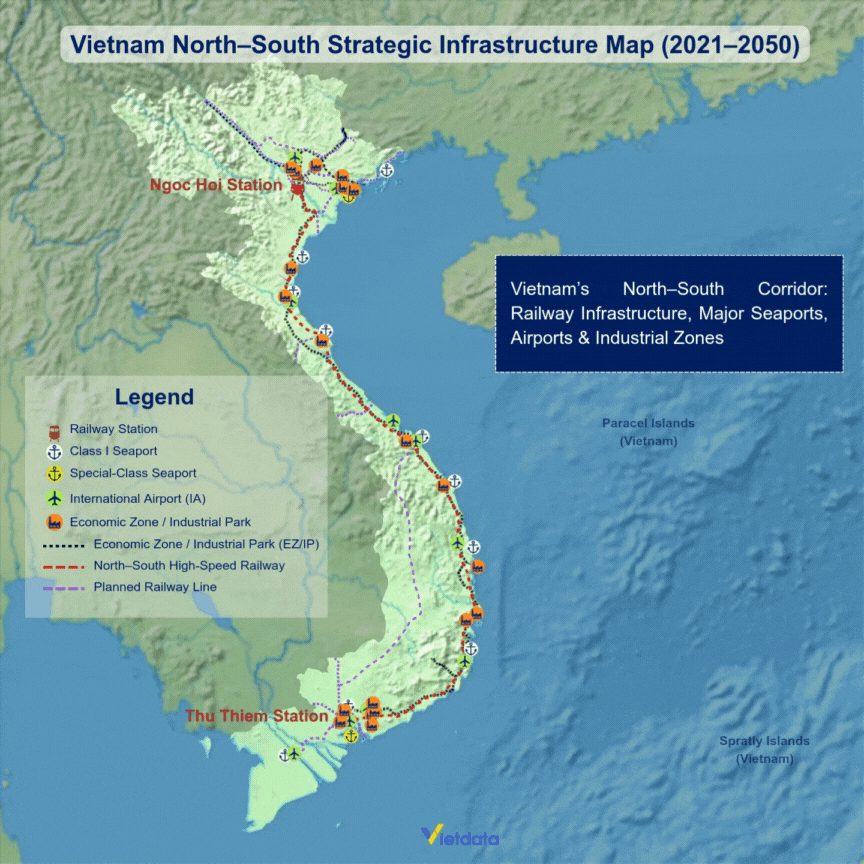
Hanoi's Ngoc Hoi station to Ho Chi Minh City's Thu Thiem station, on 1,435 mm standard gauge track.
350 km/h
Design speed
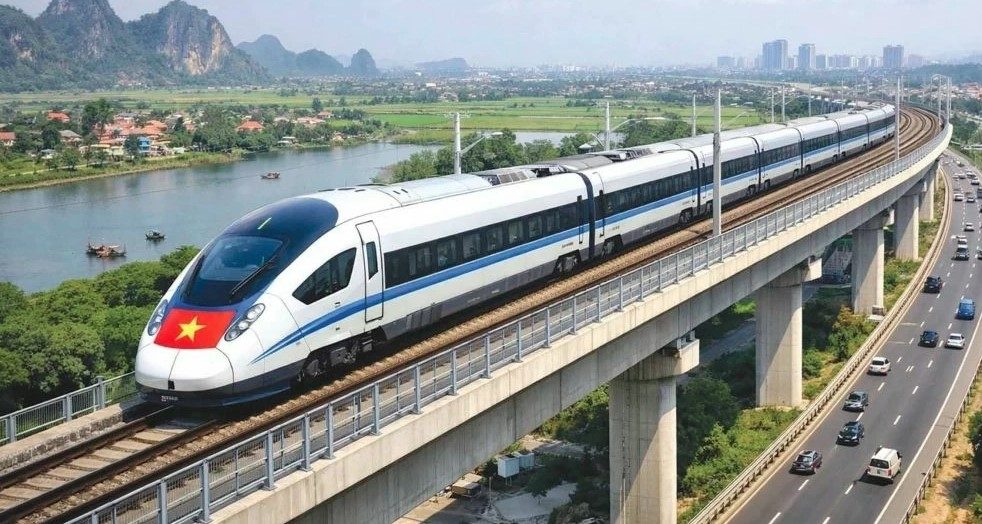
Double-track line with 23 passenger stations and 5 freight stations planned.
$67.3B
Preliminary total investment
Government estimate for the whole project, which targets basic completion in 2035; earlier coverage cited about $65 billion.
8
Firms in the winning consortium
Four French and Korean companies including lead member SYSTRA, plus four Vietnamese firms.
30
Contract duration in months
Surveys are paid at fixed unit prices; the feasibility study, FEED and tender documents are lump-sum.

Voices

Curated perspectives — historical figures and your fellow readers.

Sign up to generate historical perspectives on this story.

People Involved

Organizations Involved

Timeline

May 2026 November 2026

6 events Latest: Yesterday
Tap a bar to jump to that date
  1. Vietnam approves an eight-company consortium for the $399M design deal

    Latest Award

    Decision No. 3456 approves the SYSTRA-led group for surveys, the feasibility study, front-end engineering design and bidding documents over 30 months. Contract negotiations come next.

  2. Single consortium bids for the study contract

    Procurement

    Offers close with one bidder: SYSTRA with Korean and Vietnamese partners, at 10.243 trillion dong against a 10.782 trillion dong estimate.

  3. Vietnam cancels the first TV-02 tender round

    Procurement

    Thang Long voids the round after a consortium of three Chinese and five Vietnamese firms fails a validity requirement. The specific breach is not published.

  4. Korean minister delivers a presidential letter in Vietnam

    Diplomacy

    Korea's land and transport minister visits Vietnam and hands over a letter from the president, part of a push that Seoul later credits for the win.

  5. Korea sends a vice-ministerial delegation to lobby for the contract

    Diplomacy

    Korea's Ministry of Land, Infrastructure and Transport dispatches a delegation led by its second vice-minister to make the case for Korean firms.

  6. Consultants barred from bidding on the construction they design

    Rule

    At a project briefing, Thang Long board officials say TV-02 consultants cannot join later engineering, procurement and construction tenders, to keep the design work independent.

Scenarios

1

Consortium signs the TV-02 contract with Thang Long board

Likely Resolves by Q1 2027

Discussed by: Vietnamese state media including VOV and VietnamPlus, which both note the award is only an approval of the selection result pending negotiation

The selection decision is not yet a contract. The consortium and the Thang Long board must negotiate terms and sign, which both sides have described as the next step. A signed 30-month deal starts the clock on the interim feasibility report due about 12 months later.

2

Feasibility study approved and route alignment fixed

Possible Resolves by Q2 2028

Discussed by: Thang Long board implementation milestones reported by VietVance and VietnamPlus

The consultant must deliver an interim feasibility report within 12 months of the contract taking effect, with a stable alignment and key station, bridge and tunnel locations, then seek approval of the full study around month 15. Approval would convert a corridor drawn on maps into a route that provinces must plan around.

3

Main-line construction starts by the end of 2028

Uncertain Resolves by End of 2028

Discussed by: Vietnam's Ministry of Construction timetable, as reported by VietnamPlus and Construction Review

The government's published schedule puts feasibility study approval and groundbreaking between the fourth quarter of 2026 and the fourth quarter of 2028, with land clearance targeted for completion in late 2028. The start date has already slipped once, by a year, to the end of 2027. Relocation of residents along the corridor is the main thing that could push it again.

4

A non-French supplier wins the trains and signalling

Uncertain Resolves by Q2 2030

Discussed by: Korean Ministry of Land, Infrastructure and Transport officials, who say further packages will be tendered separately and that Korea will keep competing

The design contract does not settle technology. Vietnam has not committed to French TGV, Korean KTX, Japanese Shinkansen or Chinese high-speed systems, and the rolling stock, signalling and traction contracts will be tendered later. Seoul's stated hope is that early design involvement gives Korean firms an edge; French, Japanese and Chinese suppliers have the same ambition.

Historical Context

3 moments from history that rhyme with this story — and how they unfolded.

June 2010

Vietnam's National Assembly rejects the Shinkansen plan (2010)

Vietnam's legislature voted down a Japan-backed proposal to build the North-South line with Japanese bullet-train technology, with cost the central objection. The project had been promoted for years before that vote.

Then

The plan was shelved and the corridor remained a single-track, slow line.

Now

More than a decade passed before a high-speed rail investment plan cleared the National Assembly, and cost has framed every debate since.

Why this matters now

It explains why the current project is being phased through studies and separately managed land-clearance projects rather than approved as one giant construction contract.

2015 to October 2023

Jakarta–Bandung high-speed line (2015–2023)

Indonesia chose a Chinese consortium over a Japanese one to build its first high-speed line, in a contest that was openly framed as a technology-standard rivalry. The line opened to commercial service in October 2023 after construction costs rose well above early estimates.

Then

Indonesia got a working high-speed line and a Chinese-built, Chinese-standard railway.

Now

The project became the reference case in Southeast Asia for how a technology choice is also a diplomatic and financing choice, and for the budget risk that follows.

Why this matters now

Vietnam's decision to award the design work to a French-led group while leaving train and signalling suppliers unchosen shows the same contest being run in stages rather than settled at once.

December 2021

Laos–China railway opens (2021)

A 414-kilometre standard-gauge line linking Vientiane to the Chinese border opened, giving landlocked Laos its first railway connection to China's network.

Then

Freight and passenger volumes grew quickly, and the line became Laos's main trade link north.

Now

It left Vietnam as the neighbour without a modern rail link into the regional network, raising the cost of delay.

Why this matters now

Vietnam's 1,435 mm standard-gauge design is meant to connect with that network, which is why the engineering standards set in this study matter beyond the Vietnamese border.

Sources

(10)