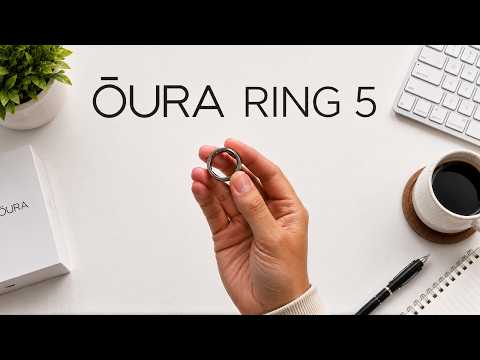
Oura's fifth-generation smart ring went on sale Thursday with blood pressure monitoring and on-demand telehealth access, starting at $399. The Ring 5 is 40% smaller than its predecessor and monitors nighttime blood pressure shifts that can warn of cardiovascular strain.
Samsung shipped live blood pressure readings on a smartwatch in March; Apple won FDA clearance for hypertension alerts in September 2025. Oura ships without that clearance. A January 2026 FDA guidance update made that possible—companies can now market blood pressure estimation as a wellness feature without the formal review Apple went through.
Why it matters
If wearables can catch undiagnosed hypertension early, primary care changes. And Oura needs that pitch to justify its $11 billion valuation.
13 events
Latest: In 6 days
Showing 8 of 13
JK to step
Tap a bar to jump to that date
Jump to
June 2026
Ring 5 shipments begin
LatestProduct
First Ring 5 units reach pre-order customers; software update lands on Gen 3 and Gen 4 rings.
May 2026
Oura unveils Ring 5 with blood pressure tracking and on-demand care
Product Launch
Fifth-generation ring is 40% smaller, starts at $399, and ships with Blood Pressure Signals, GLP-1 tools and in-app telehealth via Counsel Health. Pre-orders open the same day.
Boston Globe reports FDA has loosened wearables oversight
Regulatory
Cardiologists warn the rush of blood-pressure features shipping without clearance could mislead patients.
Oura IPO plans reported at over €9 billion
Corporate
Euronews and Bloomberg report Oura has confidentially submitted draft paperwork to the SEC.
March 2026
Samsung ships cuff-free blood pressure readings on smartwatch
Product
Galaxy Watch update delivers live systolic and diastolic readings, a first for a wrist wearable.
January 2026
FDA wellness guidance clears path for blood pressure features without 510(k) review
Regulatory
The FDA's revised General Wellness guidance lets companies market non-invasive blood pressure estimation as a consumer wellness product, skipping formal 510(k) clearance, provided the product avoids medical or diagnostic claims. Oura, Samsung, and Whoop all shipped blood pressure features in the months that followed.
October 2025
Oura raises $900M Series E at $11 billion valuation
Funding
Fidelity leads the round; the company more than doubles its 2024 valuation in under a year.
September 2025
Apple ships hypertension alerts in watchOS 26
Product
Feature rolls out to Apple Watch Series 9 and later across 150 countries, including the US and EU.
FDA clears Apple Watch hypertension alerts
Regulatory
Algorithm scans 30 days of optical heart-sensor data to flag possible high blood pressure.
July 2025
Aktiia's Hilo Band becomes the first FDA-cleared OTC cuffless blood pressure monitor
Regulatory
Swiss startup Aktiia wins 510(k) clearance for the Hilo wristband—the first cuffless blood pressure device authorized for over-the-counter sale in the US, priced at roughly $280. It uses optical pulse-wave sensors on the wrist and launches in the US in 2026.
December 2024
Oura hits $5.2 billion valuation
Funding
Late-2024 round more than doubles the company's prior valuation as Ring 4 ships in volume.
September 2018
FDA clears Apple Watch ECG
Regulatory
First consumer wearable feature to win FDA clearance, setting the template every rival now follows.
January 2013
Oura founded in Oulu, Finland
Founding
Petteri Lahtela, Markku Koskela and Kari Kivelä launch Oura as a sleep-tracking ring aimed at biohackers.
Historical Context
3 moments from history that rhyme with this story — and how they unfolded.
1 of 3
September 2018
Apple Watch ECG FDA clearance (2018)
Apple shipped the Series 4 watch with an electrocardiogram feature that won FDA clearance under the De Novo pathway. It was the first consumer wearable able to flag atrial fibrillation, a leading cause of stroke. Apple paired the feature with an Irregular Rhythm Notification that scanned heart data in the background.
Then
Cardiologists split. Some welcomed the early-warning tool. Others reported a surge in patients arriving with watch alerts that turned out to be benign.
Now
Apple's clearance set the template every wearables maker follows now: ship a feature with FDA clearance to claim clinical credibility, then build out from there. Stanford's Apple Heart Study followed in 2019, validating the approach for over 400,000 enrollees.
Why this matters now
Oura's Ring 5 launches without FDA clearance for its blood pressure feature. Whether the ring can match Apple's clinical trajectory depends on whether regulators grant similar status to its algorithm.
2 of 3
August 2024
Dexcom Stelo over-the-counter launch (2024)
Dexcom launched Stelo, the first continuous glucose monitor sold over the counter to people without diabetes. The biosensor patch, previously prescription-only, went on sale in the US for $99 a month and tracked blood sugar every 15 minutes.
Then
Sales beat internal forecasts. Abbott rushed its competing Lingo product to market the same year. Some endocrinologists warned of needless anxiety from glucose readings in healthy people.
Now
Stelo redrew the line between medical device and consumer health gadget. Insurers and employers began pilots that subsidize the patches for wellness programs.
Why this matters now
Continuous monitoring of a single vital sign, once a doctor's job, became a $99-a-month consumer product. Oura is now trying the same move with blood pressure.
3 of 3
October 2007 to January 2021
Fitbit's rise and Google acquisition (2007-2021)
Fitbit launched in 2007 as a clip-on step counter and rode the early wearables wave to a 2015 IPO valuing it at $4.1 billion. Apple Watch, Garmin and cheaper competitors then ate its margins. Google closed its $2.1 billion acquisition in January 2021.
Then
Fitbit's standalone brand faded inside Google. The company laid off staff and pulled back from medical-device ambitions.
Now
The Fitbit arc became the cautionary tale of wearables: category creator gets out-distributed by phone-platform owners once health features become table stakes.
Why this matters now
Oura is the category leader in smart rings the way Fitbit once led wristbands. Apple and Samsung adding blood pressure features is the same competitive pressure that hollowed out Fitbit's lead.