



Pull to refresh
Logo
Ancient DNA finds no population collapse in Chalcolithic Anatolia

Ancient DNA finds no population collapse in Chalcolithic Anatolia

New Capabilities

44 new genomes from 6,000–3,000 BCE show growing, mobile communities and three millennia of gene flow from the east

Overview

Updated 2 hours ago

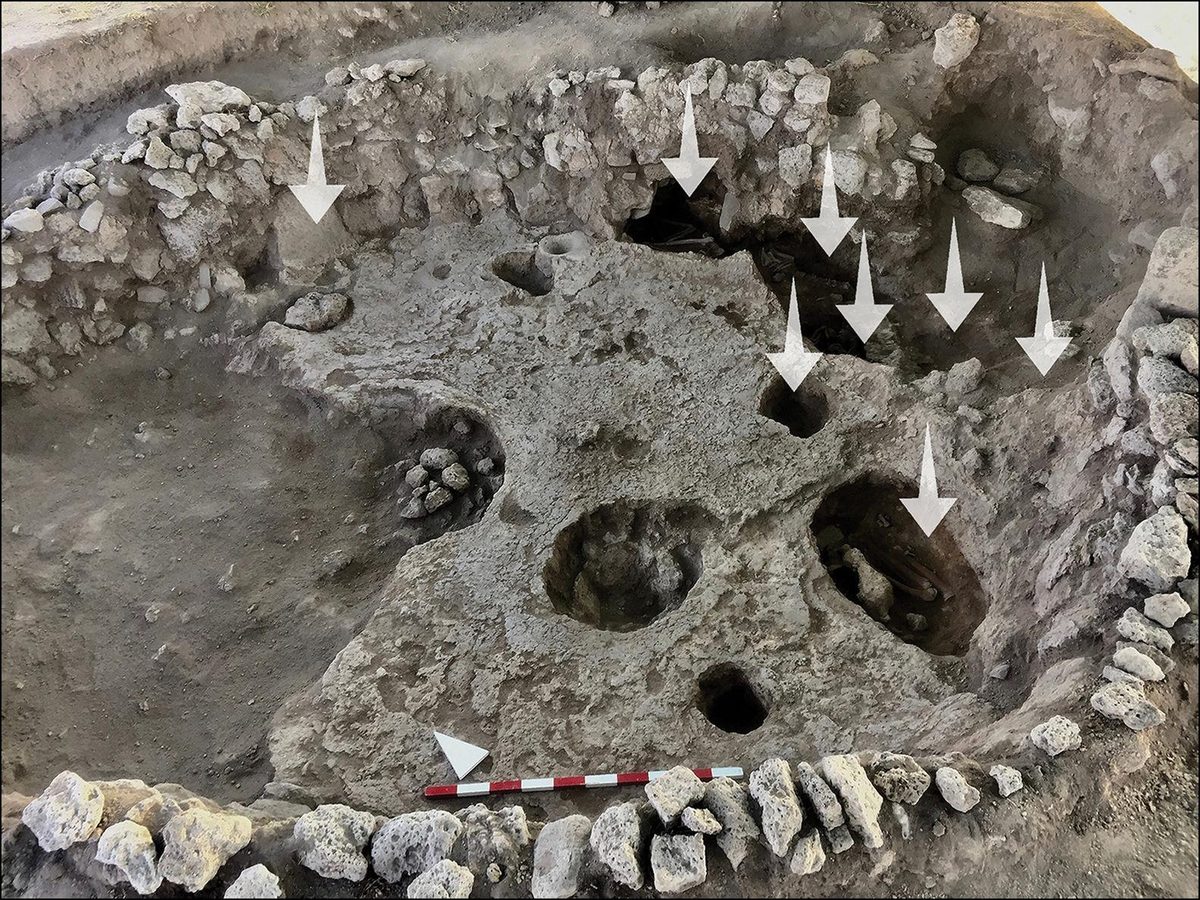
Archaeologists have called the Anatolian Chalcolithic a dark age for decades. Between roughly 6000 and 3000 BCE, settlements thinned out sharply compared with the Neolithic before and the Bronze Age after. Fewer sites usually meant fewer people. A paper published in Cell on 17 November 2026 sequences 44 genomes from the period and finds the opposite: no sign of population decline.

The genomes point to communities that were growing or on the move, absorbing gene flow from eastern Anatolia and the South Caucasus over about 3,000 years. One individual from the mid-fifth millennium BCE in Central Anatolia carries 10% to 30% ancestry linked to the Pontic-Caspian Steppe. The authors argue the missing people were mobile herders whose way of life leaves little for archaeologists to excavate.

Why it matters

If thin settlement records can hide growing, mobile populations, other archaeological 'dark ages' may reflect what survives in the ground, not who was there.

Questions about this story

Free account needed to ask — your question is kept and asked for you right after sign-up. Answers are public.

No questions yet — be the first to ask.

Key Indicators

44
New genomes sequenced
Chalcolithic Anatolian individuals added to the published record, combined with earlier data.
10–30%
Steppe ancestry in one 5th-millennium BCE individual
The earliest signal the authors report of Pontic-Caspian Steppe-related ancestry in Central Anatolia.
~3,000 years
Duration of gene flow from the east
Admixture from eastern Anatolia and the South Caucasus continued across the whole Chalcolithic.

Voices

Curated perspectives — historical figures and your fellow readers.

Sign up to generate historical perspectives on this story.

People Involved

Organizations Involved

Timeline

May 2020 November 2026

5 events Latest: 3 days ago
Tap a bar to jump to that date
  1. Research centre publishes plain-language summary

    Latest Statement

    The Center for the Human Past describes the paper as reconciling genetic and archaeological evidence through dispersed, mobile communities largely invisible to excavation.

  2. Cell publishes 44 new Chalcolithic Anatolian genomes

    Publication

    The study reports no evidence of population reduction, 3,000 years of gene flow from the east, elevated consanguinity, and one individual with 10%–30% Pontic-Caspian Steppe ancestry.

  3. Thesis models 725 Chalcolithic sites and finds a shift, not a collapse

    Research

    A Middle East Technical University thesis uses spatial interaction modelling to argue the 5th-millennium drop in site numbers reflects a move toward mobile pastoralism.

  4. Biodistance study of prehistoric Anatolian skeletons published

    Research

    A Journal of Archaeological Science: Reports paper examines demographic history in early centralized Anatolian societies using skeletal measurements rather than DNA.

  5. Earlier Anatolian genomes show continuity, not replacement

    Research

    A Cell study of 110 individuals from the Late Neolithic to Late Bronze Age finds a Neolithic-era genetic cline and long stretches of continuity in Anatolia, with only transient gene flow.

Scenarios

1

Genomes recovered from the archaeologically invisible communities

Possible Resolves by End of 2028

Discussed by: The paper's authors, who call for sampling of dispersed, mobile groups

The study's central claim is that mobile herders left few settlements but plenty of descendants. If field projects target burial grounds and open-air sites with thin architecture, the genomic signal should appear without any corresponding building remains. That would make the 'invisible' population directly observable rather than inferred.

2

Steppe ancestry in Anatolia pushed back before the Bronze Age

Uncertain Resolves by Q2 2029

Discussed by: Ancient DNA researchers tracking Pontic-Caspian ancestry routes into West Asia

One mid-fifth-millennium BCE individual carries 10% to 30% Steppe-related ancestry, roughly a thousand years before the Bronze Age horizon usually tied to steppe movement into Anatolia. A second or third such individual from the same period would turn a single outlier into evidence of a standing route across the Caucasus or the Black Sea.

3

Consanguinity signal holds across more Chalcolithic sites

Possible Resolves by Q2 2028

Discussed by: The authors, who report inbreeding at frequencies unseen in earlier Anatolian periods

The paper reports consanguinity above Neolithic and Bronze Age levels. If that pattern comes from small, isolated mobile groups, it should recur wherever Chalcolithic genomes are sampled. If it clusters at one or two sites, the explanation shifts toward local burial practice or a small founding community.

Historical Context

3 moments from history that rhyme with this story — and how they unfolded.

May 2020

Skourtanioti et al. sequence the ancient Near East (2020)

A Cell team analysed genome-wide data from 110 individuals across Anatolia, the Northern Levant and the Southern Caucasus, spanning the Late Neolithic to the Late Bronze Age. They found a Neolithic-era genetic cline linking western Anatolia to the South Caucasus and Zagros, continuity across most of Anatolia into the Bronze Age, and replacement of more than half the Northern Levant gene pool.

Then

The paper became a reference point for how much of Near Eastern prehistory could be read from genomes rather than pottery styles.

Now

It set the expectation of broad continuity in Anatolia, with gene flow arriving in short bursts rather than steady streams.

Why this matters now

The 2026 study keeps the region but changes the resolution: denser sampling of one period turns 'transient gene flow' into a 3,000-year process and contradicts the demographic dip implied by settlement counts.

June 2015

Steppe migration papers rewrite European prehistory (June 2015)

Two Nature papers analysing dozens of ancient European genomes reported large-scale movement from the Pontic-Caspian Steppe westward around 5,000 years ago. The finding undercut the assumption that pots, tools and languages spread mainly through contact between settled peoples.

Then

Museum displays, textbooks and archaeology departments adjusted within a couple of years.

Now

Steppe-related ancestry became a standard marker used to trace population movement across Europe and into West Asia.

Why this matters now

The Chalcolithic Anatolian individual carrying 10% to 30% Steppe-related ancestry is measured against that marker, and pushes the ancestry's reach into Anatolia earlier than the Bronze Age horizon usually associated with it.

1981

The Secondary Products Revolution reframes the Chalcolithic (1981)

Andrew Sherratt argued that dairying, wool, traction ploughing and wheeled vehicles transformed Near Eastern and European economies during the Chalcolithic. The claim was that a period of few monumental sites was actually a period of major economic change.

Then

The model gave archaeologists a way to treat the Chalcolithic as formative rather than stagnant.

Now

Later researchers scaled back the idea of a single rapid revolution, but the underlying point held: economy can change without leaving grand architecture.

Why this matters now

The new paper makes a similar move with genetics. Low archaeological visibility becomes evidence about how people lived, not proof that fewer of them lived.

Sources

(4)