
Logo
Daily Brief
Following
Why
Pax Silica: America's New Technology Bloc

Pax Silica: America's New Technology Bloc

The U.S. builds an AI-era alliance to counter China's silicon dominance

Overview

For the first time since COCOM dissolved in 1994, the United States is assembling a formal technology bloc. Israel became the first nation to sign a bilateral AI partnership under the Pax Silica framework on January 16, 2026—a memorandum covering joint R&D, investment, and commercialization across AI, semiconductors, energy, and space. The agreement includes plans for 'Fort Foundry One,' an industrial park in Israel to accelerate collaborative projects.

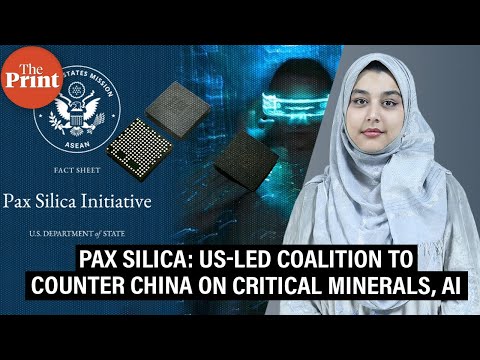
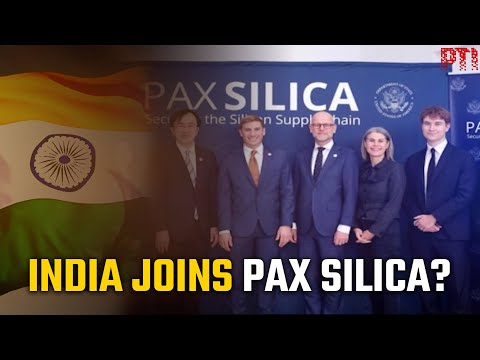
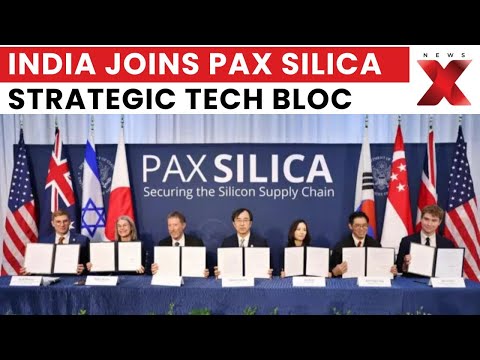
Pax Silica represents a structural shift in how Washington manages technology competition with Beijing. Rather than relying on export controls alone, the initiative creates an affirmative bloc of nations pooling compute, critical minerals, energy, and manufacturing capacity. Nine countries have now signed the declaration—Israel, Japan, South Korea, Singapore, Netherlands, UK, Australia, Qatar, and the UAE—with India expected next. The question is whether this 'coalition of capabilities' can achieve what COCOM never quite managed: sustained technological advantage through genuine coordination.

Key Indicators

9
Member countries
Nations that have signed the Pax Silica Declaration as of January 2026
$1.5T+
Sovereign wealth
Combined sovereign fund assets of Qatar and UAE members
82%
Chip production share
Global semiconductor output controlled by U.S., Taiwan, Japan, and South Korea
$44B
Israeli chip exits
Total value of Israeli semiconductor company acquisitions since 1996

People Involved

Jacob Helberg
Jacob Helberg
U.S. Under Secretary of State for Economic Affairs (Leading Pax Silica implementation)
BE
Brig.-Gen. (Res.) Erez Eskel
Head of Israel's National AI Directorate (Signed Pax Silica framework for Israel)
Gideon Sa'ar
Gideon Sa'ar
Israeli Foreign Minister (Attended Pax Silica signing ceremony)
Mike Huckabee
Mike Huckabee
U.S. Ambassador to Israel (Witnessed Pax Silica signing in Jerusalem)

Organizations Involved

PA
Pax Silica Initiative
International Technology Coalition
Status: Operational with 9 member states

U.S.-led coalition organizing allied nations around compute, silicon, minerals, and energy as shared strategic assets.

IS
Israel National AI Directorate
Government Agency
Status: Operational within Prime Minister's Office

Israeli government body coordinating national AI strategy, infrastructure, and international partnerships.

Timeline

  1. Israel signs first bilateral AI framework with U.S.

    Agreement

    Eskel and Helberg sign memorandum in Jerusalem covering joint R&D across AI, semiconductors, space, and energy. Plans announced for 'Fort Foundry One' industrial park.

  2. UAE joins Pax Silica

    Diplomacy

    The UAE signs the declaration, adding over $1 trillion in sovereign fund assets and its 5 GW AI data center plans to the alliance.

  3. Qatar signs Pax Silica Declaration

    Diplomacy

    Qatar becomes the first Gulf state to join, bringing its $524 billion sovereign wealth fund into the coalition.

  4. Inaugural Pax Silica Summit in Washington

    Diplomacy

    Helberg convenes representatives from eight nations. Japan, Israel, Australia, Singapore, and South Korea sign the founding declaration.

  5. U.S. bans B30A chip sales to China

    Policy

    White House announces ban on Nvidia's scaled-down B30A chips to China, closing the last major loophole for advanced AI hardware.

  6. China bans H20 chip purchases

    Policy

    Beijing orders Chinese companies to stop purchasing Nvidia's H20 chips, escalating the semiconductor decoupling.

  7. DeepSeek release intensifies U.S.-China AI competition

    Technology

    China's DeepSeek open-source model demonstrates competitive AI capabilities built with limited U.S. technology, prompting calls for stronger decoupling measures.

  8. Trump nominates Helberg and Huckabee

    Appointment

    President-elect Trump announces Jacob Helberg as Under Secretary for Economic Affairs and Mike Huckabee as Ambassador to Israel.

  9. Biden administration imposes AI chip export controls on China

    Policy

    The U.S. restricts sales of advanced AI chips and chip-making equipment to China, beginning the current phase of semiconductor competition.

Scenarios

1

Pax Silica Becomes Core of New Technology Bloc

Discussed by: State Department officials, Helberg in press briefings, analysts at Carnegie Endowment

The coalition expands to include India, Saudi Arabia, and potentially Taiwan as formal or guest members, establishing coordinated export controls and shared R&D infrastructure. Fort Foundry One and similar projects in UAE create distributed manufacturing that reduces reliance on Taiwan. The bloc achieves meaningful supply chain redundancy and maintains technological lead over China through the end of the decade.

2

Economic Interests Fragment the Alliance

Discussed by: ITIF researchers, semiconductor industry analysts, critics citing COCOM precedent

Member states pursue bilateral deals with China despite Pax Silica commitments, as COCOM members often did during the Cold War. South Korea and Netherlands face pressure to maintain Chinese market access. Without binding enforcement mechanisms, the coalition becomes a forum for information-sharing rather than coordinated action, and China maintains access to critical inputs through third-party channels.

3

China Accelerates Self-Sufficiency in Response

Discussed by: Chinese government statements, CF40 reports, analysts at Rest of World

Pax Silica consolidation accelerates Beijing's domestic chip development. Chinese firms like Huawei expand Ascend chip production; state investment in domestic AI infrastructure grows. By 2030, China operates a parallel technology ecosystem largely independent of U.S.-aligned supply chains, potentially serving markets in Africa, Latin America, and parts of Asia that prefer non-aligned technology providers.

4

Gulf States Bridge Israel and Arab World Through Tech

Discussed by: Helberg statements, analysts at The National, Middle East Institute

Pax Silica becomes a de facto normalization vehicle. Joint projects like Fort Foundry One and UAE data centers create economic interdependencies between Israel and Gulf states. Tech cooperation expands to Saudi Arabia, which joins Pax Silica as part of a broader regional realignment. The Abraham Accords deepen through commercial rather than diplomatic channels.

Historical Context

COCOM: The Original Technology Bloc (1949-1994)

1949-1994

What Happened

Seventeen Western nations—NATO members plus Japan and Australia—coordinated export controls to deny the Soviet Union access to strategic technologies, particularly computing equipment and semiconductors. COCOM maintained extensive control lists but operated through consensus without legal enforcement, leading to significant leakage including the 1983 VAX supercomputer diversion and the Toshiba-Kongsberg scandal.

Outcome

Short Term

COCOM limited Soviet access to some advanced technology, forcing Moscow to develop parallel systems at significant cost.

Long Term

The regime dissolved in 1994 after the Cold War ended. Its successor, the Wassenaar Arrangement, lacks COCOM's targeting and enforcement, operating on voluntary transparency rather than coordinated denial.

Why It's Relevant Today

Pax Silica attempts what COCOM could not achieve: genuine coordination among technology-holding nations against a competitor deeply embedded in global supply chains. Unlike 1949, China controls significant semiconductor manufacturing capacity, making complete exclusion impossible.

Chip 4 Alliance Attempt (2022-Present)

2022-Present

What Happened

The Biden administration proposed a 'Chip 4 Alliance' of the U.S., Taiwan, South Korea, and Japan—collectively responsible for 82% of global semiconductor production. The initiative aimed to coordinate semiconductor policy following COVID-19 supply chain disruptions, with Taiwan and South Korea focusing on production while Japan handled materials.

Outcome

Short Term

South Korea participated cautiously, wary of Chinese economic retaliation. No formal treaty or binding commitments emerged.

Long Term

The informal grouping laid groundwork for Pax Silica's more explicit bloc structure but demonstrated the difficulty of coordinating nations with competing economic interests in China.

Why It's Relevant Today

Pax Silica expands beyond Chip 4's narrow semiconductor focus to the full AI supply chain—minerals, energy, manufacturing, compute—while adding Gulf capital and European technology. The broader coalition trades depth for breadth.

U.S.-Israel Strategic Technology Cooperation (1980s-Present)

1980s-Present

What Happened

Israel became a major U.S. technology partner through defense cooperation that spawned civilian applications. Intel established its first non-U.S. development center in Israel in 1974. By 2025, Intel had invested over $50 billion in Israel; Israeli semiconductor exits totaled $44 billion, including Mobileye, Habana Labs, and Mellanox (acquired by Nvidia for $7 billion).

Outcome

Short Term

Israel developed world-class chip design capabilities despite lacking fabrication plants.

Long Term

Israeli engineers now lead development of Intel's Gaudi AI processors, Amazon's Graviton CPUs, and Nvidia's data center interconnects. Israel hosts 200 semiconductor companies employing 45,000 people.

Why It's Relevant Today

Israel's selection as the first bilateral Pax Silica partner reflects this deep integration. Fort Foundry One would add manufacturing to Israel's design capabilities, potentially creating a full-stack AI hardware ecosystem within the U.S.-allied bloc.

10 Sources: