


Pull to refresh
Logo
Rotterdam port installs temporary transformer to ease grid congestion

Rotterdam port installs temporary transformer to ease grid congestion

Built World

500-MW unit bridges the gap until permanent grid expansion completes after 2032

Today: Installation of 500-MW transformer begins

Overview

Updated 1 hour ago

The Port of Rotterdam is Europe's largest seaport. Companies there want 2,068 megawatts more grid capacity than today's network can deliver—a fivefold jump in the waiting list over two years. Grid operators TenneT and Stedin have begun installing a temporary 500-megawatt transformer in the Europoort area to start chipping away at that queue.

The transformer can't go online until at least the end of 2028. Not all of its 500 megawatts reaches the waiting list—some is reserved to keep the grid stable. For companies that qualify, expansion and electrification plans move years earlier than the permanent 380-kilovolt buildout, which isn't complete until after 2032.

Why it matters

Companies at Europe's largest port want 2,068 MW more grid capacity than today's network can carry. This transformer is the fastest relief until 2032.

Questions about this story

Free account needed to ask — your question is kept and asked for you right after sign-up. Answers are public.

No questions yet — be the first to ask.

Key Indicators

500 MW
Transformer capacity
Temporary high-voltage transformer being installed in Europoort to relieve congestion.
2,068 MW
Waiting-list grid demand
Total new or heavier connection requests in the Rotterdam port area, up from 426 MW in two years.
74%
Drop in projected 2030 shortfall
TenneT's recalibration cut the forecast transport shortfall from 244 MW to 64 MW.
€1 billion
Grid investment in port region
Combined TenneT and Stedin investment in the Rotterdam port area over the next ten years.

Voices

Curated perspectives — historical figures and your fellow readers.

Ever wondered what historical figures would say about today's headlines?

Sign up to generate historical perspectives on this story.

People Involved

Organizations Involved

Timeline

October 2025 October 2026

4 events Latest: Today
Tap a bar to jump to that date
  1. Installation of 500-MW transformer begins

    Today Infrastructure

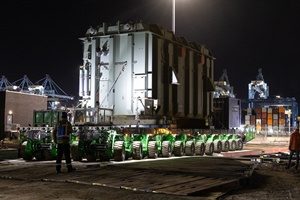
    TenneT and Stedin began installing a temporary 500-MW transformer in Europoort to ease grid congestion and connect industrial and medical facilities.

  2. Recalibration cuts projected shortfall to 64 MW

    Recalculation

    TenneT updated its calculations, lowering the port region's projected 2030 transport shortfall from 244 MW to 64 MW.

  3. Grid operators warn of overload risk

    Report

    TenneT and Stedin warned of possible overload and power failures, reporting the port waiting list hit 2,068 MW, up from 426 MW in two years.

  4. TenneT forecasts 244 MW grid shortfall

    Forecast

    TenneT projected a 244 MW transport capacity shortfall in the Rotterdam port region by 2030.

Scenarios

1

Temporary transformer goes live on schedule, clearing the Rotterdam port queue

Possible Resolves by Jan 31, 2029

Discussed by: Environment+Energy Leader, Port of Rotterdam

Permits are granted and cable connections are built as planned, letting the transformer run by the end of 2028. Most of its 500 MW goes to waiting-list customers after grid-safety reserves are set aside. Earlier electrification projects move forward before the permanent grid arrives.

2

Permit or cable delays push transformer commissioning past 2029

Possible Resolves by Q2 2029

Discussed by: TenneT, Port of Rotterdam

Commissioning slips beyond the end of 2028 because permits stall or the cable connections to the 380-kilovolt substation take longer than planned. The port queue stays near current levels through 2029, and companies must rely on other interim measures until the permanent grid is ready.

3

Grid-safety needs eat most of the transformer's capacity

Possible Resolves by Apr 30, 2027

Discussed by: Environment+Energy Leader

TenneT's network studies show a large share of the 500 MW must stay reserved for grid stability and existing customers. The effective new capacity for the waiting list is far smaller than hoped, so the queue shrinks only marginally despite the transformer's size.

Historical Context

2 moments from history that rhyme with this story — and how they unfolded.

2015-2020

German Energiewende grid congestion (mid-2010s)

Germany's shift to renewable power concentrated wind farms in the north while heavy industry stayed in the south. Transmission lines lagged behind, so grid operators had to constantly reroute power and pay generators to adjust output. The fix—new north-south high-voltage lines—took over a decade to build.

Then

Grid operators relied on rerouting and paying plants to ramp up or down, keeping the system balanced at high cost.

Now

Germany approved new north-south transmission corridors, but congestion costs remained elevated for years while they were built.

Why this matters now

Same pattern as Rotterdam: a decarbonization push outpaces grid buildout, and temporary fixes carry the load until permanent infrastructure arrives.

2021-2025

Dutch national grid congestion (2021-2025)

As solar and wind capacity surged and homes and businesses electrified, Dutch grid operators declared widespread congestion. Connection queues grew across the country, with the Rotterdam port waiting list jumping from 426 MW to 2,068 MW in two years. Operators began deploying temporary measures like mobile switchgear at the Botlek substation.

Then

Companies faced multi-year waits for new connections, slowing expansion and electrification projects.

Now

Operators launched permanent grid expansions, including seven new substations in the port region, while interim measures bridged the gap.

Why this matters now

The 500-MW transformer is one of these interim fixes, developed within the New Energy Taskforce to relieve the sharpest part of the national backlog.

Sources

(10)