
Pull to refresh
Logo
RNA activation shows first human proof-of-mechanism in Duchenne muscular dystrophy

RNA activation shows first human proof-of-mechanism in Duchenne muscular dystrophy

New Capabilities

Ractigen's RAG-18 raised utrophin levels 3.5- to 5.3-fold in three boys with no serious side effects

3 days ago: First-in-human data presented at WMS 2026

Overview

Updated Yesterday

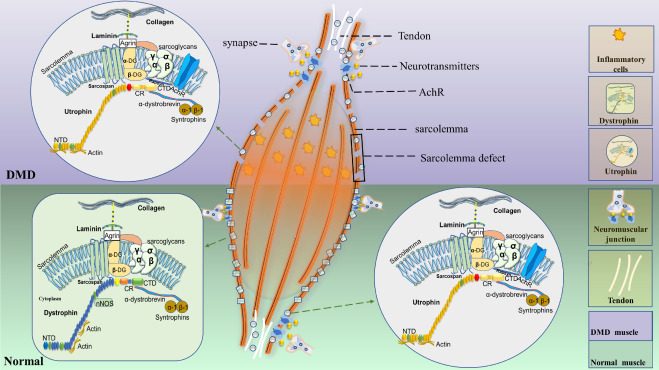
Three boys with Duchenne muscular dystrophy received monthly infusions of an experimental drug. Four months later, muscle biopsies showed 3.5- to 5.3-fold increases in utrophin, a protein that can substitute for the missing dystrophin.

Ractigen Therapeutics presented the data October 3 at the World Muscle Society congress in Hiroshima. It's the first time a systemically delivered small activating RNA has safely switched on a target gene in human muscle. If the results hold, RAG-18 could treat every DMD patient regardless of mutation — and validate RNA activation as a drug class.

Why it matters

If RAG-18 holds up, it could treat all DMD patients regardless of mutation — and prove RNA activation works as a drug class.

Questions about this story

Free account needed to ask — your question is kept and asked for you right after sign-up. Answers are public.

No questions yet — be the first to ask.

Key Indicators

3.5- to 5.3-fold
Sarcolemmal utrophin upregulation
Increase in utrophin signal density in mature myofibers at Day 113 vs. baseline
3
Patients in Cohort 1
Three boys aged 4-15 with DMD received 15 mg monthly IV infusions
0
Dose-limiting toxicities
No DLTs, serious adverse events, or Grade ≥3 treatment-emergent adverse events reported
12
Planned trial enrollment
Approximately 12 subjects across four dose cohorts in the Phase I trial

Voices

Curated perspectives — historical figures and your fellow readers.

Ever wondered what historical figures would say about today's headlines?

Sign up to generate historical perspectives on this story.

People Involved

Organizations Involved

Timeline

December 2025 October 2026

2 events Latest: 3 days ago
  1. First-in-human data presented at WMS 2026

    Latest Clinical Data

    Ractigen presents Cohort 1 data showing 3.5- to 5.3-fold utrophin upregulation in three boys with no dose-limiting toxicities.

  2. RAG-18 Phase I trial begins

    Clinical Trial

    Peking Union Medical College Hospital opens an investigator-initiated, open-label, dose-escalation trial of RAG-18 in boys with DMD.

Scenarios

1

RAG-18 shows dose-dependent utrophin response in Cohort 2

Likely Resolves by Q2 2027

Discussed by: Ractigen Therapeutics; WMS 2026 presentation

Cohort 2 (30 mg monthly IV) is fully enrolled with safety follow-up ongoing. If the higher dose produces utrophin upregulation at or above the 3.5- to 5.3-fold range seen in Cohort 1, it would strengthen the dose-response case and support advancement to later-stage trials.

2

RAG-18 advances to Phase II/III trial

Possible Resolves by End of 2027

Discussed by: Clinical trial observers; biopharma press

Positive safety and biomarker data could support a larger efficacy trial. Ractigen holds FDA orphan drug and rare pediatric disease designations, which provide incentives including potential priority review vouchers.

3

Functional benefit fails to materialize in larger cohort

Possible Resolves by End of 2027

Discussed by: Novapharmanews.com; skeptical analysts

The three-patient Cohort 1 showed mixed functional results: one boy gained 36.5 m on the 6-minute walk test, one declined 62.5 m, and NSAA scores fell uniformly by 3 points. With no placebo arm and three patients, the functional signal is unproven. A larger cohort could fail to show meaningful motor or pulmonary benefit.

Historical Context

3 moments from history that rhyme with this story — and how they unfolded.

1998-2018

RNA interference: from discovery to first drug (1998-2018)

Andrew Fire and Craig Mello discovered RNA interference in 1998, showing that double-stranded RNA can silence genes. They won the Nobel Prize in 2006. The first RNAi drug, patisiran for hereditary ATTR amyloidosis, was approved in 2018 — 20 years after the discovery.

Then

RNAi became a standard lab tool and spawned a drug class.

Now

The field took two decades to reach patients, showing the timeline from mechanism discovery to approved therapy.

Why this matters now

RNA activation is the mirror image of RNAi — small RNAs that switch genes on rather than off. RAG-18 is the first RNAa drug to show human proof-of-mechanism, roughly where RNAi was in its early clinical years.

September 2016

Eteplirsen approval (2016)

The FDA approved eteplirsen (Exondys 51) as the first exon-skipping drug for DMD. It targets only patients with mutations amenable to exon 51 skipping, roughly 13% of the DMD population, and was approved under accelerated approval despite limited functional data.

Then

Eteplirsen became the first DMD drug targeting the underlying genetic cause.

Now

It established the mutation-specific paradigm in DMD, which later drugs followed.

Why this matters now

RAG-18 is mutation-independent — it upregulates utrophin, which can substitute for dystrophin regardless of the underlying mutation. That would cover the entire DMD population, not a subset.

June 2023

Elevidys gene therapy (2023)

The FDA approved Elevidys (delandistrogene moxeparvovec), the first gene therapy for DMD. It delivers a microdystrophin gene via an adeno-associated viral vector, requiring a one-time IV infusion.

Then

Elevidys offered a one-time treatment but with viral vector risks and limited durability data.

Now

It showed the promise and limits of viral gene delivery for DMD.

Why this matters now

RAG-18 uses a non-viral approach — a lipid-conjugated oligonucleotide in saline — with no permanent DNA editing. It's a fundamentally different delivery and mechanism from gene therapy.

Sources

(10)