

Pull to refresh
Logo
Daily Brief
Following
Why Sign Up
Russian drones keep crossing into NATO territory, and the alliance keeps watching

Russian drones keep crossing into NATO territory, and the alliance keeps watching

Force in Play
By Newzino Staff |

At least 14 airspace breaches into Romania since 2022 have drawn fighter jet scrambles but no collective NATO response

Today: Russian drone breaches Romanian airspace and crashes near Parches

Overview

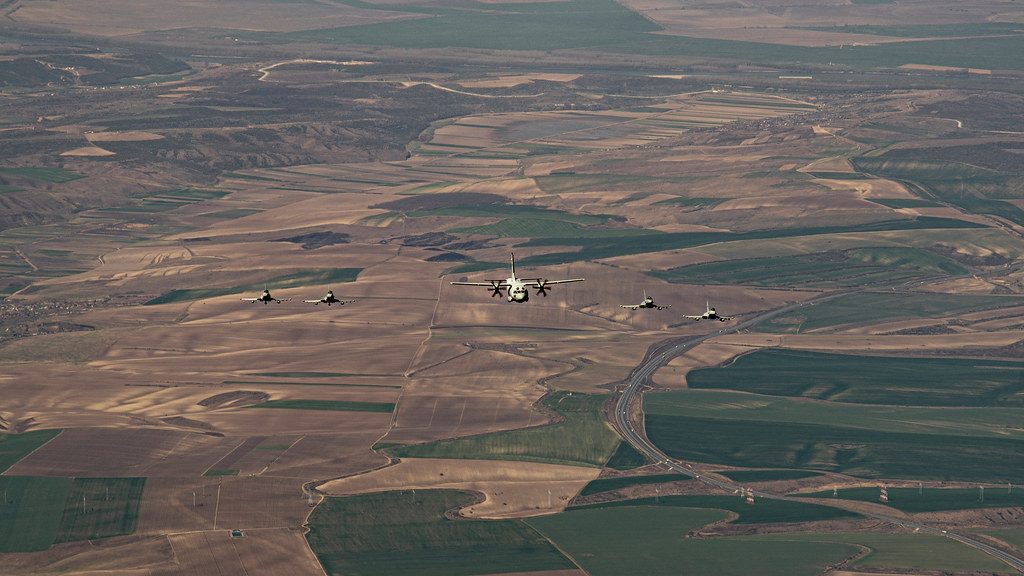
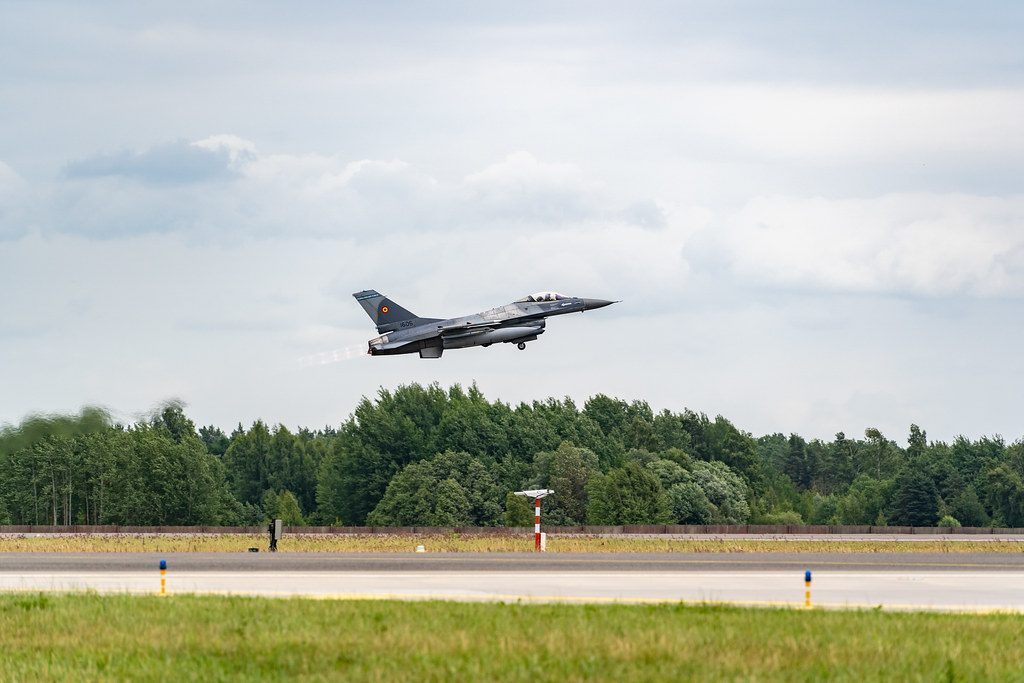
A Russian drone entered Romanian airspace just before 1 a.m. on March 26, flew four kilometers over North Atlantic Treaty Organization (NATO) territory, and crashed near the town of Parches. Romania scrambled two F-16 fighter jets. No one was hurt. It was at least the fourteenth time this has happened since Russia's full-scale invasion of Ukraine began in February 2022.

Why it matters

Each unanswered NATO airspace breach tests whether the alliance's collective defense guarantee means anything in practice.

Key Indicators

14+
Russian drone incursions into Romanian airspace
Confirmed breaches since Russia's full-scale invasion of Ukraine began in February 2022
~1,000
Drones launched in a single 24-hour period
Peak volume during Russia's spring 2026 offensive against Ukraine
4 km
Distance the drone penetrated Romanian airspace
The drone crossed the border and flew approximately 2.5 miles before crashing near Parches
0
Casualties from Romanian airspace breaches
No deaths or injuries reported from any of the 14+ incursions to date

Interactive

Exploring all sides of a story is often best achieved with Play.

Ever wondered what historical figures would say about today's headlines?

Sign up to generate historical perspectives on this story.

Sign Up

Debate Arena

Two rounds, two personas, one winner. You set the crossfire.

People Involved

Organizations Involved

Timeline

  1. Russian drone breaches Romanian airspace and crashes near Parches

    Airspace Violation

    A Russian drone deflected by Ukrainian air defenses enters Romanian airspace, flies approximately four kilometers over NATO territory, and crashes near Parches. Two Romanian F-16s scramble from the 86th Air Base in Borcea. No casualties or damage reported. The breach is at least the fourteenth such incident since 2022.

  2. Romania and NATO bolster air defenses along Black Sea border

    Military Buildup

    NATO enhances its air policing and surveillance capabilities in Romania in response to repeated drone incursions, deploying additional radar systems and maintaining heightened alert postures at Romanian air bases.

  3. Drone debris found deep inside Romanian territory

    Airspace Violation

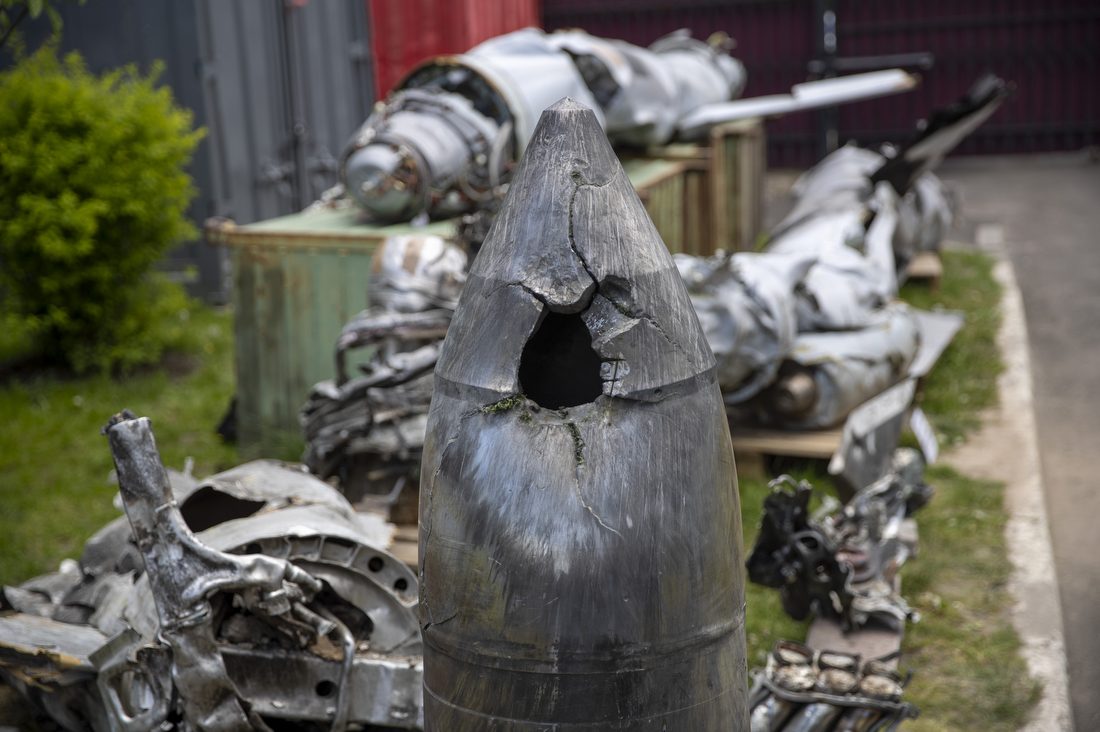
    Romanian authorities recover fragments of a Russian-origin drone that crashed on Romanian soil after crossing from Ukrainian airspace during Russian strikes on Danube port infrastructure. NATO condemns the incident.

  4. Missile strikes Polish village of Przewodów, killing two

    Escalation

    A missile lands in the Polish village of Przewodów near the Ukrainian border, killing two farmworkers. NATO and Poland later conclude it was a stray Ukrainian air defense missile, not a Russian strike — but the incident raises alarm about spillover risks across NATO's eastern flank.

  5. First confirmed Russian drone enters Romanian airspace

    Airspace Violation

    A Russian drone crosses into Romanian territory near the Danube Delta during strikes on Ukrainian port infrastructure in Odesa region. Romania begins establishing response protocols for what will become a recurring problem.

  6. Russia launches full-scale invasion of Ukraine

    Military

    Russia begins a large-scale military assault on Ukraine, dramatically expanding the conflict that began in 2014. NATO allies along Ukraine's western border immediately face new security risks from spillover.

Scenarios

1

Romania or NATO shoots down a drone over allied airspace

Discussed by: Defense analysts at the Royal United Services Institute (RUSI) and the Atlantic Council, who have argued NATO members have legal authority to intercept objects violating their sovereign airspace

As drone volumes increase with Russia's spring offensive, a NATO member intercepts a drone over its own territory rather than simply tracking it. This would establish a new precedent — that allied airspace is actively defended, not just monitored. The trigger would likely be a drone heading toward populated areas or critical infrastructure rather than crashing in open farmland. The risk is that Russia frames any shoot-down as NATO aggression, but most analysts assess Moscow would treat it as an acceptable cost of its drone campaign.

2

A drone causes casualties on NATO territory

Discussed by: The International Institute for Strategic Studies (IISS) and European defense officials who have warned that the statistical likelihood of a deadly incident grows with each large-scale Russian drone barrage

With nearly 1,000 drones launched in a single day during the spring offensive, the odds of one striking a populated area in Romania increase significantly. A drone carrying an explosive warhead that detonates on impact — rather than crashing inertly — could kill or injure Romanian civilians. This scenario would force NATO into its most consequential Article 4 or Article 5 deliberation since the alliance's founding, with enormous pressure to respond collectively.

3

Breaches continue, NATO response stays symbolic

Discussed by: Realist foreign policy commentators and analysts who note NATO has absorbed 14+ incursions without changing its posture, suggesting the alliance has tacitly accepted drone spillover as a manageable nuisance

The pattern that has held for three and a half years continues: drones cross the border, fighters scramble, statements are issued, debris is collected, and nothing structurally changes. NATO calculates that treating accidental spillover as a casus belli would risk escalation far exceeding the threat posed by errant drones. Romania enhances its own detection and response capabilities incrementally but does not shoot down incoming objects. The incursions become background noise in the broader war.

4

Romania deploys active air defense systems along the Ukrainian border

Discussed by: Romanian defense officials and NATO military planners who have discussed creating a defensive buffer zone using ground-based air defense systems capable of intercepting drones before they reach populated areas

Rather than relying solely on fighter jet scrambles — which arrive too late to intercept slow-moving drones — Romania deploys short-range air defense systems along its border with Ukraine. This shifts from a track-and-recover posture to an intercept-and-destroy posture without requiring a NATO-wide decision. The political framing emphasizes sovereign airspace defense rather than engagement in the Ukraine conflict.

Historical Context

Przewodów missile strike in Poland (2022)

November 2022

What Happened

On November 15, 2022, a missile struck the Polish village of Przewodów, about six kilometers from the Ukrainian border, killing two grain facility workers. Initial reports suggested a Russian missile had hit NATO territory. After investigation, NATO and Poland concluded it was a Ukrainian S-300 air defense missile that had gone astray while intercepting Russian cruise missiles targeting Ukrainian energy infrastructure.

Outcome

Short Term

Poland invoked Article 4 of the NATO treaty for consultations. NATO held emergency meetings but concluded the strike was unintentional and did not trigger Article 5 collective defense.

Long Term

The incident established the precedent that accidental spillover from the Ukraine war — even when it kills people on NATO soil — does not trigger collective military response. This precedent has shaped NATO's muted reaction to every subsequent Romanian drone incursion.

Why It's Relevant Today

Przewodów set the template Romania's drone breaches now follow: investigate, determine it was accidental, issue statements, take no collective action. The key difference is that Przewodów involved a Ukrainian missile, while the Romanian incidents involve Russian drones — a distinction that has received surprisingly little political attention.

Turkey shoots down Russian Su-24 fighter jet (2015)

November 2015

What Happened

On November 24, 2015, Turkish F-16s shot down a Russian Su-24 attack aircraft near the Syrian border after Turkey said the jet violated its airspace for 17 seconds. Russia denied the violation. The pilot was killed after ejecting. Turkey said it had warned the aircraft ten times over five minutes before firing.

Outcome

Short Term

Russia imposed economic sanctions on Turkey, suspended military cooperation, and deployed advanced S-400 air defense systems to Syria. Diplomatic relations between Moscow and Ankara collapsed for months.

Long Term

Turkey and Russia eventually repaired relations, and Turkey later purchased S-400 systems from Russia — straining its own NATO ties. The incident demonstrated that a NATO member could shoot down a Russian military aircraft without triggering a wider war, though the diplomatic costs were severe.

Why It's Relevant Today

Turkey's shoot-down proves that intercepting Russian military assets in sovereign airspace does not automatically escalate to conflict. But Turkey acted unilaterally at its own border, and the diplomatic fallout lasted years. Romania faces a different calculation: the drones are unmanned, expendable, and almost certainly not deliberately targeted at NATO territory, making a shoot-down harder to justify politically but lower-risk militarily.

Soviet submarine grounds in Swedish waters (1981)

October 1981

What Happened

A Soviet Whiskey-class submarine, S-363, ran aground in restricted Swedish waters near the Karlskrona naval base on October 27, 1981. Sweden was not a NATO member but the incident occurred at the height of Cold War tensions. The Swedish navy surrounded the submarine and refused Soviet demands to tow it free, holding it for ten days while conducting radiation tests that suggested nuclear torpedoes were aboard.

Outcome

Short Term

Sweden issued a formal diplomatic protest. The Soviet Union claimed navigational error. The submarine was eventually released after intense negotiations. Sweden publicly accused the Soviets of deliberately violating its sovereignty.

Long Term

The incident triggered decades of Swedish submarine anxiety, with multiple reported sightings of foreign submarines in Swedish waters. It contributed to Sweden's gradual shift toward NATO alignment, culminating in its 2024 NATO accession.

Why It's Relevant Today

Like Romania's drone problem, Sweden faced repeated violations it could not definitively prove were deliberate. The pattern of incursions — each individually explainable as an accident — cumulatively eroded the credibility of the 'navigation error' defense. Romania faces an analogous slow-burn challenge: at what point do 14+ 'accidental' breaches become a pattern that demands a structural response?

Sources

(3)