




Pull to refresh
Logo
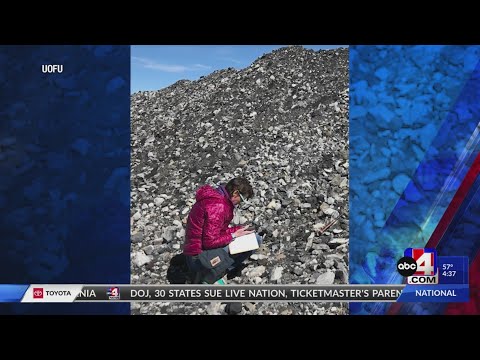
University of Utah lands federal grant to hunt for unconventional critical minerals

University of Utah lands federal grant to hunt for unconventional critical minerals

New Capabilities Salt Lake City, UT local

Department of Energy awards $7.5 million to consortium researching rare earths from unconventional sources

Yesterday: University of Utah consortium receives $7.5M DOE grant

Overview

Updated Yesterday

The Department of Energy gave a University of Utah-led consortium $7.5 million to hunt for critical minerals in places miners usually skip. The target: rare earth elements from unconventional sources, the metals that go into electric vehicle motors, wind turbines, and missile guidance systems.

The United States imports most of its rare earths and refines almost none of them at home. China controls roughly 90% of global processing. A viable domestic source would loosen that grip. A failed search leaves it intact.

Why it matters

Rare earths power the devices, vehicles, and weapons the U.S. economy relies on, and China controls most of the refining.

Monday: what changed in Salt Lake City, UT

One short email a week with the openings, closings, permits and council votes we covered. Free. Unsubscribe in one click.

Questions about this story

Free account needed to ask — your question is kept and asked for you right after sign-up. Answers are public.

No questions yet — be the first to ask.

Key Indicators

$7.5M
Federal grant amount
Department of Energy award to the University of Utah-led consortium
~90%
China's share of rare earth refining
China processes the vast majority of the world's refined rare earths, per widely cited USGS data

Voices

Curated perspectives — historical figures and your fellow readers.

Ever wondered what historical figures would say about today's headlines?

Sign up to generate historical perspectives on this story.

Organizations Involved

Timeline

September 2010 October 2026

4 events Latest: Yesterday
Tap a bar to jump to that date
  1. University of Utah consortium receives $7.5M DOE grant

    Latest Funding

    Department of Energy award funds research into unconventional sources of critical minerals and rare earth elements.

  2. Infrastructure law funds critical minerals supply chain

    Funding

    The Bipartisan Infrastructure Law directed billions to battery and critical mineral supply chain projects.

  3. DOE opens Critical Materials Institute

    Initiative

    The Department of Energy founded a research hub at Ames Laboratory to study rare earth supply and substitutes.

  4. China halts rare earth exports to Japan

    Market shock

    Beijing blocked shipments after a territorial dispute; prices for some elements rose tenfold within months.

Scenarios

1

Utah consortium finds and scales an unconventional rare earth source

Possible Resolves by Oct 8, 2029

Discussed by: University of Utah researchers and DOE program staff, per the grant's stated goal

The research program identifies rare earth deposits in waste streams, brines, or mine tailings, and tests an extraction process at pilot scale. Success draws DOE follow-on funding or a commercial partnership to build toward production.

2

Utah becomes a rare earth processing hub

Unlikely Resolves by Oct 8, 2030

Discussed by: Proponents of domestic supply chain independence, including Utah's congressional delegation

The grant joins Utah's existing mining infrastructure and the state's open embrace of mineral development. Private investment, not the research alone, drives a commercial processing plant to open at industrial scale.

3

Grant ends with findings but no new mine

Likely Resolves by Oct 8, 2029

Discussed by: Skeptics of federal supply chain programs, citing past R&D outcomes

The consortium documents unconventional sources and publishes findings, but cost, permitting, or technical barriers keep production in China. The project closes without a commercial path, and attention shifts to other states or countries.

Historical Context

3 moments from history that rhyme with this story — and how they unfolded.

September 2010

China's rare earth export restrictions (2010)

China halted rare earth shipments to Japan after a territorial dispute in the East China Sea. Prices for some elements rose as much as tenfold within months, panicking electronics and defense buyers worldwide.

Then

Japan and the U.S. scrambled for alternative suppliers and recycling; a World Trade Organization case later forced China to undo the quotas.

Now

The episode turned rare earth supply into a strategic concern and launched repeated U.S. government efforts to rebuild domestic production.

Why this matters now

This is the wake-up call that created the problem the Utah grant is meant to solve.

1980-1986

Synthetic Fuels Corporation (1980-1986)

Congress created the Synthetic Fuels Corporation to turn coal and oil shale into fuel and cut dependence on imported oil. It spent billions before oil prices crashed.

Then

The program built pilot plants but never reached commercial scale, and it was abolished in 1986.

Now

It became a cautionary example of federal energy independence programs that fail when market prices undercut the alternative.

Why this matters now

The critical minerals push faces the same risk: research dollars can map resources, but economics and permitting decide whether they become mines.

2002-2017

Mountain Pass mine closure and revival (2002-2017)

Mountain Pass in California, once the world's biggest rare earth mine, shut down in 2002 as Chinese prices undercut it. A new company, MP Materials, reopened it in 2017.

Then

The mine restarted and now supplies a slice of U.S. rare earth demand.

Now

MP Materials still sends most of its concentrate to China for processing, showing that mining alone doesn't break the dependency.

Why this matters now

The Utah grant targets unconventional sources, but Mountain Pass shows the bottleneck is processing, not just finding ore.

Sources

(1)