
Pull to refresh
Logo
San Jose pilots community paramedics for repeat 911 callers

San Jose pilots community paramedics for repeat 911 callers

New Capabilities San Jose, CA local

A six-paramedic mobile care unit, running four days a week, visits frequent callers instead of dispatching fire engines

Overview

Updated 1 hour ago

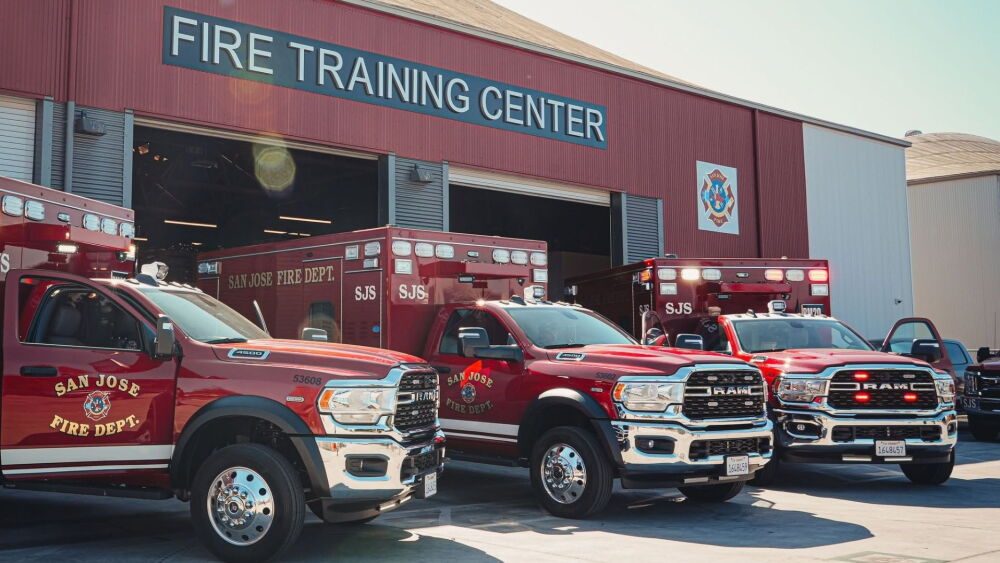
One person called 911 in San Jose 140 times in 90 days. The city's answer is a six-paramedic mobile care unit that visits repeat callers instead of sending a fire engine.

The unit runs four days a week. Its paramedics trained to read lab results and doctors' charts, and they spend an hour or two with each patient working out a care plan. Mayor Matt Mahan rode along with the team and called the approach a win-win: repeat callers get steadier care, and engines stay free for actual emergencies.

Why it matters

A fire engine costs hundreds of dollars an hour to run. San Jose is testing whether six paramedics can absorb the calls that keep them busy.

Last Monday's email for San Jose, CA

Sent Nov 23. It carried:

Get next Monday's: one short email a week. Free. Unsubscribe in one click.

Questions about this story

Free account needed to ask — your question is kept and asked for you right after sign-up. Answers are public.

No questions yet — be the first to ask.

Key Indicators

6
Paramedics on the mobile care unit
The specialized team assigned to repeat 911 callers.
140
911 calls from one person in 90 days
Example cited by San Jose Fire Department Capt. Corey Condren.
4 days a week
Current operating schedule
The pilot does not yet run every day.
14
California paramedicine pilot sites, 2014-2020
Sites the state tested before authorizing programs under AB 1544.

Voices

Curated perspectives — historical figures and your fellow readers.

Sign up to generate historical perspectives on this story.

People Involved

Organizations Involved

Timeline

2014 November 2026

5 events Latest: Yesterday
Tap a bar to jump to that date
  1. San Jose publicizes its mobile care unit

    Latest Program

    Mayor Matt Mahan rides along with the six-paramedic unit, which answers repeat 911 callers four days a week.

  2. Final pilot evaluation released

    Report

    UCSF's Healthforce Center finds six of seven paramedicine models improved patient well-being, with savings in most cases.

  3. AB 1544 takes effect

    Legislation

    Responsibility for 14 pilot sites moves to the state EMS authority while it develops implementing regulations.

  4. Governor signs AB 1544

    Legislation

    The law lets local emergency medical services agencies run community paramedicine and alternate-destination programs.

  5. California launches a paramedicine pilot

    Policy

    The state Emergency Medical Services Authority sponsors a Health Workforce Pilot Project letting paramedics work beyond 911 response and transport.

Scenarios

1

San Jose funds community paramedics beyond the pilot

Likely Resolves by Q2 2027

Discussed by: Mayor Matt Mahan, who called the program a win-win and built his case on the hourly cost of fire engine responses.

Mahan's public support plus the cost comparison give the council a case to convert the trial into a standing program. The trigger is evidence that the unit handles repeat callers at lower cost than engine responses; without published outcome data, the argument stays anecdotal.

2

Pilot lapses when its funding period ends

Possible Resolves by End of 2027

Discussed by: No city official in the reporting argues for ending it; the scenario follows from the unit's status as a trial program.

The unit is described as a pilot running four days a week, and fire departments have many competing expenses. A six-paramedic team with expanded clinical training is a soft target in a tight budget if the department cannot show reduced repeat call volume or measurable savings, neither of which has been published.

3

Other Santa Clara County agencies copy the model

Unlikely Resolves by Q2 2028

Discussed by: Not proposed by any official in the reporting; it follows from the state law that lets local emergency medical services agencies run these programs.

If San Jose's unit produces evidence that repeat 911 callers can be handled outside the emergency department, neighboring cities and the county have the same incentive to try it. The barrier is money, not authority: each agency would need its own trained staff and a budget line.

Historical Context

2 moments from history that rhyme with this story — and how they unfolded.

2014-2020

California's community paramedicine pilot (2014-2020)

The California Emergency Medical Services Authority sponsored a Health Workforce Pilot Project that let specially trained paramedics work beyond 911 response, transport and facility transfers. Fourteen sites tested seven models, including case management for frequent users of emergency medical services.

Then

UCSF's Healthforce Center found six of the seven models improved patients' well-being, and most produced savings for payers and other parts of the health care system.

Now

The pilot gave state lawmakers a record to legislate from, and its sites were carried into the AB 1544 framework in 2021.

Why this matters now

San Jose's unit is the same premise at city scale: a paramedic who can spend an hour on a chronic problem instead of transporting a patient to an emergency room.

September 2020

AB 1544 and local control (2020)

California's governor signed AB 1544 on September 25, 2020, authorizing local emergency medical services agencies to develop community paramedicine or triage-to-alternate-destination programs, under regulations the state EMS authority would write.

Then

The law took effect January 1, 2021, and responsibility for the 14 operating pilot sites moved to the state EMS authority.

Now

Authority for these programs sits with local emergency medical services agencies, inside a state rulebook rather than a single statewide mandate.

Why this matters now

It is the legal framework that lets California agencies deploy paramedics in roles beyond the traditional 911-and-transport model.

Sources

(2)