
Pull to refresh
Logo
Santa Clara weighs reconnecting Benton Street and Brokaw Road across rail tracks

Santa Clara weighs reconnecting Benton Street and Brokaw Road across rail tracks

Built World Santa Clara, CA local

Public hearing on the multimodal crossing feasibility study set for October 15

Today: Agenda lists public hearing on Benton-Brokaw crossing study

Overview

Updated 1 hour ago

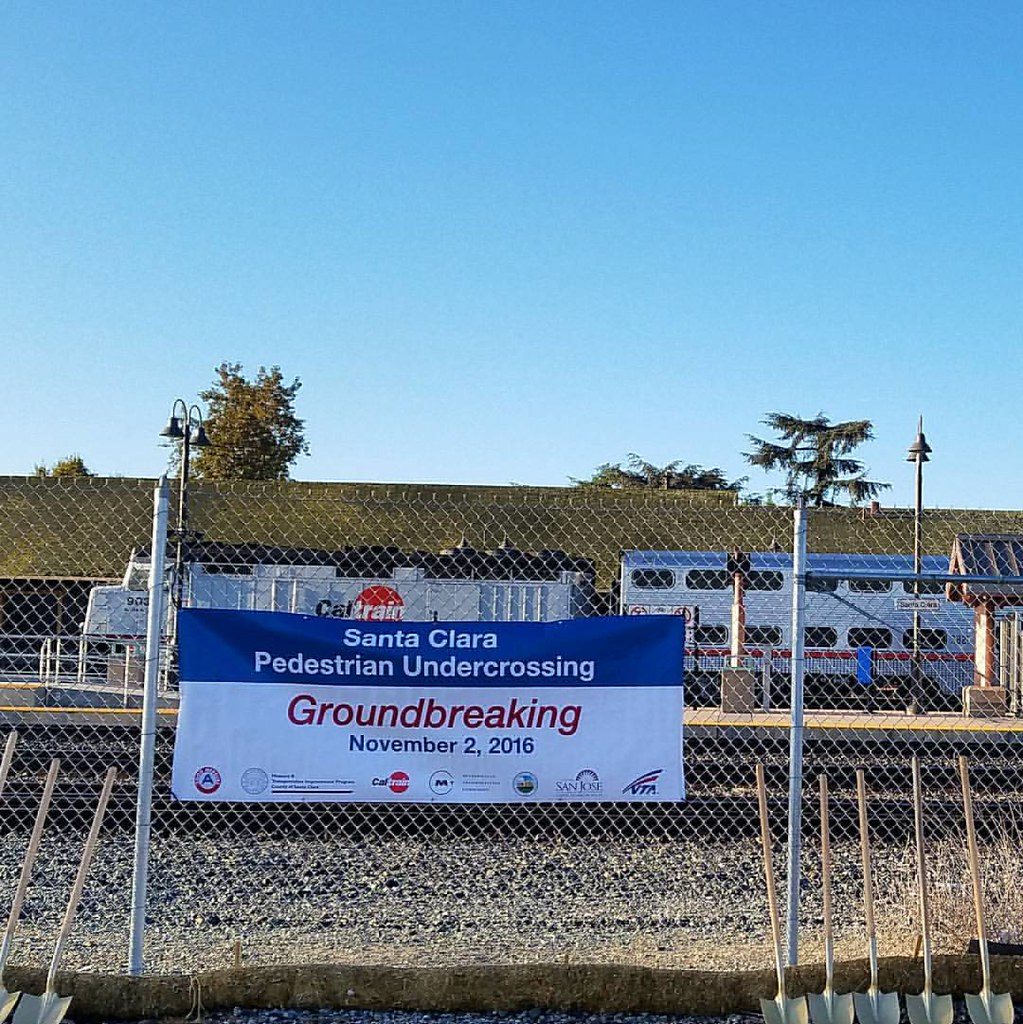
Santa Clara's Benton Street and Brokaw Road are separated by active Caltrain tracks and a planned BART line. The city is studying whether to reconnect them with a multimodal crossing.

A public hearing on October 15 gives residents a chance to tell the Station Area Task Force which crossing options should advance. The study will weigh engineering, safety, connectivity, and cost before the city decides whether to build.

Why it matters

Reconnecting these streets would shorten trips across Santa Clara's rail corridor and improve access to jobs, downtown, and the university.

Monday: what changed in Santa Clara, CA

One short email a week with the openings, closings, permits and council votes we covered. Free. Unsubscribe in one click.

Questions about this story

Free account needed to ask — your question is kept and asked for you right after sign-up. Answers are public.

No questions yet — be the first to ask.

Key Indicators

1
Prior community meeting held
The city held a virtual community meeting on the study in June 2026.
2
Rail lines the crossing would span
Existing Caltrain tracks and a planned BART line run through the study area.

Voices

Curated perspectives — historical figures and your fellow readers.

Ever wondered what historical figures would say about today's headlines?

Sign up to generate historical perspectives on this story.

Organizations Involved

Timeline

June 2026 October 2026

3 events Latest: Today
  1. Agenda lists public hearing on Benton-Brokaw crossing study

    Today Procedural

    The Station Area Task Force agenda adds a public hearing on the feasibility study for October 15.

  2. City announces community workshop on crossing concepts

    Announcement

    The city invites residents to a workshop to review crossing concepts and help choose which alternatives move forward for further study.

  3. First virtual community meeting on Benton-Brokaw crossing study

    Community Meeting

    Santa Clara's Department of Public Works hosts a virtual meeting introducing the study and gathering community priorities for the corridor.

Scenarios

1

Santa Clara task force advances Benton-Brokaw crossing options

Possible Resolves by Nov 30, 2026

Discussed by: City staff and task force members (the hearing is a decision checkpoint)

After hearing public testimony, the task force votes to keep one or more crossing alternatives in the study for further technical analysis. This moves the project closer to a recommended concept and a cost estimate.

2

Santa Clara task force defers Benton-Brokaw crossing decision

Possible Resolves by Nov 30, 2026

Discussed by: City staff (agenda items are regularly deferred or withdrawn)

The task force hears testimony but defers action, asking for more engineering detail or another round of community input. The study continues without a narrowed set of options.

3

Study narrows options after public feedback

Likely Resolves by Q1 2027

Discussed by: The city's project outreach materials

Drawing on hearing and workshop feedback, the study team eliminates some crossing concepts and retains others for detailed engineering review. The city publishes an updated study scope showing the shortlist.

Historical Context

2 moments from history that rhyme with this story — and how they unfolded.

October 1989 - 1991

Embarcadero Freeway removal, San Francisco (1989-1991)

The Loma Prieta earthquake in October 1989 damaged San Francisco's double-deck Embarcadero Freeway along the waterfront. The city chose to remove it rather than rebuild, tearing it down over the next two years.

Then

Businesses near the freeway initially opposed removal, but the Ferry Building and waterfront saw increased foot traffic and new development.

Now

The project became a national case study in removing urban infrastructure that divided neighborhoods.

Why this matters now

Shows that reconnecting a city divided by infrastructure is possible but requires years of planning and political resolve.

1991-2007

Boston's Central Artery/Tunnel, the Big Dig (1991-2007)

Boston buried an elevated highway that had separated the North End from downtown and the waterfront. The project put the Central Artery (Interstate 93) underground, replacing it with a surface boulevard and green space.

Then

The 16-year project saw major cost overruns, with the final price exceeding $14 billion.

Now

The new surface streets reconnected neighborhoods, boosted waterfront access, and generated billions in adjacent development.

Why this matters now

Illustrates both the potential benefits of reconnecting divided neighborhoods and the long, costly path to get there.

Sources

(3)