


Pull to refresh
Logo
Deep-sea brine pools in the Gulf of Aqaba hold a 1,200-year record of tsunamis and quakes

Deep-sea brine pools in the Gulf of Aqaba hold a 1,200-year record of tsunamis and quakes

New Capabilities

The oxygen-free lakes sit 1,770 meters down and 2 km offshore, and their microbes may echo life before oxygen

Overview

Updated 22 minutes ago

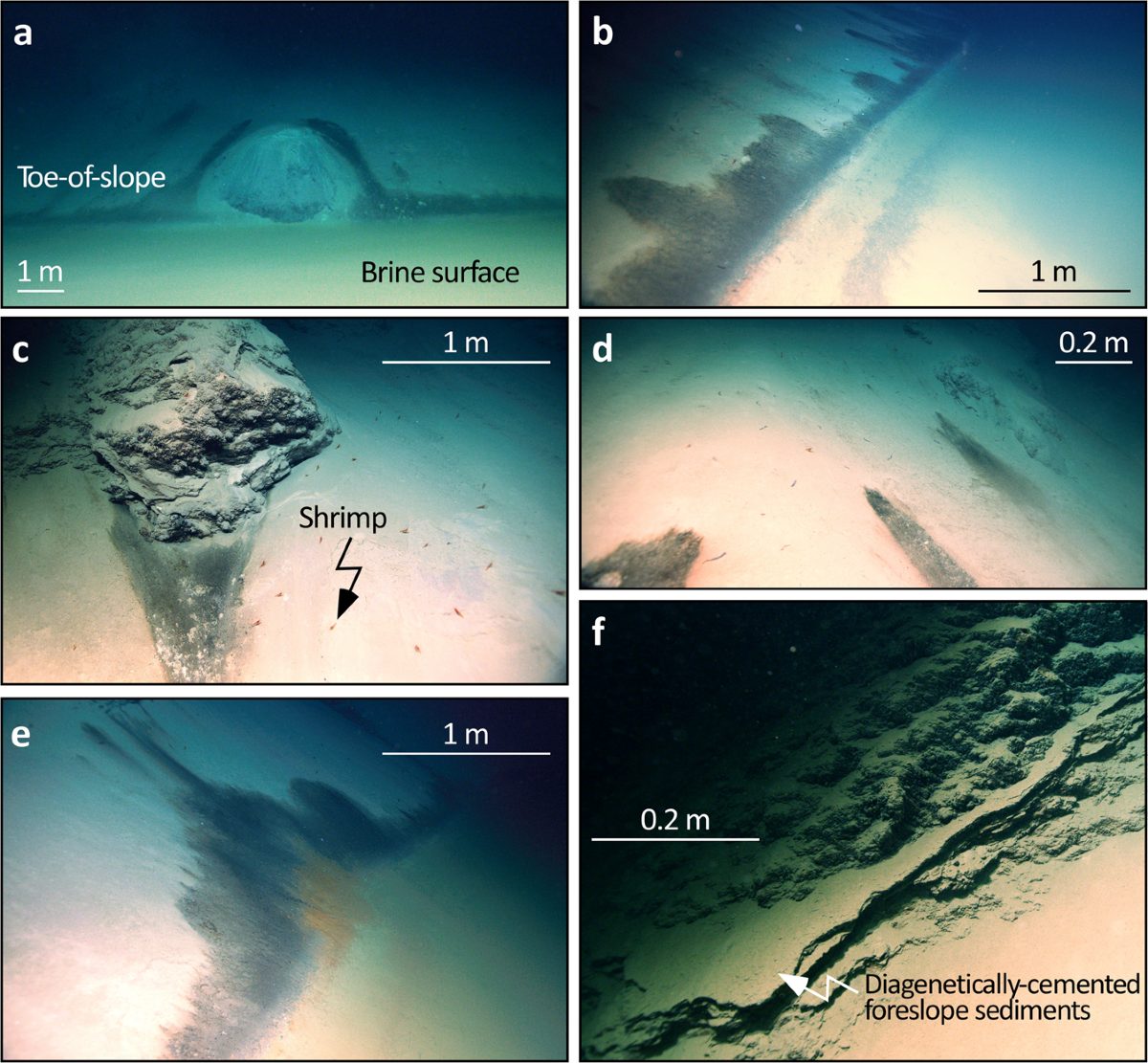
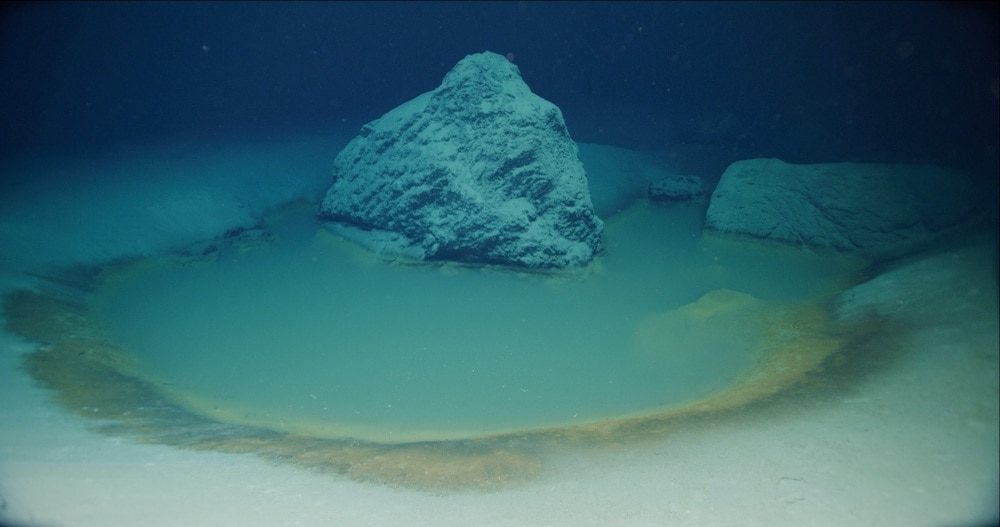
A remotely operated vehicle diving 1,770 meters into the Gulf of Aqaba found a lake on the seafloor in 2020. Its brine is so salty and so short of oxygen that fish and shrimp that swim into it are stunned to death, and its sediment has piled up undisturbed for at least 1,200 years.

Researchers named the site the NEOM Brine Pools and published the finding in June 2022. Reporting on 25 November 2026 restated that discovery, and separate 2026 work found the sediments enriched in manganese, iron, molybdenum and copper at up to 100 times the levels of ordinary seafloor mud.

Why it matters

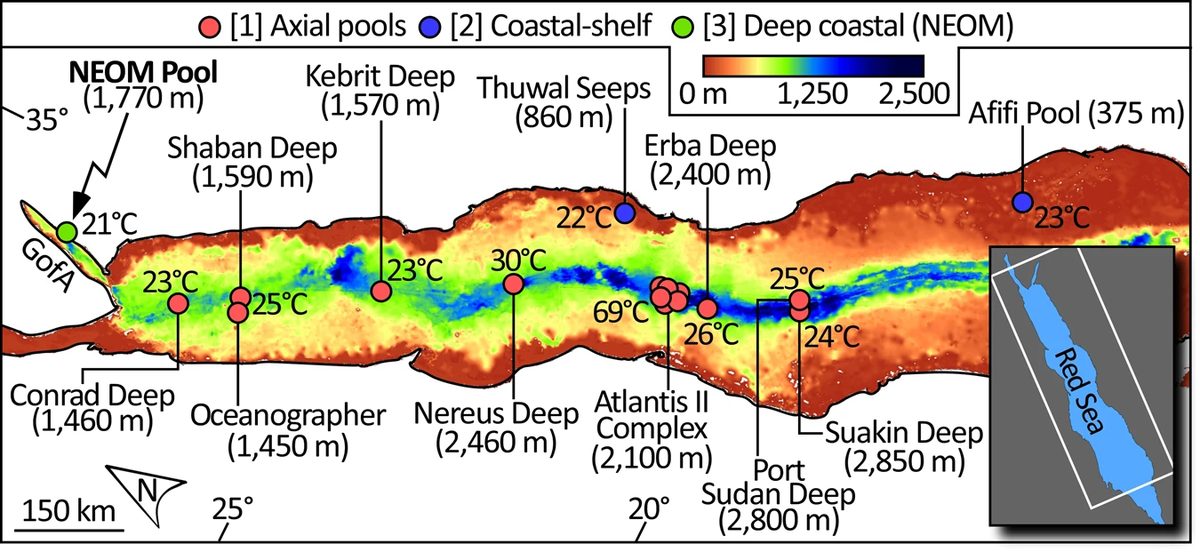
The pools sit 2 km off a coast NEOM is developing and record the tsunamis that have struck the gulf.

Questions about this story

Free account needed to ask — your question is kept and asked for you right after sign-up. Answers are public.

No questions yet — be the first to ask.

Key Indicators

1,770 m
Depth of the pool complex
More than a mile below the surface of the gulf.
2 km
Distance from the coastline
Closer to shore than any previously found Red Sea brine pool; the next nearest sits 25 km offshore.
1,200 years
Span of the preserved sediment sequence
The main pool's layers cover at least this period without being mixed by burrowing animals.
10,000 m²
Area of the main pool
Three smaller pools at the same site each measure under 10 m².
100×
Metal enrichment in pool sediments
Manganese, iron, molybdenum and copper reach up to 100 times the concentrations at non-brine seafloor sites.

Voices

Curated perspectives — historical figures and your fellow readers.

Sign up to generate historical perspectives on this story.

People Involved

Organizations Involved

Timeline

2020 November 2026

5 events Latest: Yesterday
Tap a bar to jump to that date
  1. ScienceDaily publishes a report on the gulf brine pools

    Latest Publication

    The release describes the 2022 discovery, the oxygen-free water and the microbial community, and quotes Purkis on using Earth's extremes to judge habitability elsewhere.

  2. Sediment study finds heavy metal enrichment in the pools

    Research

    An AGU Advances analysis reports manganese, iron, molybdenum and copper concentrated in pool sediments and identifies manganese-oxidizing microbes including Nitrospira.

  3. NEOM Brine Pools described in a peer-reviewed paper

    Publication

    The study reports one 10,000 m² pool and three under 10 m², and dates the main pool's stratigraphy to at least 1,200 years.

  4. Team links a gulf landslide to a likely tsunami

    Research

    Purkis and colleagues report evidence of a 500-year-old submarine landslide in the gulf that they say probably generated a sizeable tsunami.

  5. Research cruise finds brine pools in the Gulf of Aqaba

    Discovery

    A remotely operated vehicle launched from the OceanXplorer locates the complex at 1,770 meters, in the last five minutes of a ten-hour dive.

Scenarios

1

Survey finds more brine pools along the Gulf of Aqaba shelf

Possible Resolves by End of 2028

Discussed by: Sam Purkis and co-authors, who wrote that the find extended the known range of Red Sea brine pools and how they form

The paper argues the pools exist outside the main rifting part of the Red Sea, which widens where such sites might be expected. A repeat bathymetric and ROV survey of the gulf's shelf would test whether the NEOM complex is one of several. One new pool reported in a peer-reviewed paper settles it.

2

Cores tie a pool sediment layer to a named earthquake or tsunami

Possible Resolves by Q2 2028

Discussed by: The 2022 discovery paper, which describes the pools as archives of historical tsunamis, flash floods and seismicity

The main pool already holds turbidites and terrestrial sediment that the authors attribute to flash floods, local earthquakes and tsunamis. What is missing is a chronology pinned to named events. Dating a core layer and matching it to a documented gulf earthquake, such as the 1995 magnitude 7.2 event, would turn the archive into a hazard record.

3

Brine-pool microbes yield a drug candidate

Unlikely Resolves by End of 2030

Discussed by: University of Miami reporting, which cites earlier Red Sea brine research that found biologically active molecules with potential anticancer properties

The gulf pools add a microbial community that has not been screened before. Getting from there to a candidate takes isolation, cell and animal testing, and then a formal development program, which usually runs years. A compound entering preclinical development or a registered trial is the first hard milestone.

Historical Context

2 moments from history that rhyme with this story — and how they unfolded.

2.4–2.2 billion years ago

Great Oxidation Event (2.4–2.2 billion years ago)

Oxygen rose sharply in Earth's atmosphere, changing the chemistry of the oceans and of the minerals that settled into seafloor sediment. Before that shift, life had to draw energy from dissolved minerals rather than from oxygen.

Then

Oxidized iron and manganese compounds became common in sediments and rocks.

Now

The shift set the chemical baseline that later oxygen-breathing life depends on.

Why this matters now

The 2026 sediment work argues that microbes oxidized manganese and iron for energy before oxygen was plentiful, with the brine pools standing in as a present-day example.

1995

Gulf of Aqaba earthquake (1995)

A magnitude 7.2 earthquake caused waves reported at 13 feet in an Egyptian port town on the gulf, according to Scientific American's account of the region's seismic record.

Then

The waves struck an Egyptian port town.

Now

The gulf's faults and steep walls have produced repeated wave events, which is why regional planners track them.

Why this matters now

Sediment layers in the NEOM pools may hold the signature of this event and earlier ones, which is what makes the cores useful for coastal planning in Egypt and Saudi Arabia.

Sources

(6)